
Comb Over Hairstyles: 30 Styles Guide for Men (2026)
A comb over hairstyles with longer hair on top, swept to one side from a part, and shorter hair on the sides. That’s the whole structure. Everything else, including the fade, the finish, the amount of height, and how sharp the part is, changes the look while the core shape stays the same.
This guide covers what separates a comb over from a side part or quiff, 30 variations to show a barber, how to pick one for your hair and hairline, what to say in the chair, and how to style and maintain it.
Not all 30 entries are separate haircuts. Some are fade options, some are adaptations for hair type or length, and some are finishing touches like a beard or line-up. Barbers also use these terms differently, so treat the names as a shared starting point and bring photos.
What Is a Comb Over Hairstyle?
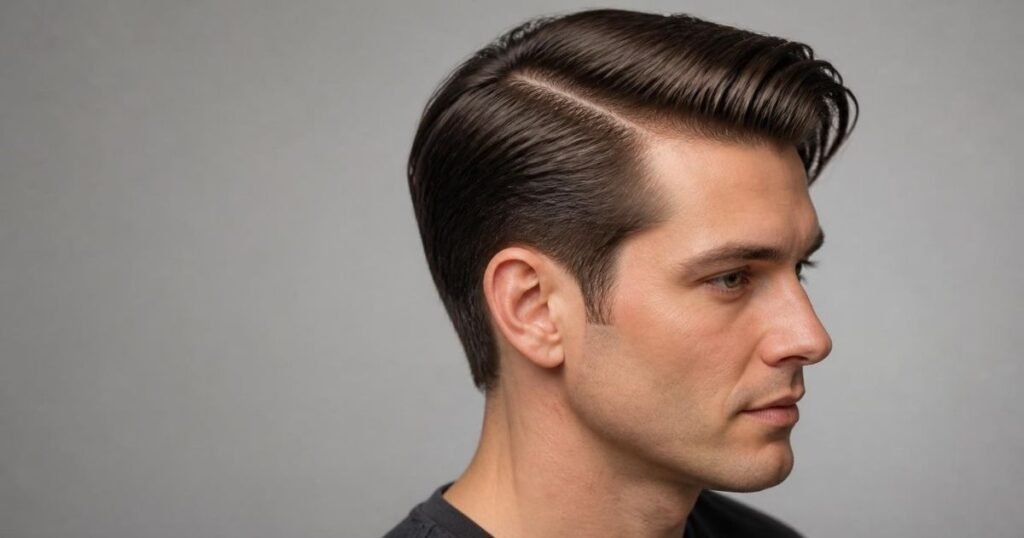
A comb over has three defining parts: a top long enough to move, a part that decides which way the hair goes, and sides cut noticeably shorter than the top. The hair is brushed or combed across from the part. The sides can be tapered, faded, scissor-cut, or undercut, and the finish can be glossy and smooth or matte and separated. The style is defined by structure and direction, not by one particular fade.
If you search “comb over haircut,” you’ll see this same style under that name as well as under “side-swept” or “side part,” which is why the comparison below matters.
1. Origin and Evolution
The original comb over was a concealment method: long strands grown from one side and arranged across a thinning area. That’s the reason the term still carries a stigma for some people.
The modern version treats the sweep as a deliberate shape. The hair is cut so the top falls to one side on purpose, usually with shorter sides that frame it. The difference is intent and cutting. Nothing is being stretched over a bare spot, and the haircut is built to look the way it does.
This matters in practice. If you say “comb over” to a barber, adding “the modern kind, not hair stretched across the top” avoids confusion. Thinning hair does get its own section below, because the modern version can still be adapted for it.
2. Classic vs. Modern Comb Over
Classic versions lean conservative. The part is visible but soft, the sides are tapered or scissor-cut so they blend into the top gradually, and the finish is smooth and combed. Contrast between top and sides is low to moderate.
Modern versions raise the contrast. The sides are often faded short, the part may be cut in sharply, and the top can have texture, movement, or a matte finish rather than a combed-flat look. The sweep is the same, but the surrounding details are sharper.
How it differs from neighboring styles: The comb over overlaps heavily with a few other cuts, and barbers don’t agree on where one ends and another begins. This table separates them by what mostly distinguishes each one.
| Style | Main hair direction | Typical top shape | What mainly separates it |
| Comb over | Sideways, across from a part | Flat to moderate height | The sweep from the part |
| Side part | Sideways, from a defined part | Often conservative | The emphasis is on the part line itself |
| Slick back | Backward, away from the face | Flat and smooth | No side sweep; hair travels back |
| Quiff | Up and back from the front | Lifted at the front hairline | Height at the front |
| Pompadour | Up, then back or sideways | High and structured | More height and volume than a quiff |
The comb over versus side part question comes up most. A reasonable rule is that a side part emphasizes the part line and a comb over emphasizes the hair swept across from it, but many barbers use both words for the same haircut. If a name matters to you, describe the result instead.
3. Who Does It Suit Best? (Face Shapes, Hair Types)
No face shape or hair type automatically fits or fails with a comb over. How it looks depends on several factors working together, and a good barber adjusts the cut to them.
| Factor | Why it matters | Worth discussing with your barber |
| Hair density | Dense hair adds weight and bulk. Lower density shows more scalp. | Whether to remove weight or keep it for fullness |
| Strand thickness | Coarse strands hold shape. Fine strands move and can go flat. | How much lift or hold to plan for |
| Curl pattern | Curls and coils shorten the visible length and change the sweep. | Cutting approach and how defined the part should be |
| Hairline | Receding temples or a widow’s peak affect where the part sits. | Part placement and how much contrast to use |
| Growth patterns | Cowlicks and crown swirls can push hair against the intended direction. | Which side to part on and how to work with it |
| Face proportions | Height and width on top change how balanced the head looks. | How much height and how much side length |
| Styling habits | Some styles need a daily blow-dry; others don’t. | Your realistic morning routine |
Face shape is often overstated. As a general styling idea, extra height on top may add balance for a rounder face, while a longer face may look better with a bit less height. But hairline, beard, hair texture, and proportions all shift the result, so treat it as one input, not a verdict.
The most reliable approach is to bring photos and ask your barber how the cut would behave with your hair.
30+ Best Comb Over Hairstyles for Men
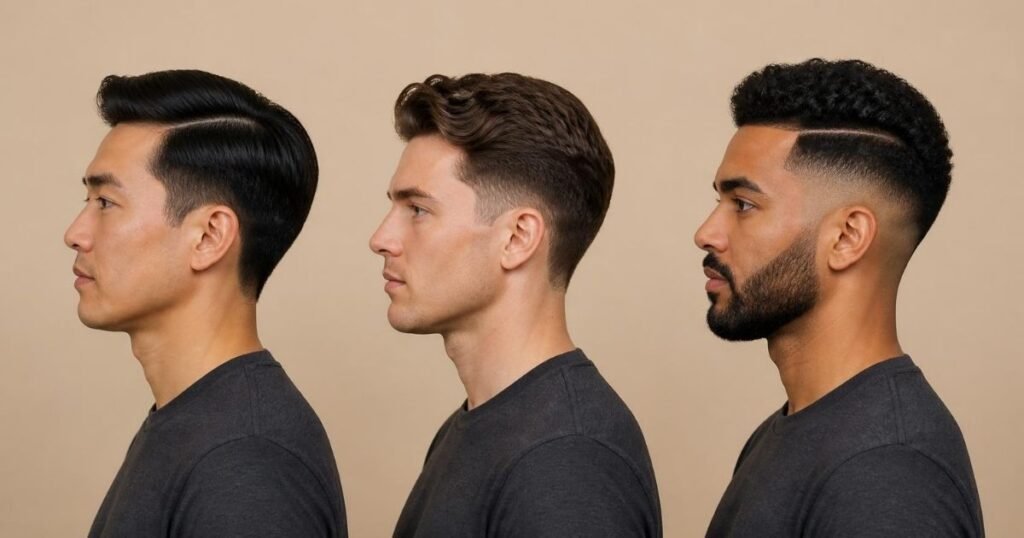
Here are comb over haircut styles for men grouped by what you’re likely deciding: the overall family, the fade on the sides, higher-contrast hybrids, how it adapts to your hair, and finishing details. “Best” depends entirely on your hair and lifestyle, so use these as reference points, not rankings.
Where a photo is described, the note says what to look at. When you collect your own references, pick images where the hair type and length resemble yours.
Classic & Timeless Comb Overs
These three share a defined part and controlled finish. They differ in how smooth the finish is, how the part is placed, and how much height the top carries.
1. Classic Comb Over
The defining feature is a smooth, deliberately combed finish with sides that taper gradually into the top. The result looks structured and formal, often with a slightly damp or lightly shiny look from a pomade or cream. It tends to be a moderate-effort style: you’ll comb it into place most mornings.
Smoother, straighter hair usually settles into this finish more easily. Wavy or curly hair can still work, but the barber may leave more length or accept more movement.
2. Side-Parted Comb Over
The part is the point here. A natural part follows where your hair already falls. A defined part is cut or combed into a specific spot. Where the part sits changes the look: closer to the center gives a more balanced sweep, further to the side creates a larger, more dramatic one.
One way a barber often finds your natural part is by looking at where the hair falls when dry or damp. Cowlicks near the part line can shift it, so it may need adjusting.
Read More About : The Modern High and Tight Haircut: Styles, Tips, and Everything You Will Need to Know In 2026
3. Comb Over with Volume
This version adds height at the front through a combination of length, layering, and drying direction. A barber may keep extra length at the front and cut layers so the hair lifts instead of lying flat. A blow-dry pushes it upward before it’s swept across.
It’s a useful option for adding height without excessive bulk, especially if fine hair tends to collapse. Taller, more shaped versions drift into quiff or pompadour territory, which are covered below. For drying technique, see Step 3 of the styling section.
Faded Comb Over
The fade controls the sides, and the comb over describes the top. The fade you choose changes contrast, how the haircut frames your face, and how quickly it looks grown-out. Fade terminology also varies between barbers, so references help.
| Fade | Where it starts | Contrast with the top | Upkeep note |
| Low | Just above the ear and neckline | Gentler | Tends to grow out more softly |
| Mid | Around the middle of the sides | Moderate | Definition softens as it grows |
| High | Higher up the head | Stronger | Contrast may show growth sooner |
| Skin | Down to bare skin | Very strong | Looks sharpest when freshly cut |
| Drop | Curves down behind the ear | Depends on the base fade | Follows head shape, so skill matters |
| Taper | Short at the edges, gradual | Subtle | Usually the gentlest grow-out |
1. Low Fade Comb Over
The fade stays low, tracing the ear and the back of the neck, which leaves most of the sides at a longer length. The contrast with the top is gentler than other fades. Some people pick it for conservative workplaces, though what’s appropriate depends on your dress code and the cut.
2. Mid Fade Comb Over
The fade begins around the middle of the sides, between a low and a high fade. It creates more definition than a low fade without as much contrast as a high one. If you can’t decide between the two, this is a common middle ground. Head shape affects where “mid” actually lands, so your barber will adjust the position.
3. High Fade Comb Over
The fade starts high on the sides and leaves the top standing out strongly against it. That contrast can make the top look fuller by comparison, though density and length still decide how it really looks. The trade-off is that growth tends to be more noticeable as the sides fill in.
4. Skin Fade Comb Over
The shortest part of the fade reaches bare skin, giving the sharpest edge of any option here. A few individual factors matter: skin tone and scalp visibility, scarring, and razor irritation or bumps for people prone to them. It looks its sharpest soon after a cut, so people who like it crisp tend to refresh it more often.
5. Drop Fade Comb Over
A drop fade isn’t a new top style. It’s a fade shape in which the line curves downward behind the ear, following the skull instead of running straight around. It’s most visible from the side and back, so a rear-view reference photo helps your barber see what you mean. Because it follows the shape of the head, the result depends on the barber’s skill.
Read More About : Ivy League Haircut: 22+ Clean & Timeless Styles for Men
6. Comb Over Taper Fade
This is where the terminology gets blurry. A taper generally shortens the hair gradually around the sideburns and neckline while leaving visible length. A fade usually goes shorter and often reaches skin. “Taper fade” combines the two: a gradual blend that gets quite short at the edges. Many barbers use the two words loosely, so name the length you want at the neckline and sideburns, or show a photo.
This is the only entry where we unpack taper versus fade in detail. The comparison under the choosing section covers the decision side.
7. Military Comb Over Fade
This one is short all over: tightly cut sides, a compact top, and a part that’s still visible. It’s low-maintenance in daily styling terms, but short sides look best when kept fresh. The name describes a look, not any official standard.
Edgy & Modern Comb Overs
What these share is sharper lines, higher contrast, or a hybrid with another named haircut. For the quiff, pompadour, and mullet, the entries below describe what changes when a comb over is added, and the table earlier covers the base differences.
1. Comb Over with Hard Part
A hard part is a thin line shaved or razored into the hair to define where the part sits. It makes the part sharp and permanent-looking until the hair grows back. It softens as regrowth fills in, so it needs more frequent touch-ups than a natural part to stay crisp.
Cowlicks near the part and very curly hair can complicate it, so ask your barber how it will behave with your hair.
2. Comb Over Undercut
An undercut means the sides are cut short and disconnected from the longer top, with no gradual blend between them. Disconnected is the word to use with your barber. Compared with a fade or taper, there’s a visible step where the short hair ends and the long hair begins. It’s a stronger contrast, and it grows out in stages, not smoothly.
3. Spiky Comb Over Fade
A better way to think of this is as a textured, piecey top that still sweeps to one side, not literal spikes. It usually combines a fade on the sides with a cut that creates separation on top. A matte product like clay or fiber gives it grip. It needs enough length for the hair to separate and some hold to keep the pieces defined.
4. Comb Over Mullet
The top is swept across to one side, and the back is left longer. A barber may leave length at the nape or cut it into the neckline in a shaped way. Workplace and dress-code tolerance for this one varies a lot.
5. Quiff Comb Over
Compared with a plain comb over, this has more lift at the front hairline, with the hair angled across to one side. It’s less structured and less tall than a pompadour. If you want to see where it sits relative to related styles, see the comparison table above.
Read More About : Buzz Cut Men: 32 Bold & Clean Haircut Styles for 2026
6. Pompadour Comb Over
This version adds more height and structure at the front and is brushed to the side or back. It usually needs more length on top, a blow-dry for shape, and a firmer hold to maintain it. The difference from the quiff is mostly scale. It’s taller and more built up.
Comb Overs for Different Hair Types
Texture and length change how a comb over is cut, dried, and held. These adaptations are starting points, and individual hair varies a lot within each type. Entries 5 to 7 describe finish and length more than hair type, but they’re included here because those choices interact with texture.
1. Comb Over for Curly Hair
With curly hair, the curl pattern often shapes the sweep. Instead of a razor-straight line, you might get a looser, curl-led movement that still travels in one direction. Some barbers cut curly hair dry to see how the curls fall, while others cut it wet. It’s worth asking someone experienced with curls. Over-combing can break up curl definition, so shaping with fingers or a wide-tooth comb is often gentler.
2. Comb Over for Wavy Hair
Natural waves add movement that can make the sweep look relaxed and textured. The trade-off is that waves can resist a perfectly flat finish, and they can look different from day to day depending on humidity. Working with the wave pattern, instead of fighting it, usually gives a more natural-looking finish.
3. Comb Over for Straight Hair
Straight hair typically holds a crisp part line easily, which suits structured versions. It can also fall flat or show every cowlick. Fine, straight hair may need root lift to keep it from collapsing, while coarse, straight hair may need weight managed so it doesn’t sit stiffly.
4. Comb Over for Natural Hair
Here, “natural hair” means unrelaxed, textured or coily hair. A few specifics matter. Shrinkage means coily hair looks shorter than its stretched length, so a top that seems long when pulled out may look much shorter at rest. Moisture helps shape and softness, and a barber experienced with coily hair can shape the sweep and the part accordingly. A defined or hard part is a common approach, though results vary with texture and density.
5. Textured Comb Over
This is about finish, not hair type. The hair looks less smooth and more separated, which can come from a texturizing cut, natural texture, a matte product, or all three. Anyone can have it, and it often works with a looser, less combed sweep.
6. Long Hair Comb Over
Longer lengths, from about the ears and beyond, sweep with more weight and movement. The hair may tuck behind the ear or fall naturally across. Longer hair brings extra weight, so it may behave differently, and regular trims help it keep its shape.
7. Short Hair Comb Over
A shorter top still needs enough length to hold a part and move to one side. As a rough starting point, that might be around 1 to 2 inches (2.5 to 5 cm), though hair type matters: curly hair looks shorter than it is, so you may need more. The length section later in this guide covers this in more detail.
Photo note: Look at how little length is needed to keep a visible part.
Read More About : The Caesar Haircut: A Complete Guide for Men Who Want a Sharp, Low-Maintenance Look
Style Enhancers
These aren’t separate haircuts. They’re additions that change how a comb over looks.
1. Comb Over with Beard
The key detail is where the haircut meets the beard. A fade often blends into the beard, so the transition looks smooth. Beard density and growth patterns vary a lot, and trimming keeps the shape intentional. The length and shape of the beard also change how balanced the whole look appears.
2. Bleached or Highlighted Comb Over
Lightening part of the hair adds contrast that can highlight texture and movement. Bleaching can dry or damage hair, and the effect varies with your natural color and hair health, so a consultation with a colorist is a sensible first step, along with a patch test. Whether it makes hair look thicker depends on the person.
3. Slicked Back Comb Over
This is a hybrid. A true slick back goes straight back, and a comb over goes across, so this version sweeps back and slightly to the side. It usually needs a smoother finish and some length, and a high-shine finish from a pomade often suits it.
4. Combed Over Fringe with Taper
The fringe is hair that falls across the front, usually over the forehead, rather than being swept up and back from the hairline. Here it sweeps across to one side, while the taper keeps the sides subtle. A fringe may suit some hairlines and foreheads better than others, so ask your barber how it would sit with yours.
5. Comb Over with Line Up
A line-up, sometimes called an edge-up, sharpens the hairline at the front, temples, and sometimes the neckline. It’s a finishing detail you can pair with a fade or taper. It stays crisp for a limited time before regrowth softens it.
Read More About : French Crop Haircut for Men: Best Styles & Guide (2026)
Additional Comb Over Variations
1. Comb Over with Taper
This is the conservative option: sides shorten gradually but don’t go to skin, so the grow-out is gentler. It’s often done with scissor-over-comb work or a soft clipper blend. For the terminology difference with fades, see the taper fade entry above.
2. Comb Over with a Natural Part
This approach works with where your hair already falls rather than cutting in a defined part line. It’s useful for people with cowlicks or crown growth patterns who find a hard or forced part fights their hair. The Side-Parted entry covers how part placement affects the look, and this one is about letting growth direction lead.
How to Choose the Right Comb Over for Your Hair Type and Style

Choosing usually comes down to four questions: how thick or fine your hair is, how much length you’re willing to keep on top, how much contrast and upkeep you want, and whether your hairline or thinning is a factor.
A quick checklist of ideas worth considering:
- Want something low-effort and conservative? A taper with a natural part may be worth discussing.
- Want sharp definition? A fade with a defined part may be worth considering, with the understanding that it needs more frequent touch-ups.
- Want more height? Ask about layering and a lifted front, and be realistic about drying time.
Choosing a Comb Over for Thick or Fine Hair
Density is how many hairs you have, while strand thickness is how wide each hair is. They’re different, and people often mix them up.
Thick or dense hair often needs weight managed. A barber may thin or texturize the top so it sits better, and the sweep can behave differently if the bulk isn’t controlled. Fine hair may need lift to avoid looking flat, and heavy products can weigh it down. Over-thinning can leave fine hair limp, so ask your barber to be careful with how much is removed.
Neither type is a problem. They just call for different cutting and styling choices.
Choosing the Right Top Length and Volume
The right length depends on the version you want, your hair texture, and whether the hair can hold a part. These ranges are rough starting points, and barbers vary.
| Top length | Approximate range | What’s typical |
| Shorter | 1 to 2 in (2.5 to 5 cm) | Holds a part with a small sweep. Fast to style. |
| Medium | 2 to 4 in (5 to 10 cm) | Clear sweep with room for some lift or texture. |
| Longer | 4 in and up (10 cm+) | Bigger sweep and more movement. Needs more care and trimming. |
Curly and coily hair appear shorter than their stretched length, so measure how it sits at rest, not pulled straight. Volume comes from a mix of length, cutting technique such as layering, and blow-drying direction, so a product alone usually won’t do it.
Choosing Between a Fade, Taper, and Undercut
Here the decision is about contrast, formality, and how it grows out.
| Option | What defines it | Contrast | Grow-out | May suit if you want |
| Taper | Gradual shortening at the edges | Low | Gentle | A conservative look that’s easy to grow out |
| Fade | Gradual blend to very short or skin | Medium to high | Shows sooner | A sharper outline |
| Undercut | Short sides disconnected from the top | High | Grows out in stages | A bold contrast |
How noticeable growth is also depends on how quickly your hair grows and how sharp you want it to stay.
Comb Over Styles for Receding Hairlines and Thinning Hair
This is where honesty helps. The traditional method of sweeping long strands across a bare area often draws attention to the area instead of hiding it. Modern approaches usually work with shorter lengths, lower contrast, texture, and matte products to make thin areas less obvious, though results depend on how much thinning there is and where.
A few patterns call for different thinking:
- Receding temples: A barber may adjust where the part sits and how much length stays at the front.
- Crown thinning: A shorter or textured top can reduce scalp visibility, depending on the extent.
- Diffuse thinning: Hair that’s thinner all over may look fuller with a shorter cut and a matte finish.
A few things to ask your barber about: how short to go on the sides, whether a matte product would help, and which direction to part. If hair loss is sudden, patchy, or accompanied by scalp symptoms, a doctor or dermatologist is the right person to see. No haircut treats hair loss.
How to Style a Comb Over Haircut?
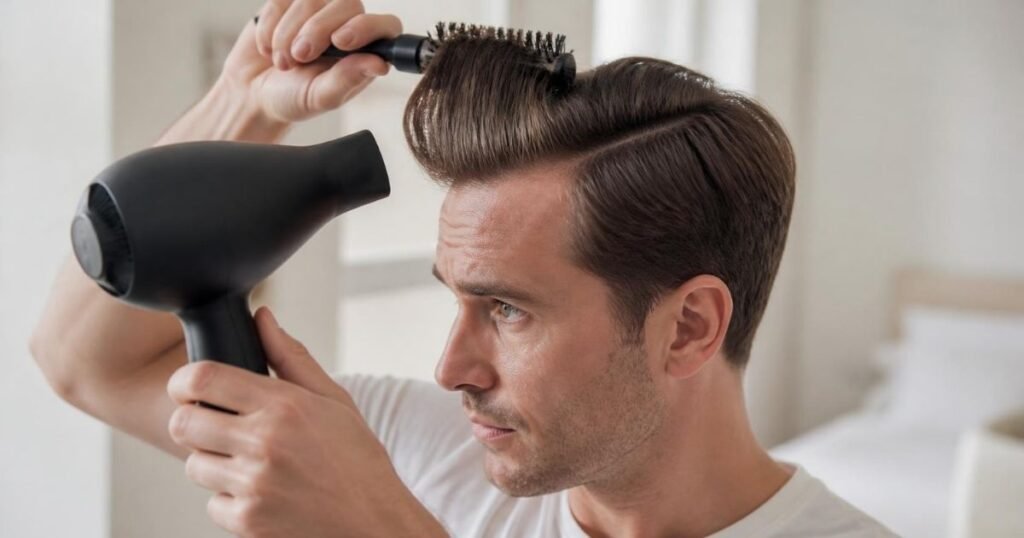
Effort depends on length, texture, and finish. A short taper with a natural part might take a minute with a comb and a little product. A tall, textured version could take ten minutes with a dryer. The steps below are a general routine to adapt.
Step 1 – Get the Right Cut
Styling is easier when the cut is shaped for your hair, including the part, sweep direction, and weight. The barber section below covers how to ask for it.
Step 2 – Wash & Prep Hair
Start with clean or freshly dampened hair. How often you wash depends on your hair type and scalp. Curly and coily hair often doesn’t need daily washing. Towel-dry until it’s damp, not dripping. A light pre-styler, like a sea salt spray or a light cream, can add grip or body if your hair needs it.
Step 3 – Blow Dry for Volume
Blow-drying sets direction as well as volume. Dry the hair in the direction you want it to fall, often using a vent brush or fine-tooth comb to guide it. If you want root lift, lift the hair at the front while drying and finish by directing it across. Some people prefer a flatter finish and can skip the lift. A moderate heat setting is gentler on the hair.
Step 4 – Use the Right Product (Pomade, Gel, Wax)
Start with a small amount. Warm it between your palms, then work it in from the back to the front, adding more only if needed. Too much product can make hair look heavy or greasy. Product types and finishes are covered in the next section.
Step 5 – Comb and Set
Use a comb to set the part and the sweep. If you want extra hold, a light mist of hairspray helps, and flexible hold keeps it from feeling stiff. A small amount of product on the fingertips can calm flyaways without flattening the hair.
If it isn’t working, try these:
- A cowlick keeps popping up: Try drying the area against its growth first, then setting it in the desired direction. If it fights you every time, a different part side or natural part may help.
- The front goes flat: Focus root lift when drying, and use a lighter product.
- It looks greasy: Use less product, or switch to a lighter, matte one.
- The part disappears by afternoon: A bit more hold or a sharper cut, such as a hard part, may help.
Read More About : Modern Mullet Fade: The Complete Guide to Getting It Right in 2026
Best Hair Products for Comb Over Hairstyles
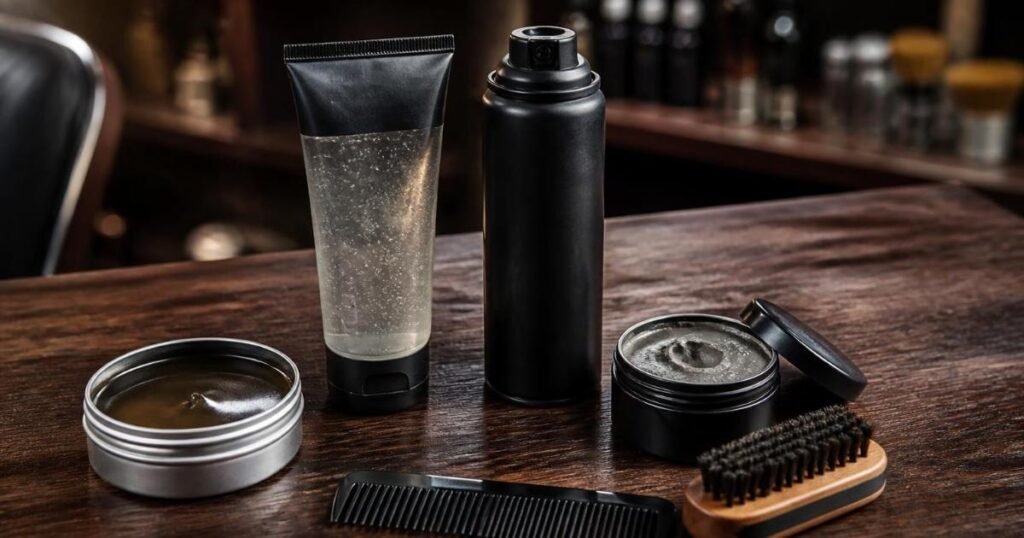
What works best depends on the finish you want and how the product interacts with your hair type. This section covers product types and finishes, not brands.
| Product type | Typical finish | Weight | Possible trade-off |
| Pomade | Smooth, can be shiny | Varies | Can feel heavy on fine hair |
| Gel | Firm, often shiny | Varies | Can feel stiff or flaky |
| Mousse or texturizing powder | Lifted, natural | Light | Less hold on its own |
| Clay, fiber, or matte wax | Matte, textured | Medium | Can be harder to wash out |
1. Best for Sleek Styles
Pomades, gels, and creams give a smooth finish. Shine level and hold vary by product, so read the label. A high-shine finish suits formal versions, while a lower shine looks more natural. Heavy products can weigh down fine hair, and a lighter cream may behave better.
2. Best for Volume & Hold
Mousse, texturizing powder, and sea salt spray can all add lift. Often the cut and blow-drying matter more than the product, and fine hair may do better with lighter products that don’t pull it down.
3. Best for Textured Looks
Clay, fiber, paste, and matte wax give a matte, piecey finish with grip and little shine. Matte finishes are often a good fit for textured styles, and some people with thinner areas prefer them because they reflect less light on the scalp. That’s an individual preference, though, not a rule.
How to Ask Your Barber for a Comb Over

“Comb over” can mean different things to different barbers, so details help. No single phrase guarantees the same result at every shop, and a barber will adapt the cut to your hair.
A few terms worth knowing:
- Top length: How long the hair on top is left.
- Part: The line where the hair separates. It can be natural or defined.
- Disconnected: Short sides with no blend into the top.
- Blend or graduated blending: A gradual change in length.
- Neckline finish: How the hair at the back is shaped, such as tapered, blocked, or rounded.
- Guard numbers or grades: Clipper length settings, which differ between the US and the UK. Millimeters or a photo avoids confusion.
Before you sit down, decide on:
- How long you want the top
- Which side you part on
- Fade, taper, or undercut
- Smooth or textured finish
- How much daily styling you’ll actually do
A sample you can adapt: “I’d like a comb over with a taper on the sides, about three inches on top, parted on the left, with a natural-looking part. I’d like it textured, not slicked down.”
Explain Your Preferred Top Length and Parting Direction
Describe length in inches or centimeters, or show it with your fingers against a photo. Say which side you part on and how defined it should be, soft or hard. If you have a cowlick or a strong growth pattern, mention it. It may limit which side works, and your barber may suggest a different one.
Choose Your Fade, Taper, or Side Length
Say how short you want the sides and where the blend begins. Terms like “tapered,” “faded to skin,” and “disconnected” help, as does pointing to a photo. Since guard numbers and grades differ by country, describing the look, or giving millimeters, is safer.
Read More About : Fade Haircuts for Black Men: 58+ Sharp Styles & Tips In 2026
Use Reference Photos to Communicate Your Desired Look
Choose photos where the hair is similar to yours in texture and density. Bring a few angles, ideally front, side, and back. Say what you like about each: the part, the side length, or the amount of volume. A photo of something you don’t want can be as useful as one you do. Keep in mind that your barber will adapt the cut to your hair, so the result may not match exactly.
How to Maintain a Comb Over Haircut
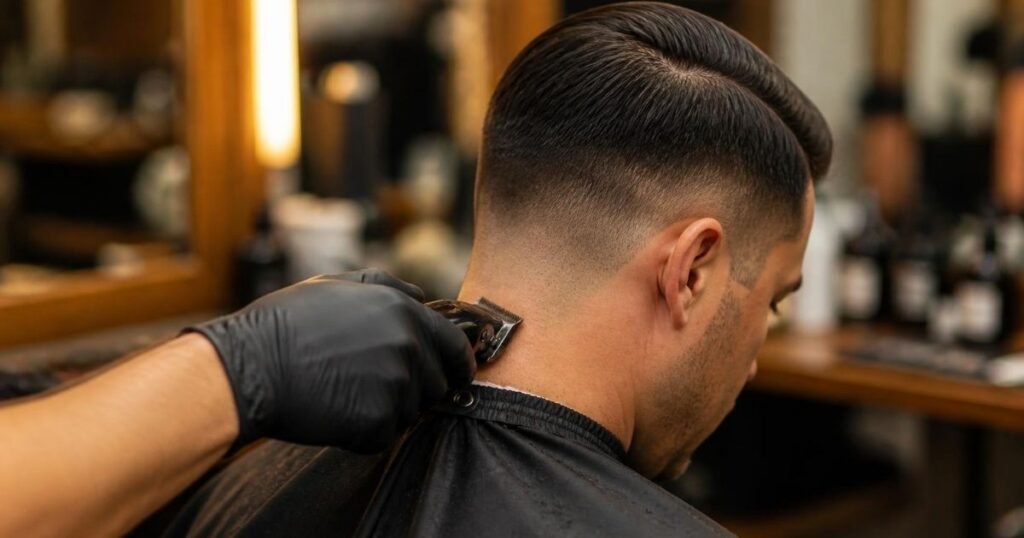
Maintenance depends on the version. A tapered classic with a natural part grows out more gently than a skin fade with a hard part. Because growth speed and sharpness preferences vary, cues work better than fixed schedules.
Signs it may be time for a refresh:
- The fade or taper has softened or lost definition
- The part is harder to find or hold
- The sides are getting bulky or are starting to cover the ears
- The top has grown heavy and no longer sweeps cleanly
Maintaining the Shape and Parting
As the top grows, it gets heavier, the part becomes less defined, and the sweep may flop more. A barber might trim the length or remove some weight to restore the shape. Gentle handling day to day, like avoiding harsh brushing and heavy product buildup, helps.
Managing Side Growth and Fade Definition
As the sides grow, contrast softens and the fade line blurs. Higher-contrast versions show this sooner. Line-ups and neckline finishes need their own refreshing since they’re often the first thing to look untidy.
Keeping Your Comb Over Styled Between Haircuts
Between cuts, rewet the hair slightly, comb it back into place, and add a small amount of product. Avoid layering more product on top of old product, and wash out buildup regularly. If a style starts requiring more effort than you want, mention it to your barber. A slightly different cut might fit your routine better.
Read More About : Low Blowout Taper for Black Men with a Clean, Sharp Styles (2026)
Frequently Asked Questions
Is a comb over professional?
It depends on the workplace and the version. A tapered cut with a soft part and a smooth finish is generally seen as conservative, while higher-contrast versions such as skin fades or undercuts may read as more casual. Think about your workplace’s norms, and ask your barber how to adjust the cut for them.
Can you do a comb over with thinning hair?
Sometimes, but the approach matters. Modern, lower-contrast versions with a shorter top and a matte finish are often easier to make work than the traditional method of sweeping hair across a bare area. How well it works depends on where and how much you’re thinning. See the section on receding hairlines and thinning hair for more detail, and ask a barber to assess your hair.
How long does hair need to be for a comb over?
Long enough to hold a part and sweep to one side, which varies by hair type and version. As a rough starting point, a short version might work at 1 to 2 inches (2.5 to 5 cm), while a fuller sweep tends to need more. Curly and coily hair appear shorter than they are, so allow extra length.
What is the difference between a comb over and a side part?
They overlap heavily, and many barbers use the terms interchangeably. A side part puts the emphasis on the part line, while a comb over emphasizes the hair swept across from it. If the name matters to you, describe the result or bring a photo. The comparison table near the start of this guide lays out the differences.
Is a comb over suitable for thick or fine hair?
Both can work with adjustments. Thick hair may need weight managed so it sits well, and fine hair may need lift and lighter products so it doesn’t go flat. See the section on thick and fine hair for more, and ask your barber how they’d adapt the cut.
How often should you get a comb over haircut trimmed?
It depends on the style, how fast your hair grows, and how sharp you want it to look. Higher-contrast versions tend to show growth sooner than tapers. Watch for cues like a softened fade or a lost part, and see the maintenance section for details.
Final Words
A comb over is flexible, but the right version depends on your hair, your hairline, and how much effort you want to put in each morning. A few decision cues to start with:
- If you want a conservative look that grows out gently, a taper with a soft or natural part may be worth discussing.
- If you want stronger contrast and a crisp outline, a fade or undercut is worth considering, with the understanding that it needs more frequent touch-ups.
- If you have fine hair, ask about lift and lighter products. If you have thick hair, ask about weight management.
- If you’re thinning or receding, shorter lengths and lower contrast are worth raising with your barber.
Whichever you choose, bring reference photos, describe the part, top length, and side treatment, and talk through your hair type and routine. A barber can adapt a comb over to your hair in ways a photo can’t show.

Jake Miller is a barbering and men’s hairstyle enthusiast who shares practical tips, haircut inspiration, and the latest grooming trends at BarberZylo. He enjoys exploring modern and classic hairstyles and helping readers find fresh ideas for their next look.
2 Comments