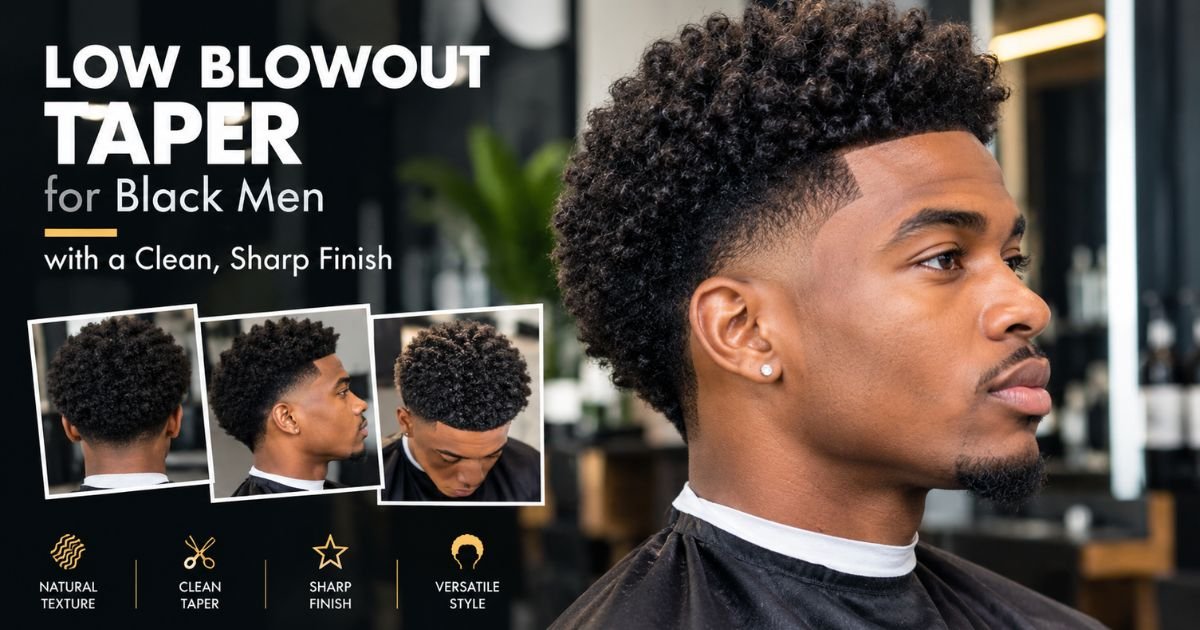
Low Blowout Taper for Black Men with a Clean, Sharp Styles (2026)
A low blowout taper for Black men pairs a full, lifted top with sides that shorten gradually, starting low around the sideburns, ears, and nape. You keep your length and natural shape where it counts, and the perimeter looks tidy without a high or skin-level fade.
This guide covers what the cut involves, how it differs from a fade, which variations exist, how to tell whether it suits your hair, what to say in the barber’s chair, and how to style and maintain it.
Quick snapshot
- Top: Long enough to lift, shape, or define, with the amount depending on your texture.
- Sides and back: Shortened gradually, starting low, with noticeable length left in the middle of the sides.
- Styling effort: Anywhere from finger-fluffing to blow-drying and picking out, depending on your hair and the look you want.
- Upkeep: The edges show growth sooner than the top does, and sharper edges usually need more frequent visits.
What Is a Low Blowout Taper for Black Men?
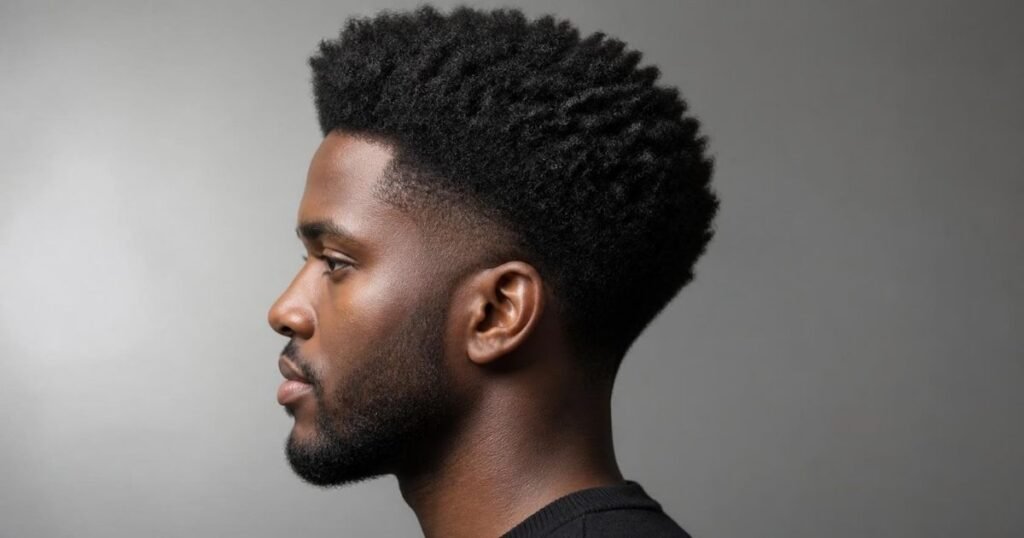
A low blowout taper haircut has three parts that work together:
- The top: Enough length to lift, round out, or define into curls.
- The sides: Shortened gradually from the top down, not cut to the skin.
- The taper: Concentrated low, around the sideburns, the area behind and around the ears, and the nape.
“Blowout” describes the top. In most conversations it means hair that’s been stretched, lifted, or picked out so it looks full and rounded. Some people mean a literally blow-dried finish, others mean volume created with a pick or fingers. Usage varies between barbers and communities, so there’s no single official definition, and a photo clears up any ambiguity.
A quick anatomy check helps when you’re looking at reference images:
- Top: How tall and how round is it?
- Temples and sideburns: Where does the shortening begin?
- Around the ears: How tight is the cut?
- Nape and neckline: Is the shape rounded, squared, or tapered?
You’ll also see the term “blowout taper fade for Black men.” People use it for the same general look, often implying slightly shorter, more blended edges than a classic taper. Since taper and fade overlap in everyday speech, confirm how short the barber plans to go.
What to notice in a photo: the contrast between the top and the sides. A low taper keeps that contrast soft and gradual.
How it Enhances Natural Afro-Textured and Curly Hair?
The taper removes bulk from the sides, so the top reads as a deliberate shape. Without it, hair that’s full all around can look wide or uneven. With it, your curl or coil pattern becomes the main feature of the cut.
The effect varies with density. Denser hair tends to show a stronger contrast between top and sides. Finer or less dense hair may look softer, and a barber may adjust the taper to keep the shape balanced. Either way, the cut works with your natural texture instead of changing it.
Why it’s a Popular Choice for Black Men
Instead of claiming popularity, here are the practical reasons people choose this cut:
- It keeps your length. You don’t have to cut the top down to get a tidy outline.
- The edges look finished. A shaped perimeter can make hair look intentional even on a low-effort day.
- It’s less extreme than a high or skin fade. The low taper leaves more hair on the sides, so the transition is gentler.
- It can grow out gradually. Softer edges often blend as they grow, though how it looks in week three depends on your growth rate.
- It adapts to different settings. You can wear the top defined and soft or picked out and tall.
Whether these matter will depend on your priorities. If you want a high-contrast, crisp look, the fade comparison below may point you elsewhere.
What Makes a Blowout Taper Different From a Regular Taper?
A regular taper describes the sides and back: hair that shortens gradually toward the hairline. The blowout part describes what’s on top: length left to lift, and a fuller, rounded shape.
So the same low taper can sit beneath a short textured top, twists, defined curls, or a blowout. What makes it a blowout taper is how you leave and style the top. This is why two people can ask for the same cut and walk out with slightly different results.
What to notice: look at a low taper with a flat or short top, then one with a lifted top. The sides are nearly identical, and the top changes the whole silhouette.
Read More About : Types of Fade Haircuts for Men: 50+ Skin Fade Hairstyles to Try in 2026
Why Does the Low Blowout Taper Works Well for Black Hair?
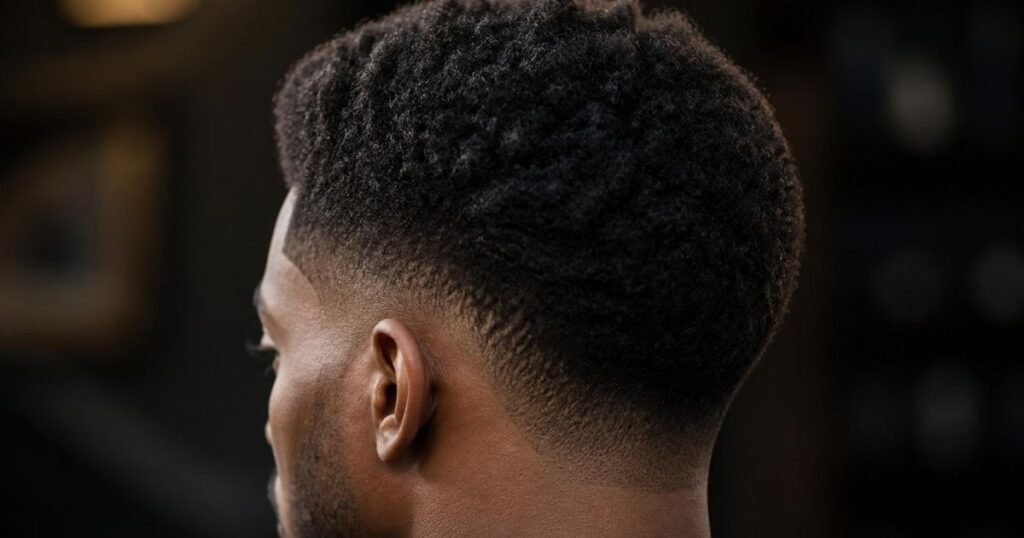
Textured hair holds shape and volume in ways straighter hair often doesn’t, which is a big part of why this cut fits so naturally. The sections below explain the mechanics.
Complements Curls, Coils, and Afros
Curls, coils, and afro-textured hair can hold height and structure, and the taper defines the outline around them. That’s why a low taper for curly hair often looks cleaner than the same top over untreated sides.
The textures behave differently:
- Looser curls: Tend to show definition and bounce, and can clump when moisturized.
- Tighter coils: Often hold a compact, dense shape and may look fuller when picked out.
- Afro texture: Can build a rounded, voluminous top and holds that shape when shaped carefully.
Curl typing systems are approximations, and one head can contain several patterns, so treat labels as a starting point. A barber who looks at your hair dry can usually read it better than any chart.
What to notice: how the same low taper frames each texture differently, with defined curls looking softer and tight coils looking denser.
Keeps the Neckline and Temples Clean
The “sharp finish” comes from the edges. A low taper follows your hairline at the sideburns, around the ears, and across the nape.
You have a choice about the hairline itself:
- Natural hairline: Your actual growth line, tapered but not redrawn. It looks softer.
- Line-up (or edge-up): A defined, crisp hairline made with a trimmer or razor. It looks sharper, and the shape visibly softens as new growth appears.
Neckline shape matters too. Rounded, squared, and tapered necklines each give a different back view, so it’s worth choosing one deliberately.
Your hairline and growth patterns affect the result. Recessed temples, an uneven hairline, or a cowlick at the nape may change how a barber shapes the edges. A good barber will adapt to what’s there instead of forcing a template.
What to notice: a back-view photo shows neckline shape better than any description, and a close-up of the temple shows how the hairline is treated.
Balanced Look Between Volume and Sharpness
The cut works through contrast. A fuller top against tapered edges creates definition, and either extreme can throw it off:
- A very tall top with soft, indistinct edges can look uneven.
- A small top with very tight edges can lose the contrast that defines the style.
Proportion matters, meaning how tall the top is relative to the width of your head and the length of your face. Some people find that more height may help balance a rounder face and a flatter top may suit a longer one, but these are tendencies, not rules. If you’re unsure, it’s worth discussing top height with your barber while they’re looking at your head shape.
Read More About : 300+ Low Fade Haircuts for Men: Find Your Perfect Style
Hair Length and Texture Considerations
Two things change how this cut looks on your head: shrinkage and how you style it.
Shrinkage is the way coily hair appears shorter than its stretched length. Hair that measures several inches when pulled straight may sit much closer to the scalp when dry and natural. That’s why a top that “looks short” can have more length than expected, and why blow-drying or picking out can change the look noticeably.
Length for lift: You need enough length to work with, but the amount varies. Looser curls may need less length to look full, while tighter coils may need more room to stretch and round out. I’m deliberately not giving a single measurement because it genuinely depends on the person.
Texture and finish: Your pattern influences whether the top reads as defined curls, a picked-out shape, or a stretched, blow-dried finish. If you’re searching for a blowout taper for 4C hair, expect the shape to rely heavily on shrinkage, moisture, and how the hair is stretched. Natural hair volume can look quite different from one head to the next, even with identical cuts.
Best Low Blowout Taper Styles for Black Men
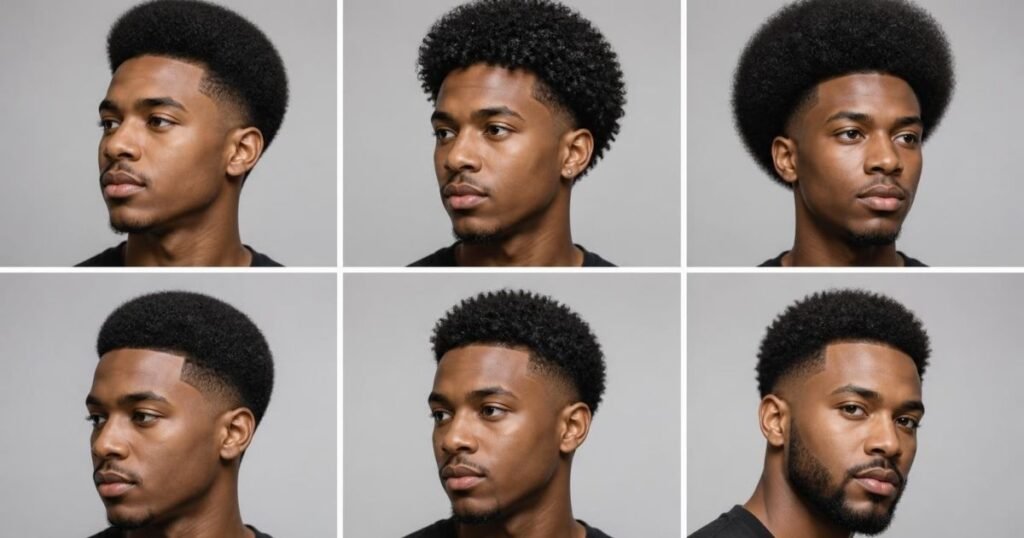
These aren’t ranked. They’re variations on the same base cut, each defined by one thing that changes. This table gives you a quick comparison, and the details follow.
| Style | What changes | Edge contrast | Styling effort |
| Classic | Moderate top, natural lift | Soft | Lower to moderate |
| Curly top | Definition instead of lift | Soft | Moderate |
| Blowout afro | Maximum height and roundness | Soft to moderate | Moderate to higher |
| Temple fade | Shorter blend at the temples | Moderate | Moderate |
| Short blowout | Limited top length | Soft | Lower |
| With beard | Taper connects to beard | Varies | Varies |
Effort levels are general tendencies and depend on your hair.
1. Classic Low Blowout Taper
This is the reference version, with a moderate top, natural lift, a low taper around the ears and nape, and the hairline left mostly natural. Think of it as the baseline the other styles vary from.
It may be a comfortable starting point if you haven’t had the cut before, because it doesn’t commit you to extremes of height or contrast.
Ask for: a low taper, a top left long enough to lift, and a natural hairline.
2. Low Blowout Taper with Curly Top
The distinguishing feature here is definition over height. Instead of picking the hair out, you leave it moisturized and shaped so individual curls or clumps show.
The cut sets the outline, while the curl definition comes mostly from moisture, products, and technique. How well it works depends on your curl pattern and how well your hair holds definition. A blowout taper with a curly top tends to suit hair that clumps naturally, though most textures can approximate it with the right routine.
What to notice: the visible spirals and the rounded outline, which come from the cut, not the styling.
3. Blowout Afro with Low Taper
This version is about silhouette: a tall, rounded top with the taper framing it. It generally requires more length and more careful shaping than the other styles, because uneven length shows up fast on a round shape.
Density and texture affect how full and even the shape looks. If you want this look, ask your barber how much length your hair can support and what shaping approach they’d use.
What to notice: front and side views should both look round, with no flat or lopsided areas.
Read More About : Top 40 Mid Fade Haircuts for Men: Fresh, Modern Styles to Try
4. Low Blowout Taper with Temple Fade
This variation adds a shorter blend at the temples, which increases contrast around the hairline. It reads sharper than the classic version, and the shorter hair at the temples will show growth sooner.
How the temples are shaped matters. A recessed or uneven temple area may change how a barber approaches the blend, so it’s worth discussing before the clippers come out.
What to notice: how the blend meets the hairline. A smooth transition looks intentional, while an abrupt one can look patchy.
5. Short Blowout with Low Taper
This version keeps less length on top. It’s a realistic option if your hair is on the shorter side, or if you want less styling.
Expect less lift than the afro version, with more of a textured, shaped top. It won’t produce the same height, and a barber can help you judge what your current length allows.
What to notice: the texture on top still reads as a shape, even though the height is modest.
6. Low Blowout Taper with Beard
The distinguishing feature is where the taper meets the beard. In a low blowout taper with a beard, the sideburn area can flow into the beard, and the transition often looks smoother when the two are blended by the same barber in the same visit.
Beard density affects the blend. Patchier or denser beards may need different approaches, so mention your beard when you’re describing the cut.
What to notice: the side view. The connection between sideburn and beard should look continuous, not like two separate cuts.
Low Blowout Taper Vs Low Fade: What’s the Difference?
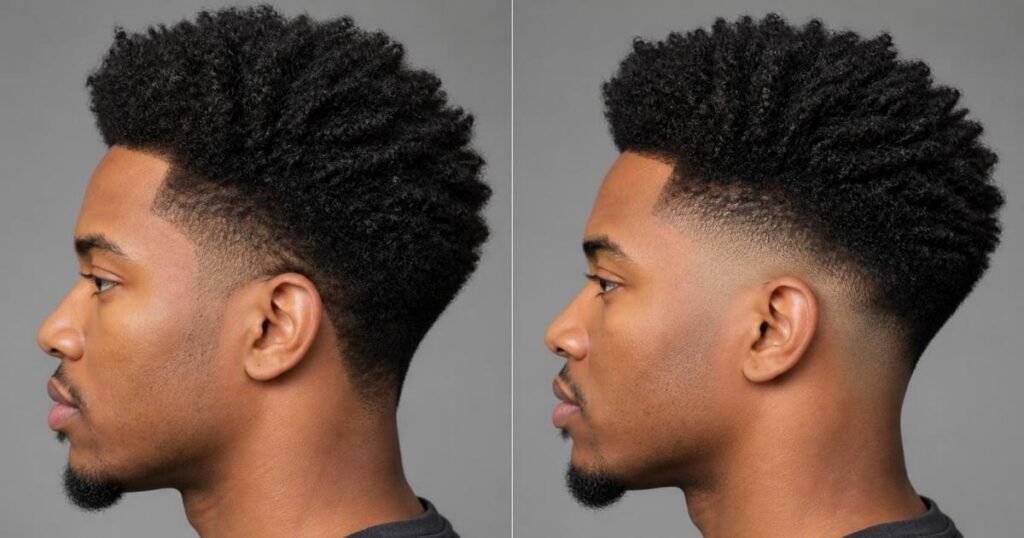
Both start low and both clean up the perimeter, but they differ in how much hair gets removed and how visible the transition is. Terminology varies, and some barbers use “taper” and “fade” interchangeably, so check what your barber means.
| Low blowout taper | Low fade | |
| Where it starts | Low: sideburns, ears, nape | Low, around the ears and nape |
| How short it goes | Gradual, usually leaving noticeable length | Often much shorter, sometimes to skin |
| Visible contrast | Softer | More pronounced |
| Effect on the top | Defines the shape of a fuller top | Similar, with a stronger contrast |
| Grow-out | Tends to soften gradually | Contrast fades more visibly |
| Upkeep | Edges still need tidying | Often shows growth sooner |
1. Tapered Edges Vs Faded Sides
A taper shortens hair gradually, usually concentrated at the edges, so the sides keep visible length. A fade graduates more sharply, often to very short or skin, so the contrast between top and sides is stronger.
The difference becomes especially obvious as the hair grows. A taper tends to look softer in the in-between weeks, while a fade can lose its crisp contrast more noticeably. How either looks still depends on how fast your hair grows.
What to notice: in side-by-side photos on textured hair, look at how quickly the sides go from short to full.
2. Which Looks More Natural On Black Hair
“Natural” is subjective, so there’s no honest blanket answer. What you can compare is how visible the transition is. A taper tends to look softer and keeps more of your hairline texture visible, while a fade tends to look more defined and graphic.
Your hairline, your preference, and how polished you want to look all matter. Neither one is inherently better for Black hair. It comes down to the look you want.
Read More About : High Fade Haircuts: What They Are & The Best Versions For 2026
3. Choosing The Right Option
A few questions can help you decide:
- Do you want softer or sharper edges? Softer points toward a taper, sharper toward a fade.
- How often will you visit a barber? A fade’s contrast may show growth sooner.
- How do you feel about your hairline? A fade can emphasize it, while a taper is more forgiving.
- Are you unsure? Bring photos of both and let your barber adapt the cut to your head.
Is the Low Blowout Taper Right for You?

Suitability depends on your hair, your habits, and how the barber adapts the cut, so treat this as a self-check instead of a verdict.
Hair Length and Texture Considerations
Run through these questions before booking:
- Is there enough length on top to lift or shape? (A barber can assess this.)
- How does your hair behave dry versus damp? Does it clump, spring up, or lie flat?
- Is your density fairly even, or are there thinner areas?
- Do your crown or hairline have growth patterns that affect the shape?
- Do you want defined curls or a picked-out, lifted finish?
If you’re drawn to a low taper for curly hair, you’ll want to know whether your curls hold definition. If you’re asking about a blowout taper for 4C hair, consider how much you want to rely on stretching and shaping. A barber who has worked with your texture can answer these quickly.
Lifestyle and Upkeep Level
Think about the tradeoffs:
- Daily styling: How many minutes are you willing to spend?
- Products: Do you already use a moisturizer or leave-in, or would you be starting from scratch?
- Barber visits: How often are you realistically willing to go?
- Dress codes: If you work somewhere with grooming expectations, a softer, shorter version may be easier to carry.
If you want a no-effort cut, this style may ask for more than you’d like. If you’re fine with a few minutes each morning, it’s manageable.
Who Benefits Most from This Style
This cut may be easiest to enjoy if you:
- Want to keep length on top while still having tidy edges
- Are comfortable with some daily shaping
- Prefer softer transitions to high-contrast fades
On face shape, you’ll often hear that rounder faces may benefit from extra height and longer faces from a lower top. These are tendencies, not rules, and the final look also depends on your hairline, beard, and how your barber adapts the cut.
You may want to consider other options if you have very fine or sparse density that makes a full top hard to achieve, or if you want a cut that needs no styling at all. A shorter textured crop or a different taper height might fit better.
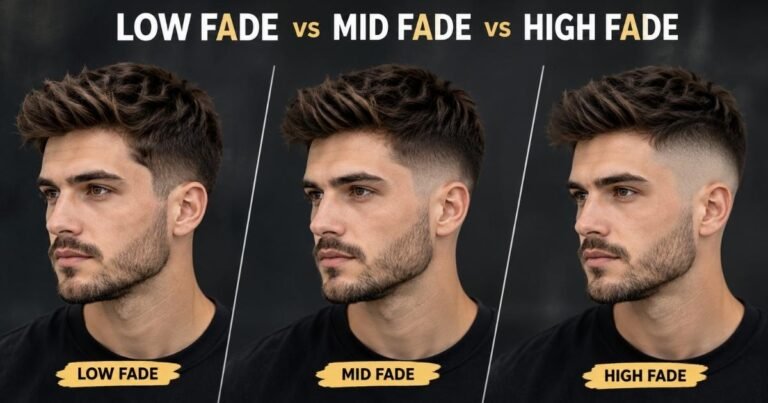
Read More About : Low Fade vs Mid Fade vs High Fade: What’s the Key Differences and Which Suits You Best?
How to Ask Your Barber for a Low Blowout Taper?
No single phrase guarantees the same result at every shop. What helps is giving your barber a shared picture: where the taper starts, how much length stays on top, and what the hairline should look like.
1. Key Terms to Use
| Term | What it means |
| Low taper | Gradual shortening that starts low, near the ears and nape |
| Sideburn taper / nape taper | Shortening focused at those specific areas |
| Top length | How much hair stays on top |
| Line-up / edge-up | A crisp, defined hairline |
| Natural hairline | Taper without redrawing the hairline |
| Beard blend | Connecting the sideburn area to the beard |
A sample way to say it: “I’d like a low taper around the ears and nape, leaving enough length on top to lift and shape. Keep the hairline natural, and here’s a photo of the look I’m after.”
2. How Low the Taper Should Sit?
“Low” means the taper stays near the ears and nape and doesn’t climb the sides toward the temples or crown. Because “low” varies from barber to barber, the safest way to communicate is to point to a spot in a photo or on your own head and say, “the shortening should stop about here.”
Importance of Reference Photos
Photos remove most of the guesswork. For best results:
- Bring more than one angle, ideally front, side, and back.
- Choose photos with hair texture similar to yours.
- Point out what you like (taper height, top shape) and what you don’t.
- Stay open to the barber’s adjustments, since your head shape and hairline may differ from the photo.
How Much Length to Keep on Top
Instead of naming a number, describe the finish you want: “lifted,” “rounded,” “short and textured,” or “defined curls.” Then ask how much length your barber would leave to get there.
Mention shrinkage so expectations match. If your hair looks shorter dry than it does stretched, tell your barber which version you want to see. It’s an easy way to avoid a top that ends up shorter than you pictured.
How to Style a Low Blowout Taper at Home?
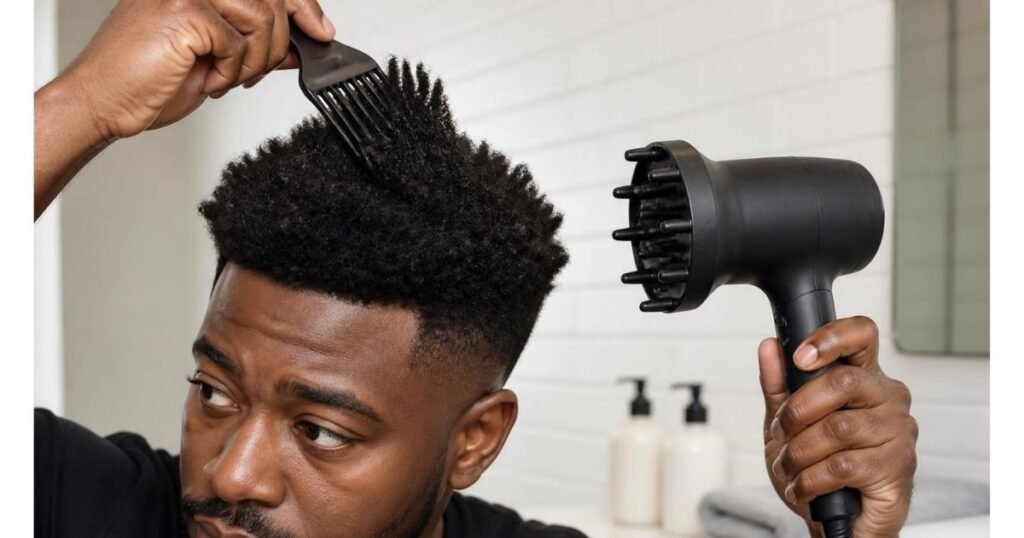
The right method depends on your texture and your goal, whether that’s defined curls or a lifted finish. These steps cover the usual approaches, and the details will vary.
1. Blow-drying Techniques for Volume
- Start with clean, moisturized hair. Dry, brittle hair is more prone to heat damage.
- Apply a heat protectant before using any heat.
- Use low to medium heat. Keep the dryer moving.
- Lift as you dry. A pick or a comb attachment can help stretch and raise the hair. A diffuser is an option if you want to keep more curl.
- Shape at the end. Use a pick or your fingers to round out the top.
You can work on damp hair for stretching, or dry hair for lift. Tighter coils, looser curls, and afro texture respond differently, so adjust the heat and tools to what your hair tolerates. If you notice dryness or breakage, scale back the heat.
2. Daily Curl Maintenance Tips
- Refresh with a light mist of water if hair feels dry.
- Use a leave-in or curl product to restore moisture and definition.
- Shape the top with your fingers or a pick.
Heavy products can weigh curls down, but that depends on your hair. Some people use gel for definition and find it works well, while others find it flattens volume. Start light and add as needed.
Read More About : Taper vs. Fade Haircut: Which One Should You Ask Your Barber For?
3. Keeping the Taper Clean Between Cuts
Generally safe to tidy: stray hairs along the neckline and around the ears.
Better left to a barber: reshaping the line-up, changing the neckline shape, or adjusting the taper itself.
A little tidying can make the cut look fresher, but there’s a risk of distorting the shape or irritating your skin. If you’re not confident with a trimmer, small, careful passes are safer than big ones.
Maintenance Tips for a Low Blowout Taper
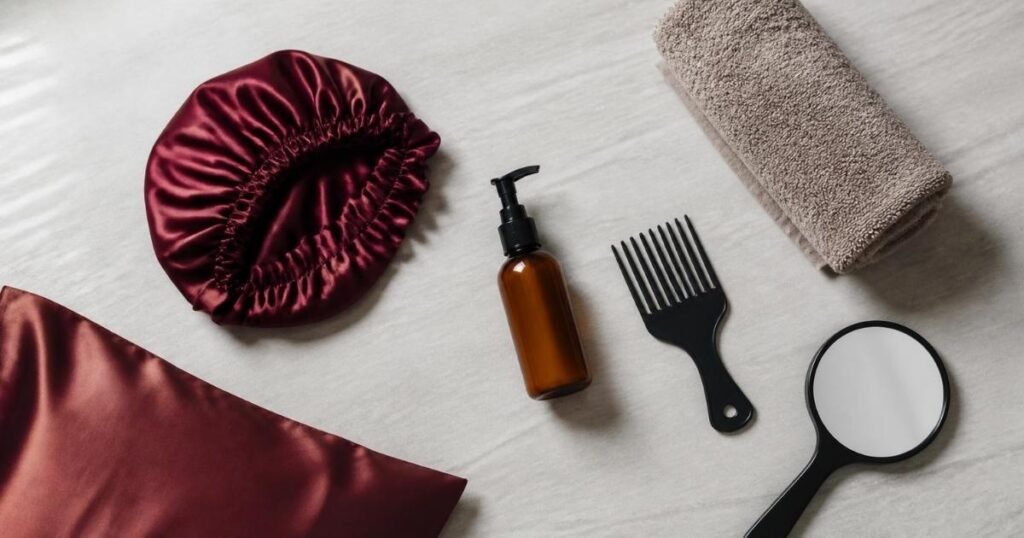
The upkeep depends on how fast your hair grows and how sharp you want the edges to look.
1. How Often to Trim
There’s no universal schedule. How often you need a refresh depends on:
- Your hair growth rate
- How crisp you want the edges
- Whether you wear a line-up or natural hairline
Signs you’re due:
- The neckline looks fuzzy
- The taper contrast is fading
- The edges look uneven
- The top has lost its shape
If you like sharp edges, you’ll likely notice these signs sooner. If you prefer a softer look, you can usually stretch the time between visits.
Read More About : Low Taper Fade: 25 Best Styles and Grooming Tips for Men
2. Protecting Hair Texture
- Moisture: Keep hair moisturized with products suited to your texture.
- Handling: Be gentle when detangling and shaping.
- Heat: Limit it, and use protection when you do use it.
- Scalp: Keep it clean and comfortable.
After close trims, some people get razor bumps or irritation along the neckline or edges. Gentle care, avoiding harsh products on freshly cut skin, and not over-trimming at home can help. If irritation is persistent or painful, it’s worth speaking to a doctor or dermatologist.
3. Maintaining Shape and Definition
Occasional shaping of the top keeps the silhouette even, and trimming split ends helps curls look healthier. As the cut grows, the style changes: the taper softens, and the top gets taller or heavier. Tell your barber how it grew out so they can adjust the next cut.
Protecting the Style While Sleeping
A satin or silk bonnet, scarf, or pillowcase can reduce friction and help hair hold moisture overnight. Results vary from person to person.
Fit matters if you want to keep height. A tight covering can flatten the top, so a looser scarf or a satin pillowcase may work better if volume is your priority.
Read More About : Burst Fade Haircuts for Men: Stylish, Modern Looks & Ideas in 2026
FAQs
What is a blowout taper for black men?
It’s a haircut with sides that shorten gradually, usually starting low, and a top left long enough to lift or shape. The “blowout” refers to the top’s volume. See the definition section above for the anatomy of the cut.
What is a blowout for African American hair?
A blowout is styling that gives the hair volume and lift. It can be done by blow-drying, picking out, or stretching the hair. Terminology varies, so a reference photo is the easiest way to show what you mean.
What is the best taper for black men?
There’s no single best taper. Low, mid, and high tapers suit different preferences, hairlines, and styles. A low taper keeps things softer, while a higher one is more dramatic. The comparison and decision sections can help you work out which fits you.
How Long Does Your Hair Need to Be for a Blowout Taper?
It depends on your texture, how much your hair shrinks, and how much lift you want. Because of shrinkage, hair can look shorter than it is, so a barber can judge better in person. See the length sections above for more.
Can You Get a Low Blowout Taper With Short Hair?
Yes, in a shorter, more textured form with less height. It won’t give you the same lift as a longer top, but it can still look shaped and tidy. See the short blowout style above.
How Often Should You Maintain a Low Blowout Taper?
It depends on your growth rate and how sharp you want the edges. The “signs you’re due” list in the maintenance section is a practical way to decide.
Can a Low Blowout Taper Work With Curls, Coils, or an Afro?
Generally, yes. The cut can be adapted to each texture, though they hold volume and definition differently. Curls may show definition, coils tend to look dense and compact, and afro texture can build a rounded shape. The texture sections above explain the differences.
Final Thoughts on the Low Blowout Taper for Black Men
The low blowout taper works by pairing a full, shaped top with softly tapered edges. Before you book, decide how high the taper should start, how much length to keep on top, and whether you want a natural hairline or a crisp line-up.
Bring photos from more than one angle, and match the upkeep to what you realistically want to do. If you’re still deciding, comparing it with a low fade or a mid taper is a good next step.

Jake Miller is a barbering and men’s hairstyle enthusiast who shares practical tips, haircut inspiration, and the latest grooming trends at BarberZylo. He enjoys exploring modern and classic hairstyles and helping readers find fresh ideas for their next look.