
Ivy League Haircut: 22+ Clean & Timeless Styles for Men
An Ivy League haircut keeps the sides and back short and neatly tapered, and leaves enough length on top to part and brush to one side. It’s tidier than a growing-out cut and has more styling options than a crew cut, which is a big part of why it works in offices, classrooms, and weekend plans alike.
This guide covers 22 variations of the cut, how they differ from each other, and how they compare with crew cuts, fades, pompadours, and tapers. It also covers what to say at the barbershop, how to style it, and how to keep it looking neat between visits. Hair type, density, and growth patterns change the result, so each version includes notes on what might affect it for you.
What Is an Ivy League Haircut?

At its simplest, an Ivy League haircut is a short, tapered cut on the sides and back with a longer top that can be combed or brushed, usually to one side. It sits between a crew cut (short all over, with the top only slightly longer) and a longer side-parted style.
The cut at a glance:
- Top: Long enough to part, sweep, or brush. Many barbers work somewhere around 1 to 3 inches (roughly 2.5 to 7.5 cm), but the right length depends on your hair.
- Sides and back: Shorter and tapered, using clippers, scissors, or both.
- Part: Usually a soft side part, though a defined hard part is a common option.
- Finish: Anywhere from polished and combed to loose and textured.
- Styling effort: Often low to moderate, depending on hair type and the version you choose.
A note on names. The “Ivy League” label points to the group of northeastern US universities and the collegiate grooming look associated with them, particularly in the mid-20th century. That’s the usual story, but it’s hard to pin the cut to one origin, and barbers don’t use the terminology consistently. “Princeton cut” and “Harvard clip” are sometimes treated as the same thing as an Ivy League cut and sometimes as close relatives, usually a crew cut with a bit more length on top. Because of that overlap, bringing a photo to your appointment matters more than the name.
Length depends on hair type. Straight hair looks as long as it is. Wavy and curly hair springs up when it dries, so a top that measures 2.5 inches wet may look noticeably shorter in real life. That’s worth keeping in mind when you ask for length.
What to look for in a reference photo: a visible part line, how short the sides get, and where the taper begins.
22+ Best Ivy League Haircut Styles for Men
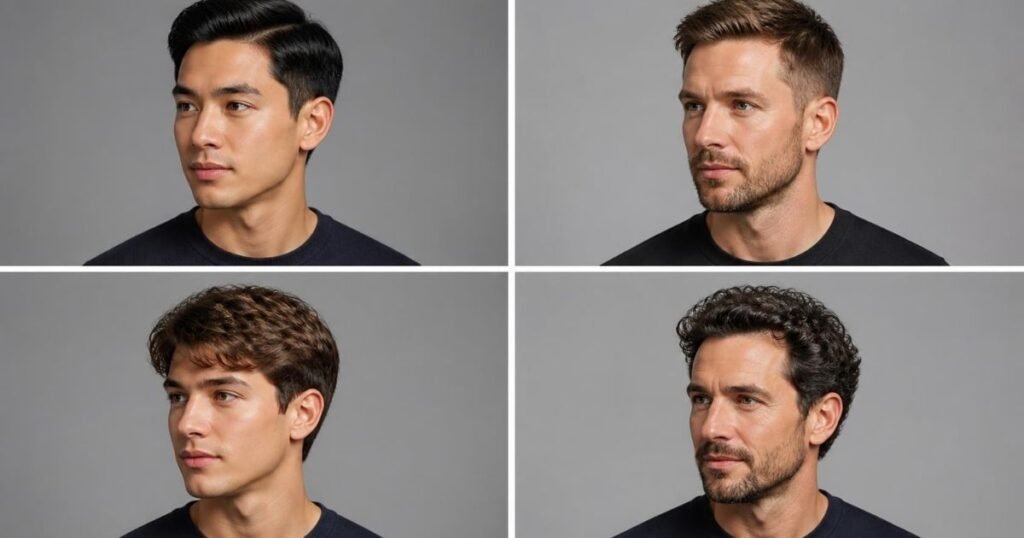
These are variations, not a ranking. Some stay close to the classic cut. A few, like the pompadour and undercut versions, borrow from related styles, and we’ll say where they drift. Barbers may label the same cut differently, so use the photos and descriptions here to communicate what you want, not just the names.
Find your version by what matters most:
- Side finish: 3, 4, 8, 10, 11, 21
- Top shape and texture: 1, 2, 9, 12, 14, 15, 22
- Hair type or concern: 6, 7, 13, 16, 18
- Face and facial hair: 17, 20
- Upkeep: 19
1. Classic Ivy League Haircut
This is the reference point for everything else: neat tapered sides, a soft side part, and a top brushed across or slightly up and over. The sides are short but not skin-close, and the length on top is enough to hold a part without needing much product.
Medium-density straight to slightly wavy hair tends to sit most naturally in this version. Very fine hair may flatten by midday, so a light styling product can help.
What to notice in the photo: the soft, slightly irregular part line (not a razored one) and how the top gradually meets the sides.
2. Modern Textured Ivy League
The difference here is built into the cut. Instead of one smooth length on top, the barber removes weight with point cutting or texturizing shears, so the hair separates into pieces instead of lying in one combed sheet.
That can help hair that tends to sit flat. It can also backfire on fine hair, where too much thinning leaves the top looking sparse. If you want to add texture without losing shape, ask for texture “on top only” and tell your barber how much hair you have to work with.
What to notice: the broken-up ends along the top edge, compared with the smooth line on the classic.
3. Ivy League with Taper Fade
This version focuses on how the sides blend. A taper fade keeps the shortening gradual, with the shortest hair around the sideburns, ears, and nape, and a softer progression above. Compared with a high or skin fade, it looks more conservative and tends to grow out more gently.
The terminology varies, and some barbers use “taper” and “fade” almost interchangeably. Ask where the shortest point will be and what clipper length they plan to use there. Dense hair can show blending lines more clearly, and strong growth patterns around the ears may affect how smooth the result looks.
What to notice: the blend zone at the temples and behind the ear.
4. Ivy League Fade Haircut
Choose this one if you want more contrast. Where the taper fade stays soft, a low or mid fade brings the sides visibly shorter, so the top stands out more.
The trade-off is upkeep. The sharper the contrast, the sooner it looks grown out. If you want to stay close to the Ivy look, a low fade with some length retained at the sideburns is a conservative starting point.
What to notice: how high the fade climbs on the side of the head.
Read More About : Buzz Cut Men: 32 Bold & Clean Haircut Styles for 2026
5. Ivy League Crew Cut
This is the shortest version that still earns the name. The sides are very short, and the top has just enough length to brush forward or into a small part.
It’s a good fit if you want a tidy look with minimal styling. The shorter the top, the less a part will show, so if you like a visible side part, this may feel too short.
What to notice: the top length relative to the sides. It’s only slightly longer.
6. Curly Ivy League Haircut
Curls change the equation. Hair that springs up as it dries looks shorter than it measures, so the top often needs extra length, and tapered sides keep the shape from widening.
A combed part usually isn’t realistic with curls. Instead, the shape comes from the cut, and a barber may carve a loose part or leave the curls to fall naturally. Cream or a light-hold gel helps define curls, and a wide-tooth comb or fingers are generally gentler than a fine comb.
With tighter coils, the result may read more as a shaped, tapered cut than a combed Ivy look. That can still be a good option, and it’s worth showing your barber photos on similar hair.
What to notice: how much volume sits on top compared with the tapered sides.
7. Long Ivy League Style
You can push the length well beyond the standard cut and still keep the structure, as long as the sides stay trimmed and the top is long enough to sweep or push back.
More length means more dependence on your hair’s behavior. Fine hair may need more help to hold shape, cowlicks become more noticeable, and trims matter more to keep the top from drifting into a longer, shaggier cut.
What to notice: the contrast between a long top and a clearly shorter side.
8. Short Ivy League with Hard Part
A hard part is a line cut or shaved into the hair to define the part. It looks sharper than a soft part and stands out, especially on shorter cuts.
The line fades as hair grows, so it may need touch-ups to stay crisp. Part placement also depends on your hairline and any front cowlick, so ask your barber to follow your hair’s natural direction.
What to notice: the clean line itself, and whether it follows the natural fall of the hair.
9. Brushed Up Ivy League
Here, the styling direction defines the look. The front is brushed up and slightly back instead of across, adding lift without the full height of a pompadour.
Thicker hair often holds lift easily. Finer hair may need a blow-dryer and a light product to hold it. It’s tidier than a messy finish and shorter and flatter than a pompadour.
What to notice: where the front hairline rises.
10. Side-Swept Ivy League with Low Taper
A low taper keeps the sides subtle, so the sweep of the top gets the attention. The taper starts low, near the ears and nape, and the rest of the sides stay short but not skin-close.
Because the taper is mild, it tends to grow out gradually. That makes it a practical middle ground for people who like a neat finish but don’t want to book appointments constantly.
What to notice: the low position of the taper and the soft transition above it.
Read More About : The Caesar Haircut: A Complete Guide for Men Who Want a Sharp, Low-Maintenance Look
11. Ivy League Undercut
This version moves furthest from the classic. A true undercut has sides noticeably shorter than the top with little blending in between, so the top looks disconnected.
An Ivy-style undercut usually keeps the longer top groomed and parted but with sharper contrast on the sides. That contrast needs more regular maintenance, and the lack of blending tends to show growth sooner.
What to notice: the visible step between the top and the sides.
12. Ivy League Pompadour
This is a related style, not a pure Ivy cut. The sides stay short and neat, but the top is long enough to lift and sweep back with volume.
It generally takes more styling effort than other versions, usually blow-drying and a medium-hold product. If you like the height but not the effort, a brushed-up Ivy League (9) is a lower-maintenance middle ground.
What to notice: height at the front, and how the top curves back.
13. Wavy Ivy League with Taper
Waves need enough weight to show their shape. If the top is too short, they can puff out. If it’s slightly longer, the waves lie more clearly.
Tapered sides keep the outline controlled. Light creams or a water-based pomade can define waves without stiffening them, and humid weather may change how much they spring.
What to notice: the wave pattern on top compared with the straighter, tapered sides.
14. Ivy League with Fringe
Instead of sweeping across, the front falls forward onto the forehead. It gives a softer look than a clean hairline, and it can suit people who like a relaxed, casual finish.
Hairline shape and forehead proportions affect how it sits, and a front cowlick may push the fringe in an unwanted direction. Trims help keep it from creeping into your eyes.
What to notice: how long the fringe is and where it ends relative to the eyebrows.
15. Messy Ivy League Look
This is about the finish, not the cut. It’s usually the same shape as other versions, styled loosely with fingers and a texturizing product instead of a comb.
For a polished haircut without excessive styling, a loose finish can actually be faster. The risk is going too undone: a light, matte product and a little structure keep it intentional.
What to notice: the separation of hair on top and the lack of a visible comb line.
Read More About : French Crop Haircut for Men: Best Styles & Guide (2026)
16. Ivy League for Thinning Hair
Short sides and a moderate top can reduce the contrast between thinner and denser areas, which some people find makes thinning less noticeable. It can’t conceal it, though, and results depend on where and how much hair is thinning.
Matte products tend to look more natural than shiny ones. Brushing hair up can expose the scalp more, so some people prefer a forward or sideways sweep. A barber can advise based on your pattern.
What to notice: how the top is arranged near the hairline or crown.
17. Ivy League for Round Faces
Some barbers use height on top and neat sides to create a longer visual line, and the Ivy League structure can do that. It’s one option among many, and proportions matter more than the face-shape label.
Beard shape, glasses, ear size, and how much height you add all influence the result. If you want to try it, ask your barber how much volume suits your proportions, and consider a photo of someone with a similar face.
What to notice: the balance of height on top against the width at the sides.
18. Ivy League for Asian Hair
This heading refers to a hair type often described as straight and thick, not to a single look, and hair varies widely within any group. If your hair is straight and strong, the cut can hold its shape well, but the sides may stick out as they grow and the top may sit heavy.
Texturizing can reduce weight, and a barber who regularly cuts thick, straight hair can help with taper placement. A matte clay or paste usually suffices for hold.
What to notice: how the sides lie flat against the head.
19. Low-Maintenance Ivy League
The easiest version is designed at the chair: a soft part (not a razored one), a moderate top, and gradual tapering instead of a high-contrast fade. These choices help the cut grow out without looking messy.
It still needs regular trims, and the top still needs a few minutes with a comb or fingers. Air-dry-friendly hair makes it easier. See the maintenance section for upkeep details.
What to notice: the soft part and gradual taper.
20. Ivy League with Beard
A beard changes what the sides need to do. The goal is usually a smooth transition from the sideburns into the beard, so the two don’t look separate.
Beard length matters. Short stubble pairs naturally with tapered sides, while a fuller beard may call for a little more length on the sides to keep the proportions even. A neat neckline and cheek line keep the whole look tidy.
What to notice: where the sideburns meet the beard.
Read More About : Modern Mullet Fade: The Complete Guide to Getting It Right in 2026
21. Military Ivy League Haircut
This is the most regimented option: very short, tight sides with sharply defined edges and a short, neat top. It’s close to a crew cut but with a combed, side-parted top.
If you’re in the service, check your branch’s grooming standards before trying any variation, since they differ and change.
What to notice: the tight edges and how little styling is needed.
22. Ivy League Comb Over
In this version, the top is combed to one side, usually with more length across than a classic side part. For hair that naturally falls to one side, it can feel effortless, because you’re working with the direction your hair already wants to go.
It differs from a hard part (8) in that no razored line defines it, and it differs from the classic (1) in having more length. A light-hold product gives it all-day hold without looking stiff.
What to notice: the direction of the sweep and how it follows the hair’s natural lie.
Who Should Consider an Ivy League Haircut?
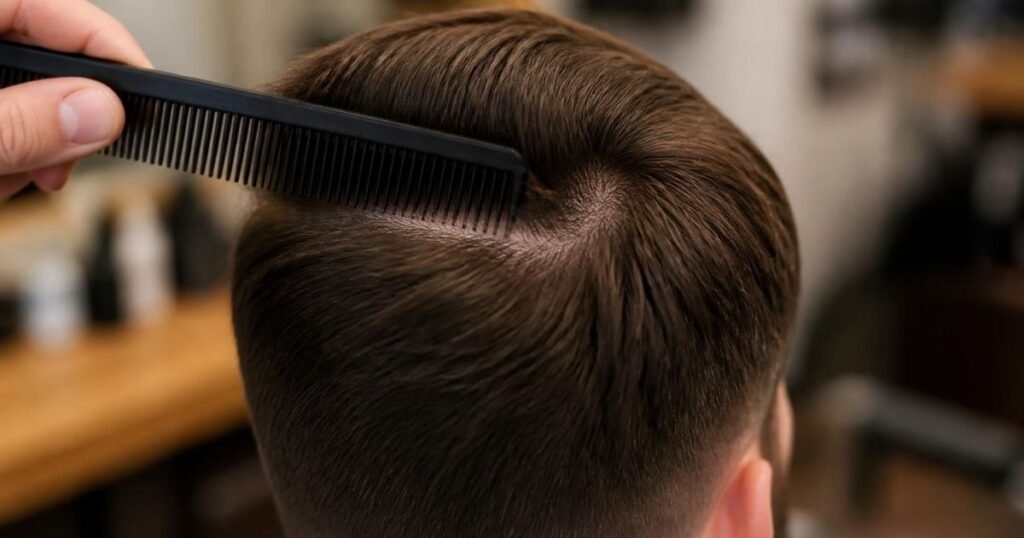
It tends to suit people who want a neat, structured cut that still looks natural, and who don’t mind a few minutes of styling. It can also work as a smart hairstyle for the office that relaxes easily on weekends, though that depends on how you style it.
What to weigh:
| Factor | What to consider | Worth asking your barber |
| Hair type | Straight and wavy hair hold the shape most easily. Curly and coily hair may need more length and a different approach. | “How would this work with my curl pattern?” |
| Density | Thick hair may need thinning for weight. Fine hair may need a lighter cut and product. | “How much texture can my hair take?” |
| Hairline and growth | Front cowlicks and receding hairlines affect where a part sits. | “Which side does my hair want to fall?” |
| Face proportions | Height and side width change how the cut reads on different faces. | “How much height suits my proportions?” |
| Upkeep | Sharper fades need more frequent visits. | “How will this grow out?” |
| Styling habits | Some versions need blow-drying, others don’t. | “How long should my morning routine take?” |
You may enjoy it if:
- You want a clean-cut look without very short hair
- You like a side part or a brushed finish
- You want one cut that adapts from work to weekends
You may prefer something else if:
- You want no styling at all (a shorter crew cut may be easier)
- You like very bold contrast (a skin fade with a textured top may fit better)
- Your hair grows in a pattern that fights a side part
Ivy League Haircut vs Other Popular Styles
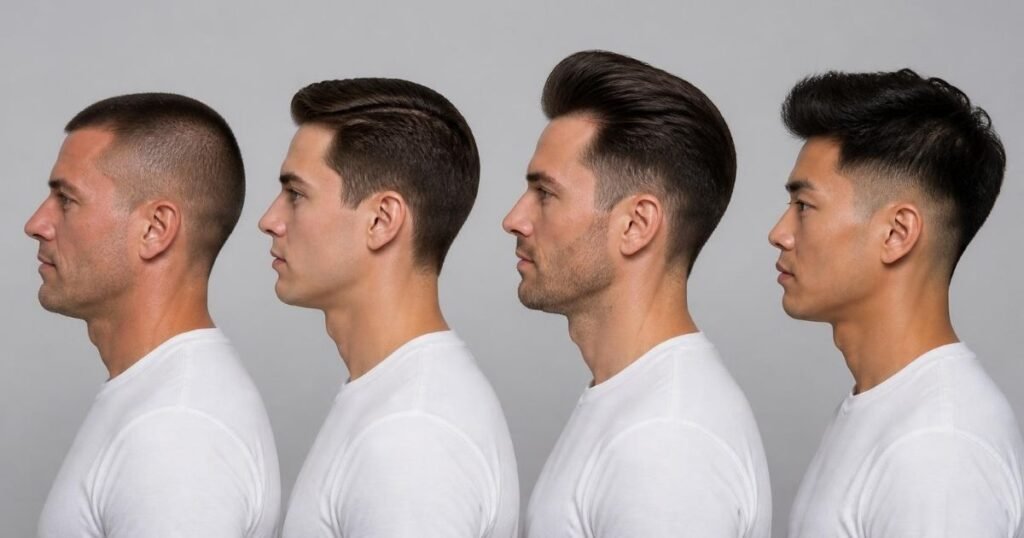
Fades and tapers are techniques for the sides, while Ivy League, crew cut, and pompadour describe the overall shape. That’s why the comparison isn’t always either/or.
| Top length | Sides | Styling feel | Upkeep feel | |
| Ivy League | Moderate, can be parted | Short, tapered | Combed to brushed | Moderate |
| Crew cut | Short | Very short | Minimal | Lower |
| Fade | Any | Gradually shortens, sometimes to skin | Depends on top | Often higher |
| Pompadour | Long | Short | Lifted, swept back | Higher |
| Taper | Any | Gradually shortened | Depends on top | Moderate |
Ivy League vs Crew Cut
The main difference is top length. A crew cut is short all over, with just enough on top to stand or lie forward. An Ivy League cut leaves more length so you can part or sweep.
The two overlap: a crew cut with a longer top can look like an Ivy League cut, which is part of why terms like “Harvard clip” muddy the waters. If you want a visible part and a brush-over, lean Ivy. If you want minimal styling, lean crew.
Ivy League vs Fade Cut
A fade is a way of blending the sides, not a haircut itself. An Ivy League cut can include a fade, or use a gentler taper instead.
The practical difference is how visible the shortening is. A taper looks gradual and conservative, while a low or mid fade shows more contrast, and a skin fade shows the most.
Ivy League vs Pompadour
A pompadour is about height: the top is long enough to lift and sweep back, usually with heat and product. An Ivy League cut keeps more of a flat sweep and generally needs less styling.
If you like volume but want less effort, a brushed up Ivy League sits in between.
Ivy League vs Taper Cut
A taper describes how the sides get shorter. Ivy League describes the overall shape, including top length and part. You can have an Ivy League cut with a taper, but a taper doesn’t make a cut Ivy League.
Barbers use “taper” differently, so describe the result you want, such as short at the ears and gradually longer above.
Why Does the Ivy League Style Remain a Top Choice?

Part of the appeal is practical. The cut works across a range of lengths and finishes, from combed and polished to loose and textured, so you can adjust it to your hair and your day.
It also sits comfortably in many settings. A neat part and tapered sides suit offices and formal events, and a looser finish can make a traditional haircut look less formal on weekends. That flexibility is why it’s a common request, though it doesn’t make it right for everyone, and some hair types and growth patterns take more work.
Finally, it’s easy to explain to a barber, especially with a photo, and it grows out in a way that’s easy to manage.
How to Ask Your Barber for an Ivy League Haircut?
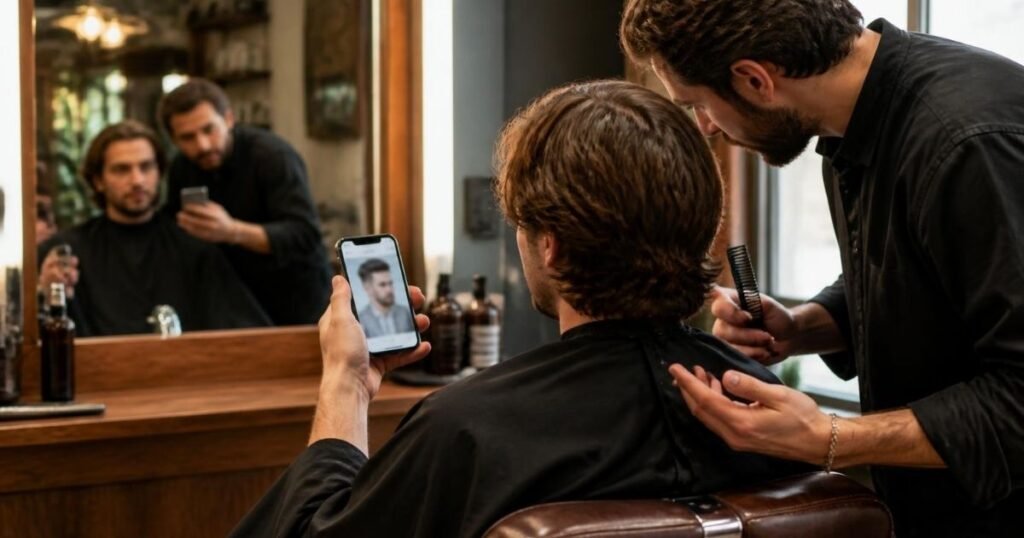
No single phrase guarantees the same result at every shop, so the goal is to describe the cut and show a photo.
Decide before you go:
- Top length: Show with your fingers or a photo. Remember wavy and curly hair looks shorter dry.
- Side finish: Gradual taper, low fade, or something sharper.
- Part: Soft or hard, and which side. Let your hair’s natural direction guide you.
- Neckline: Natural or squared. A natural line tends to grow out more gently.
- Texture: Smooth and combed, or textured and loose.
- Styling expectations: Tell them how much time you’ll spend each morning.
Scissors or clippers? Clippers are quick and precise for short sides. Scissor-over-comb gives a softer, more natural blend, particularly on longer sides, but takes more skill and time. Some barbers use both. If you’re unsure, ask which they recommend for your hair.
Guard lengths. Clipper guards are numbered, and a #2 is about 6 mm (1/4 inch) on most standard sets. Numbers and naming vary between brands and between the US and UK, so describing the result is safer than relying on a number.
A sample script:
“I’d like short, tapered sides and about [show length] on top, with a soft side part on the left. Keep the taper gradual, not skin. I’d like some texture on top but I don’t want it too thin. Here’s a photo of what I’m after.”
For curly hair, add: “My hair springs up when dry, so please leave extra length on top and keep the sides tapered.”
Useful terms:
| Term | Meaning |
| Taper | Sides that gradually get shorter toward the neckline and sideburns |
| Fade | A more pronounced gradual shortening, sometimes down to skin |
| Soft part | A natural part created by combing |
| Hard part | A part line cut or shaved in |
| Point cutting | Cutting into the ends for texture |
| Neckline | The shape of the hair at the back of the neck |
A good barber may ask about your hairline, cowlicks, and daily routine. Answer honestly, since it affects what they recommend.
How to Style an Ivy League Haircut at Home?

Styling effort depends on the version. A soft part with a combed finish takes a couple of minutes, while a brushed up or pompadour-style top takes longer. Hair type matters too, since straight hair usually holds a part more easily than curls do.
Styling Products You’ll Need
| Product type | Finish and hold | May suit |
| Lightweight styling clay | Matte, medium hold | Textured finishes; thicker hair |
| Water-based pomade | Soft sheen, flexible hold | Combed finishes; easy to wash out |
| Matte paste | Low shine, medium hold | Everyday styling |
| Sea salt spray | Texture, light hold | Adding grip to fine hair |
| Curl cream | Definition, soft hold | Wavy and curly hair |
Tools: a fine-tooth comb for parts, a brush for lift, and a hair dryer if you want volume.
Step-by-Step Styling Guide
- Start with towel-dried or damp hair. Products work more easily on slightly damp hair.
- Add lift (optional). Dry the front with a hair dryer, brushing up and slightly across. This is how to keep the top from looking flat.
- Warm a small amount of product. Rub it between your palms.
- Apply from back to front. Work through the hair, finishing at the front.
- Set the part. Comb it where your hair naturally falls. If it falls to one side, work with that.
- Finish the shape. Sweep, brush up, or loosen with your fingers.
Adjusting for your hair:
- Fine hair: Use less product, and consider sea salt spray for grip.
- Thick hair: Use a firmer product, and ask your barber about thinning weight.
- Wavy or curly hair: Apply curl cream to damp hair and avoid fine combs.
- To add texture without losing shape: Use matte clay and finger-style only the top.
- To make it less formal: Skip the comb and use your fingers.
How to Maintain an Ivy League Haircut
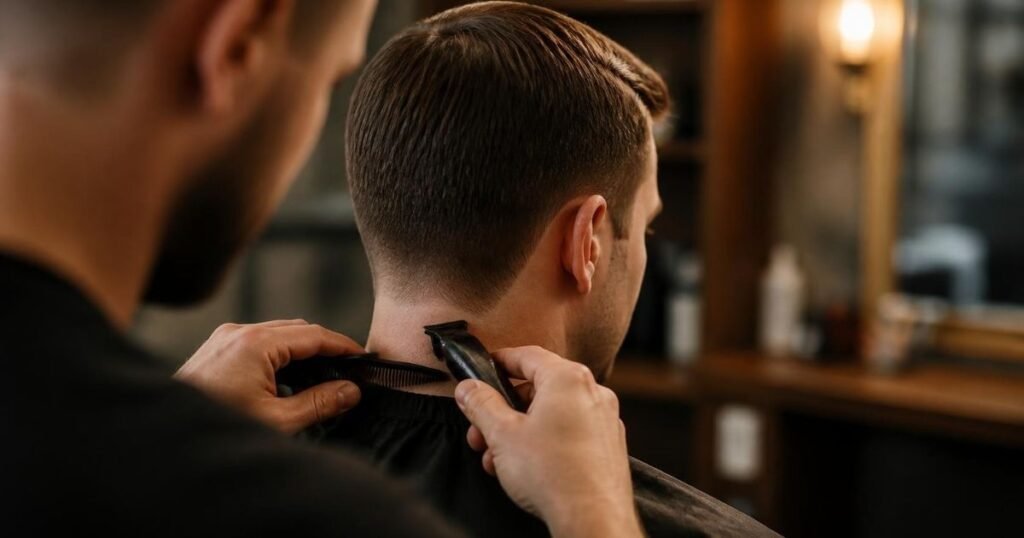
There’s no single schedule that works for everyone. How often you need a trim depends on:
| Factor | How it affects upkeep |
| Growth rate | Faster growth shows sooner |
| Side finish | Sharper fades and hard parts look grown out sooner than gradual tapers |
| Hair type | Waves and curls may widen as they grow |
| Part style | A razored part loses definition faster than a soft part |
| Your standards | Some people prefer a sharp edge, others prefer a gradual grow-out |
Your barber can suggest a range for your hair. Keeping the sides neat as hair grows usually means a quick tidy-up at the neckline and sideburns between full cuts.
At home, wash regularly, condition if your hair is dry, and rinse out product so it doesn’t build up. If you blow-dry, a heat protectant can help.
Final Tips for Pulling Off the Ivy League Look
- Work with your cowlick. Fighting one usually takes more effort than moving the part.
- Fix a flat top. Dry the front upward, and use a lightweight product instead of a heavy one.
- Avoid too much shine. A little goes a long way, and matte often looks more natural.
- Bring photos every time. They show your preferences better than words.
- Keep the neckline tidy. A clean back is a quick way to look polished.
- Match your grooming to the occasion. A combed finish suits formal settings, and a looser one suits casual ones.
FAQs
How long should my hair be?
Many barbers work with roughly 1 to 3 inches (about 2.5 to 7.5 cm) on top, with shorter tapered sides. The right length depends on your hair. Waves and curls look shorter when dry, so you may need more length. A barber can help you judge.
Is it suitable for curly or thinning hair?
It can be adapted for both. For curly hair, extra length on top and tapered sides help manage volume. For thinning hair, shorter sides and a moderate top can reduce contrast, though results depend on your pattern. Coily hair may suit a shaped, tapered version. See the curly and thinning hair entries above for details.
How often should I trim it?
It depends on how fast your hair grows and how sharp you like the sides. Sharper fades and hard parts show growth sooner than gradual tapers. Ask your barber for a range that fits your hair.
What is the difference between an Ivy League and a crew cut?
The top. A crew cut keeps the top short, while an Ivy League cut leaves enough length to part or sweep. They overlap, so a photo helps.
Can you get an Ivy League haircut with a fade?
Yes. Fades are a common choice for the sides, from a gentle low taper to a more visible low or mid fade. The more pronounced the fade, the further the cut moves from the traditional look.
Conclusion
Choosing an Ivy League haircut comes down to a few decisions: how long to keep the top, how the sides should blend, and how much styling you want. Your hair type, density, and growth patterns shape the result, and a good barber will adapt it to you.
Bring a photo, describe the finish you want, and be honest about your routine. Start with the classic if you’re unsure, and adjust from there.

Jake Miller is a barbering and men’s hairstyle enthusiast who shares practical tips, haircut inspiration, and the latest grooming trends at BarberZylo. He enjoys exploring modern and classic hairstyles and helping readers find fresh ideas for their next look.
2 Comments