
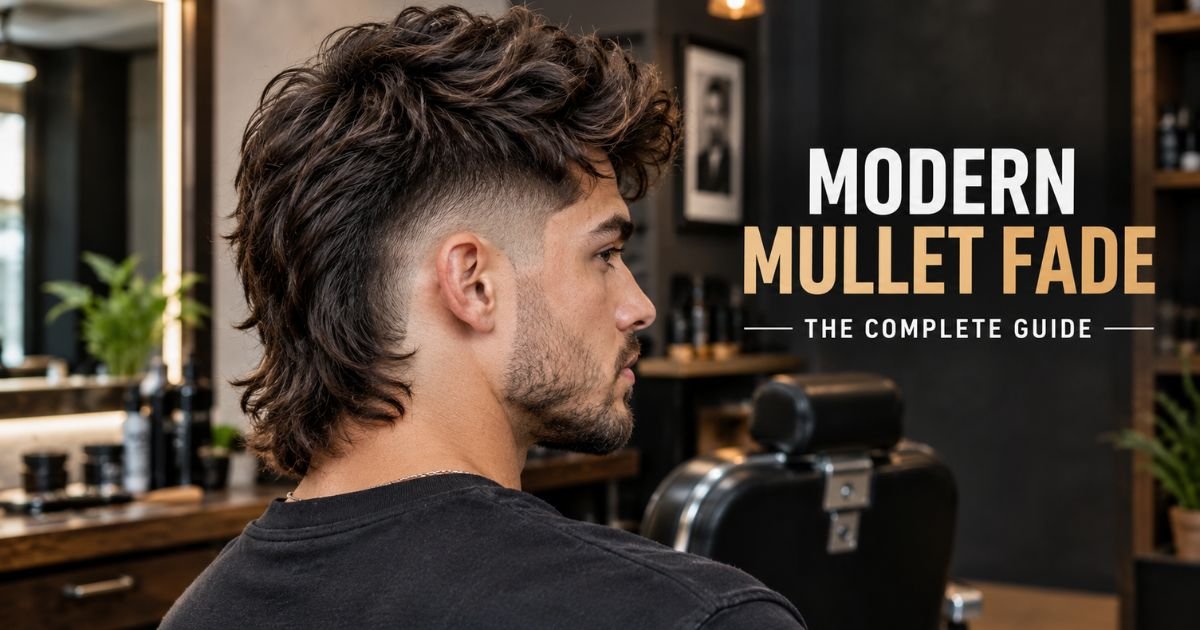
Modern Mullet Fade: The Complete Guide to Getting It Right in 2026
A modern mullet fade keeps the classic idea of a mullet, with more length at the back than on the sides. But instead of leaving the sides bulky or cutting them in a blunt step, it blends them down short with a fade. The result is a haircut that reads as deliberate rather than accidental.
This guide covers how the modern version differs from the traditional one, how fade height changes the look, how your hair type and face proportions may affect the result, and how long your hair needs to be. It also covers how to explain the cut to a barber, style it, and keep it looking good.
What is a Modern Mullet Fade anyway?
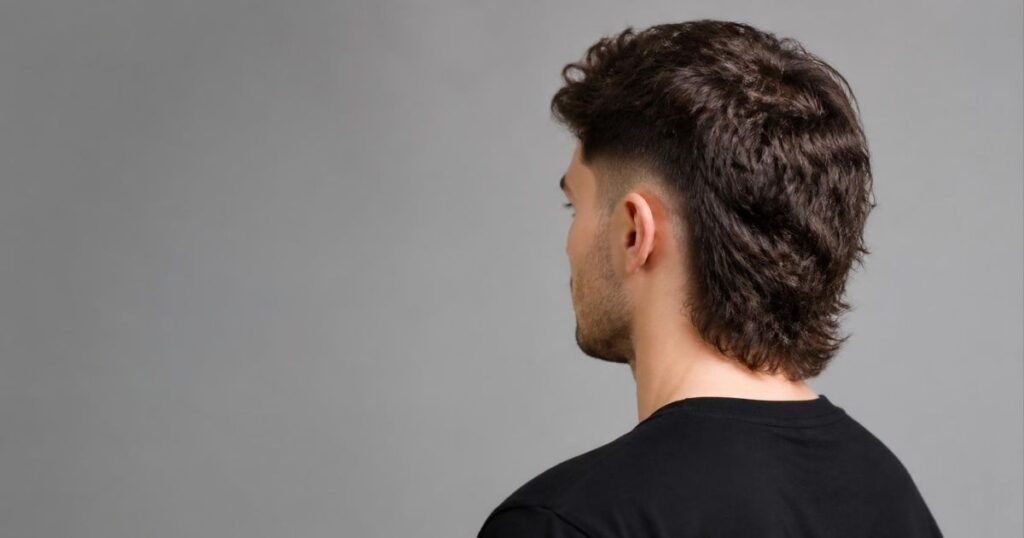
A mullet fade haircut has three connected zones:
- Top: Long enough to show texture, or to form a fringe (bangs) or a loose, swept shape.
- Sides: Blended short with a fade, meaning the hair changes gradually from very short near the ear and neckline to longer higher up, with no visible line between the two.
- Back: Noticeably longer, usually reaching at least the nape (the base of the skull where the neck begins), and often extending past it.
The easiest way to spot the cut is the contrast. Tidy, close sides sit next to a longer tail at the back. People also call it a fade mullet or a modern mullet haircut, and a mullet fade haircut for men can look quite different from one barber to the next.
“Mullet fade” describes a family of cuts rather than one exact haircut. Two people can ask for the same thing and leave with different results, depending on where the fade starts, how long the back is, and how the top is shaped. The rest of this guide is about making those choices on purpose.
Your hair density, texture, and growth patterns all influence the final look, so treat any photo as a target rather than a promise.
Modern Mullet Fade vs. Traditional Mullet
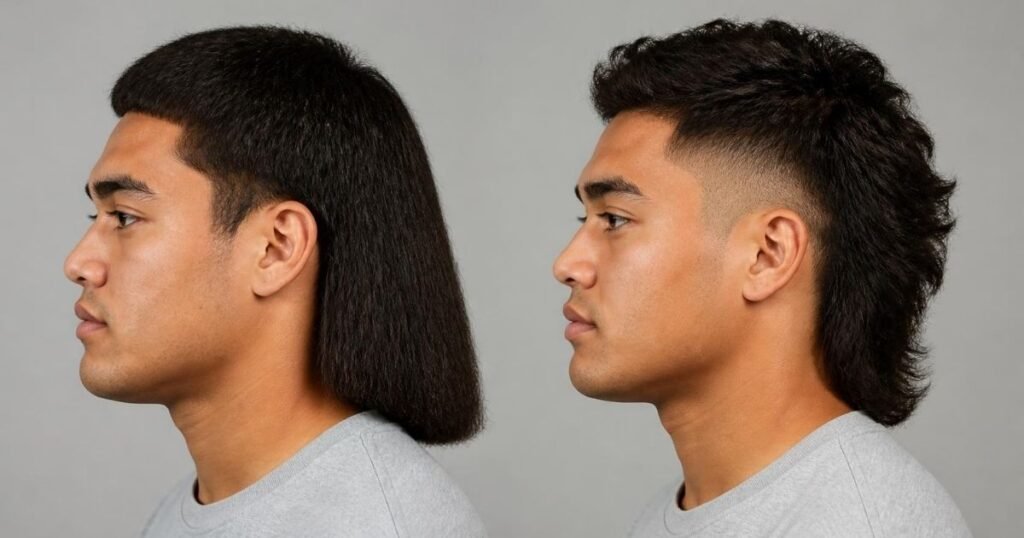
Most people picture the traditional mullet as a fairly uniform shape. The sides are cut short or left to blend into the back, and the hair hangs in one mass. A modern mullet keeps the short-front, long-back idea but changes how the pieces connect.
| Traditional mullet | Modern mullet fade | |
| Sides | Short or medium, often with a visible step to the back | Blended down short with a fade |
| Transition | Can look abrupt or boxy | Gradual, with no hard line |
| Back | Often one heavy, blunt mass | Usually layered so it moves |
| Texture | Often flat or uniformly cut | Commonly textured on top and back |
| Overall shape | Straight-down silhouette | Defined tail with a tidier head shape |
Neither is objectively better. Some people prefer the bolder, more retro look of a traditional mullet, and the modern version is simply a different approach to the same idea.
What Makes a Modern Mullet Fade Different?
The differences come down to how the hair is cut:
- Blended sides. Clippers, scissors, or both are used to soften the transition, so the sides don’t stop suddenly against the longer hair.
- Layering. The back is cut in different lengths so it has movement instead of hanging as one flat block.
- Weight removal. Barbers thin out bulk, often with texturizing shears or point cutting (snipping into the ends), so the hair sits and moves better.
- A shaped top. Instead of being left flat, the top is often textured, choppy, or cut into a fringe.
Density matters here. Thick hair may need more weight removal to avoid a heavy, boxy back, while fine hair may need less, since too much can leave it looking wispy.
How the Fade Changes the Overall Mullet Shape
Without a fade, long hair at the back often makes the whole head look like it’s growing outward. Fading the sides narrows the silhouette (the outline you see from a distance), so the back reads as a distinct tail rather than general length.
How much skin shows, and how high the fade starts, changes how “mullet-like” the cut feels. A soft, low blend keeps the head looking fuller. A high, tight fade makes the top and back stand out more.
The neckline matters too. This is the shape the hair makes where it ends at the nape. It can be natural (left as it grows), tapered (shortened gradually), or squared or rounded (cut to a defined shape). A squared neckline looks crisp but shows grow-out faster, while a natural or tapered one usually looks softer as it grows.
Ear prominence and head shape at the back can also change how the finished silhouette reads, which is another reason to look at photos from several angles.
Read More About : Types of Fade Haircuts for Men: 50+ Skin Fade Hairstyles to Try in 2026
Many mullet fade variations have become popular in recent times.
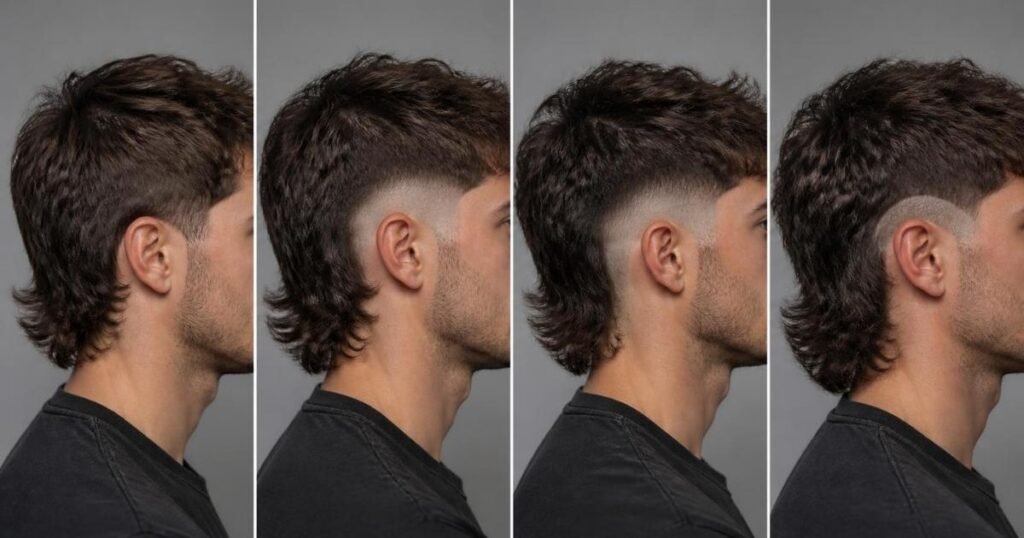
Mullet fade styles differ mainly in where the blend begins and what shape it follows. Barbers place these differently, so treat the heights below as approximate zones rather than exact rules.
| Variation | Roughly where the blend starts | Contrast level | Upkeep demand | May appeal to people who want |
| Low fade mullet | Just above or around the ear, following the hairline down | Lower | Lower | A softer transition |
| Mid fade mullet | Around the temple area, roughly halfway up the sides | Medium | Medium | A clear fade without going bold |
| High fade mullet | Higher, near or above the temples | Higher | Higher | Strong contrast |
| Burst fade mullet | Curves around the ear in a semicircle | Varies with the starting height | Medium | A shaped, ear-framing blend |
Fade height interacts with head shape, hair density, and hairline, so the same fade can look different on different people. The sections below add detail and barber language without repeating the table.
Low Fade Mullet
A low fade mullet starts its blend around or just above the ear and follows the natural hairline down toward the nape. Because the short zone is small, the sides sit closer in length to the top, and the longer back carries most of the character.
That lower contrast is why some people treat it as an easy entry point. The trade-off is that it shows the least fade, so someone wanting a sharp, high-contrast look may find it too soft. Hair density also affects how the hair sits around the ears, since thicker hair may need more shaping to avoid bulk there.
Mid Fade Mullet
A mid fade mullet begins its blend around the temple area, roughly halfway up the sides. It gives more contrast than a low fade and less than a high one, with a clear fade visible from the side while the top stays connected to the sides.
It’s often chosen as a middle ground, but ear position and head shape change how it sits. If you’re between low and mid, it may be worth asking your barber to show you on your own head where each would start.
Read More About : 300+ Low Fade Haircuts for Men: Find Your Perfect Style
High Fade Mullet
A high fade mullet starts its blend near or above the temples, leaving much more of the sides very short. This puts the focus on the top and back, so the longer hair reads as the main feature.
The trade-off is upkeep. The contrast is the point of the cut, so as the short hair grows in, the sharp difference softens quickly. A high fade also shows the shape of your head and ears more, which is worth considering before committing.
Burst Fade Mullet
A burst fade mullet differs in shape rather than height. Instead of running level around the head, the fade curves around the ear in a semicircle and usually leaves more length at the nape. That retained length is why it pairs so naturally with a mullet.
It can look especially natural with wavy or curly hair, because the extra length at the back gives the hair room to move. Some barbers start a burst low, mid, or high, so it helps to say where you want it to begin as well as the curved shape.
Taper vs Fade: A Quick Note:
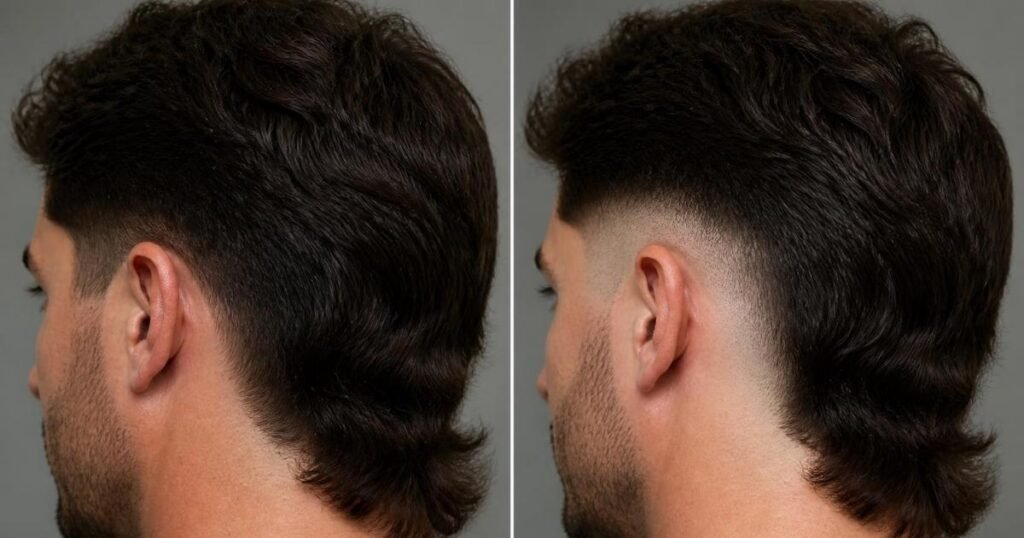
Barbers don’t all use these terms the same way, but the most common distinction is this:
| Taper | Fade | |
| Shortest point | Usually leaves some visible length | Often goes much shorter, sometimes to skin |
| Look | Softer, more conservative | More contrast, sharper |
| Grow-out | Tends to look tidy longer | Softens sooner |
A taper gradually shortens the hair toward the sideburns and neckline. A fade blends down to a very short length. A “taper fade” sits somewhere between the two, and that overlap is where the confusion starts.
A taper mullet is a subtler option, and it may suit you if you want a more conservative look or fewer visits. To avoid a mismatch with a barber, describe the result as well as the term: how short you want the shortest area, and where the blend should start.
Selecting the Perfect Modern Mullet Fade for Your Face Type
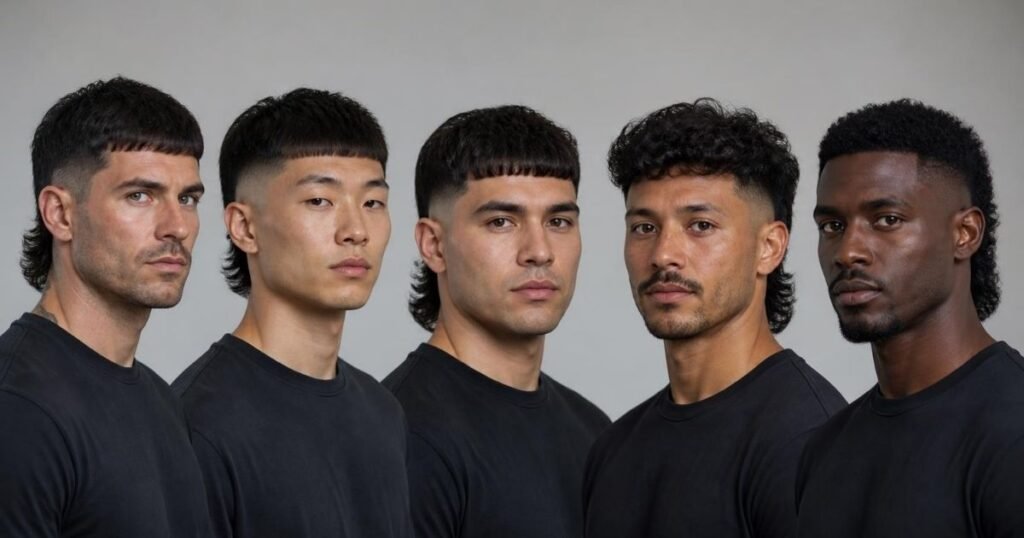
Face shape is a helpful starting point, not a rule. Hair characteristics, hairline, neck length, ear position, and beard all affect how a mullet fade looks. Many people also fall between shapes, and a barber can adjust fade height, top length, and back length to suit what they see.
The suggestions below explain what each choice does, so you can judge for yourself.
Modern Mullet Fade for Oval Faces
Oval faces are often described as balanced, so many fade heights and top styles may be worth trying. Your choice can come down to hair texture, lifestyle, and how bold you want to go. Forehead height and jawline still matter, so it’s worth checking photos against your own features rather than assuming anything works.
Modern Mullet Fade for Round Faces
The main consideration with a round face is width. A higher or tighter fade can reduce the width you see at the sides, and some height or texture on top can add vertical emphasis. Bulky sides tend to add width, so a barber might keep them cleaner. A longer back can also add a vertical line. These choices can help create the impression of a longer face, though density and shaping change how they turn out.
Modern Mullet Fade for Square Faces
With a strong jaw, softer texture or layering on top and at the back can contrast with the angles. A side fade also affects how wide the temples and jaw appear. Sharper, cleaner lines can work too if you like a bolder look, so this is more about the effect you want than a fixed rule.
Read More About : Top 40 Mid Fade Haircuts for Men: Fresh, Modern Styles to Try
Modern Mullet Fade for Oblong Faces
The main consideration is length. Extra height on top adds to the length of the face, while a fringe or a little more fullness at the sides can help balance it. A lower fade keeps more width at the sides, which some people use for the same purpose. Forehead height and head shape matter, so treat these as options to discuss.
Modern Mullet Fade for Diamond, Heart, and Triangle Faces
These shapes overlap, and a barber’s read of your actual face matters more than the label.
- Diamond: Cheekbones are the widest point, with a narrower forehead and chin. A fringe or some fullness at the forehead may help balance this.
- Heart: A wider forehead and narrower chin. A fringe can soften the forehead, and back length adds visual weight toward the lower half.
- Triangle: A wider jaw and narrower forehead. Volume or texture on top may help balance the jaw.
How Hair Type and Texture Affect a Modern Mullet Fade
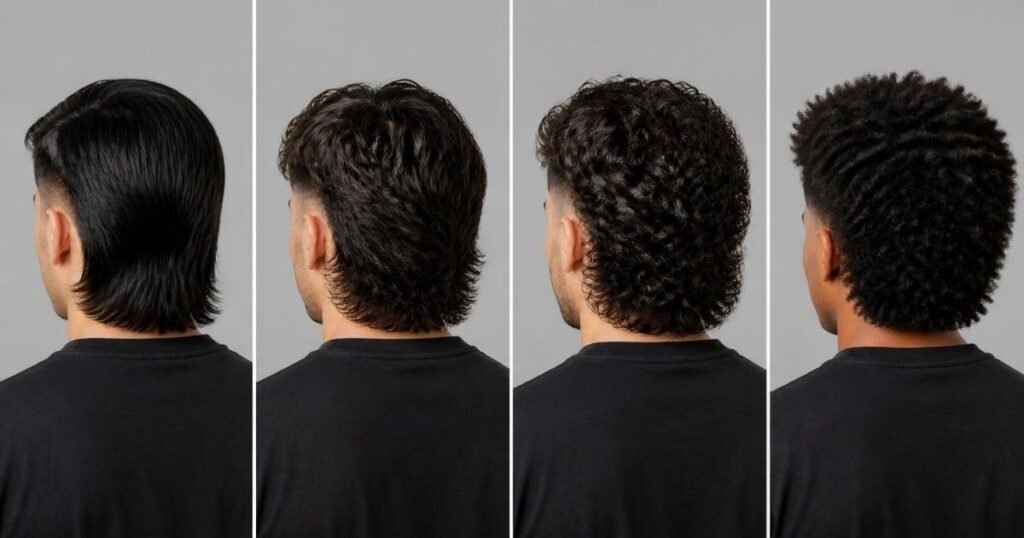
People often mix up texture, density, and strand thickness, but they’re separate:
- Texture: the pattern of the hair (straight, wavy, curly, coily).
- Density: how much hair you have per area of scalp.
- Strand thickness: whether individual hairs are fine, medium, or coarse.
Growth patterns matter as well. A cowlick (hair that grows against the direction of the rest) or a strong crown whorl can change how the top sits, and the direction of growth at the nape affects how the back falls.
| Hair type | What to expect | Worth discussing with your barber |
| Straight | Shows lines and blending clearly | Layers or texturizing for movement |
| Wavy | Natural movement, but waves can shift with length | How the back length affects the wave pattern |
| Curly | Volume, with shrinkage when dry | Cutting approach and how the curls will sit |
| Thick | Bulk builds at the back and sides | Weight removal and back shape |
| Fine or thin | Can look sparse at length | Keeping density at the back |
Modern Mullet Fade for Straight Hair
Straight hair shows everything: the blend, the layers, and any unevenness. Without layers, the back can hang flat or heavy, and fine straight hair may lose shape. Texturizing usually adds movement, and cowlicks or strong growth directions tend to be more visible. Strand thickness and density change the outcome, so it’s worth mentioning both.
Modern Mullet Fade for Wavy Hair
Waves give the top and back built-in movement, which many people find easier to work with. The catch is that waves can appear or disappear depending on length. Hair that waves at four inches may lie flatter when cut shorter, so back length and top length affect how the cut looks.
Read More About : High Fade Haircuts: What They Are & The Best Versions For 2026
Modern Mullet Fade for Curly Hair
Curls add volume and shape, and the same haircut can look quite different wet and dry because curly hair shrinks as it dries. A barber’s approach can matter, such as cutting dry or with your curl pattern in mind. Frizz and curl definition also affect the outline. Tighter or coily textures may benefit from a barber experienced with them, since layering and weight removal work differently on those patterns.
Modern Mullet Fade for Thick Hair
Thick or dense hair can build bulk at the back and sides. A fade helps reduce bulk at the sides, but a heavy back can look boxy without weight removal. No single fade height is right for every thick-haired person, so this is something to discuss with your barber.
Modern Mullet Fade for Fine or Thin Hair
“Thin” can mean fine strands, low density, or both, and they behave differently. Fine or low-density hair can look see-through at longer lengths, so heavy thinning at the back may work against you. Some barbers keep more density at the back, leave the top shorter or textured, and avoid over-thinning. For hairline and crown concerns, see the FAQs below.
How Long Does Your Hair Need to Be for a Modern Mullet Fade?
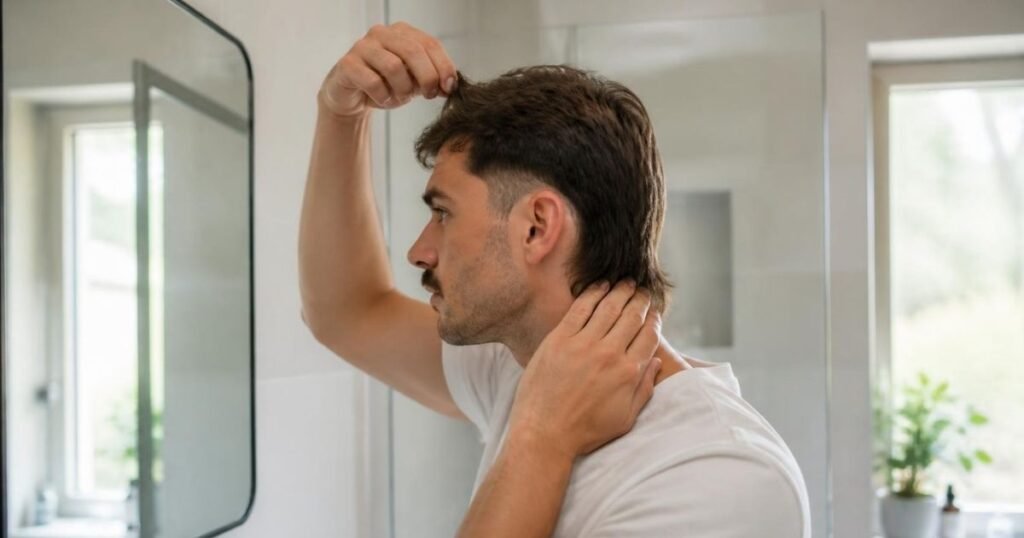
You don’t need much length on the sides, since they’ll be faded. What matters is the top and the back.
Top: Long enough to show texture or form a fringe. As a rough guide, somewhere around 2 to 4 inches (5 to 10 cm) gives a barber something to shape, though this depends on texture and what you want.
Back: At minimum, long enough to reach the nape. To read clearly as a mullet, it usually needs to extend past the nape toward the collar.
A quick self-check:
- Pinch the hair on top and see how much a barber could work with.
- Feel the hair at the back of your neck and see whether it reaches the base of your skull.
- If you have curls, remember they look shorter than they are until pulled straight.
If you’re not there yet, you have options. Your barber can create a shorter or starter version, fade the sides now, and leave the back to grow. You can also plan the growth around the look you want. Growth rates and texture change the timeline.
Is a Modern Mullet Fade Right for You?

Face shape and hair type aren’t the whole picture. Practical fit matters too. This cut may suit you if:
- You don’t mind a visible back that touches your collar.
- You’re comfortable with regular barber visits to keep the fade sharp.
- Your workplace or school dress code allows a longer back.
- You like some contrast and don’t mind a bit of styling.
You may want to think twice if you:
- Prefer a cut that needs almost no upkeep.
- Wear hats, helmets, or collars that press on the back of your head all day.
- Don’t want to go through the in-between phase of growing the back out.
One practical point: it’s easier to add contrast later than to grow length back. If you’re unsure, starting with a lower, softer version is a low-risk way to test it.
How to Style a Modern Mullet Fade at Home
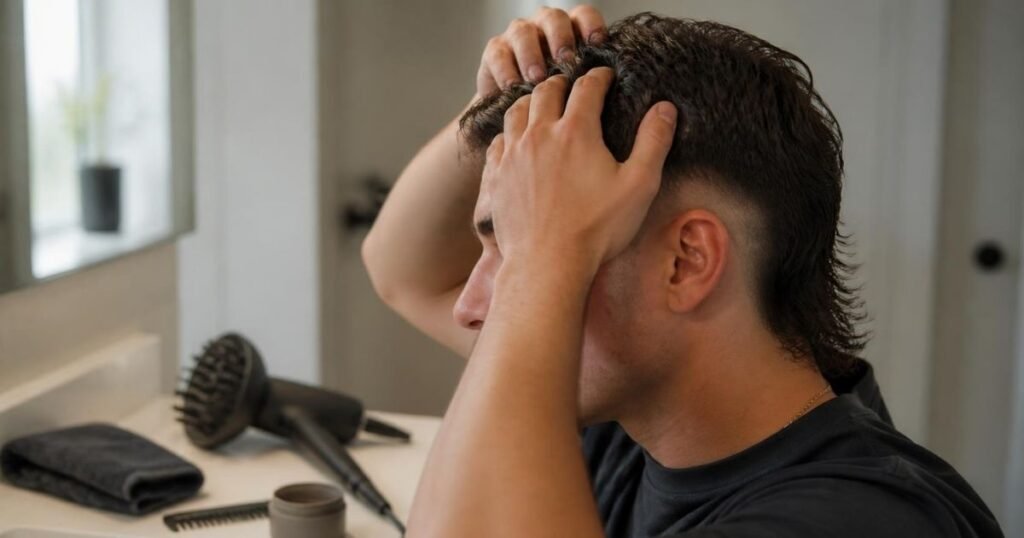
Daily effort depends on your hair type and how polished you want the cut to look. Here’s a base routine that works across most textures:
- Start with damp hair. Towel-dry until it’s no longer dripping.
- Apply a base product. Use a light product suited to your texture (see the table below), working it through the top and back.
- Shape the top. Use your fingers or a comb to push the fringe or top in the direction you want.
- Dry. Air-dry, or use a diffuser or blow dryer on low, keeping the airflow gentle so the back doesn’t flatten.
- Finish. Once mostly dry, add a small amount of matte clay, paste, or light cream for definition on the top.
| Hair type | Product ideas | Worth avoiding |
| Straight | Sea salt or texture spray, then matte clay or paste | Heavy pomade that flattens the back |
| Wavy | Curl cream or mousse, light wax or pomade on top | Over-brushing dry waves |
| Curly | Leave-in conditioner and curl cream | Heavy, shiny products that weigh curls down |
Go light at the back regardless of texture, since heavy products can flatten the length and make it look greasy. Density, strand thickness, and scalp oiliness all change how much product you need, so adjust rather than following a fixed recipe.
What to Tell Your Barber
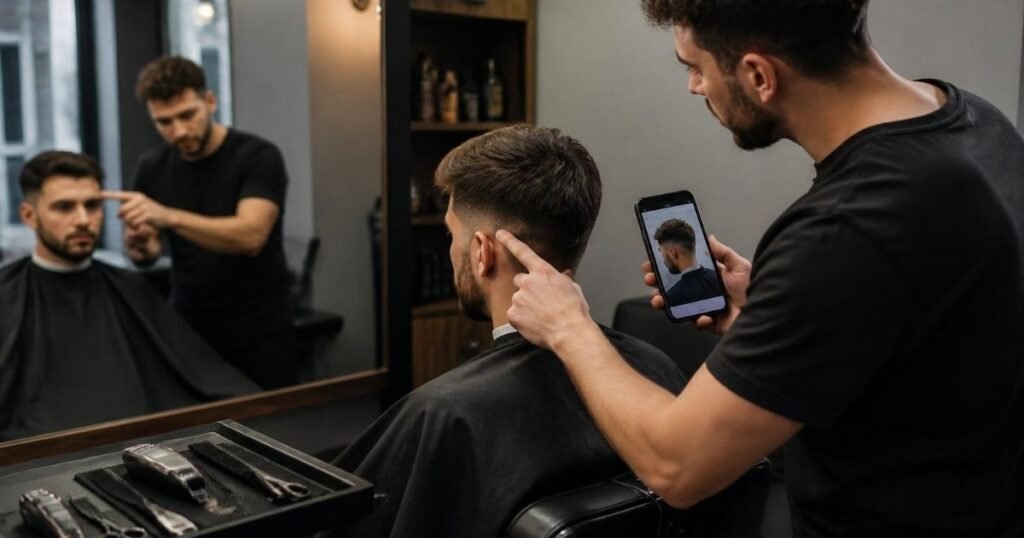
Walking in and saying “modern mullet fade” leaves a lot open, because barbers may interpret it differently. No single phrase guarantees the same result at every shop, so the more specific you are, the better. A short checklist before you sit down:
- Where the fade should start
- How short the sides should go
- How long the back should be
- What the top should look like
- Any concerns about your hair (cowlicks, thinning, curls)
How to Describe the Fade
Say where you want the blend to start (low, mid, high, or a burst curve) and how short the sides should go, whether that’s down to skin, very short, or short with visible stubble. Mention whether you want a soft blend or a sharper contrast. Because “taper” and “fade” mean different things to different barbers, describe the result as well as naming the technique.
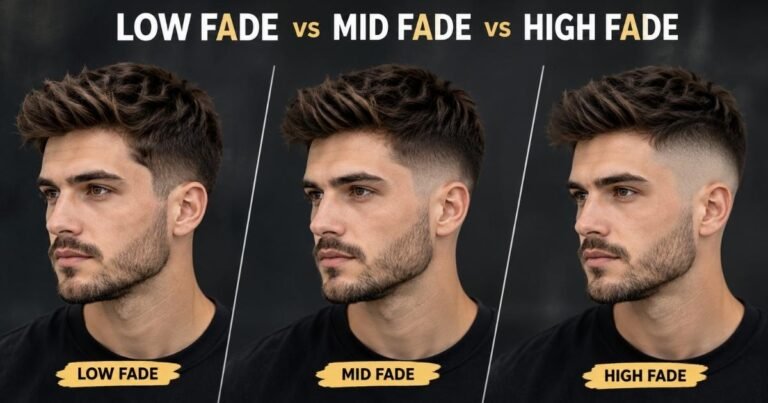
Read More About : Low Fade vs Mid Fade vs High Fade: What’s the Key Differences and Which Suits You Best?
How Much Length to Leave on Top and in the Back
Use body reference points rather than guessing at inches:
| Area | How you might describe it |
| Back | “Keep it to the nape,” “to the collar,” or “past the collar” |
| Top | “Long enough for a fringe,” or “keep enough to texture” |
Approximate measurements can be a useful second reference. Keep in mind that curly hair looks shorter than expected, and it’s easier to trim more later than to add length back.
How to Communicate the Shape and Texture You Want
Length isn’t the only thing that defines the cut. A few useful terms:
- Layered vs. blunt: whether the back has staggered lengths or one solid edge.
- Textured vs. smooth: choppy, lightly cut ends versus a cleaner finish.
- Neckline: natural, tapered, squared, or rounded.
- Top style: fringe, side-swept, or pushed back.
Also mention anything about your hair that could change the plan, like a cowlick at the front, waves that appear at certain lengths, or thinning.
Why Reference Photos Can Help
Words leave room for misunderstanding, and photos narrow it down. A few tips:
- Bring photos from the front, side, and especially the back, since most mullet photos show only one angle.
- Pick examples where the hair texture and density look similar to yours.
- Point out what you like (the fade, the back, the top).
- Ask your barber whether the look is realistic for your hair.
A photo shows a target, but your own hair determines the result.
Maintenance and Upkeep
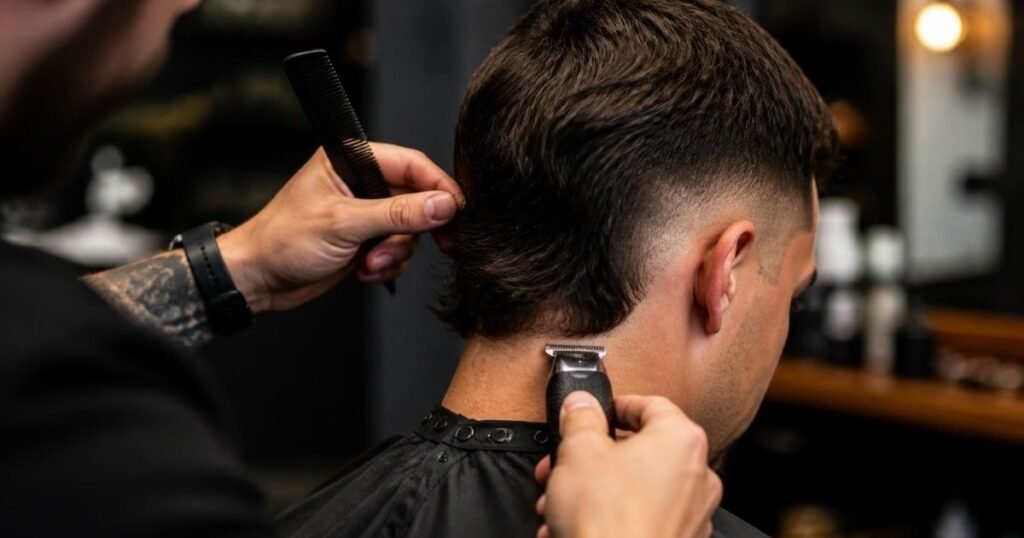
The cut has two parts that need different care. The faded sides lose their crispness first, while the longer top and back need care but less frequent cutting. How often you need a visit depends on how tight the fade is, how fast your hair grows, and how sharp you want it to look.
| Area | What to watch for | What a barber can do |
| Fade | Sides look fuzzy or overgrown | Refresh the blend |
| Neckline | Edges lose definition | Clean it up |
| Back | Ends dry, shape gets heavy | Trim and reshape |
| Top | Fringe gets too long | Retexture or shorten |
Maintaining the Fade
Fades soften as the short hair grows in, and a higher, tighter fade shows this sooner than a low or soft one. A clean-up usually covers the fade, around the ears, and the neckline. Signs it’s time include a fuzzy blend, a lost neckline, and side hair that has started to touch the top. As a very rough guide, average hair growth is about half an inch (around 1.25 cm) a month, but individual rates vary. Ask your barber what interval suits your specific fade.
Managing the Longer Back and Top
Longer hair needs fewer cuts but more care. Watch for dryness and split ends at the back, tangles, and a shape that gets heavy as it grows. Conditioning, gentle detangling, and keeping heat styling moderate all help. If you wear a fringe, the top may need reshaping more often than the back.
Read More About : Taper vs. Fade Haircut: Which One Should You Ask Your Barber For?
Keeping the Shape During the Grow-Out Stage
There are two grow-out situations:
Growing the mullet out. As the back lengthens, there’s often an in-between phase where the sides, top, and back grow at different rates. Your barber can keep the sides faded and shape the top while the back catches up. Growth speed, texture, and starting length all affect how long this takes.
Growing out between cuts. This is the gradual softening of the fade as it grows. A low fade or taper tends to look tidier for longer, while a high, skin-tight fade shows growth sooner.
Styling and Daily Maintenance Considerations
This is about ongoing effort rather than steps (see the styling section above for the how-to). A few things to consider:
- Some cuts look fine with a quick air-dry and a little product, while others need daily styling.
- Sleeping can flatten or tangle the back, so a quick refresh in the morning may help.
- Hats and helmets can change the shape, and humidity can affect waves and curls.
- Product buildup can weigh down the back, so wash out product regularly.
Read More About : Low Taper Fade: 25 Best Styles and Grooming Tips for Men
Frequently Asked Questions
Can a modern mullet fade be used in the workplace?
Often, yes, though it depends on the workplace. The controllable factors are fade height, back length, and how neatly the cut is styled. A lower fade, a shorter or tidier back, and a clean neckline tend to read as more conservative. If you’re unsure, check your dress code. The “Is a Modern Mullet Fade Right for You?” section covers this in more detail.
Which hairstyles are best for a modern mullet fade?
There’s no single best pairing, but some top styles are commonly paired with it: a textured fringe, natural waves or curls on top, a loose swept-across shape, or a shorter crop-style top. A beard or clean-shaven face can also change the overall balance. See the hair type section for texture-specific detail.
What is the time frame for a modern mullet fade from scratch?
It depends on your starting length and how fast your hair grows. The back needs to reach the nape and then extend past it, while the sides can be faded at any point and the top can be shaped in the meantime. Growth varies, so ask your barber to estimate based on your current length, and see the length section and grow-out subsection for more.
Is it possible to get a modern fade with a balding crown?
It may be, depending on how much thinning there is and how the barber balances length and density. A blended side with more length on top might draw less attention to the crown, while longer hair over the crown can sometimes show it more. Bring photos and ask your barber what they’d recommend for your pattern of thinning.
Can a modern mullet fade work with a receding hairline?
It can, depending on the pattern of recession and how much density remains. A fringe or textured top may soften the hairline, while some fades can draw more attention to it. This is worth discussing with a barber, ideally with reference photos that resemble your hairline.
How often should you maintain a modern mullet fade?
It depends on the fade height, how sharp you want it, and how fast your hair grows. The sides usually show growth first. Ask your barber for an interval that suits your cut, and see the maintenance section above for what to watch for.
Conclusion
Three decisions shape a modern mullet fade: where the fade starts and what shape it follows, how long the back stays, and what the top looks like. Your hair type, density, hairline, and lifestyle influence each one, which is why the same photo can turn out differently on different people.
Before your next appointment, choose a few reference photos from several angles, note anything about your hair you’d want the barber to know, and be ready to describe the fade, the back length, and the top. If you’re not sure, a lower-contrast version is an easy way to try the cut, and a good conversation with your barber usually beats a perfect phrase.

Jake Miller is a barbering and men’s hairstyle enthusiast who shares practical tips, haircut inspiration, and the latest grooming trends at BarberZylo. He enjoys exploring modern and classic hairstyles and helping readers find fresh ideas for their next look.
2 Comments