

Wolf Cut vs Shag: The Real Differences and How to Choose the Right One
The wolf cut vs shag share a lot: both are layered, both look a little messy on purpose, and both get saved to the same reference folders. Barbers and clients also use the names loosely, so two people can ask for the same thing in different words, or for different things in the same word.
The short version: a wolf cut is built around a deliberate length contrast, with shorter, choppy layers through the crown and noticeably longer hair at the back. A shag spreads feathered layers more evenly through the whole head, so the shape reads as softer and more blended.
This guide covers the difference between wolf cut and shag in practical terms, then helps you work out which one fits your hair, your routine, and how you like to look. It also covers styling, grow-out, and how to explain what you want to a barber. If you only want the quick version, jump to the comparison table below.
What Is the Wolf Cut?

The wolf cut is a layered haircut with short, textured layers through the crown and top, and longer hair left through the back and nape. It borrows from both the shag and the mullet, and the defining feature is that the layers are meant to look somewhat disconnected, with a visible step in length between the top and the back.
Picture the shape from the side. The top has lift and a choppy, broken-up texture. Below it, the length drops away into longer, thinner ends at the nape, which is where the mullet influence shows. Unlike a classic mullet, though, the sides are usually left longer and blended rather than cut very short, and the overall effect is softer.
Some things vary a lot from one wolf cut to the next:
- How dramatic the contrast is. A subtle version keeps the crown and back close in length. A bolder one leaves a clear gap.
- The sides. They can be scissor-cut and blended into the layers, or tapered shorter, and some men pair the shape with faded sides.
- The fringe. It’s usually textured and uneven rather than cut in one smooth line.
You may also see the term “wolf shag.” Some barbers and clients use it as another name for the wolf cut, while others use it to mean a wolf cut with more shag-style blending. If you use it with a barber, a reference photo clears up what you mean.
Length matters too. Layers need something to work with, so very short hair may not show the shape properly. Exactly how much length you need depends on your hair type and how your barber approaches the cut, so it’s worth asking before the appointment rather than guessing.
What Is the Shag?
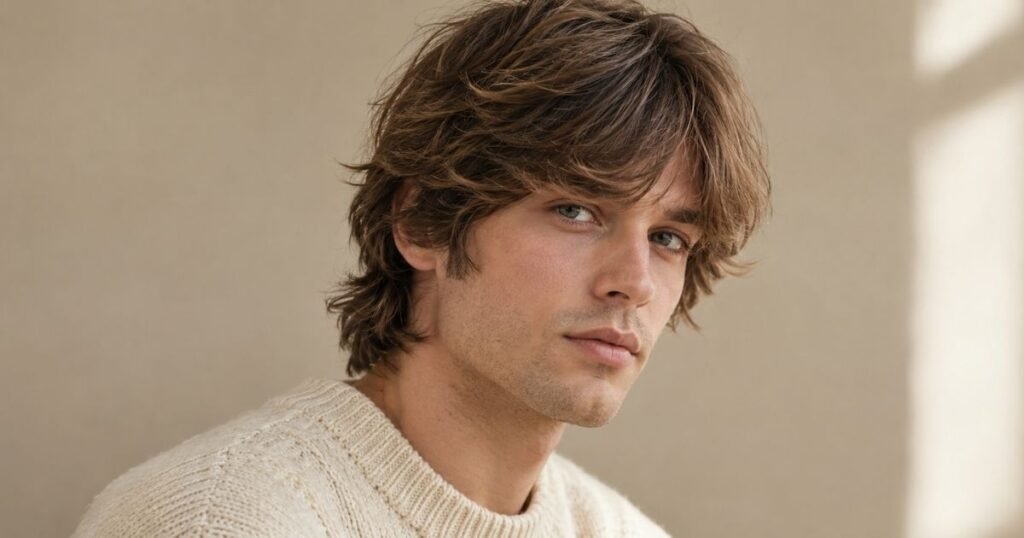
A shag is a layered cut with feathered, textured layers through the whole head, designed to create movement and a rounded, lived-in shape. Where the wolf cut relies on contrast, the shag relies on blending: the layers step down gradually, so there’s no obvious break between top and back.
The fringe is usually longer and softer than a wolf cut fringe. It’s often side-swept or parted in the middle and blended into the side layers, which is why shags and curtain-style fringes show up together so often. Around the ears and temples, shorter face-framing pieces connect the fringe to the rest of the cut.
A shag isn’t a single fixed look. It can be a subtle, medium-length layered cut with a little movement, or a very choppy one with strong texture and lots of volume. The common thread is that the layers flow into each other, and the ends look feathered rather than blunt.
Wolf Cut vs Shag: The Key Differences

These two cuts sit on a spectrum rather than in separate boxes, so the differences below are matters of emphasis. A shag with strong crown layers can start to look like a wolf cut, and a soft wolf cut can look a lot like a shag. When you’re comparing a wolf cut vs shag haircut in reference photos, these four things are the clearest tells.
Layer Placement
This is the biggest difference. In wolf cut vs shag layers, the question is where the shortest layers sit and how suddenly the length changes.
A wolf cut concentrates its shortest layers on the crown and top, then lets the back fall much longer. The step between the two is part of the design, which is why barbers often describe it as disconnected layering. A shag spreads graduated layers more evenly, so the length changes bit by bit from top to ends.
You may hear a few barbering terms here. Point-cutting means snipping into the ends with the scissors held at an angle to create a broken, textured edge instead of a straight line. Internal weight removal means taking bulk out from within the hair rather than just shortening it. Both can be used in either cut, though a wolf cut leans on them harder for its choppy crown.
In a reference photo, look for the transition. A sharp step from top to nape points to a wolf cut. A smooth, gradual slope points to a shag.
The Fringe
A wolf cut fringe tends to be chunkier and more textured, often cut in uneven pieces so it breaks up across the forehead. A shag fringe tends to be softer and longer, blending into the side layers.
Either cut can also be worn without a fringe, and the amount of forehead coverage is easy to adjust. If your hairline has a strong cowlick at the front or sits unevenly, tell your barber, because it affects how any fringe falls. Bangs and fringe mean the same thing, so you may see either word depending on where you live.
Read More About : Fringe Haircuts for Men: Best Styles, Tips & How to Pull Them Off
Silhouette
Silhouette is the outline you see at a glance. A wolf cut usually looks lifted and textured on top, then narrower and longer toward the back. A shag usually looks fuller and more rounded overall, with movement through the sides.
Hair texture can change this more than the name of the cut does. Dense or wavy hair adds width, while fine or straight hair lies flatter. When you look at reference photos, check the side and back views as well as the front, since the front alone hides most of the shape.
Styling Requirements
As a rule, a wolf cut tends to need more help from styling to look intentional. Its choppy crown and length contrast can look limp or uneven when the hair is left to dry on its own, especially on straight hair. A shag tends to forgive more, because the blended layers often settle into a reasonable shape even with minimal effort.
That’s a tendency, not a promise. Natural wave can do much of the work for either cut, and the barber’s execution matters as much as the cut name. The full routines are in the styling section below.
Wolf Cut vs Shag: Quick Comparison Table
| Wolf Cut | Shag | |
| Core idea | Deliberate length contrast between crown and back | Blended, feathered layers through the whole head |
| Layer pattern | Disconnected, choppy crown layers | Graduated layers that flow into each other |
| Crown vs back length | Noticeable step from short crown to longer back | Gradual change in length |
| Typical fringe | Textured, chunkier, often uneven | Softer, often side-swept or curtain-style |
| Overall shape | Lifted on top, longer and narrower at the back | Fuller, rounder, with movement all over |
| Styling effort | Often needs more help to look intentional | Often looks reasonable with less effort |
| Grow-out | Contrast may soften sooner | Layers tend to blend as they lengthen |
| Hair that may suit it | Waves or curls, or hair with some texture | A wider range, though results vary |
These are tendencies. The final result depends on your hair and how your barber adapts the cut.
Which Cut Works Best for Your Hair Type?
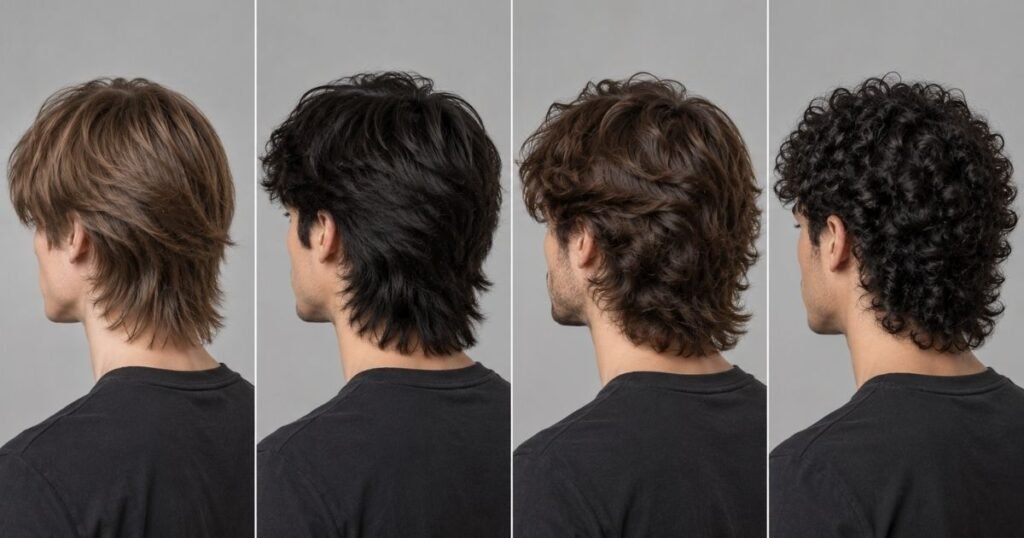
“Hair type” is shorthand. What really shapes the result is a mix of density (how many strands you have), strand thickness, wave or curl pattern, and growth direction. Two people with “fine hair” can end up with very different results if one has dense hair and the other has sparse hair.
So instead of declaring a winner for each type, the sections below describe what each cut asks of that hair and what to raise with your barber.
Fine Hair
The main concern with fine hair is ends that look see-through. Very short layers or heavy thinning can leave the ends looking wispy, which can make hair look thinner than it is.
When comparing wolf cut for fine hair vs shag, a shag often makes the gentler starting point, since its blended layers can add movement without removing much weight. A wolf cut can still work if the layers are kept soft and the barber leaves enough weight at the ends.
Fine strands aren’t the same as low density, so mention which one you have. Things worth discussing:
- Keeping the ends fuller instead of heavily thinned
- Whether thinning shears are needed at all
- How short the crown layers should be, given your density
Thick Hair
Thick or dense hair can feel heavy and look bulky, so layering and internal weight removal can help. A wolf cut can take bulk out of the crown and give thick hair a more defined shape. A shag can control volume while keeping the overall shape soft.
One caution: if too much weight is removed too aggressively, thick hair can turn frizzy or stick out at odd angles. It’s worth asking your barber how they plan to reduce bulk without making the hair look uneven. Straight thick hair and wavy thick hair also behave differently, so photos that match your hair help.
Read More About : 26 Stylish Middle Part Hairstyles for Men (2026)
Wavy or Curly Hair
Natural wave and curl give layers texture without much effort, and that’s why either cut can look good on wavy or curly hair. A wolf cut’s disconnected layers can bring out curl definition, while a shag keeps the shape more predictable.
The main thing to understand is curl shrinkage. Curly hair springs up as it dries, so layers can sit noticeably shorter than they looked when wet. Some barbers cut curly hair dry, or check the length as it dries, so they can see where each curl lands. That varies from barber to barber, so ask about their approach.
Waves, loose curls, and tight curls don’t all behave the same way, so describe your pattern specifically when you book.
Straight Hair
Straight hair shows every layer, so the cut either looks crisp or looks flat, depending on the texture the barber builds in and how you style it. For wolf cut vs shag for straight hair, a shag often looks more natural without effort, while a wolf cut tends to need regular styling to get the choppy, lifted look from photos.
That doesn’t rule out the wolf cut. It just means you should expect to use styling products, and you should tell your barber that your hair is straight so they can build in texture with point-cutting. Thick straight hair, fine straight hair, and straight hair with a front cowlick will each need slightly different decisions.
Shag vs Wolf Cut: Face Shape Compatibility
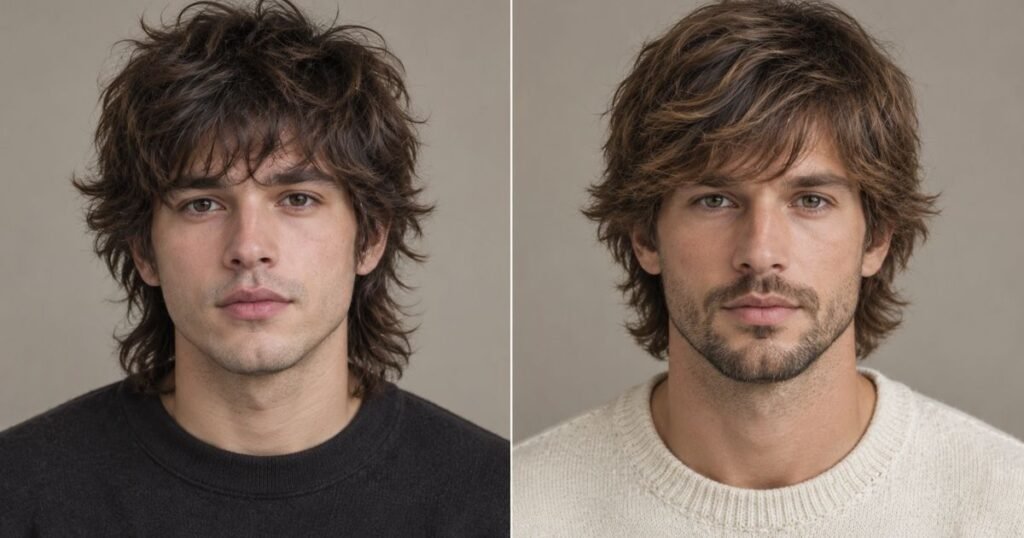
Face shape is one factor among many, and probably not the most important one. Your hairline, hair texture, beard, and the way your barber adapts the cut all influence how a haircut looks on you. Treat the table below as ideas to discuss, not as rules.
| Face shape | What may be worth considering |
| Oval | Balanced proportions mean either cut can be adapted fairly easily. Hair texture and lifestyle may matter more than face shape here. |
| Round | Lift at the crown and longer length at the back can add vertical emphasis, which is why a wolf cut may be worth a look. A shag with fuller sides can add width, so ask your barber how they’d manage that. |
| Square | Softer, face-framing layers and a textured fringe can soften a strong jawline. Either cut can do this, depending on how it’s shaped around the face. |
| Oblong | A fringe can shorten the look of a longer face. Too much height at the crown may exaggerate length, so a barber may suggest keeping volume more even. |
| Diamond | Fuller layers around the forehead and jaw can balance wider cheekbones. A fringe with some width may help, and the sides are worth discussing. |
| Heart or triangle | Side-swept or curtain-style fringe can soften a wider forehead, and fuller layers at the middle lengths can help balance a narrower chin. A shag may be easier to adapt this way, though a softer wolf cut can also work. |
A skilled barber can adjust either cut, for example by changing the length of the face-framing pieces, how much crown lift to leave, or how long the fringe sits. If you’re unsure, bring a photo of someone whose face proportions are similar to yours and ask what they’d change.
How to Style a Wolf Cut vs a Shag

The two cuts share some styling basics, so the sections below focus on what’s different. Routines vary with your hair type and length, and products are described by type rather than brand because many options work. When you compare wolf cut vs shag styling, the biggest difference is how much definition you need to add.
Styling a Wolf Cut
A wolf cut generally needs some texture and lift at the crown to look the way it does in photos. A basic routine:
- Start with damp hair. Towel-dry until it’s no longer dripping.
- Apply a prep product. A sea salt spray or lightweight styling cream adds grip and texture. Use a small amount first and add more if needed.
- Dry it with movement. Air-dry while scrunching, or use a diffuser on low heat. For more root volume, blow-dry the crown upward, away from your head, using your fingers.
- Finish at the crown and ends. Rub a small amount of texture paste or clay between your fingers and work it through the top and ends to separate the pieces.
- Adjust the fringe. Break it up with your fingertips so it falls unevenly instead of in a flat line.
If your hair is wavy or curly, you may need fewer steps, since natural movement does part of the work. If it’s straight, you may need more product and more drying effort, and some people use a curling iron for a light wave. That’s a personal choice, and plenty of people prefer to skip heat altogether.
Styling a Shag
A shag usually works best when you work with your natural movement and avoid over-styling it. A basic routine:
- Start with damp hair. Remove excess water with a towel.
- Use a light product. A light styling cream or mousse adds definition without stiffness.
- Let it dry mostly on its own. Air-dry it, scrunching the ends gently if you want more wave. Use a diffuser if you’re short on time.
- Place the fringe. Finger-style it to sit where you want it, whether that’s side-swept or parted in the middle.
Straight or fine hair may need a little more help to hold movement, such as a texturizing spray at the roots. How the layers look when the hair is air-dried will depend on your natural texture, so test the cut on a day when you don’t need to be anywhere.
Read More About : Curtain Bangs Haircuts for Men: Modern Styles and Ideas
Which Cut Should You Choose?
Neither cut is universally better, so the real question when deciding between a wolf cut or shag, and which is better for you, comes down to a few practical factors.
Think about how much styling you want to do.
- If you want something that looks decent with little effort, a shag may be easier.
- If you don’t mind spending a few minutes with product and a diffuser, a wolf cut may be worth it.
Think about your hair.
- Wavy or curly hair may suit a wolf cut’s disconnected layers.
- Fine or straight hair may be easier to manage with a shag’s blended layers, though a wolf cut can still work.
- Thick hair can work with either, as long as the barber manages weight carefully.
Think about how bold you want to look.
- A wolf cut makes a stronger statement because of its length contrast.
- A shag is typically softer and easier to wear in more settings.
Think about your environment.
- If you work in a conservative office or have a dress code, a softer shag, or a toned-down wolf cut with less contrast, may be easier to wear.
Think about maintenance.
- If you want to go a long time between appointments, a shag may grow out more gracefully, though this depends on how fast your hair grows. The next section explains why.
If you’re torn, a shag-style cut with slightly stronger crown layers is a common middle ground to discuss with your barber. You can always push it toward a wolf cut later.
Read More About : Mens Shaggy Hairstyles: 35 Effortless & Cool Looks
The Grow-Out Phase Nobody Talks About

A haircut doesn’t just need to look good on day one. It needs to look acceptable on day forty, too, and the two cuts age differently.
In a shag, layers merge as the hair gets longer. The shape loosens, but it usually still reads as a layered cut, which is why many people find a shag more forgiving between appointments.
A wolf cut depends on contrast, and contrast fades as the hair grows. The crown layers lengthen while the back keeps getting longer too, so the distinct step between top and nape starts to blur. In between, it can end up looking neither deliberately choppy nor neatly layered, and that’s the awkward stage.
How quickly this happens depends on a few things:
- How fast your hair grows
- How sharp or dramatic the original cut was
- How your hair texture hides or shows the change
- How much you care about keeping the exact shape
For that reason, I won’t give a fixed number of weeks. Ask your barber how long they think your particular cut will hold its shape on your hair, and plan the next appointment before you leave.
If you hit the in-between stage, you have options:
- A small tidy-up of the nape or tapered neckline can sharpen things without a full cut.
- A quick fringe trim can reset the front.
- A bit more texturizing product can help the crown look intentional again.
- Asking your barber to soften the shape toward a shag can ease the transition.
Read More About : Wolf Cut for Men: Best Styles, Tips & Inspiration (2026)
How to Ask Your Barber or Stylist for Each
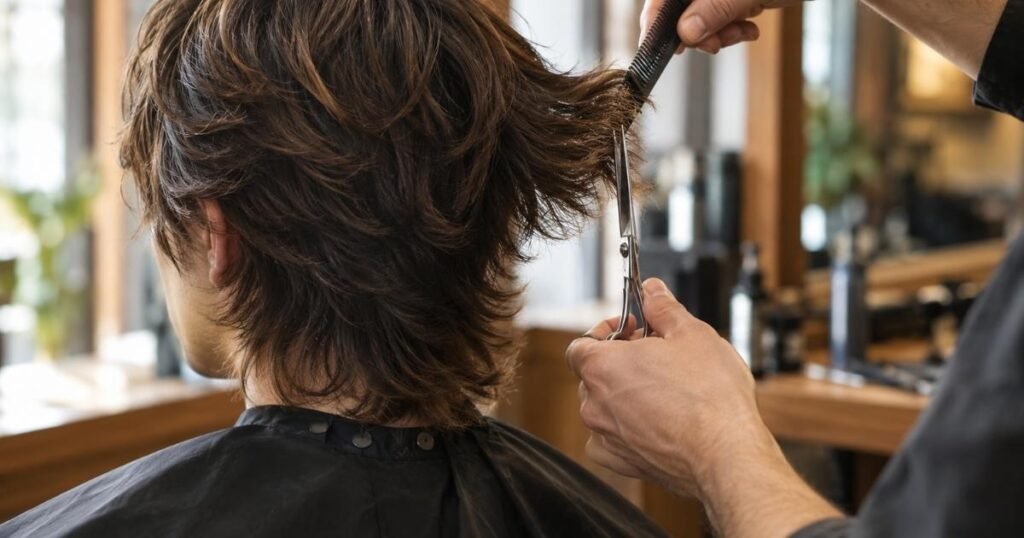
No single phrase guarantees the same result at every barbershop, because barbers interpret terms differently. The best approach is to combine a few clear words with reference photos.
A few terms worth knowing
- Layers: Hair cut at different lengths so it moves and builds volume.
- Texturizing: Techniques that break up the weight and edges of the hair to make it look less uniform.
- Point-cutting: Snipping into the ends at an angle for a feathered, uneven finish.
- Weight: The visual heaviness in a part of the haircut, usually where lengths stack.
- Neckline: The shape of the hair at the back of the neck. A tapered neckline blends gradually instead of stopping at a hard line.
- Fringe: The hair at the front that falls over the forehead (called bangs in the US).
What you might say
For a wolf cut, you could describe it like this: “I’d like short, choppy layers through the crown and top, with the length kept longer at the back and nape. I want a noticeable step between the two, but not as extreme as a full mullet. Please keep the sides blended, and I’d like a textured fringe.”
For a shag, you might say: “I’d like blended, feathered layers all over, with soft face-framing pieces and a longer, side-swept fringe. I want movement and volume, but I don’t want a big step in length between the top and back.”
These are starting points, not scripts. Adjust the details to your own hair.
What to bring
- Reference photos showing the front, side, and back
- Photos of hair similar to yours in texture and thickness
- A note on how you usually style your hair, and how much time you want to spend
- Details of your current haircut, so the barber can plan how to adapt it from where you are now
If you’re not sure what length to keep at the back and sides, ask your barber to explain the options and show you in the mirror before cutting.
Read More About : Spiky Hairstyles for Men: 17 Bold & Textured Styles
FAQs About Wolf Cut vs Shag
Is a wolf cut the same as a shag?
They’re closely related but not identical. A wolf cut emphasizes length contrast and disconnected layers, while a shag emphasizes blended, feathered layers. The names get used loosely, so a reference photo is the surest way to make sure you and your barber are picturing the same thing.
Which lasts longer between trims: a wolf cut or a shag?
A shag often holds its shape more forgivingly, since its layers blend as they grow, while a wolf cut’s contrast may soften sooner. The real answer depends on how fast your hair grows and how the cut was done. The grow-out section above explains what to look for.
Can you get a wolf cut or shag with straight hair?
Yes, but straight hair usually needs more styling to show the texture, and it helps to have a barber who texturizes carefully. The straight hair section above covers what to expect.
Can you get a wolf cut or shag if you’ve never had a layered haircut?
Yes. Either can be a first layered cut. A shag may feel like a gentler introduction because its layers blend, but the right choice depends on your hair and how bold you want to go. You can also ask your barber to start with longer layers and adjust over time.
Is a wolf cut harder to maintain than a shag?
Often it needs more styling and tidy-ups to keep its shape, but that depends on your hair texture and how much contrast the cut has. For a straight comparison of wolf cut vs shag maintenance, think in two parts: daily styling effort (usually higher for a wolf cut) and how long the shape holds as it grows (usually longer for a shag). Both vary from person to person.
Conclusion
The difference between a wolf cut and a shag comes down to contrast versus blending. A wolf cut builds its look on a short, choppy crown and longer back. A shag builds its look on layers that flow evenly through the whole head.
Your choice depends on your hair, how much styling you’ll realistically do, and how bold you want the finished look to be. If you’re still unsure, pick two or three reference photos that match your hair type, bring them to your barber, and ask how each cut would work on you. That conversation will tell you more than any general rule.

Jake Miller is a barbering and men’s hairstyle enthusiast who shares practical tips, haircut inspiration, and the latest grooming trends at BarberZylo. He enjoys exploring modern and classic hairstyles and helping readers find fresh ideas for their next look.



4 Comments