
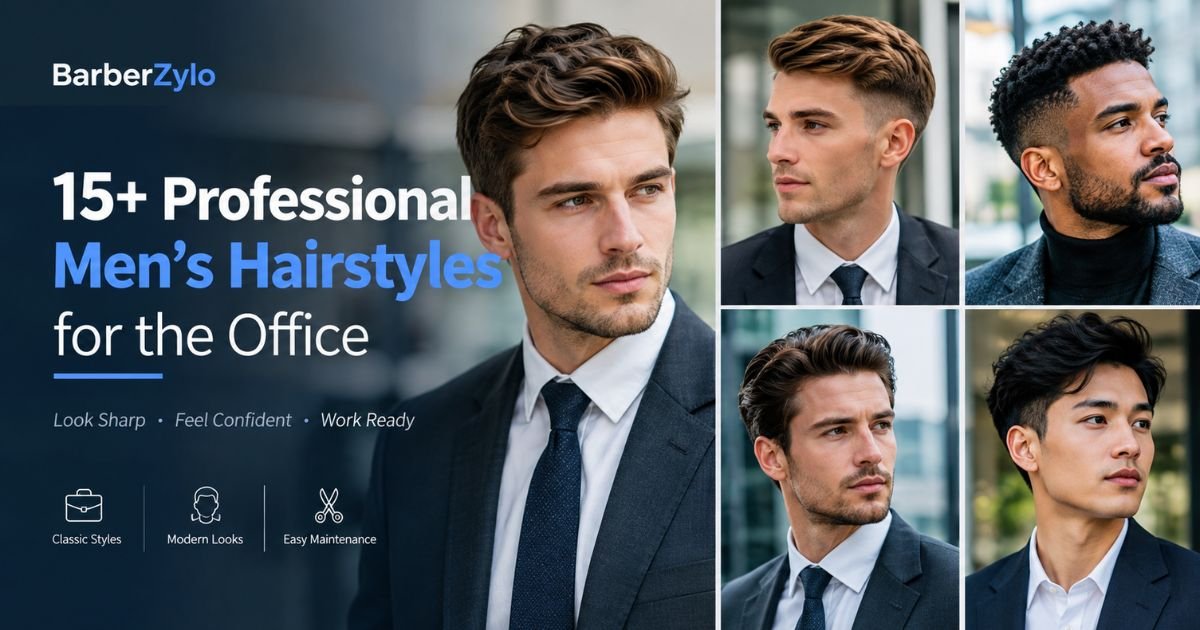
15+ Professional Men’s Hairstyles for the Office (2026 Guide)
“Professional” isn’t one look. A cut that passes without comment at a creative agency can stand out in a conservative bank, and the same cut can behave very differently on fine straight hair and on thick curls. This guide covers 15 professional men’s hairstyles for office settings, with notes on what defines each one, how it tends to behave on different hair, and what to tell your barber.
In practical terms, a professional cut usually has a controlled shape, tidy edges, and a finish that doesn’t pull attention away from your work. After the styles, you’ll find help matching a cut to your workplace, your hair, your morning routine, and your barber visit.
The Best Professional Men’s Hairstyles for Office
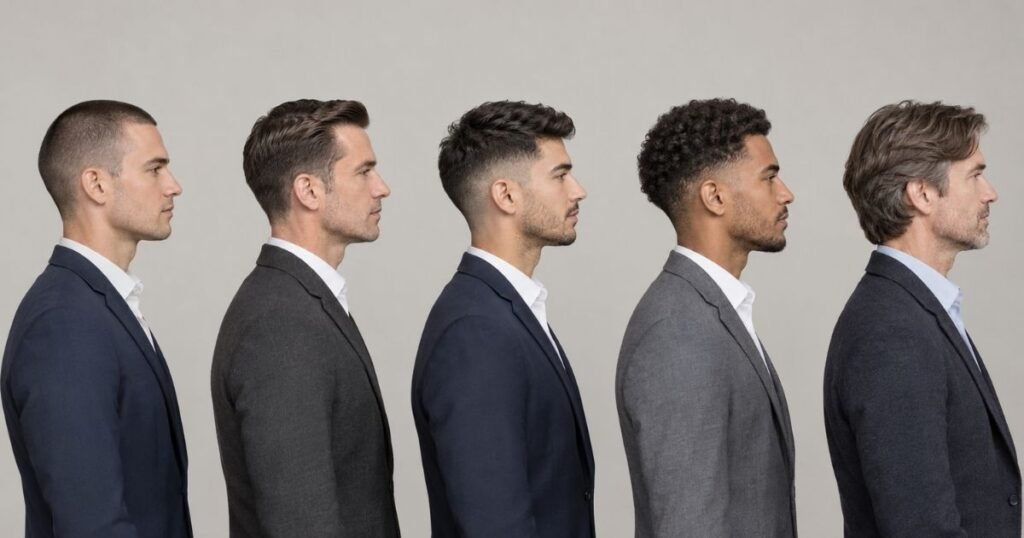
“Best” depends on your workplace and your hair, so treat this list as a menu rather than a ranking. Four adjustments, which we’ll call formality dials, change how conservative almost any cut reads:
- Side contrast: how abruptly the sides get shorter. Soft blending usually reads as more traditional than a sharp step.
- Top lift: how much height the front has. Flat or lightly lifted hair is calmer than a tall front.
- Finish: matte or low-shine looks more understated than high shine.
- Edge sharpness: a razor-crisp hairline looks more styled than a softer, natural one.
The table below shows how the 15 styles compare, including the ones people most often mix up.
| Style | Top and sides in brief | Styling effort | Often confused with |
| Classic Side Part | Top combed across a visible part; short, softly blended sides | Low to medium | Tapered comb over |
| Ivy League | Short tapered sides; top long enough to part or brush | Low | Crew cut |
| Crew Cut | Top graduated from longer front to shorter crown; tapered sides | Very low | Buzz cut |
| Tapered Comb Over | Defined part; clearly tapered sides | Medium | Side part |
| Classic Gentlemen’s Cut | Balanced proportions; flexible top | Low to medium | “Short back and sides” |
| Low Taper Fade with Side Part | Side part; sides fade shorter near ears and neckline | Medium | Tapered comb over |
| Modern Quiff | Front lifted modestly up and back | Medium to high | Pompadour, brush back |
| Slick Back | Combed straight back; flat; no part | Medium | Brush back |
| Brush Back with Taper | Swept back with natural movement; tapered sides | Low to medium | Slick back |
| Short Textured Crop | Short top with visible, subtle movement | Low | French crop |
| Buzz Cut | One clipper length all over | Very low | Crew cut |
| French Crop | Short, blunt fringe; tapered sides | Low | Textured crop |
| Short Natural Curls with a Taper | Natural curls on top; tapered sides and back | Low to medium | Textured crop |
| Scissor Cut with a Side Sweep | Soft scissor-blended sides; swept top, no defined part | Low to medium | Side part, gentlemen’s cut |
| Medium-Length Side Part | Longer sides and top; defined part | Medium to high | Classic side part |
1. Classic Side Part
Top: long enough to comb across. Sides: short, softly blended. Effort: low to medium.
The part line defines this cut. Hair on top is combed to one side along a visible line, with short sides that blend rather than contrast sharply. A natural part follows where your hair already wants to fall. A hard part is a deliberately defined line, sometimes marked with a trimmer, and it looks more formal.
Style it on damp hair: comb it in the direction you want, then set it with a light cream or pomade, adding a quick blow-dry if the hair resists. Straight to wavy hair tends to be the easiest to train. A cowlick near the part can fight the line, fine hair can look flat, and very thick hair may need weight removed so it lies down. If your temples are receding, your barber may suggest which side to part on.
2. Ivy League Haircut
Top: long enough to part or brush. Sides: short, tapered. Effort: low.
Think of the Ivy League as the middle ground between a crew cut and a side part. The sides and back are short and tapered, but the front is left long enough to part or brush to the side. The length at the front hairline is the detail to be specific about, because that’s what separates it from a crew cut.
A little light cream is usually enough. The cut needs reasonable density on top to hold its shape, and a short front can make a receding hairline more noticeable. If your hair grows forward at the front, it may need some blow-drying direction to sit where you want it.
3. Crew Cut
Top: short and graduated. Sides: tapered. Effort: very low.
A crew cut keeps the top short and graduated, typically longest at the front and shorter toward the crown, with tapered sides and back. That gradient is what separates it from a buzz cut (even length) and an Ivy League (longer front). It’s done mostly with clippers, so the length on top matters. Give your barber a measurement in millimeters or inches as well as a guard number, since numbering can vary by brand.
Little or no product is needed. Because there’s so little hair, head shape and hairline show clearly, and a front cowlick or coarse hair that stands up can be more visible. Results vary from person to person.
Read More About : Professional Haircuts for Men: 35+ Classic & Modern Styles
4. Tapered Comb Over
Top: longer, combed across. Sides: clearly tapered. Effort: medium.
“Comb over” has a dated reputation as a way of hiding hair loss. The modern version is different: an intentional part, a longer top combed across, and clearly tapered sides. It overlaps heavily with the classic side part. The real difference is the visible contrast between the longer top and the clipper-tapered sides.
Tell your barber where the taper should start, where the part should sit, and how much length to leave on top. A medium-hold product, a comb, and a quick blow-dry to set direction usually do the job. If you have thin areas, mention them, since the barber may adjust the part or the length. Thick hair can need weight removed to lie flat.
5. Classic Gentlemen’s Cut
Top: flexible. Sides: blended. Effort: low to medium.
This is less a single silhouette than a set of proportions: a neat neckline, sides blended rather than dramatically shortened, and a top that can be parted, swept, or brushed. Names vary by barber and region. Many UK barbers would call a version of this a “short back and sides,” so describing the result is safer than relying on the name.
Its main strength is flexibility. Decide on the neckline (tapered, which fades into the skin, or blocked, which ends in a straight line) and how much length you want on top. Light cream or pomade is typical. How well it works depends on how the barber adapts it to your density and growth patterns.
6. Low Taper Fade with Side Part
Top: side part. Sides: fade shorter near ears and neckline. Effort: medium.
This adds one variable to the side part: sides that get noticeably shorter near the ears and neckline. Because “taper” and “fade” are used loosely, here’s how they differ in general:
| Taper | Fade | |
| What it does | Gradually shortens hair, mainly around the sideburns and neckline | Blends from longer hair down to very short, sometimes bare skin |
| How visible | Subtle | More noticeable |
| Typical office read | Often reads as conservative | Depends on height and finish |
Fades are also described by where they start: low (around the ear and neckline), mid (roughly temple height), or high (up toward the temple and above). Lower placements tend to read as more conservative, though that’s a tendency, not a rule. A skin fade blends down to bare skin, while a fade that stops at a short guard length is softer.
Ask for a “low taper fade,” tell your barber the shortest length you want at the bottom, and say whether you want a crisp edge-up around the hairline. Fades tend to show regrowth sooner than softer blends. A beard may need blending into the fade, and a strong cowlick at the nape can complicate the blend. The FAQs have a short answer on fades at work.
7. Modern Quiff (Controlled Version)
Top: lifted at the front. Sides: short, tapered. Effort: medium to high.
A quiff lifts the front hair up and slightly back. “Controlled” means keeping that lift modest, so it reads as shape rather than statement. It differs from a pompadour, which has bigger, more sculpted volume, and from a slick back, which has no lift at all. To keep a quiff understated, lift is the main dial: modest height, softly tapered sides, and a matte finish look calmer than a tall front with high-contrast sides.
It’s usually blow-dried up and back, then finished with a matte or light-hold product, so it takes more morning time than most styles here. Thick or wavy hair may hold lift more easily, while fine hair can flatten and may benefit from a volumizing product. Lift also draws the eye to the forehead and hairline.
8. Slick Back (Clean Version, No Undercut)
Top: combed straight back. Sides: gradual taper. Effort: medium.
Hair is combed straight back with a flat profile and no part. “No undercut” refers to the sides. An undercut has very short sides with an abrupt step up to the longer top. This version uses a gradual taper instead, so it looks less severe. Finish matters too: a matte or low-shine product looks more office-appropriate than a high-shine one.
Comb it through damp hair, then use a cream or pomade depending on how much shine you want. You need enough length on top to reach the back. Receding temples are more visible when hair is pulled straight back, density affects how well it lies, a front cowlick can push hair up, and tightly curled hair may not lie flat without a lot of product.
Read More About : French Crop Haircut for Men: Best Styles & Guide (2026)
9. Brush Back with Taper
Top: swept back, soft. Sides: tapered. Effort: low to medium.
If the slick back is sleek, the brush back is relaxed. Hair goes back with your fingers or a comb but keeps some natural movement and softness at the front. Compared with a slick back, it has less hold and shine. Compared with a quiff, it has less lift.
It often needs only a cream and a quick dry, and it can suit hair you’re growing out. Wavy or thick hair can work well. A widow’s peak or receding temples will show, so discuss the front hairline with your barber. Ask for enough length on top to brush back.
10. Short Textured Crop (Office Version)
Top: short, with subtle movement. Sides: tapered. Effort: low.
This cut is short on top with visible movement, created when the barber texturizes the hair, for example by point cutting (snipping into the ends). It usually has a short forward or sideways sweep and tapered sides. The office version keeps the texture subtle and the finish matte, so it reads as natural movement rather than a messy look.
Rough-dry it and shape it with your fingers and a small amount of matte clay or paste. Wavy or thick hair may create texture more easily, while straight, fine hair may need product to get a similar effect. Unlike the French crop below, it has no blunt fringe line.
11. Buzz Cut
Top and sides: one clipper length. Effort: very low.
A buzz cut is one clipper length across the whole head, sometimes with tapered edges. With no length variation, the look depends on the length you choose and how clean the edges are. On many clipper sets, a #1 guard leaves about 1/8 inch (roughly 3 mm) and a #2 about 1/4 inch (roughly 6 mm). Numbering varies by brand and region, and UK barbers often say “grade,” so quote millimeters or inches.
There’s nothing to style, but regrowth shows evenly, so how often you tidy up depends on how crisp you want the edges. Head shape, hairline, scars, and growth whorls are all more visible. It works across hair types, though results vary. If you have a beard, think about how the two blend, and consider sun protection for your scalp.
12. French Crop
Top: short, with a blunt fringe. Sides: tapered. Effort: low.
A French crop has a short, blunt fringe cut straight across the forehead, a top longer than the sides, and tapered sides. The fringe line is what separates it from the textured crop. Tell your barber where on your forehead the fringe should end.
A light matte paste, combed forward, is typical. Straight to wavy hair may suit it. Front cowlicks can push the fringe up, and a fringe changes how forehead height reads. If you’re thinning at the front, talk it through with your barber first.
Read More About : Short Professional Men’s Hairstyles for Office: 17+ Clean, Polished Cuts
13. Short Natural Curls with a Taper
Top: natural curls. Sides and back: tapered. Effort: low to medium.
The curls stay natural on top while the sides and back are tapered for a defined shape. That structure helps textured hair look tidy without flattening the curl. Curl pattern (wavy, curly, or coily), density, and length on top all shape the result. Shrinkage also matters: curls look shorter when dry than when stretched, so ask your barber how much length to leave. Some barbers cut curls dry and others damp, so ask which they prefer. Photos of hair like yours help, and it’s worth finding a barber with experience in your curl pattern.
Moisture usually matters more than hold. A leave-in or curl cream worked through damp hair and shaped with your fingers is a common approach, with a diffuser optional. Many people find that brushing dry curls creates frizz. Neat edges and neckline do as much for the polished look as moisture does.
14. Scissor Cut with a Side Sweep
Top: swept to the side, no defined part. Sides: scissor-blended. Effort: low to medium.
This cut is done mostly with scissors and a comb, so the sides blend softly instead of ending in a clipper line, and the top sweeps to the side without a visible part. That separates it from the classic side part (defined line) and from tapered styles (clipper contrast). Ask for scissor-blended sides, no hard taper line, and a natural sweep.
Cream and an air-dry or light blow-dry usually do it. It tends to grow out more gently, which helps keep a haircut presentable between appointments, though it can lose shape over time. Wavy hair or hair with natural movement may work well, thick hair may need weight removed, and your cowlick direction often decides which way it sweeps.
15. Medium-Length Side Part
Top and sides: longer, with a defined part. Effort: medium to high.
Here, medium means hair that reaches around the ears at the sides and has enough length on top to part cleanly. With more length, the sides and neckline are more visible, so regular shaping trims matter.
Expect more styling time. Blow-drying and product choice matter, and frizz, grease, and humidity show more at this length. Thick or wavy hair may hold the shape well, fine hair can look limp, and curly hair at this length has different needs. This style leans toward the relaxed end of workplaces, though a neat version may still work in conservative ones.
Read More About : Low Maintenance Men’s Haircuts: 32+ Easy Styles That Look Great
Which Professional Hairstyle Is Best for You?

Professional is a spectrum shaped by industry, dress code, client contact, and local norms. The formality dials above give you a way to read it. When in doubt, check your dress code policy and look at what’s normal around you.
| Setting | Side contrast | Top lift | Finish | Edges |
| Corporate / finance | Low, soft blending | Minimal | Matte or low shine | Softer, natural |
| Business casual | Moderate | Modest | Matte to light sheen | Defined, not razor-sharp |
| Creative office | Flexible | Flexible | Flexible | Tidy and intentional |
Corporate / Finance Offices
Traditional and client-facing settings often favor styles that don’t draw comment. The Classic Side Part, Ivy League, Crew Cut, and Classic Gentlemen’s Cut sit here, along with the most subtle versions of the Tapered Comb Over and the Low Taper Fade.
- Keep side contrast soft.
- Keep lift to a minimum.
- Choose a matte or low-shine finish.
- Keep fades low and avoid skin-short sides.
For an interview, consider booking your cut a few days ahead, which ties into the 7-day idea in the FAQs.
Business Casual
There’s usually more room for texture, softer sides, and moderate lift. The Tapered Comb Over, Low Taper Fade, Brush Back, Short Textured Crop, French Crop, and Scissor Cut with a Side Sweep all fit here. What to hold back on: very high lift, strong contrast between top and sides, and high-shine finishes.
Creative Office
Creative workplaces often allow more personality: the Quiff, Brush Back, Short Natural Curls, Medium-Length Side Part, and French Crop. “Tidy” still means an intentional shape, clean edges, and hair that looks cared for. Client-facing days and local norms can still limit your choices, so it’s worth asking.
How to Choose and Maintain a Professional Men’s Hairstyle
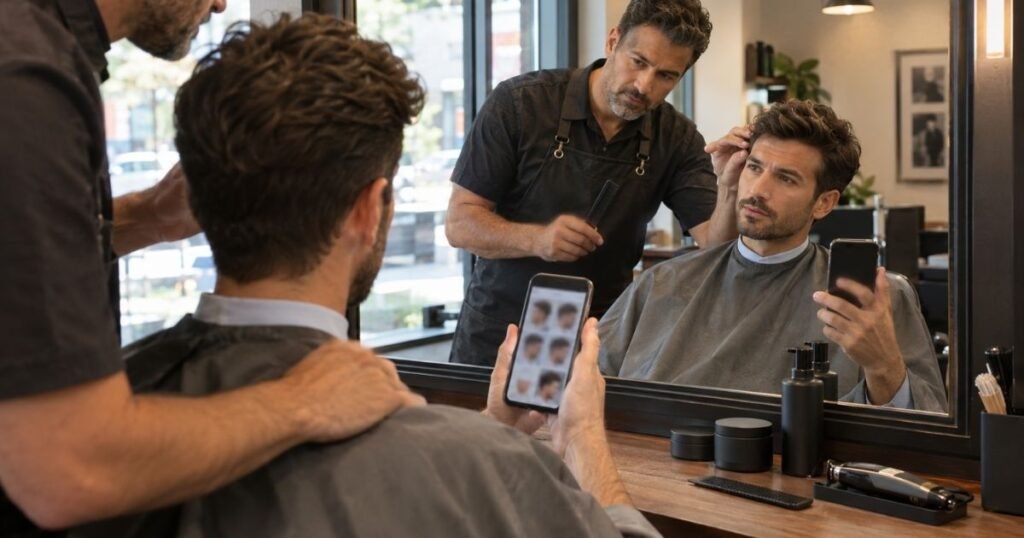
The best choice balances your hair, your morning routine, and how much upkeep you’ll realistically do. This section follows that order: choose, style, maintain, then ask.
Choose a Haircut That Works with Your Hair Type and Texture
Hair type and texture change the result more than almost anything else. Density, growth patterns such as cowlicks and crown whorls, and your hairline matter too. Face proportions and beard shape can influence how a cut looks, but treat them as one input among several. The table is a starting point for conversation with your barber, not a rule.
| Hair situation | Styles worth discussing | Watch-outs |
| Thick or dense | Side Part or Scissor Cut with weight removed; Textured Crop | Bulk can puff at the sides; tapered sides can help in a formal setting |
| Fine | Crew Cut, Ivy League, French Crop | Slick backs and quiffs can flatten; a volumizing product may help |
| Curly or coily | Short Natural Curls with a Taper | Shrinkage; barber experience with your pattern matters |
| Thinning or receding | Crew Cut, Buzz Cut, Ivy League | Pulling hair straight back can highlight temples |
| Strong cowlick | Scissor Cut, Brush Back, Textured Crop | Fighting the growth direction with a hard part or short front |
Consider Your Daily Styling Time and Hair Products
Be honest about your mornings. A buzz cut or crew cut needs almost nothing, a textured crop needs a minute or two, and a quiff or medium-length side part can need a blow-dryer. If you want to style your hair quickly before work, choose a cut that works with how your hair already falls.
Products differ mainly by finish and hold:
| Product type | Typical finish | Works well with |
| Cream | Natural, low shine, light hold | Side part, Ivy League, brush back, curls (curl cream) |
| Paste or matte clay | Matte, textured, medium to strong hold | Textured crop, French crop, quiff |
| Pomade | Smoother; sheen varies by formula | Slick back, side part |
| Gel | Firm hold; can look stiff or shiny | Short styles that need strong hold |
To avoid a greasy-looking finish, start with a small amount, warm it in your palms, and work from back to front, adding more only if needed. For a style that stays in place during meetings, hold matters more than shine, so a light to medium hold with a matte finish is often enough. Wash product out regularly, since buildup can make hair look dull and heavy.
Keep Your Haircut Looking Neat Between Appointments
How often you need a trim depends on your cut’s design, your hair’s growth rate, and how crisp you want to look. Your barber is the best person to suggest an interval for your hair. These things tend to make upkeep more frequent:
- Short sides, fades, and tapers
- Razor-sharp edges and a skin-short neckline
- A defined part line
- Fast-growing hair
Longer scissor-cut styles generally grow out more gracefully. In between visits, keep hair clean, deal with product buildup, and leave neckline cleanup to a barber if you can.
Read More About : 14+ Hairstyles for Older Men: Stylish Cuts for Thinning Hair
How to Ask Your Barber for a Professional Haircut
No single phrase guarantees the same result at every barbershop, but these steps help:
- Bring photos from the front, side, and back, ideally of hair similar to yours.
- Name the style and describe it: length on top, how the sides and back finish (taper or fade, and the shortest length), the part, and the neckline.
- Mention your hair: cowlicks, hairline, thickness, and how much time you’ll spend styling.
- Mention workplace limits: what to tell a barber about workplace dress codes is simply what’s off the table.
A sample: “I work somewhere with a conservative dress code. I’d like a low taper, nothing skin-short, about [length] on top, with a side part. Here are photos from the front and side.”
| Term | Plain meaning |
| Taper | Gradual shortening, mostly at the sideburns and neckline |
| Fade | Blending from longer hair to very short, sometimes bare skin |
| Skin fade | A fade that blends down to bare skin |
| Guard | A clipper attachment that sets cutting length; numbering varies by brand |
| Scissor-over-comb | Cutting hair held up by a comb with scissors, for soft blending |
| Texturizing / point cutting | Snipping into the ends to add movement |
| Neckline | The shape of the hair at the back of the neck (tapered, blocked, rounded) |
| Edge-up / line-up | Crisp trimming around the hairline |
| Blend | A smooth transition between lengths |
In the UK, you’ll often hear “grade” instead of “guard” and “short back and sides” for a classic cut.
FAQs
What are the most professional men’s hairstyles for office?
There’s no single winner. Short-sided classics like the side part, Ivy League, crew cut, and gentlemen’s cut are commonly regarded as the most conservative. The right choice depends on your workplace and your hair.
Are fades acceptable in professional workplaces?
Often, yes, especially a subtle low fade or taper. High skin fades are more noticeable and may read as less conservative in strict settings. Dress codes and local norms vary, so check yours.
How often should I trim my professional haircut?
It depends on the cut, how fast your hair grows, and how sharp you want the sides. Shorter and faded styles usually need more frequent upkeep. Ask your barber for a suggested interval.
What hair products are best for office hairstyles?
Matte, low-shine, light-hold products tend to keep a natural office look, while heavier or shinier ones give a more styled finish. See the product table above.
Can professional men’s hairstyles for office still look modern?
Yes, through restrained choices: subtle texture, softer blending, and controlled lift. The Modern Quiff and Short Textured Crop show how.
What does the 7-day haircut rule mean?
It’s an informal rule of thumb, not an established fact. It suggests a haircut often looks more natural after a few days to a week, as stiffness softens and the hair settles. Definitions vary, and sharp fades may look best fresh. If you have an important meeting, getting your cut a few days beforehand is one option.
Final Thoughts
The right professional haircut fits your workplace, your hair, and the time you’re willing to spend on it. Start with these steps:
- Decide how conservative your workplace is.
- Shortlist two or three styles that suit your hair.
- Bring photos and describe the cut.
- Book it a few days before any important event.
The final result will vary with your hair and how your barber adapts the cut, so treat these styles as starting points for a conversation.
Jake Miller is a barbering and men’s hairstyle enthusiast who shares practical tips, haircut inspiration, and the latest grooming trends at BarberZylo. He enjoys exploring modern and classic hairstyles and helping readers find fresh ideas for their next look.



2 Comments