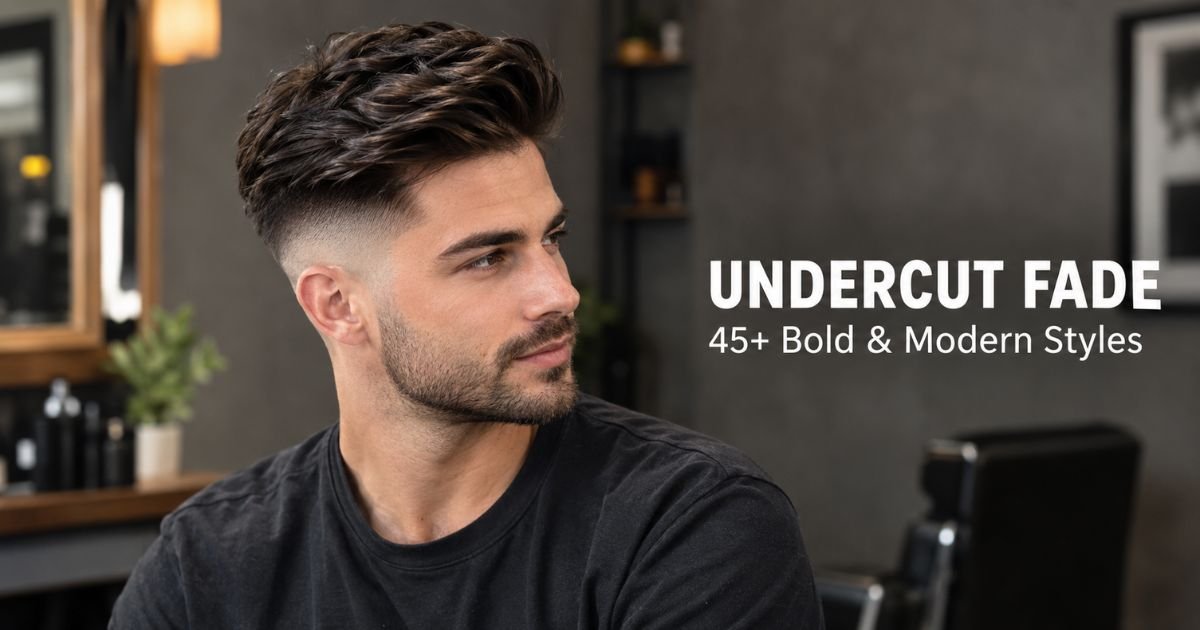
Undercut Fade: 45+ Bold & Modern Haircut Styles In 2026
An undercut fade pairs short sides that blend gradually toward the skin with a top that’s left noticeably longer. That difference in length is the first thing people see, and it’s why one basic cut can look sleek, textured, or tied back depending on what you do with the top.
The names get used loosely, though. One barber hears “undercut fade” and pictures a smooth blend. Another pictures a sharp break between the top and the sides. This guide splits the cut into three choices you can make on purpose: how the sides transition, how high the fade starts, and what happens on top.
How to use it:
- Browsing for ideas: start with the gallery.
- Trying to decide: jump to the section on choosing the right undercut fade.
- Booking an appointment: go straight to how to ask your barber.
What Is an Undercut Fade?
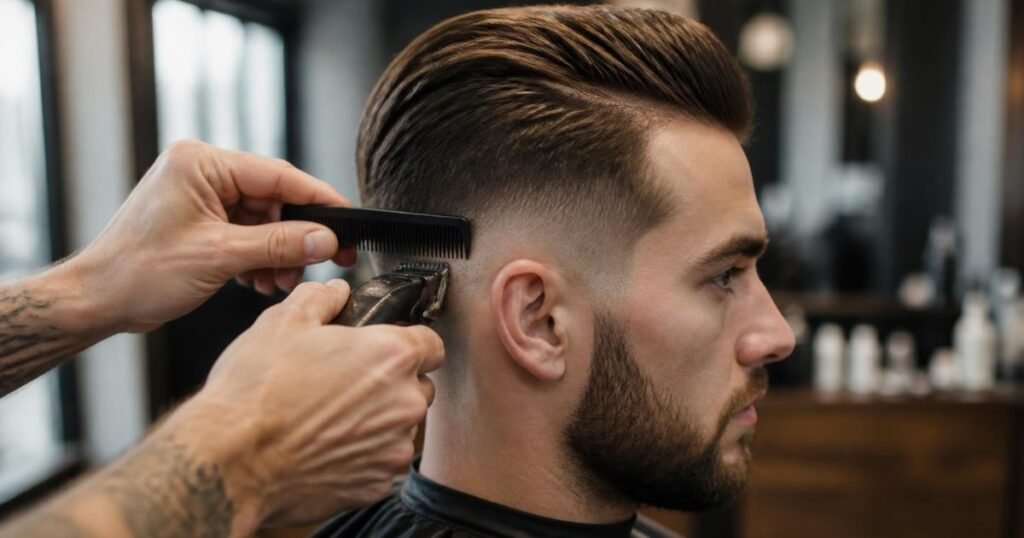
An undercut fade is a haircut with the sides and back clipped short and faded, moving gradually from longer hair to very short hair or bare skin, while the hair on top stays much longer. The fade controls how the sides look. The top length controls how you can style it. You’ll also see it called a fade undercut, and it’s one of the most requested short-sides, longer-top combinations in men’s barbering.
The Basics of the Undercut
“Undercut” describes a length relationship. The sides and back are cut short, the top is left long, and in its classic form there’s little or no blending between the two. You can see the step where the long hair ends and the short hair begins.
The sides are often one uniform short length rather than a gradient. The top length decides your options: comb it back, sweep it to the side, push it up, or tie it up if it’s long enough. Some barbers use “undercut” for any cut with a big length gap, so the word alone doesn’t tell you much about the transition.
What to look for in a photo: a plain undercut with no fade. Notice how the top stops abruptly at the sides, with no in-between lengths.
What Makes It a Fade?
A fade is a gradient. Using clippers, and often clipper-over-comb work, a barber moves from longer hair to shorter hair so smoothly that you can’t spot where one length ends and the next begins. The bottom of a fade usually ends at bare skin or very short stubble.
Fades vary in where they start (low, mid, or high on the head) and in shape (straight across, curved around the ear, or dropping toward the nape). Barbers call the smoothing process blending. A well-blended fade looks like a soft shadow, with no stripes or bands.
How does the Undercut Fade Combine the Two Styles?
Two separate decisions make up the cut, and they’re easy to confuse:
- How the sides shorten. Either they fade gradually or they stay one short length.
- How the top meets the sides. Either the top blends into the sides or it sits clearly apart from them.
That gives you two common readings of “undercut fade”:
- Blended: the fade climbs the sides and melts into the top length gradually. The overall look is softer.
- Disconnected: the fade, or the short sides, stops at a clear point, and the top sits above it with no in-between lengths. The overall look is sharper.
Because barbers and clients use the words differently, a reference photo says more than the name does.
Why the Undercut Fade Is Trending in 2026?
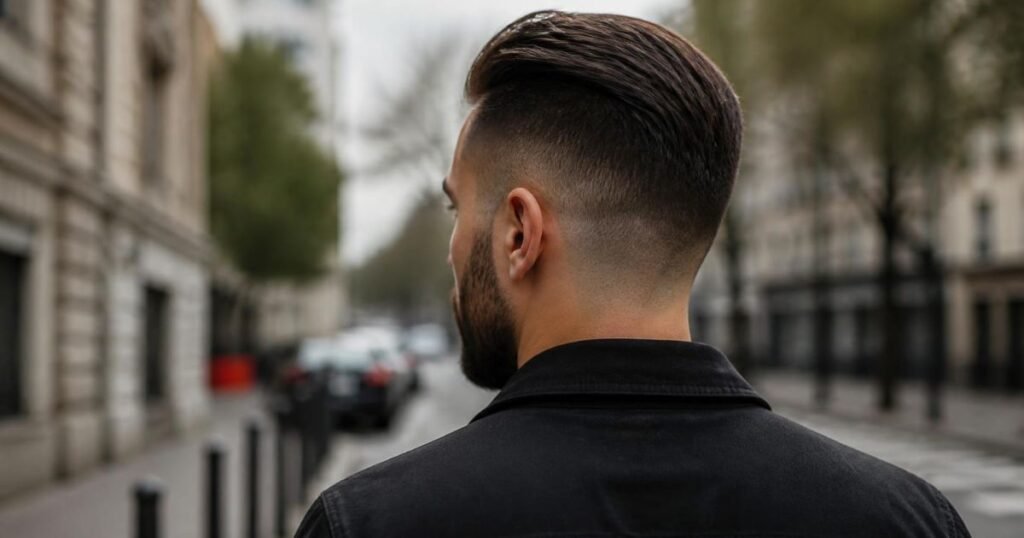
Popularity is hard to measure from the outside, and this article doesn’t rely on trend figures. What we can explain is why people keep asking for this cut.
The length contrast gives the head a defined outline, which many people like. The top can be styled in several ways without changing the haircut underneath. And barbers can dial the intensity up or down by changing the fade height or the transition, so one basic idea covers a wide range of looks.
Works with All Hair Types (Straight, Wavy, Curly)
The concept adapts to many textures because the fade happens on the sides, and the top is cut to suit the hair growing there. “Works” still depends on the details. For most people, the factors that change the result are:
- Top length needed. Curly and coily hair often needs more length to look the way you expect, because curls spring up when dry.
- How the hair falls. Straight hair tends to lie flat unless it’s cut or styled for lift. Waves add movement but can puff up if cut too short.
- Cowlicks and growth direction. These can change where the top naturally wants to go.
- Density. Thick and thin hair hold shape differently.
Later sections cover each of these in detail.
Modern, Versatile & Easy to Maintain
“Versatile” has a concrete meaning here. One cut can be sleeked back for work, roughed up with matte product for the weekend, or tied up when the top is long enough.
“Easy to maintain” is a spectrum, not a promise. Lower fades and tapers tend to grow out more gradually. Skin fades, sharp disconnected lines, and shaved designs tend to look overgrown sooner. The top still needs styling regardless. How much upkeep you’ll face depends on how fast your hair grows, your hair type, your styling habits, and which version you choose.
Best Undercut Fade Hairstyles for Men
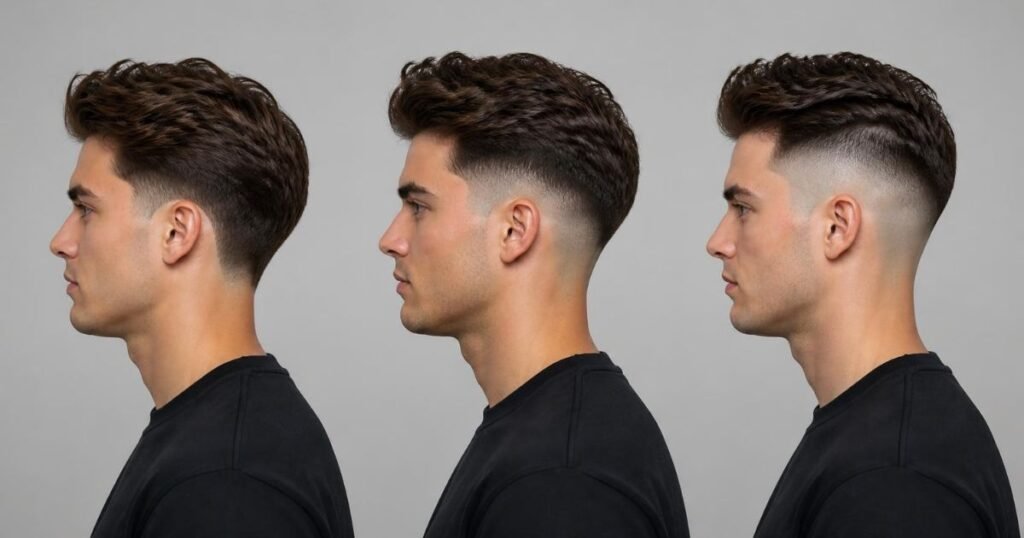
If you’re searching for undercut fade hairstyles for men, the quickest way to browse is by decision. The gallery below is grouped so you can compare like with like: fade placement and shape (1–10), top styles (11–19), use-cases and add-ons (20–27), hair types (28–34), and one hybrid (35). Each entry covers what makes the style recognizable and one practical point to raise with your barber. Results always vary with your hair and how your barber adapts the cut.
1. Classic Undercut Fade
This is the reference point for everything below. The sides and back fade from short to shorter, the top stays long enough to comb or push off the forehead, and the transition is blended rather than abrupt.
If you’re not sure what to ask for, start here and adjust one variable at a time: raise or lower the fade, lengthen or shorten the top. Tight curls, strong cowlicks, or thinning at the front may call for changes, so mention them early.
2. Low Undercut Fade
The fade starts low, tracing just above the ear and around the nape, so more of the sides keeps its length. Contrast with the top is milder, and less scalp shows.
This is the version to consider if you want the cut to look less severe. It also tends to grow out more gradually. The tradeoff is that more of your natural side hair stays visible, so wavy hair or odd growth direction near the ears may be more noticeable.
What to notice in photos: the point where the hair above the ear stops being faded.
3. Mid Undercut Fade
A mid fade starts around the temple. More of the sides go short than with a low fade, so the contrast is clearer, but it stops short of the dramatic effect of a high fade. It’s a sensible middle ground if you can’t decide between subtle and bold.
Compare it side by side with the low and high versions before you commit. The differences are easier to see in a pair of photos than in a description.
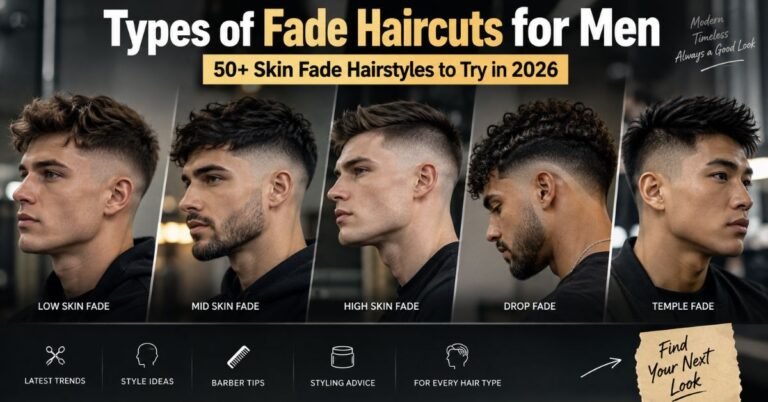
Read More About : Types of Fade Haircuts for Men: 50+ Skin Fade Hairstyles to Try in 2026
4. High Undercut Fade
A high fade starts near or above the temple, so most of the sides are very short and the top stands out sharply. It gives the strongest contrast in the fade-height family.
It also asks more of you. More scalp shows, and regrowth tends to be visible sooner. A high fade combined with a tall top can make the head read as longer vertically, which some people want and others don’t. A top with enough density to hold its shape tends to balance the cut well.
The three heights side by side:
| Fade height | Where it starts (approximately) | Contrast with the top | Things to weigh |
| Low | Just above the ear and nape | Softer | Shows more natural side hair; grows out gradually |
| Mid | Around the temple | Moderate | A middle option; shows regrowth moderately |
| High | Near or above the upper temple | Strongest | More scalp visible; may need tidying sooner |
Start points vary by barber, so describe them by landmarks (above the ear, at the temple) rather than by number.
5. Skin Fade Undercut
In a skin fade, the gradient finishes at bare skin. Barbers often use close-cutting clippers or a foil shaver for that final finish. It produces the sharpest gradient and the clearest contrast with the top.
The practical costs: regrowth shows quickly, any scalp features (scars, moles, tan lines) become visible, and the exposed skin needs sun protection. Some people with sensitive skin find very close finishes irritating. Asking for “a skin fade at the bottom” is clearer than asking for “a fade” alone.
6. Disconnected Undercut Fade
Disconnection is the idea that separates this version from a blended undercut fade. The top sits apart from the sides with a visible break, and no in-between lengths bridge the two. The sides may still fade, but the fade stops where the top begins.
The result is a high-contrast look that’s also easy to recognize in photos. When you ask for it, specify where that break should sit on the head and how hard the line should look. A razor-sharp line and a softer edge are different requests.
What to notice in photos: the front, side, and top views together, since the break is easiest to see from the side.
7. Taper Fade Undercut
A taper shortens the hair gradually, most visibly around the sideburns and neckline, and generally leaves more length at the bottom than a skin fade. On an undercut, that means a gentler step from the top down to the neckline, with less scalp showing.
It’s often chosen when a workplace or personal preference calls for a quieter cut. The full comparison with fades is covered in the taper section later.
8. Burst Fade Undercut
The fade in a burst fade curves around the ear in a rounded, semicircular shape, and longer hair remains behind it down to the nape. The cut is defined by that curve, so side and back photos matter more here than front views.
It’s commonly paired with mohawk-style tops and with hair left longer at the back. If your barber doesn’t use the term, a photo that shows the curve around the ear communicates it quickly.
Read More About : 300+ Low Fade Haircuts for Men: Find Your Perfect Style
9. Drop Fade Undercut
The fade line in a drop fade arcs downward behind the ear toward the nape, following the curve of the skull instead of running straight across. The easiest way to remember the difference: a burst fade wraps around the ear, while a drop fade dips behind it.
Look at the back of the head in reference photos. The dropped line is hardest to judge from the front.
10. Bald Fade Undercut
“Bald fade” and “skin fade” often mean the same thing: a fade that ends at bare skin. Some barbers use “bald” for the very closest finish. Others use the terms interchangeably, so the safest wording is to say you want the fade to go “down to skin” and show a photo.
The same upkeep points apply as with a skin fade: faster visible regrowth, more exposed scalp, and sun protection.
11. Slick Back Fade Undercut
The top is swept straight back from the forehead, so it needs enough length to lie flat without sticking up. Product choice sets the finish, from a wet, glossy look to a drier, matte one.
Thick or straight hair often holds the direction more easily. Fine or springy hair may need more product or blow-drying to stay back. A cowlick or an uneven front hairline can fight the direction, so tell your barber where the hair naturally wants to go.
12. Pompadour Undercut Fade
A pompadour lifts the front of the hair up and back, with the front the longest part of the top. It needs blow-drying and a hold product to keep the height, and it’s the most volume-driven style on this list.
Dense hair tends to hold height more easily, while fine hair may need a volumizing product. A receding hairline changes how the front reads, so it’s worth discussing with your barber before cutting.
13. Quiff Undercut Fade
A quiff also lifts the front, but it usually feels looser, shorter, and less structured than a pompadour. Instead of a sculpted wave, you get a softer lift that tilts slightly forward.
The two terms overlap, and barbers define them differently. A photo settles the question faster than the name.
14. Textured Undercut Fade
“Textured” describes both how the top is cut and how it’s finished. A barber may point cut or use texturizing tools to create separation in the hair, then you style it with a matte product so the pieces show.
Natural waves add texture with little effort. Straight hair usually needs product to get the same effect. Fine hair rarely needs aggressive thinning, so ask your barber how much texture it can take.
Read More About : Top 40 Mid Fade Haircuts for Men: Fresh, Modern Styles to Try
15. Side Part Undercut Fade
The top is combed to one side along a part, either a natural part or a hard part, which is a line cut into the hair with clippers or a razor. A natural part looks softer. A hard part reads as sharper and more formal.
Cowlicks and growth direction can resist a part, so ask your barber to work with where the hair already falls.
16. Fringe Undercut Fade
The top falls forward onto the forehead, cut straight or with a textured edge. It needs regular trims because the length near the eyebrows changes quickly.
Forehead shape, hairline, and front cowlicks can all affect how a fringe sits. Show a front-view photo to your barber so they can see the intended length.
17. Messy Undercut Fade
This is a finishing approach rather than a separate haircut. You rough the top up with your fingers, skip careful combing, and let it fall unevenly. “Effortless” usually still involves a bit of product, typically a matte paste or clay.
It works on tops cut with some layering. If the top is cut in one flat length, it may fall flat no matter how you style it.
18. Long Top Undercut Fade
The top is long enough to sweep, slick, or tie, which gives you the most styling range and the starkest contrast with short sides. The challenge is patience: the grow-out phase can feel awkward before the length becomes workable.
Ask your barber to keep the shape under control while it grows. Long tops also need more regular washing and styling to avoid looking heavy.
19. Short Undercut Fade
With a short top, contrast with the sides shrinks, and the cut starts to resemble a textured crop or a high-and-tight style. Styling options narrow, but daily effort tends to drop.
Because the whole head is short, growth shows faster, so the shape may lose its definition sooner than a longer cut.
Use-cases and add-ons (20–27)
20. Undercut Fade with Beard
The fade can taper into the sideburns and beard, so the hair and the facial hair look connected rather than separate. The beard’s length and shape then change the balance of the whole face.
Beard density, patchiness, and jaw shape all matter. If your beard grows unevenly, a barber may suggest keeping it shorter or adjusting where the fade meets it.
Read More About : High Fade Haircuts: What They Are & The Best Versions For 2026
21. Mohawk Undercut Fade
A mohawk leaves a central strip of longer hair running front to back, with the sides faded very short. The width of that strip sets the whole look, from narrow and dramatic to wide and moderate.
Crown swirls and hair density affect how the strip stands. Fine hair may need product to hold height.
22. Faux Hawk Undercut Fade
A faux hawk pushes the top toward a center ridge without cutting the sides as extremely as a mohawk does. The sides are shorter, but the transition is milder.
It reads as less dramatic and is easier to adapt to different settings. It’s styled with a hold product that pulls the hair inward.
23. Man Bun with Undercut Fade
The sides are faded and the top is long enough to gather into a bun. The most important practical point is length: the top needs enough to tie, and the awkward grow-out phase can last a while.
Pulling the hair tightly can stress the hairline over time, particularly at the temples. If you have thinning there, a looser tie may be kinder to it.
24. Undercut Fade with Long Hair
Here the short section can sit underneath the longer hair, often at the nape or the sides, so it shows only when you tie your hair up or move it aside. This works as a hidden undercut: the cut is a surprise, not the whole look.
Ask where the shaved section will begin and end, since that decides how much is visible when the hair is down.
25. Undercut Fade with Hair Design
Designs are lines or patterns shaved into the sides. They need a barber with experience in detail work and tend to need frequent upkeep to stay sharp.
Check a barber’s portfolio before you commit. Scalp features and hairline shape also matter, since designs are cut into skin that might show scars or irregularities.
Read More About : Low Fade vs Mid Fade vs High Fade: What’s the Key Differences and Which Suits You Best?
26. Modern Disconnected Undercut
This version pairs sides cut to a uniform short length, rather than faded, with a textured or heavier top. The break between them is intentional and fully visible.
It overlaps with the disconnected fade in entry 6, but the difference is in the sides: here they’re even and flat instead of graded. The look is blunter and less blended.
27. Professional Undercut Fade
A version that reads as polished usually combines a lower or tapered start, a softer transition, a neatly combed top, and a natural part. Whether it counts as professional depends on the workplace, so check any dress code.
You can also make any version less severe by lowering the fade, choosing a taper instead of skin, and keeping the top away from the extremes of volume or length.
Hair types (28–34)
28. Curly Undercut Fade
Curl pattern and shrinkage decide how much length you need. Curls look shorter dry than they do stretched, so a top that seems long when wet may spring up much shorter. Tell your barber your curl type and how tightly it coils.
The sides fade, and the top stays long enough for the curls to form. This is the usual starting point for anyone searching for an undercut fade for curly hair.
29. Wavy Undercut Fade
Waves need some length to show. If the top is cut too short, waves can puff up or flatten and lose their pattern. Natural movement can give the top texture with little styling, so it’s often less work than straight hair.
Humidity can change how waves behave from day to day.
30. Thick Hair Undercut Fade
“Thick” refers to density, meaning how many strands grow per area. The fade removes bulk from the sides, which can help the head look balanced. On top, a barber may suggest weight removal, which means thinning out the hair to reduce bulk, so the top doesn’t sit heavy or stick out.
If you’re looking at an undercut fade for thick hair, ask your barber whether the top needs weight removed or whether it already falls the way you want.
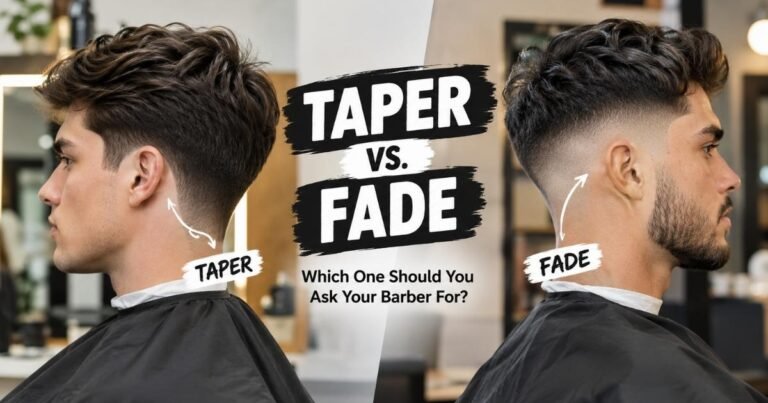
Read More About : Taper vs. Fade Haircut: Which One Should You Ask Your Barber For?
31. Straight Hair Undercut Fade
Straight hair tends to show blending and sharp lines clearly, which can make the cut look precise. It can also lie flat, so volume often comes from the cut itself and from blow-drying or product.
For an undercut fade for straight hair, a textured or layered top usually gives more movement than a single flat length.
32. Fine Hair Undercut Fade
“Fine” refers to strand thickness, not how much hair you have. You can have fine strands and high density, or fine strands and low density. The contrast between the faded sides and the top may make the top look fuller to some people, but that depends on density, hairline, and length.
Lightweight products or powders can add grip and lift without weighing the hair down.
33. Coarse Hair Undercut Fade
“Coarse” describes thick individual strands, which can stand off the head and resist styling. It’s separate from density: you can have coarse hair that’s sparse.
Matte products and a barber who understands weight removal may help the top sit better.
34. Afro + Bald Fade Undercut
The top is natural afro-textured hair, shaped into a rounded or flat top, with the sides faded down to skin. The line-up, a sharp edge at the hairline, helps define the shape.
Moisture matters for the top, so moisturizing products and a gentle hand help it keep its form. Some people get razor bumps from very close shaves, so tell your barber if that applies to you. They may adjust the finish or the technique. Choosing a barber with experience cutting coily texture also makes a difference.
35. Textured Fringe or Quiff Undercut Fade
This one is a decision as much as a style: should the front fall forward or lift up? Your front hairline, cowlicks, and growth direction often decide it. A hairline that grows forward may suit a fringe, while a front that already wants to lift may suit a quiff.
Ask your barber which way your hair naturally leans before choosing.
Undercut Fade Variations by Hair Type & Style
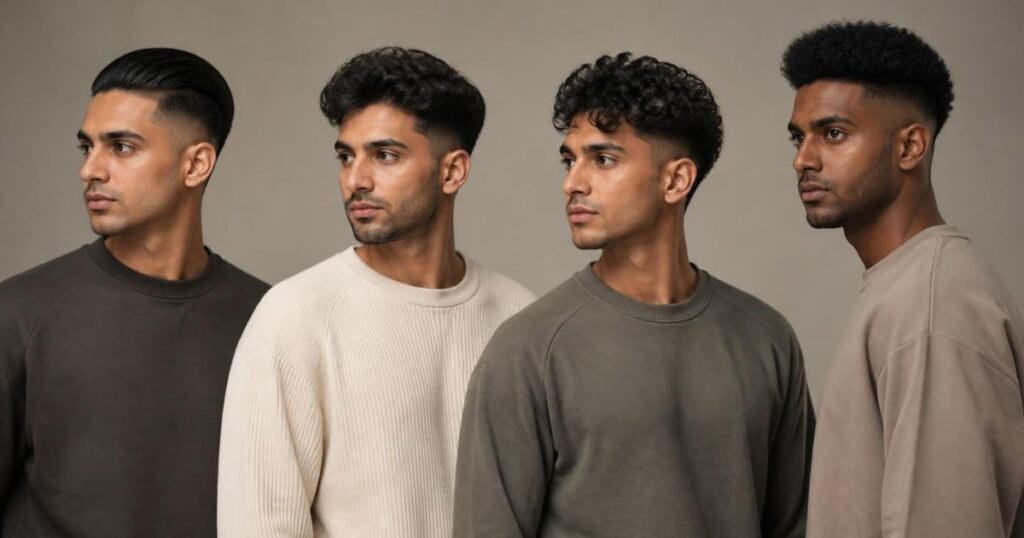
The entries above describe the cuts. These short notes cover what changes in practice when you add a particular hair type or pairing.
1. Curly Hair with Undercut Fade
Curl clumping and shrinkage mean the hair reads shorter than its true length. Ask your barber to check the length while the curls are in their natural state, not stretched or wet.
2. Wavy Hair Undercut Fade
Waves can change with humidity or length. A cowlick that was hidden by longer hair may show up once the sides go short, so mention it before cutting starts.
3. Thick Hair + High Fade Undercut
The gap between very short sides and a dense top is pronounced, so bulk on top may stand out. Ask whether weight removal would help the top sit better.
4. Straight Hair & Pompadour Undercut Fade
Straight hair often needs help to hold lift. Blow-drying forward and up, then setting the shape with a firm product, usually does more than product alone.
5. Slick Back Fade Undercut
Thick and fine hair behave differently when slicked: thick hair stays put but can look heavy, while fine hair may separate and show scalp. Growth direction at the front decides how easily the top lies back.
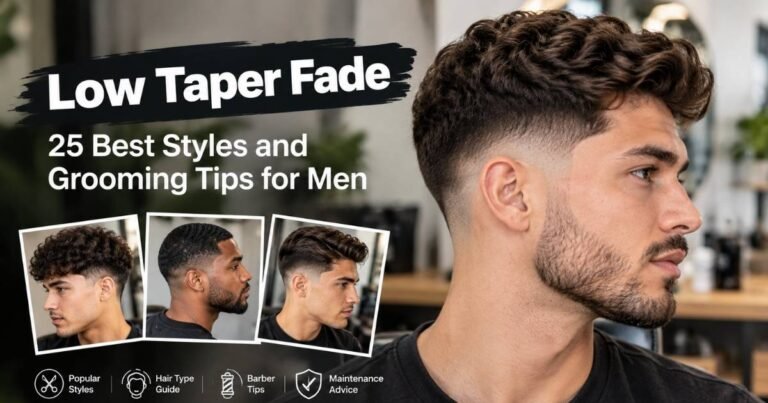
Read More About : Low Taper Fade: 25 Best Styles and Grooming Tips for Men
6. Mohawk Undercut Fade
A crown swirl or low density can make the center strip harder to stand up. The edges of the strip need regular tidying because the sides grow in around it.
7. Man Bun with Undercut Fade
While the top grows, keep the sides tidy so the cut still looks intentional. Mind the tension on your hairline.
8. Undercut Fade with Beard
Match the contrast so the fade and the beard don’t compete. A very sharp skin fade beside a soft, patchy beard can look uneven, so discuss the two together.
9. Afro + Bald Fade Undercut
The ongoing care is about moisture, shaping tools, and keeping the edges and line-up crisp between visits.
10. Textured Fringe or Quiff Undercut Fade
Natural waves or thicker strands often handle a fringe or quiff with less effort. Straighter or finer hair may need products to hold the shape.
Choosing the Right Undercut Fade for You
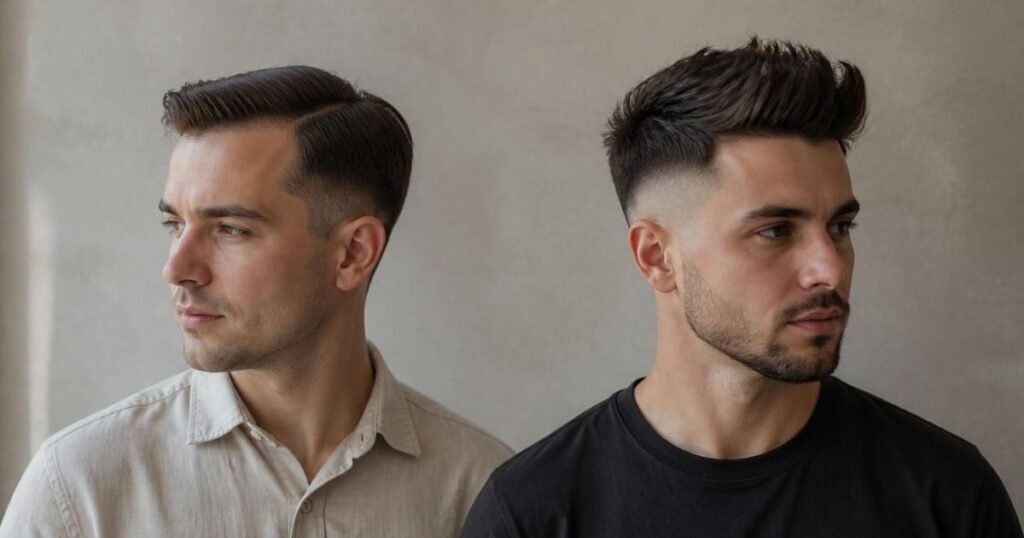
Work through the decision in this order: how bold you want the cut to look, what your hair actually does, and how much upkeep you’ll accept. When you collect reference photos, look for people with hair similar to yours, not only a similar face. Hair texture and density change the result more than most people expect.
Based on Face Shape
Fade height and top volume change vertical proportions, and that’s the main way face shape enters the picture. Hairline, forehead, beard, and jaw matter just as much as the label.
| Face shape | Things to consider |
| Oval | Proportions are fairly balanced, so many options may be worth trying |
| Round | A taller top or higher fade may add vertical length; a very wide top may add width |
| Square | A softer or textured top can balance a strong jawline; a sharp skin fade can emphasize it |
| Oblong | Extra height on top may lengthen the face further; a fringe or less lift may be worth considering |
| Diamond or heart | A fringe or side-swept front may soften a wider forehead |
Treat these as starting points. Your barber can adapt the cut to your actual features.
Based on Lifestyle & Maintenance Level
Ask yourself a few questions:
- How many minutes will you spend styling in the morning?
- Will you book regular appointments to keep the fade sharp?
- How do you feel about the awkward phase when it grows out?
Lower fades and tapers with a shorter top tend to ask less. Skin fades, disconnected lines, hair designs, and tall tops tend to ask more.
Professional vs. Edgy Looks
Think of it as a dial, not two categories. Each of these changes the intensity:
| Subtler | Bolder |
| Low fade or taper | High fade |
| Fade stops short of skin | Skin fade |
| Blended into the top | Disconnected |
| Natural part | Hard part or shaved design |
| Combed or brushed top | Tall, spiky, or very textured top |
Workplace norms vary, so check yours if it matters. If you want to make the cut look less severe, lowering the fade and softening the transition are the quickest changes.
Based on Hair Type and Texture
Straight, wavy, curly, and coily hair each need slightly different decisions about top length, product, and cowlicks. The gallery entries 28–34 cover the details. In short:
- Straight: consider texture or layering for movement.
- Wavy: give the waves enough length to show.
- Curly and coily: account for shrinkage and keep the top long enough for the pattern to form.
Read More About : Burst Fade Haircuts for Men: Stylish, Modern Looks & Ideas in 2026
Based on Hair Density
Density is how many strands you have, which is different from how thick each strand is. A thinner-density top shows more scalp and may look more contrasted against a faded side. A denser top holds shape and volume more easily but may need weight removed. Don’t expect a fade to make thin hair look fuller, since the effect depends on your hairline, density, and top length.
Based on Hairline and Growth Pattern
Receding hairlines, widow’s peaks, cowlicks at the crown or front, and side growth direction can all change the plan. A barber may adapt the cut by leaving the top longer at the front, shifting the part, or choosing a different style. Talk it through before the clippers come out.
Based on Top Length
Roughly, what different top lengths allow:
| Top length | Styles it typically allows |
| Short | Textured crop, short fringe, minimal styling |
| Medium | Quiff, side part, slick back, textured looks |
| Long | Slick back, pompadour, bun, long hair undercut |
A useful check: curl shrinkage and hair type change how length reads, so ask your barber to hold sections of your hair between their fingers and judge the real length.
How to Ask Your Barber for an Undercut Fade
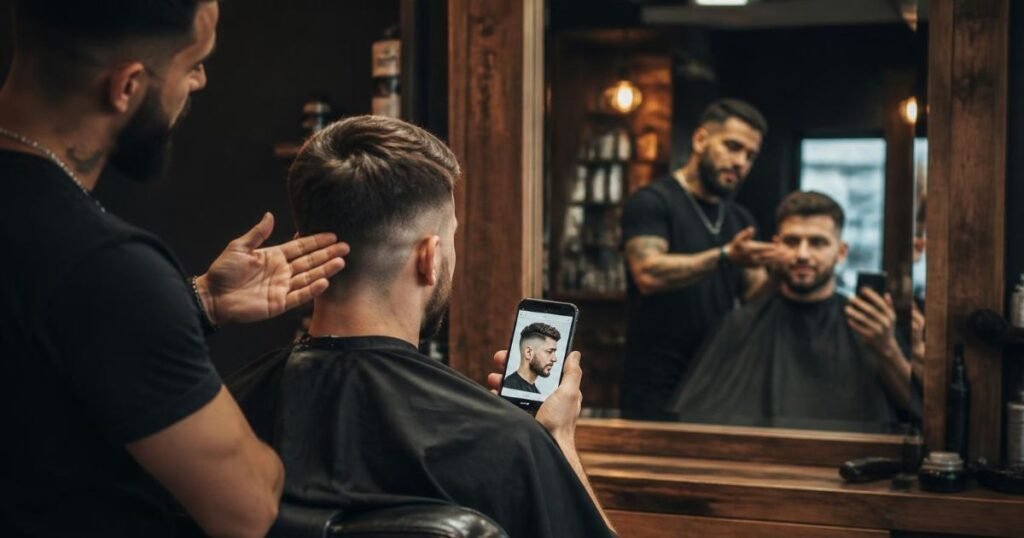
Not every barber uses the same words, so no single phrase guarantees the same result everywhere. If you’re wondering how to ask for an undercut fade, the most reliable approach is to cover six points. Together they remove most of the ambiguity.
Bring a Reference Photo
Bring photos from the front, side, and back if you can, ideally of someone with hair like yours. Your barber will adapt the cut to your hair, so the photo is a guide, not a template.
Tell Your Barber How Much Length You Want on Top
Describe the length by how it should function: “long enough to comb back” or “enough to push up.” Ask your barber to confirm the length against your hair type, since curl shrinkage can change what you get.
Choose a Low, Mid or High Fade
Describe the start point by landmarks, such as just above the ear, at the temple, or higher. Avoid clipper guard numbers unless you know your barber’s system, since they differ by region and brand.
Explain How Much Contrast You Want
Say whether you want a soft, gradual change or a sharp, obvious one. Decide whether the bottom of the fade should end at skin or at short stubble.
Ask About the Transition Into the Top
Decide whether you want the fade to blend into the top or stay separate. While you’re at it, ask about the neckline finish: rounded, square, or tapered.
Mention Your Hairline, Cowlicks or Growth Pattern
Mention these before the cutting starts, and ask your barber to work with them, not against them.
A sample you can adapt:
“I’d like a mid fade down to skin, blending naturally into the top, with no hard line. Keep the top long enough to comb back, with some texture. I have a cowlick at the crown, so can you work with it? Here’s a photo from the side and the back.”
How to Style and Maintain an Undercut Fade
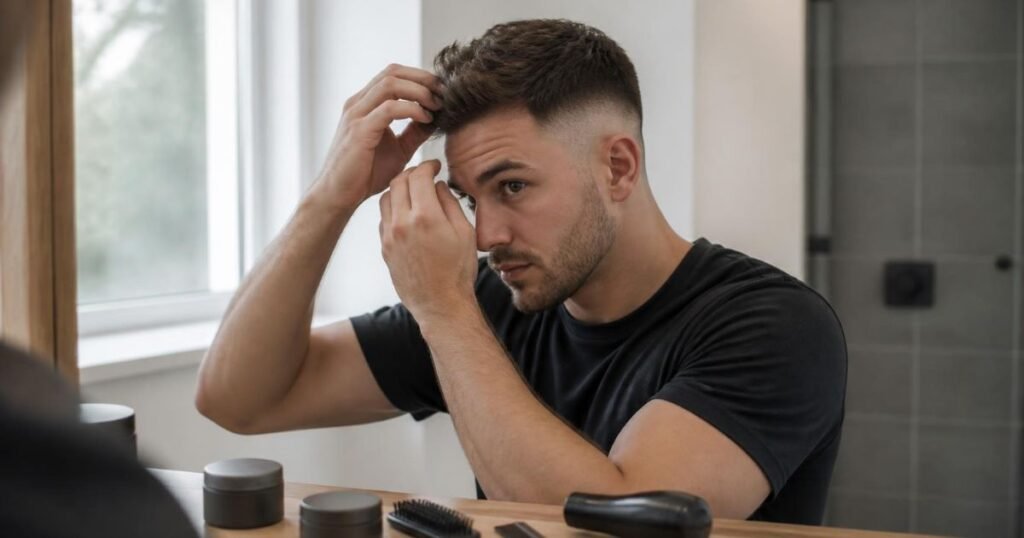
If you want to know how to style an undercut fade, the answer depends on top length and hair type more than on the fade itself. The sides stay put. The top is where the effort goes.
Essential Tools & Products
| Product or tool | Typical finish | Works well for |
| Matte clay | Matte, strong hold | Textured and messy looks, thicker hair |
| Paste | Matte to slight sheen, flexible hold | Textured looks, most hair types |
| Pomade | Shine, medium to strong hold | Slick back, side parts, pompadours |
| Cream | Light hold, natural look | Wavy and curly hair, softer styles |
| Sea salt spray | Texture, light hold | Straight or fine hair needing grip |
| Texture powder | Lift, grip | Fine hair needing volume |
You’ll also want a comb, a brush, and a blow-dryer. Brands vary, so check labels for hold and finish.
Styling Tips for Everyday Looks
A basic routine works for most versions:
- Towel-dry the hair so it’s damp, not dripping.
- Blow-dry in the direction you want the top to sit.
- Work a small amount of product through, starting at the front and moving back.
- Shape with your fingers or a comb, and adjust the amount next time.
From there, three common finishes: matte and textured (clay or paste, rough with fingers), slicked (pomade, comb straight back), and lifted (blow-dry up and forward, set with firm product).
How to Get a Longer Top Under Control
Longer tops usually need a bit more product and a firmer comb-through. The length also lets you try tying or tucking when you don’t want to style it.
How Often to Get It Trimmed
There isn’t a single right schedule. Timing depends on:
- How fast your hair grows
- How sharp the fade is (skin fades show regrowth sooner)
- Whether you have designs or a hard line
- How much definition you want to keep
| Version | How it tends to age |
| Low fade, taper | Grows out gradually |
| Mid fade | Moderate |
| High, skin, or disconnected | Shows regrowth sooner |
| Hair designs | Lines blur quickly |
Signs it’s time: the fade line has lost definition, the neckline is growing in, or the top has lost its shape. Ask your barber what they recommend for your growth rate.
How to Style an Undercut Fade for Straight Hair
Straight hair needs help to avoid falling flat. Blow-dry with direction, using a texture product or a light hold spray for grip, and avoid heavy products that weigh it down.
How to Style an Undercut Fade for Wavy or Curly Hair
Moisture matters most. A cream or curl product helps define the pattern, and air-drying or diffusing keeps it from frizzing. Avoid over-brushing, since it can break up curls. Hair varies, so adjust products based on what your own hair does.
How to Keep the Fade Looking Clean
To keep the sides looking sharp between visits, a few habits help:
- Brush or comb the sides to keep them tidy.
- Use gentle neckline touch-ups only if you’re confident.
- Protect exposed skin from the sun after a skin fade.
Avoid trying to fade the sides yourself. A blended gradient is hard to do well at home, and mistakes can mean a shorter cut than you intended.
Undercut vs Fade Vs Taper – Key Differences
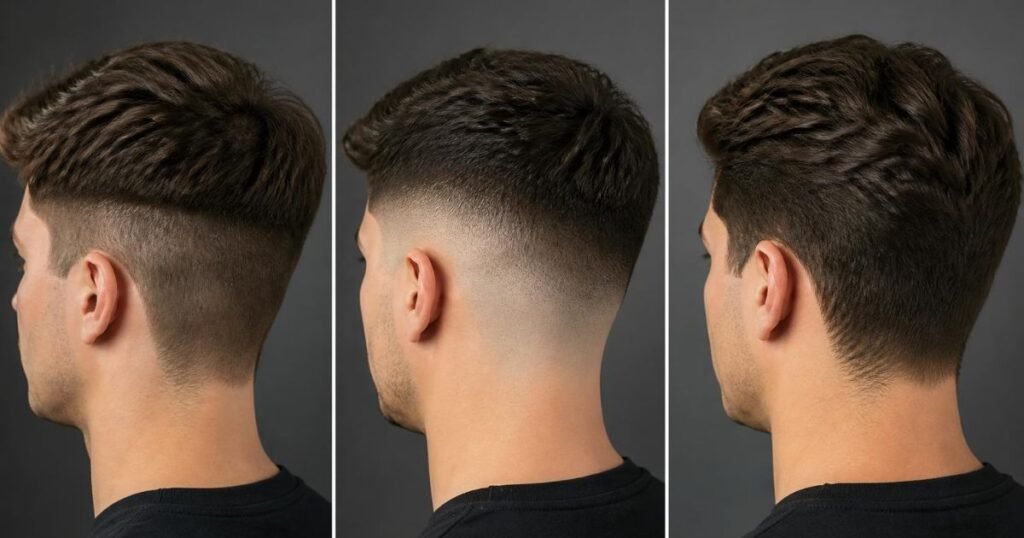
Readers searching for undercut vs fade vs taper usually want to know which to ask for. Here’s how the three compare:
| Undercut | Fade | Taper | |
| What changes | Length contrast between top and sides | Gradual shortening, often to skin | Gradual shortening that stays longer |
| Transition | Often abrupt or disconnected | Smooth gradient | Smooth, subtle |
| Contrast | High | Varies by fade height | Low to moderate |
| Scalp exposure | Depends on side length | Often more | Often less |
| Grow-out feel | Depends on the version | Can look overgrown sooner | Often more gradual |
Undercut vs Fade
An undercut is about contrast and, in its classic form, disconnection. A fade is about gradient and blend. They can be combined, which is why undercut fades exist.
Fade vs Taper
A taper shortens the hair gradually, especially around the neckline and sideburns, and usually leaves more length. A fade shortens more and can reach skin. A taper fade sits in between, and barbers don’t always draw the line in the same place.
When to Choose Each
- Want a visible length gap between top and sides? Ask for an undercut.
- Want a smooth gradient on the sides? Ask for a fade.
- Want a subtle finish around the neckline and sideburns? Ask for a taper.
- Want both a gradient and a long top? Ask for an undercut fade, and show a photo.
Explore More Styles
If you want to go deeper on a related topic, these are good next steps.
Pompadour Haircuts
A pompadour haircut guide goes further into volume, height, and the blow-drying that holds them.
Skin Fades
A skin fade guide covers the close finish, skin care, and the upkeep it involves.
Disconnected Undercuts
A disconnected undercut guide explains the hard-line look, where the break sits, and how to ask for it.
Best Hairstyles for 2026
A broader men’s hairstyles roundup can help if you’re comparing options beyond this cut.
FAQs
Does an Undercut Fade Work for Thin Hair?
It can, but it depends on whether “thin” means fine strands or low density, along with your hairline and top length. The contrast may make the top look fuller, but it isn’t guaranteed. Ask your barber how much length the top needs to cover the scalp.
How Long Does an Undercut Fade Last?
It varies with your growth rate and the version. Fades that reach skin, hard lines, and designs look overgrown sooner, while lower fades and tapers soften more slowly. See the trim section above for signs that it’s time.
Can I Combine a Fade with Other Styles (e.g., Pompadour, Faux Hawk)?
Yes, in general. The fade works with most top styles as long as the top is long enough for the style you want. See the gallery for pompadour, faux hawk, quiff, and slick back versions.
What Is the Difference Between an Undercut and a Fade?
An undercut is a big length contrast between the top and the sides, often with no blend. A fade is a gradual shortening. An undercut fade combines a faded side with a longer top.
Does an Undercut Fade Work for Curly or Wavy Hair?
Often, with some adjustments. The top needs enough length for curls or waves to form, and shrinkage changes how long it looks. See entries 28 and 29 for the details.
Can I Get an Undercut Fade with Long Hair?
Yes. A hidden version keeps the short section under the longer hair so it shows only when you tie it up. See entry 24.
Is an Undercut Fade Professional?
It depends on the version and the workplace. A low fade or taper, a blended transition, and a neatly combed top tend to read as more polished. Check any dress code.
How Often Should I Maintain an Undercut Fade?
That depends on your hair growth and how sharp you like the fade. For the signs that it’s time for a trim, see the trimming section. This question is about booking; the “how long does it last” question above is about how long it stays sharp.
How Do I Ask My Barber for an Undercut Fade?
Bring a reference photo, say how long you want the top, choose where the fade starts, and explain how much contrast and blend you want. Mention cowlicks or hairline concerns. The section above has a sample script.
Can I Get an Undercut Fade with a Beard?
Yes. The fade can taper into the beard so the two connect. Beard density and shape affect the result, and your barber will decide how to blend them. See entry 20.
Does an Undercut Fade Grow Out Well?
It depends on the version. The fade line softens first, then the top gains length. The in-between stage is more noticeable on high and disconnected cuts. Ask your barber how to manage the shape while it grows.
Final Thoughts
An undercut fade comes down to three decisions: how the sides transition, how high the fade starts, and how long and styled the top is. Everything else, from beards to hair type to workplace, adjusts those three.
Bring reference photos, describe the cut by what you want to see, and mention your hairline, cowlicks, and hair type before cutting starts. Your barber can adapt the cut to the hair you actually have.

Jake Miller is a barbering and men’s hairstyle enthusiast who shares practical tips, haircut inspiration, and the latest grooming trends at BarberZylo. He enjoys exploring modern and classic hairstyles and helping readers find fresh ideas for their next look.