
Men’s Haircut Prices: How Much Does A Barbershop Cut Cost By State
In the United States, the average men’s haircut prices about $29. The averages for individual states run from $15 in West Virginia to $42 in Delaware. Your own quote can land well outside that spread, depending on the shop, the barber, and what’s included.
This guide shows the average for all 50 states, explains why they differ, and gives you ways to check whether a price is reasonable before you sit in the chair. If you’re in a hurry, jump to the state table. Readers in the UK and elsewhere will find a short section on non-US prices in the national average section and the FAQ.
The National Average For A Men’s Haircut
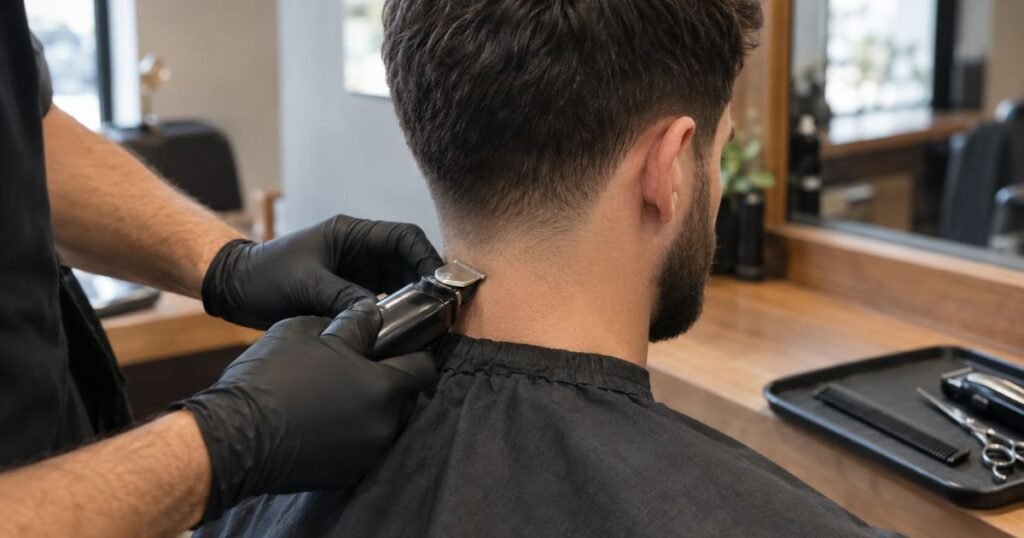
StyleSeat puts the US average at about $29. It also gives a general range of $15 to $42, but that range is simply the lowest and highest state averages in its table. Real prices go beyond it. A no-frills clipper cut at a low-cost shop can come in well under $15, and a premium barbershop can charge far more than $42.
A standard men’s haircut usually means a clipper cut, a scissor cut, or a mix of the two, finished with a neckline clean-up. Shops differ on what else is included. Some things that are often priced separately:
- Shampoo and wash
- Hot towel service
- Beard trim or shaping
- Line-up (a crisp edge along the hairline)
- Styling products or a finishing style
So the number on a price list may not describe the service you actually want. Use the national average as a benchmark for judging a quote. It isn’t a target.
Longer or thicker hair can also take more time to cut, which some shops reflect in the price. If your hair is longer, thicker, curly, or coily, it’s worth asking whether that changes the price. More on that in the section on extra fees.
Outside the US: UK prices are lower in absolute terms and use a different currency, so don’t compare the numbers directly. One 2025 analysis by Ripe Hair & Beauty, based on Expatistan cost-of-living data for 36 UK towns and cities, put the average UK men’s haircut at £13, with Stoke-on-Trent around £9 and Edinburgh the priciest at £21. That’s a single estimate built on cost-of-living data rather than a survey of barbershop price lists. Other sources report higher UK averages, partly because they define a “haircut” differently. If you’re in the UK, check a few local price lists as well. The state-by-state table below applies to the US only.
Why Prices Vary So Much By State
No single factor sets a barber’s price. Costs, local competition, and the barber’s own standing all play a part, and they interact. A shop in a pricey area with an in-demand barber will charge differently from a quiet-town shop with a newly licensed one. The four factors below are influences, not a formula, and the data here can’t tell you how much each one contributes.
Cost Of Living And Rent
A barbershop has fixed costs it must cover however many haircuts it does: commercial lease, utilities, insurance, equipment, supplies, and wages. Those overhead costs are spread across the cuts the shop sells, so higher rent and wages tend to push prices up.
A state average can hide a lot, though. A barbershop in a big city and one in a small rural town in the same state face very different costs. Urban and rural pricing can differ sharply within a single state, which is why a state figure shouldn’t be treated as your local price.
The data also shows that cost of living doesn’t explain everything. Hawaii and New York are both known as expensive places to live, yet in this dataset their averages ($29 and $28) sit at or just below the national figure. This could be due to how the data was collected, or the mix of shops included. In New York’s case, the figure may also reflect a gap between the city and the rest of the state.
Licensing And Regulation
Barbering is a licensed trade in the US, and the rules are set at state level. Training requirements, exams, renewal, and inspections differ from state to state, and some states license barbers and cosmetologists separately. These rules may affect how many barbers are available and what they cost to employ, but we can’t say they directly set prices.
For you as a client, a license is a basic check on training and hygiene standards. If a price looks suspiciously low, it’s reasonable to ask whether the barber is licensed. Your state’s licensing board will have the specific requirements and, in many states, a way to look up a license.
Local Demand And Culture
Places differ in how people get their hair cut. In some areas, a regular appointment with a favorite barber is an established routine, and shops can build loyal clienteles. In others, quick walk-in chains dominate and compete mainly on price. The number of competing shops nearby, the popularity of detailed styles such as skin fades, and seasonal or tourist demand may all influence what shops charge.
This is the hardest factor to measure, so treat it as a general explanation, not a rule you can apply to a specific state.
Read More About : How Often Do Men Get Haircuts? (A Barber’s Guide for Men)
Barber Experience
Two barbers in the same town can charge quite different amounts. Skill level, years in the trade, specialty (fades, textured hair, long hair, straight-razor work), reputation, and how booked up they are all feed into price. A barber with a waitlist can charge more than one with open chairs.
How a barber is paid matters too. Some rent a chair and set their own prices. Others work on commission or for a shop owner who sets the menu. Barbers still in training, or students at a barber school, often charge less, and are discussed in the tips below.
If you have a demanding style, or hair that is thin, curly, or coily, a barber who regularly works with your hair type may be worth a higher price. That’s something to weigh, not a rule.
Men’s haircut prices by state
The table lists average men’s haircut prices for all 50 states, in alphabetical order so you can find yours quickly. The last column shows how far each state sits from the $29 national average. We calculated that column ourselves by subtracting $29 from each figure.
Source: StyleSeat, “Men’s Haircut Prices: How Much Will It Cost You?” (retrieved 29 October 2026). Prices are averages per appointment in US dollars. The source doesn’t disclose sample sizes or the date the data was collected.
| State | Average price | Compared with $29 average |
| Alabama | $29 | $0 |
| Alaska | $32 | +$3 |
| Arizona | $31 | +$2 |
| Arkansas | $26 | −$3 |
| California | $40 | +$11 |
| Colorado | $35 | +$6 |
| Connecticut | $29 | $0 |
| Delaware | $42 | +$13 |
| Florida | $29 | $0 |
| Georgia | $33 | +$4 |
| Hawaii | $29 | $0 |
| Idaho | $25 | −$4 |
| Illinois | $40 | +$11 |
| Indiana | $25 | −$4 |
| Iowa | $20 | −$9 |
| Kansas | $24 | −$5 |
| Kentucky | $28 | −$1 |
| Louisiana | $31 | +$2 |
| Maine | $37 | +$8 |
| Maryland | $36 | +$7 |
| Massachusetts | $37 | +$8 |
| Michigan | $32 | +$3 |
| Minnesota | $34 | +$5 |
| Mississippi | $24 | −$5 |
| Missouri | $34 | +$5 |
| Montana | $20 | −$9 |
| Nebraska | $28 | −$1 |
| Nevada | $30 | +$1 |
| New Hampshire | $25 | −$4 |
| New Jersey | $30 | +$1 |
| New Mexico | $26 | −$3 |
| New York | $28 | −$1 |
| North Carolina | $27 | −$2 |
| North Dakota | $22 | −$7 |
| Ohio | $29 | $0 |
| Oklahoma | $30 | +$1 |
| Oregon | $30 | +$1 |
| Pennsylvania | $28 | −$1 |
| Rhode Island | $22 | −$7 |
| South Carolina | $29 | $0 |
| South Dakota | $29 | $0 |
| Tennessee | $30 | +$1 |
| Texas | $31 | +$2 |
| Utah | $22 | −$7 |
| Vermont | $29 | $0 |
| Virginia | $33 | +$4 |
| Washington | $40 | +$11 |
| West Virginia | $15 | −$14 |
| Wisconsin | $26 | −$3 |
| Wyoming | $26 | −$3 |
Remember that these are averages. A high-end shop in a “cheap” state can charge more than the average of a “pricey” one, and the reverse is also true. A state average also can’t tell you what any particular city charges. The same source reports a figure for New York City several times higher than its New York State average. We haven’t independently verified that number, but it shows how far a city can sit from its state.
States With The Highest Men’s Haircut Prices
Delaware tops the table at $42. California, Illinois, and Washington follow at $40. Maine and Massachusetts come next at $37, then Maryland at $36, Colorado at $35, and Minnesota and Missouri at $34.
The pattern is mixed, not simply “big, expensive states cost more.” Delaware is small, and the source doesn’t say how many stylists its figure rests on. Averages from smaller samples can swing more easily than those from large ones. The leading group also includes states with major metropolitan areas and states without them, which suggests that local factors matter more than any single trend.
If you’re moving or traveling to one of these states, expect to budget a few dollars more than the national average at an average shop, and treat a quote near the state figure as ordinary rather than a sign of overcharging.
States With The Lowest Men’s Haircut Prices
West Virginia is lowest at $15, well below the next group. Iowa and Montana are at $20, and North Dakota, Rhode Island, and Utah at $22. Kansas and Mississippi are at $24, with Idaho, Indiana, and New Hampshire at $25.
A low average doesn’t automatically mean better value. It can reflect lower local costs, a higher share of budget or walk-in shops, or limited data. West Virginia’s figure sits $5 below the next-lowest state and $14 below the national average, so treat it as an indication of a lower-cost market and not as an exact price you’ll find on any given street.
A lower price can still be a good deal if the barber is licensed, the shop is clean, and the cut is what you wanted. Judge by the result and the service, not just the number.
Read More About : Pomade vs Hair Clay: Which One Actually Works for Your Hair?
Average Men’s Haircut Prices By Region
To see broader patterns, we grouped the states into the four US Census Bureau regions and averaged each group. These are simple, unweighted averages of the state figures above. They don’t account for population or the number of barbers in each state, and the table doesn’t include Washington, D.C. The regional figures are our own calculation, not data published by the source.
| Region | States included | Simple average | Lowest to highest state |
| Northeast | 9 | $29 | $22 (Rhode Island) to $37 (Maine, Massachusetts) |
| Midwest | 12 | $29 | $20 (Iowa) to $40 (Illinois) |
| South | 16 | $30 | $15 (West Virginia) to $42 (Delaware) |
| West | 13 | $30 | $20 (Montana) to $40 (California, Washington) |
The first thing to notice is how close the four averages are. All of them land within a dollar or so of 29–30. The differences within each region are much larger than the differences between regions. The South has the widest spread, from $15 to $42, and the Northeast the narrowest.
So knowing your region tells you very little about your price. Your state, your city, and the type of shop matter far more. City prices can differ sharply from the state or region around them, and since the source doesn’t publish city-level data, we haven’t listed any. A quick look at the price lists of two or three barbershops near you will tell you more than any regional figure.
How Much Do Different Men’s Haircuts And Barber Services Cost?
The price of a haircut depends on what’s actually being done. Time, technique, and detail work all affect the price, and one sourced set of numbers can’t cover every service. The two figures below come from the same StyleSeat guide. Beyond those, we explain what changes the price rather than invent numbers.
| Service | What it involves | Price information |
| Standard haircut | Clipper or scissor cut, neckline clean-up | About $29 national average |
| Fade | Sides and back blended from very short (sometimes skin) up to longer hair | $30 to $40, per StyleSeat |
| Beard trim | Shaping and trimming facial hair | $5 to $15, per StyleSeat |
| Haircut plus beard trim | Both services in one visit | Check the shop’s menu; some shops price combinations as a package |
| Line-up (edge-up) | Sharp edge along hairline and beard line | Often a small add-on; confirm if it’s included |
| Kids’ and seniors’ cuts | Shorter or simpler cuts | Some shops offer different prices; ask |
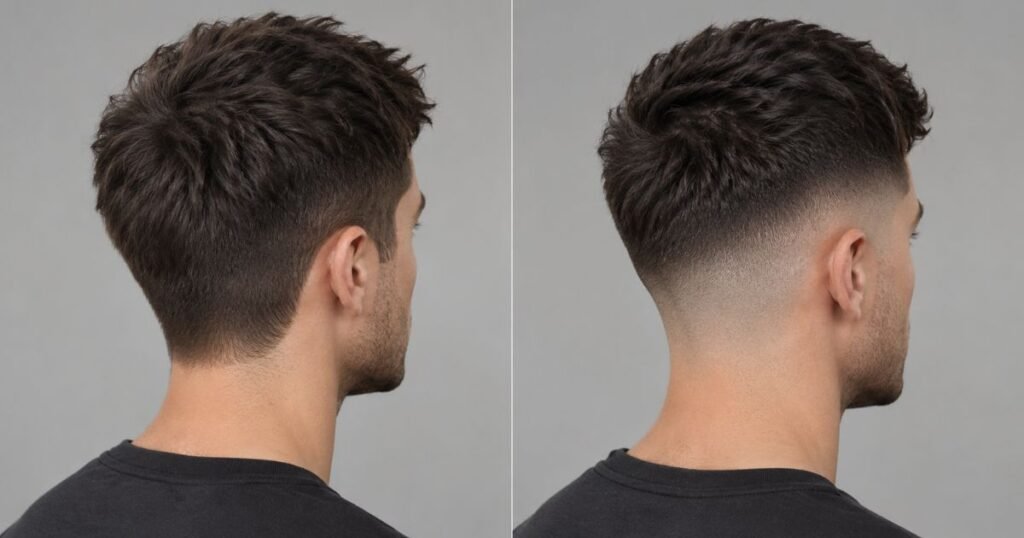
Why a fade can cost more than a basic cut. A fade takes more time and more blending work, and the quality is easy to see, so there’s less room for error. A taper is a related but different cut. In a taper, the hair gets gradually shorter toward the neckline and around the ears, but the sides usually stay longer than in a fade. A fade goes shorter, often down to the skin, and the blend is more dramatic. Fades are also described by where the shortest part starts: a low fade begins near the ears and neckline, a mid fade sits higher on the sides, and a high fade starts closer to the temples.
Hair type matters here, too. Fine, thick, curly, or coily hair may need different tools or techniques, which can change how long a cut takes. Some shops price for this and some don’t, so it’s worth asking before you book. Don’t assume a higher price means better work or a lower price means worse.
Describing what you want. Terms like “mid fade with scissor work on top” help a barber price and plan the cut. It also helps to ask whether the price includes a wash, a line-up, or a finish. Different shops use these terms slightly differently, so a short conversation or a reference photo is safer than relying on one phrase.
What This Means If You’re A Client
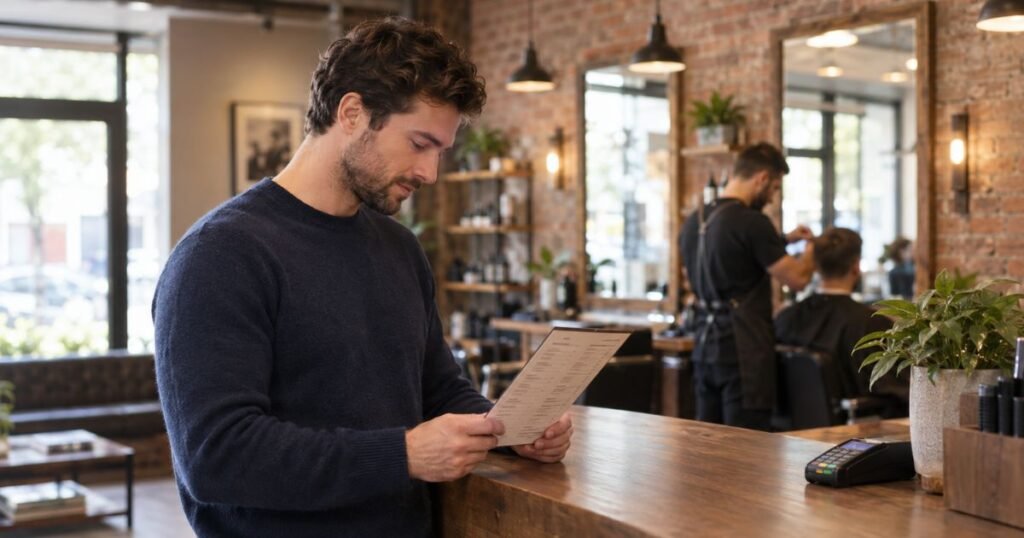
The tips below are about actions. This section is about interpretation: how to decide whether a quote is reasonable. Here’s a simple way to check:
- Start with your state’s average from the table as a rough baseline.
- Adjust for the venue. A quick walk-in chain, an independent neighborhood barber, and a premium barbershop experience compete on different things. Chains often compete on speed and price. Independent and premium shops may charge more for time, skill, atmosphere, or extras.
- Adjust for the service. A fade, a long-hair cut, or a cut plus beard work will probably sit above a basic trim.
- Adjust for your hair and the barber. Complex or thick hair, or a barber in high demand, can add to the price.
- Ask what’s included, then decide whether the gap is explained.
A worked example (hypothetical numbers): Say your state’s average is $30, and a shop quotes $45 for a haircut. That’s 50% above average, so it’s worth a question, but not an automatic red flag. If the shop is in a high-rent downtown area, the barber is a booked-out specialist, and the price includes a wash and hot towel, the gap may well be justified. If it’s an ordinary shop with no extras and no waitlist, you may want to compare other options.
Budgeting for regular grooming: Multiply the price by how often you get a cut, then add a tip. Again, with made-up numbers: a $30 cut plus a 20% tip is $36. If you go every four weeks, that’s 13 visits a year, or $468. How often you go depends on your style, how fast your hair grows, and your own preference, so use your own schedule.
Read More About : The 20+ Most Attractive Men’s Hairstyles That Women Love (According to Our Readers)
Tips to Get the Best Deal on Your Men’s Haircut
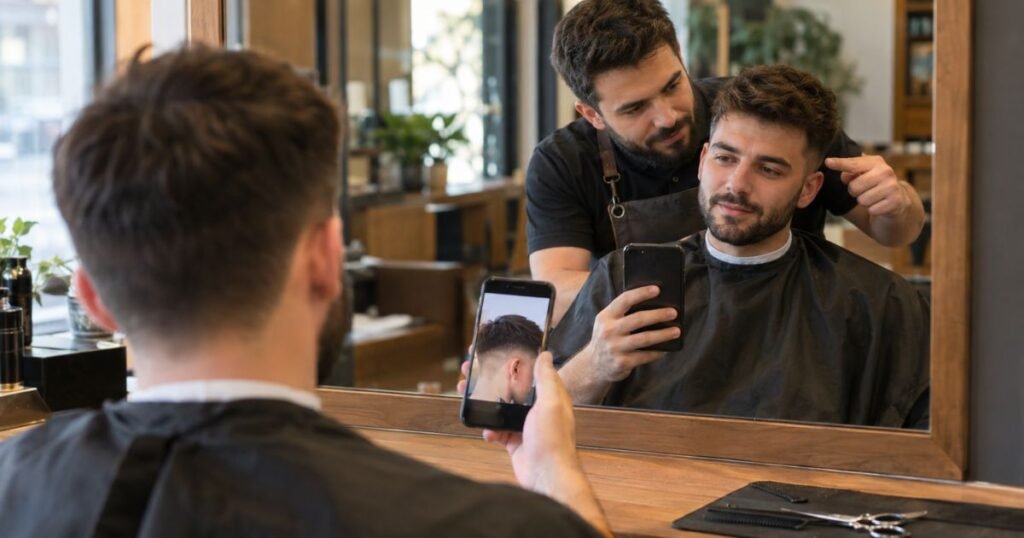
Real savings come from knowing the price and clarifying what’s included, not from cutting corners on quality. A few other options can lower the cost. Barber school students and apprentices often charge less, usually under supervision. Some shops offer loyalty cards or package deals, and some price quieter times differently. Ask before assuming any of these exist.
Know the prices before you book
Most shops list a service menu on their website, booking page, or social media. If they don’t, a quick call or message works. Look for a price per service and note what the base haircut includes. Comparing two or three nearby shops gives you a much better local benchmark than any state average, and a shop that clearly lists its prices makes it easier to compare.
- Is the price for a cut only, or cut plus finish?
- Is the price different for walk-ins and appointments?
- Is there a surcharge for longer, thicker, or textured hair?
Check for extra fees before booking
Extra charges are the most common source of a bill that’s higher than expected. Things worth asking about:
- Shampoo or wash
- Beard trim, line-up, or other add-ons
- Styling products
- Booking or card-processing fees
- Higher pricing for weekends or peak times
- Sales tax, which can apply to personal services in some places
Hair type is one more thing to raise. Some clients report being charged more for textured hair, sometimes called the “natural hair tax.” We can’t say how widespread this is, but if you have textured hair, it’s reasonable to ask whether the price changes, and to look at shops that specialize in your hair type or state a flat price.
A simple script: “Is that the full price for a haircut and a line-up, or are there any extras?”
Read More About : Best Haircuts for Men in 2026 : 35+ Trending Styles & Styling Tips
Request a consultation
A short conversation before the cut starts helps make sure you’re paying for the right service. Say what you want, ask what the barber would recommend for your hair, and confirm the price. This is especially useful with a new barber, a big change, or a more complex cut.
Useful things to cover:
- How short you want the sides and back
- How much length to leave on top
- Whether you want a taper, a fade, or something softer
- How much styling effort you’re willing to put in each day
A good barber may suggest changes based on your hair’s growth pattern, texture, or density. That input is part of what you’re paying for.
Show the barber photos
Photos reduce misunderstandings that can lead to a redo, and a redo costs time and possibly money. If you can, bring photos that show the front, sides, and back. Choose pictures of hair that’s similar to yours in texture and thickness, because the same cut can look different on different hair.
Be ready for a barber to say a particular look won’t work with your hair. Ask what the closest alternative would be.
Ask for hair care advice (optional)
While you’re in the chair, ask how to style the cut at home, what kind of product suits it, and how it will look as it grows out. The answers help you get more from each visit and may make the cut last better between appointments. This is a bonus, not a pricing tactic, so use it if it’s useful.
Frequently asked questions
What is the average cost of a men’s haircut?
About $29 in the US, according to StyleSeat’s data, with state averages from $15 to $42. The price you pay depends on your location, the type of shop, and what’s included. See the state table for your area.
What’s a fair price for a men’s haircut?
A fair price is one that fits your local market, the type of shop, the barber’s experience, and what’s included. The range of state averages ($15 to $42) shows where typical averages sit, but it isn’t a hard limit on what’s fair. Compare two or three shops near you, and use the step-by-step check in the client section above.
How much do you tip for a $20 haircut?
A commonly cited range for tipping a barber is 15 to 20 percent, which works out to $3 to $4 on a $20 haircut. Many people round up to the nearest convenient amount. If the cut was complex or you’re very happy with the result, you might tip more. If a shop has discounted the price, many people tip on the original price, though there’s no single rule. Tipping customs differ outside the US, so check local norms if you’re elsewhere.
Why are haircuts so expensive?
A haircut price covers more than the barber’s time. It also helps pay for rent, supplies, insurance, and the training behind the work. A detailed cut can take longer and needs real skill. If your price seems high, check what’s included and compare it with nearby shops.
How much does a men’s haircut cost in the UK?
One 2025 analysis put the UK average at around £13, with big differences between towns and cities. Edinburgh was the highest of the 36 places it covered, at £21. Different sources use different definitions, so figures vary. Tipping a barber in the UK is generally treated as optional, though customs vary by shop.
Conclusion
The national average of about $29 is a useful starting point, but your state, your city, and the kind of shop you visit will move the number. A quote is easier to judge once you know what’s included, so ask about extras before you sit down. Prices change, so use the figures here as a benchmark and check a couple of local price lists before you book. The state data was retrieved on 29 October 2026 and should be rechecked periodically.

Jake Miller is a barbering and men’s hairstyle enthusiast who shares practical tips, haircut inspiration, and the latest grooming trends at BarberZylo. He enjoys exploring modern and classic hairstyles and helping readers find fresh ideas for their next look.





5 Comments