
How Often Do Men Get Haircuts? (A Barber’s Guide for Men)
Most men land somewhere between every two weeks and every three months, and the right number depends mostly on how short and sharp your cut is. Tight fades and clipper cuts show growth within a couple of weeks. Longer, scissor-cut styles can go for a month and a half or more before they look off.
If you’re wondering how often do men get haircuts in general, habits vary a lot, and no single average is useful here. This guide gives typical ranges by cut and hair type, then shows you how to work out your own schedule. The ranges are rules of thumb. Your growth rate, hair texture, and how polished you like to look can shift them earlier or later.
How often should I get a haircut if my hair is short?
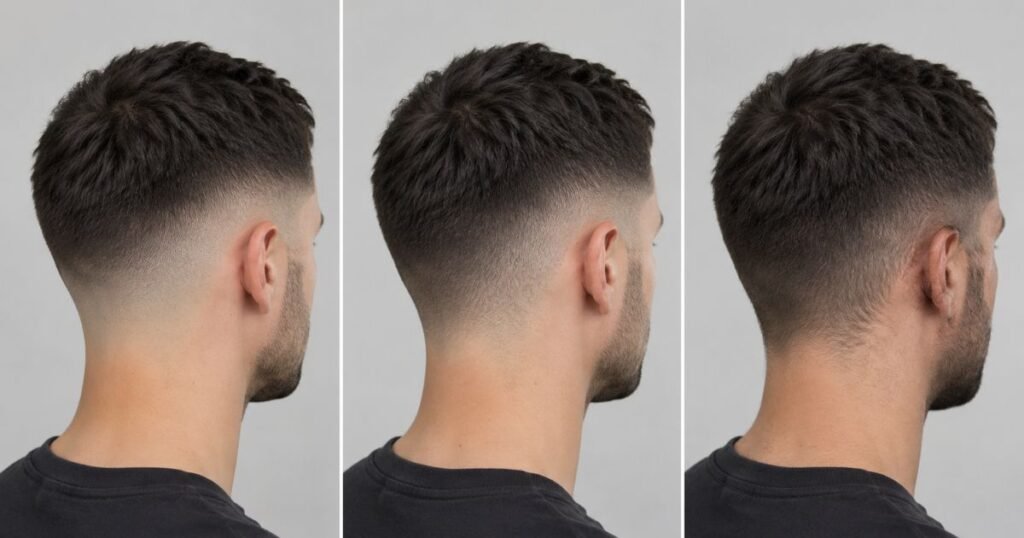
The shorter and more defined your haircut is, the sooner it looks overdue. On a buzz cut or a skin fade, a few millimeters of growth is a big change in proportion. On a longer style, the same growth barely registers.
Hair is often cited as growing roughly half an inch (about 1 cm) per month on average, though the rate varies from person to person. Even at that pace, two weeks adds around a quarter inch (about 5 mm). On hair clipped to a few millimeters, that doubles the length. On hair that’s three inches on top, it’s hardly noticeable.
What drives the timing is contrast. A cut with tight sides, a clean neckline, and a longer top loses its shape faster than a cut with one even length, because the gradient and edges soften first.
A few things influence how soon you’ll notice:
- Growth rate. Some men are due for a cut earlier than others, even with the same haircut.
- Density. Dense hair fills in quickly and makes a neckline look heavy sooner. Sparse areas can make grow-out less obvious.
- Hairline and neckline shape. Hair that grows low on the neck or around the ears tends to look untidy first.
- Your tolerance. Some people are bothered by a fuzzy neckline at week two, and others don’t mind until week six.
If you want to stretch the time between full cuts, a quick neckline clean-up can help. The Frequency Guide below covers it.
How Often Do Men Get Haircuts If They Have Long Hair?
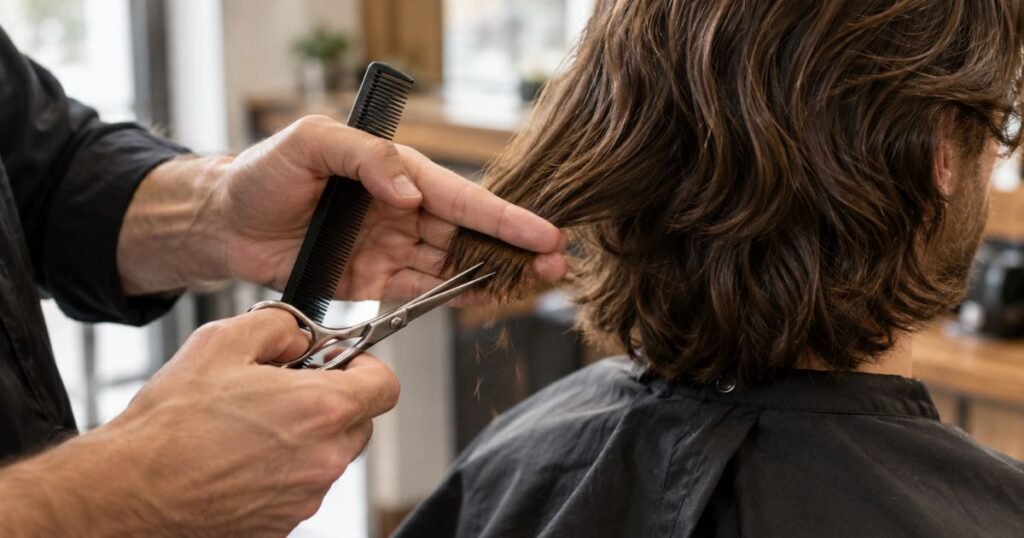
Long hair needs cuts less often, but it still needs them. Hair that’s shoulder-length or longer isn’t trimmed to keep a sharp outline. The goal is to keep the ends healthy and the overall shape intact.
Over time, the ends of long hair take the most wear, from brushing, friction against clothes, sun, heat styling, and chemical treatments like bleach. Hair that’s been growing for a long time has also been exposed to all of that for longer, and the damage can show up as split ends or a frayed look. Cutting off the damaged section removes the problem, but it can’t repair damage that’s already there.
Trimming also keeps the silhouette balanced. Without any shaping, long hair can grow unevenly, so one side or the back becomes noticeably longer, and thick hair can get heavy and shapeless. A trim lets a barber even things out and take weight out where needed.
How often depends on your goal. If you’re maintaining a specific shape, you’ll want trims at a steadier pace. If you’re growing your hair out, you can go longer between them. The sections on the Long Hair Cut and growing out cover this in more detail.
The Frequency Guide by Haircut Style
The ranges below describe how long each style typically holds its shape. They’re a starting point, not a deadline. The table gives the overview, and the sections after it add what’s specific to each cut.
| Style | What defines it | Typical range | What shows first when overdue |
| Fade | Sides and back blend from very short to longer | Every 2–4 weeks | The blend softens and the skin or shortest area looks fuzzy |
| Taper | Sides shorten gradually, mainly at the neckline and sideburns | Every 4–6 weeks | The neckline and ears look thick |
| Crew cut | Short tapered sides, slightly longer top | Every 3–5 weeks | The top loses its neat length and the sides puff out |
| Shape up / line up | Crisp hairline, temples, and sometimes beard line | Every 2–3 weeks | The hairline edge turns fuzzy |
| Classic haircut / side part | Scissor-cut top with a defined part | Every 4–6 weeks | The part and neckline lose their line |
| Long hair cut | Length kept, ends and shape maintained | Every 8–12 weeks | Uneven ends and extra weight |
| Head shave | Scalp kept smooth | Every 1–2 weeks | Stubble |
Fade: Every 2–4 Weeks
A fade blends the hair on the sides and back from very short at the bottom to longer higher up. The blend is what people notice, and it’s also what fades first as hair grows out.
How soon it happens depends on how short the fade goes. A skin fade (sometimes called a bald fade), which goes down to the skin at its lowest point, shows regrowth sooner than a fade that stops at a short guard length. The height matters too:
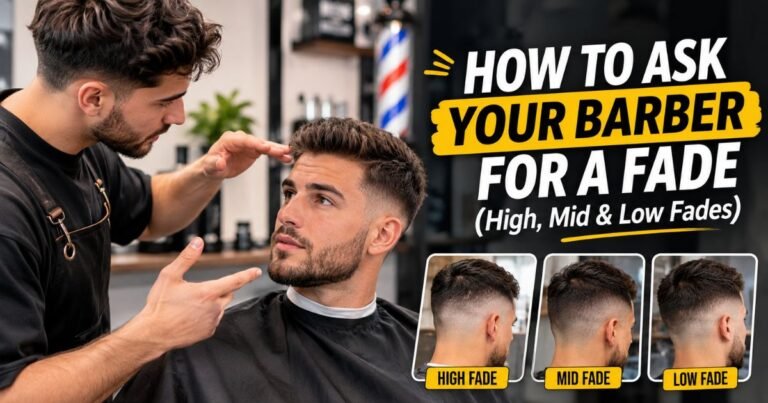
| Fade type | Where the blend starts | What to notice |
| Low fade | Just above the ears and around the neckline | Subtle, with most of the sides left at a longer length |
| Mid fade | Around the temple area | A balanced middle ground with more visible contrast |
| High fade | Higher up on the head | Sharp contrast, and the shortest area is large, so growth shows quickly |
As a fade grows out, the transition line softens and the shortest section starts to look shadowy instead of smooth. That’s usually the point when people say a fade looks grown out.
To ask for one, it helps to specify:
- the fade height (low, mid, or high);
- the shortest length (skin or a particular guard number);
- how you’d like the top handled;
- whether you want a squared or natural neckline.
Guard numbers and terms vary between shops and countries. In the UK, guards are often called grades. Showing a photo usually communicates more reliably than a number alone.
Hair type can change how a fade grows out. Tightly coiled hair can look different from straight hair at the same length because of how it sits and springs back, and a barber who works with your texture can tell you what to expect.
Taper: Every 4–6 Weeks
A taper shortens gradually too, but it doesn’t go down to the skin. The change in length is smaller, and it’s mostly concentrated at the neckline, sideburns, and around the ears. The sides generally stay longer than they would in a fade.
That’s why a taper tends to grow out more quietly. There’s less contrast to lose, so it looks acceptable for longer. What gives it away is the neckline and the hair around the ears getting thick.
The practical difference from a fade comes down to contrast:
| Fade | Taper | |
| How short it gets | Very short, often to skin | Short but typically not to skin |
| How noticeable the blend is | High | Subtle |
| When grow-out shows | Sooner | Later |
If you like a neat look without a strong contrast between the sides and the top, a taper may be worth discussing with your barber.
Crew Cut: Every 3–5 Weeks
A crew cut has short, tapered sides and back, with the top left a little longer, usually slightly longer toward the front. It’s low-maintenance to style, but it depends on keeping the top short and the sides tidy.
It’s easy to confuse with similar cuts:
- Buzz cut: the same clipper length all over, with no contrast between the top and sides.
- Ivy League cut: a similar structure with a longer top that can be combed or parted.
For a crew cut, tell the barber how long you want the top and how tight the sides and neckline should be. As it grows out, the top starts to look shaggy and the sides lose their definition. If your hair is on the finer side, a very short crew cut may show more scalp, which is worth bringing up beforehand.
Shape Up / Line Up: Every 2–3 Weeks
This isn’t a haircut style so much as a maintenance service. A shape up, or line up, tidies the hairline, temples, and sometimes the beard line, usually with clippers or a razor. In the UK, you’ll often hear it called an edge-up or a clean-up.
It’s useful because hairlines blur long before the rest of a cut changes shape. A crisp edge can make a haircut look recent even if the length has crept up.
You can request one on its own or add it to a haircut. If your hairline is receding or irregular, it’s worth talking it through with the barber so the line suits your hairline rather than forcing one.
Read More About : Men’s Haircut Prices: How Much Does A Barbershop Cut Cost By State
Classic Haircut / Side Part: Every 4–6 Weeks
A classic haircut generally has shorter, tapered sides and a longer top that’s combed to one side with a defined part. These cuts are usually scissor-led, often using scissor-over-comb on the sides for a softer blend.
Because the length is more forgiving, they tend to hold up longer. What changes first is the neckline, the area around the ears, and the part. Hair around the part can start to fall the wrong way, and cowlicks (spots where hair grows against the intended direction) can become more obvious as it gets longer.
For styling, a comb with a light to moderate hold product, such as cream or pomade, is typical. How well the part stays depends on your natural growth direction and density.
Long Hair Cut: Every 8–12 Weeks
For longer styles, the typical range is much wider apart. The reasoning is covered above. The goal is to remove damaged ends and keep the shape without taking off length.
Fine hair may show frayed ends sooner, and thick or curly hair may need shaping to manage bulk. If you color, bleach, or heat-style your hair, you might want trims on a shorter cycle.
Head Shave: Every 1–2 Weeks
A head shave works differently from a haircut. The interval describes how often you re-shave to keep the scalp smooth, not how often you trim.
Stubble shows up fast. Some people with dark, quick-growing hair see it within a day or two, while others can go longer. You can use clippers on a low setting or a razor for a smoother finish, and each affects how long the result lasts.
Shaved scalps can get irritated. If you get razor bumps or persistent irritation, it’s worth asking a doctor or dermatologist about it.
The Frequency Guide by Hair Type
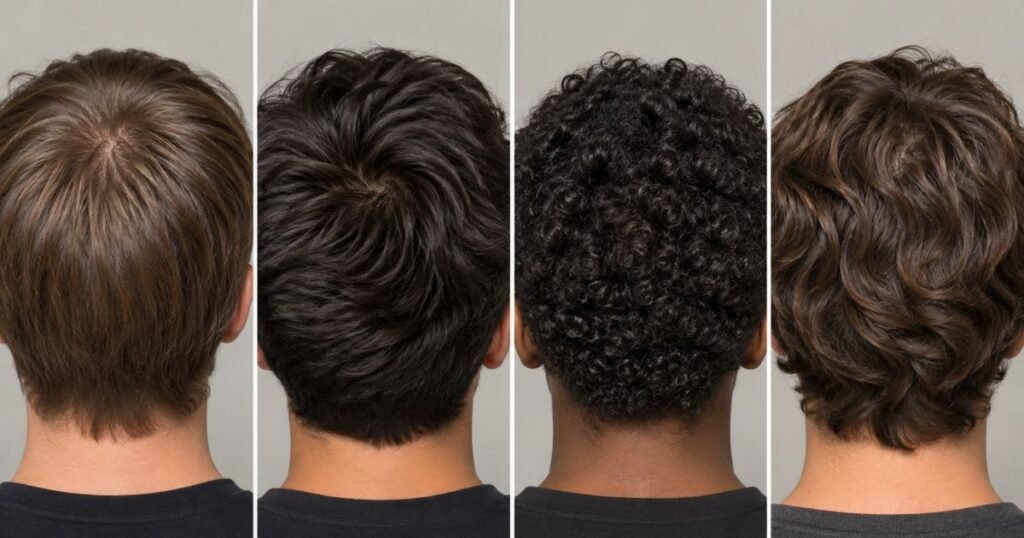
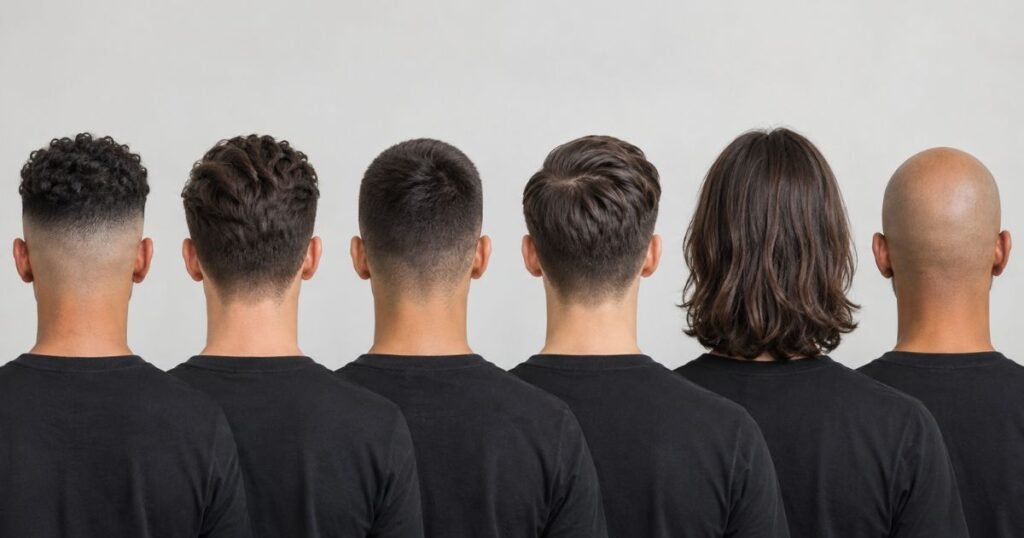
The style ranges assume fairly typical hair. Texture, density, and growth pattern change how a cut ages, so treat these as adjustments to the ranges above, not as a separate schedule. Many people also have a mix of types, such as fine strands with a wave.
| Hair type | What tends to change | Worth discussing with your barber |
| Fine | Loses body as it lengthens | Keeping shape and volume |
| Thick | Gets bulky and heavy | Thinning or texturizing |
| Curly and coily | Length can look different than it is | Cutting approach and curl pattern |
| Wavy | Wave pattern shifts with length | The length where it sits best |
Fine Hair
Fine hair means each strand is thin. It’s not the same as thinning hair, which is about fewer strands. Fine hair can lose body as it grows, and extra length may weigh the style down so it looks flat. Regular shaping can help it keep some volume.
If you’re noticing more scalp than before, a doctor or dermatologist is the right person to ask. A barber can adjust the cut but can’t diagnose why hair is thinning.
Thick Hair
Thick, dense hair can lose shape faster because there’s simply more of it. The sides stick out, the neckline thickens, and the whole cut feels heavy. A barber may thin or texturize it to reduce bulk.
Thick hair also behaves differently depending on whether it’s straight, wavy, or curly, so the same density can lead to very different results.
Curly and Coily Hair
Curl patterns range from loose curls to tight coils, and they don’t all behave alike. A key factor is shrinkage. Curly and coily hair springs up, so it looks shorter than its actual length. Hair that looks fine at one length can look noticeably different once it grows a bit more.
Tight fades and crisp edges on tightly coiled hair can show regrowth in ways that differ from straight hair, and longer styles often need regular shaping to stay balanced. How often you’ll want a cut depends on the pattern, the style, and how you like it to look.
It helps to book a barber who is experienced with your texture. Some cut curls dry so they can see how the hair sits, and others cut it wet. Ask what they recommend. Questions worth asking:
- How will this cut look as it grows?
- Do you suggest cutting it dry or wet?
- How should I keep my curls defined as the length increases?
Wavy Hair
Waves can behave unpredictably at certain lengths. A cut that’s slightly too short may lose its wave, while one that’s too long can look weighed down or frizzy. Many people find there’s a length where their waves sit best, and that sweet spot is worth identifying.
Once you know your preferred length, you can plan haircuts around returning to it.
Read More About : Pomade vs Hair Clay: Which One Actually Works for Your Hair?
Why Frequency Matters More Than Most Men Think
Rather than a list of general benefits, here are the practical effects of timing a haircut well:
- The cut keeps the shape it was designed to have. Shape retention is the biggest reason, since cuts are built around proportions that change as hair grows.
- Styling is easier. Hair that’s been cut recently usually sits better, so you can spend less time and product on it.
- Grow-out stays intentional. If you’re growing hair, regular shaping keeps it from looking neglected.
- Long hair keeps healthier ends. Trimming removes damage before it spreads upward.
- You can plan the cost. Knowing your cycle lets you budget.
It isn’t a rule that you should always cut early. Plenty of men prefer a looser look and are happy to stretch the gap. If you want to balance a neat appearance with fewer barber visits, alternating full cuts with quick neckline clean-ups is one option. Whether it’s worth it depends on your standards and your budget.
The Practical Framework: How to Find Your Cadence

A number from a table is a starting point. Here’s a way to turn it into a schedule that fits your life:
- Start with your style’s typical range. Use the Frequency Guide above.
- Adjust for your hair. Fast-growing, dense, or very short hair may mean sooner. Slow-growing or longer hair may mean later.
- Consider your standards and schedule. An important meeting or event might call for a fresher cut than a quiet month.
- Notice when it starts to bother you. Note the date of your cut and the point when you first think it looks overgrown.
- Book before that point. Many people find it helpful to rebook at the end of an appointment, based on the gap you’ve noticed.
Do this for two or three cuts and you’ll have a personal number that’s more accurate than any general rule. You can also ask your barber how your hair is growing and when they’d suggest coming back.
Signs It’s Time for a Haircut
Think of these as cues to compare against how your hair looks right after a cut.
Your Hair Has Lost Its Shape
Look for general changes: the sides puffing outward, the neckline looking thick, or the top falling differently than it did. If the outline you paid for isn’t there anymore, it’s likely time.
Styling Takes Longer Than Usual
If you’re using more product, restyling more often, or fighting a part that won’t stay put, extra length may be the cause.
Your Fade Looks Grown Out
The blend becomes less smooth, the shortest area looks fuzzy, and the edges blur. This is specific to fades, and it tends to show up before the rest of the cut changes.
Split Ends Are Appearing
This mostly applies to longer hair. Look for ends that fray or split into two strands, or hair that looks uneven at the bottom. Heat, bleach, and friction can all contribute. A trim removes the damaged section, but it won’t repair what remains.
Your Hair Feels Heavier or Harder to Manage
When hair gets long enough, it can feel bulky, especially if it’s thick. It’s different from slower styling. Here the issue is weight, and the hair may not hold the shape you want.
You’re Constantly Wearing a Hat
If a hat has become your default way to hide how your hair looks, that’s a fairly reliable sign.
Read More About : Soccer Player Haircuts: 35+ Iconic Styles & Trends 2026
Do I still need to get haircuts if I’m trying to grow out my hair?

Usually yes, but in a different way. If you stop cutting entirely, hair often grows unevenly, the ends can thin out, and the shape can get awkward. Many people find that occasional shaping keeps the grow-out looking deliberate.
The goal is to keep length while tidying the shape. A grow-out typically includes some in-between stages that can look untidy, especially when the sides are longer but the top hasn’t caught up. Regular visits help you get through them.
When you book, be clear about the plan. You might say:
- “I’m growing it out, so please keep the length.”
- “I’d like to tidy the shape and remove only damaged ends.”
- “Can you keep the sides tidy while I grow the top?”
Neckline and side clean-ups can keep things neat without removing length. In between, hats, headbands, and light styling products can help with the awkward stages. How often you need shaping is personal, and it’s generally less frequent than when you’re maintaining a short cut. Your hair texture, density, and growth rate all affect how the stages look.
What’s the Difference Between a Trim and a Haircut?
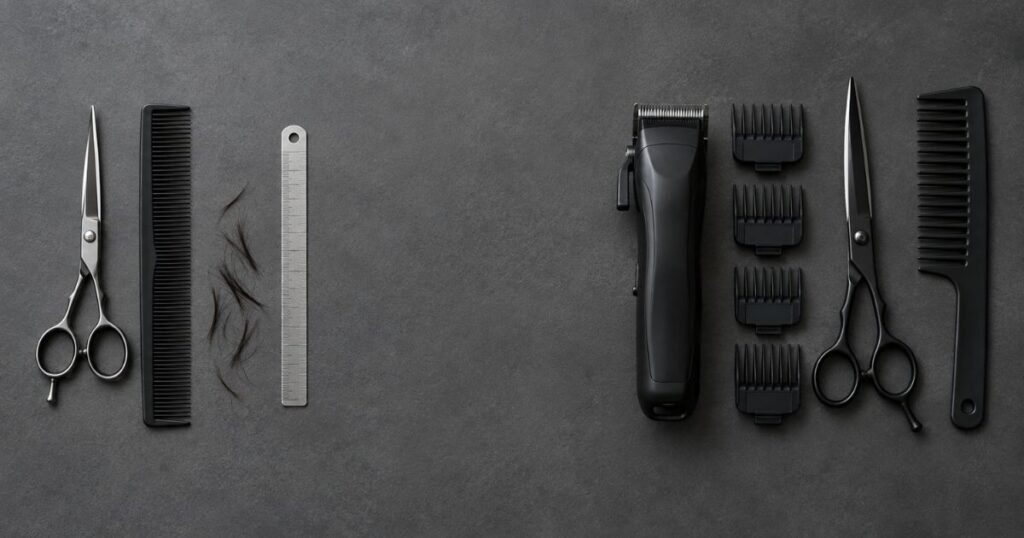
The words are used loosely, and different barbers may use them differently, so it’s worth confirming what’s meant. Generally:
| Trim | Haircut | |
| What’s removed | A small amount | More length, often with reshaping |
| Goal | Maintain the existing style | Create or change the style |
| When to ask | Between full cuts or during grow-out | When you want a new shape or the old one has changed |
It’s always worth specifying how much you want removed, for example “about a quarter inch” or “about a centimeter.”
A Trim
A trim takes off a small amount to tidy the ends, keep the current length and shape, or clean up the neckline. It’s useful when you like your style and just want it kept neat.
A Haircut
A haircut is a fuller service. It can change the length, structure, or style, and it’s the better choice when the shape has changed enough that a trim won’t bring it back.
Does Cutting Your Hair Make It Grow Faster?
Generally, no. Hair grows from the follicle under the scalp, and cutting the ends doesn’t change that process. Growth rate is influenced by things like genetics, age, and overall health.
It can seem like cutting makes hair grow faster or thicker because trimming removes broken or split ends. That helps you keep the length you’ve grown, and hair with fresh, even ends tends to look fuller. If you notice sudden or unusual hair loss, it’s worth seeing a doctor.
How to Maintain Your Hair Between Haircuts

Good habits can make a cut look better for longer, but they can’t stretch it indefinitely. These tips are about helping the cut keep its shape.
Use Quality Hair Products
“Quality” here means suited to your hair and style, not necessarily expensive. Creams, clays, pastes, and pomades give different levels of hold and finish. A matte clay might suit a textured crop, while a cream could work better for a softer side part.
Product buildup can make hair look dull or heavy, so wash it out and avoid layering more than you need.
Avoid Excessive Heat
Blow-dryers, flat irons, and very hot water can dry hair out. It matters most for longer hair and for styles that rely on regular heat styling. Using a lower setting and heat protection can help.
Wash Your Hair Appropriately
How often to wash depends on your scalp, hair type, and activity level. Oily scalps may need it more often, and dry or curly hair often does better with less frequent washing. There’s no universal schedule, and both over-washing and under-washing can cause problems for some people.
Condition Regularly
Conditioner can improve softness and manageability, especially for longer, drier, or curly hair. It won’t repair split ends, but it can make hair easier to handle between cuts.
Protect Your Scalp
Scalps that are exposed because of short cuts or shaved heads can get sunburned, so sun protection is sensible. If you have persistent flaking, itching, or irritation, a doctor or dermatologist can help work out the cause.
Read More About : Haircut Designs: Ideas, Cost, and How to Ask for One
Frequently Asked Questions
What is the 7 day haircut rule?
I wasn’t able to confirm a standard, widely accepted meaning for this phrase. It may be used informally in some places, but there’s no established rule behind it that I can point to. For a dependable approach, use the style ranges and the cadence framework above.
Is $30 a lot for a men’s haircut?
It depends on where you live, the type of shop, the barber’s experience, and what the price includes. Prices vary widely between countries and even between neighborhoods, so a figure that’s high in one place can be ordinary in another. Local norms on tipping also affect the total. A fair way to judge is to compare similar shops near you and check what’s included, such as a neckline clean-up, a shave, or a wash.
Is a haircut every 2 months too much?
No, it’s the opposite. Every eight weeks is less often than most short styles are typically cut, and it falls within the usual range for longer styles. If your hair is short and you’re happy with how it looks at that interval, there’s no problem. If not, use the framework above to find a cycle that fits.
What is the 3:2:1 haircut rule?
The 3:2:1 haircut rule is a clipper-guard technique that uses a No. 3 guard on top, a No. 2 guard on the sides and back, and a No. 1 guard around the temples, sideburns, and neckline for a clean, tapered look. It’s a simple way to request a short, structured haircut, but the exact placement and blending can vary depending on your preferred style and your barber’s technique.
Conclusion
The main idea is simple. Start with the typical range for your style, adjust for your hair and your standards, and book your next appointment before the cut starts to bother you. Short, high-contrast cuts need more frequent attention, and longer styles need it less often but still benefit from regular shaping.
If you’re unsure, ask your barber what interval they’d suggest for your hair and your cut. They can see how your hair grows in a way no general guide can.

Jake Miller is a barbering and men’s hairstyle enthusiast who shares practical tips, haircut inspiration, and the latest grooming trends at BarberZylo. He enjoys exploring modern and classic hairstyles and helping readers find fresh ideas for their next look.




4 Comments