High Fade Haircuts: What They Are & The Best Versions For 2026
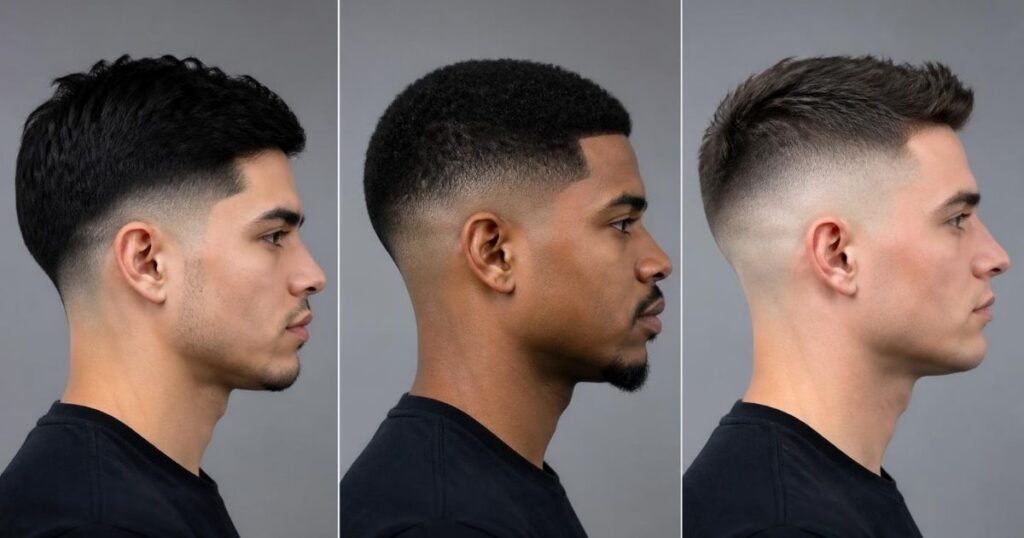
A high fade haircut starts near the temples or higher, taking the sides and back down to a very short length or bare skin, then blending into noticeably longer hair on top. That height is what gives it more contrast than a low or mid fade and it’s also why it pairs well with almost any top style, from a tight buzz to a full pompadour.
This guide breaks down exactly where a high fade sits, how it compares to a mid fade, a low fade, and a taper, and whether it’s likely to work with your hair type before you sit in the chair. You’ll also find current high fade haircut styles for 2026, styling and maintenance guidance, and a short script for describing the cut to your barber so you leave with what you actually asked for.
What Is a Fade Haircut?
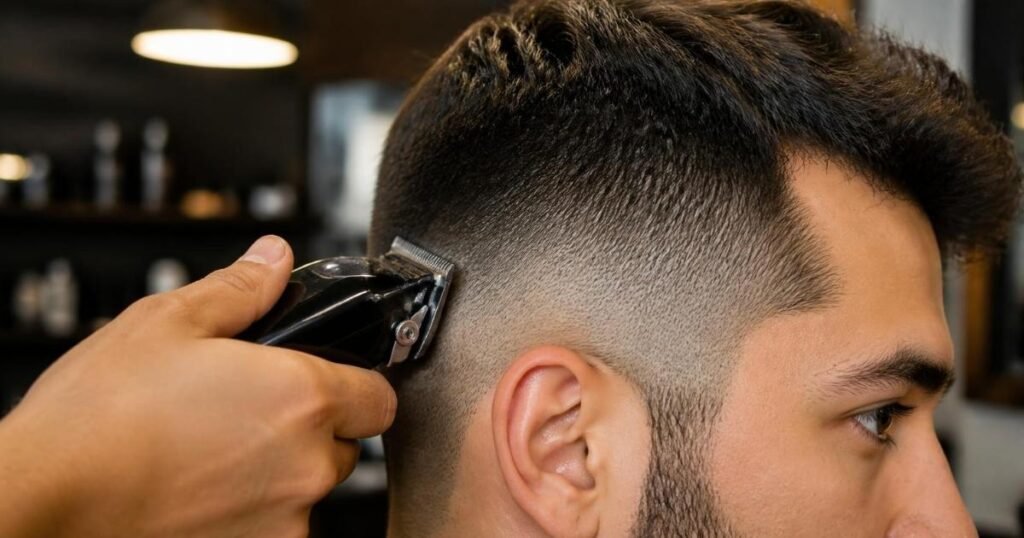
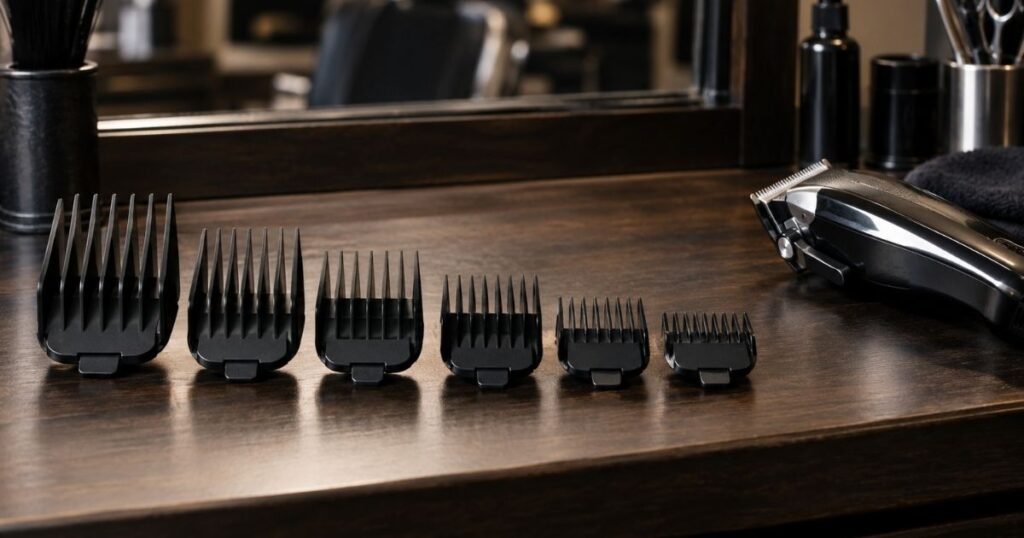
A fade is a cutting technique, not a single hairstyle. It describes how the hair gradually shortens from longer at the top down to very short sometimes all the way to the skin at the sides and back, using clippers fitted with progressively smaller guards. The barber works through the guard sizes in sequence so there’s no visible line where one length stops and another begins.
Because a fade describes the transition, it can be applied to almost any top style. A crew cut can have a fade. So can a pompadour, an afro, or a set of twists. What changes between different fades is where that transition starts and how far down it goes which is exactly what the rest of this article covers.
The quality of a fade often comes down to how seamless that blend looks. A rushed or poorly blended fade can leave visible lines or steps between guard lengths, while a well-executed one reads as one smooth gradient from top to bottom.
What Are the Different Types of Fades?
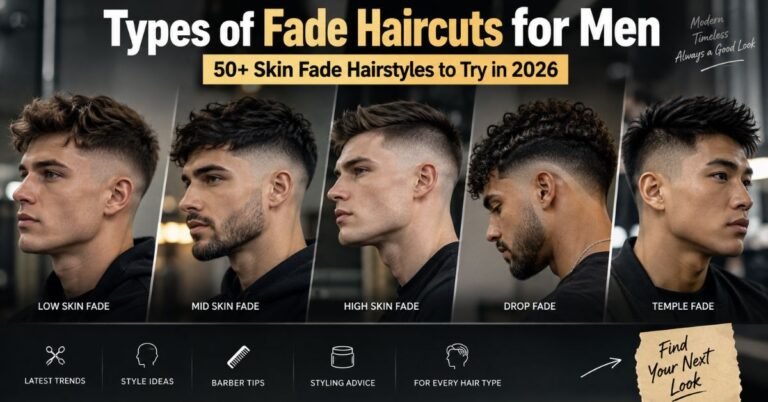
Before getting into the high fade specifically, it helps to see where it sits among the other common fade types. These aren’t mutually exclusive categories a fade can be described by its height (low, mid, high), its finish (how far down it goes), or its shape (straight line vs. curved), and a single haircut often combines more than one of these descriptions.
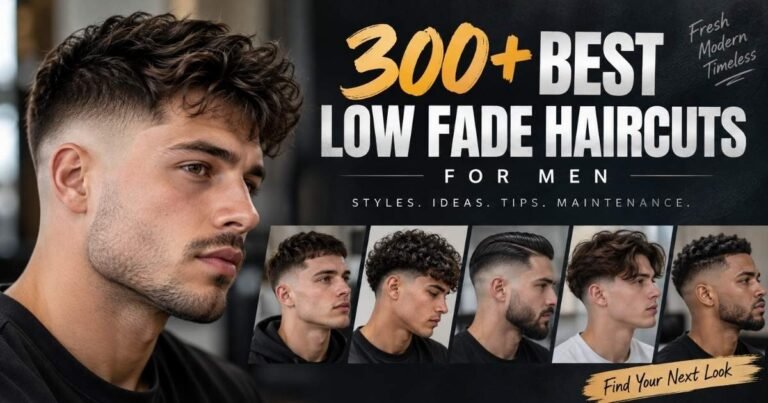
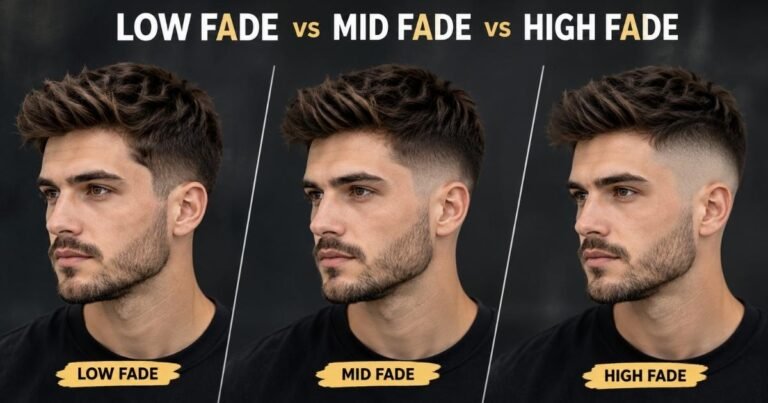
- Low fade Starts just above the ear, close to the hairline at the back and sides. It leaves more hair on the lower sides, so the contrast between top and bottom is subtle. Often the choice for readers who want a fade without a dramatic change in appearance.
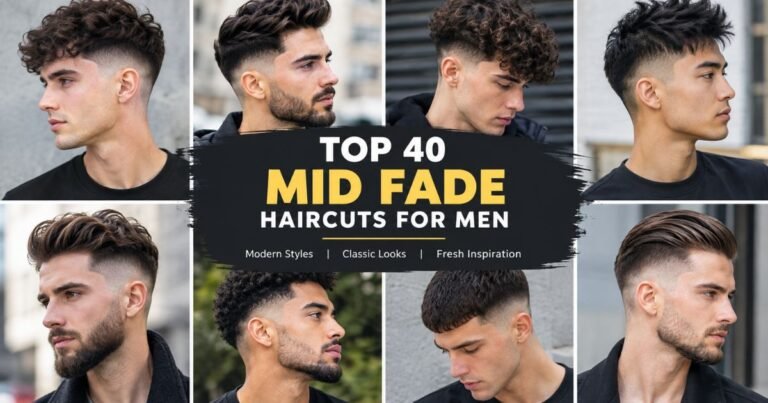
- Mid fade Starts roughly around the temple, halfway up the side of the head. It’s a middle-ground option: more defined than a low fade, but not as bold as a high fade.
- High fade Starts at or above the temple, sometimes closer to the crown. This is the focus of this article, and it’s covered in full detail in the next section.
- Skin/bald fade Describes how far down the fade goes, not where it starts. A skin fade blends all the way to bare skin at the bottom, creating the sharpest possible contrast at that point. A skin fade can technically be low, mid, or high “high skin fade” simply means the height is high and the bottom finishes at the skin.
- Drop fade Describes the shape of the fade line rather than its height. Instead of running in a straight horizontal line around the head, a drop fade curves downward behind the ear, following the natural curve of the skull. It’s often paired with longer or more textured top styles.
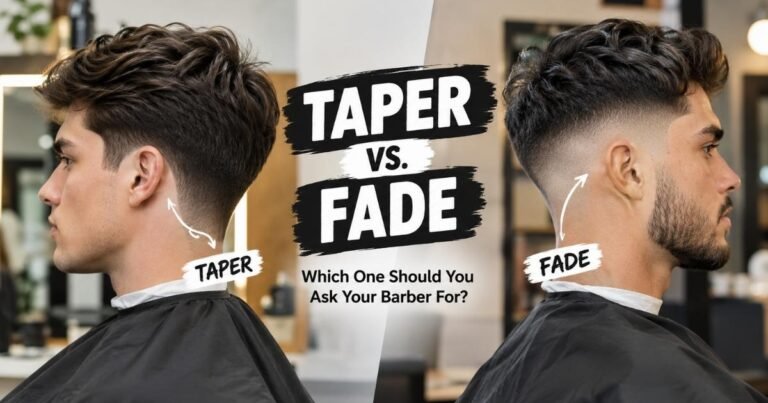
- Taper fade A softer, more gradual reduction in length with much less contrast than a fade, and often no hard visible line at all. Some barbers and clients use “taper” and “fade” almost interchangeably, but there’s a meaningful difference between them covered in detail later in this article.
What Is a High Fade?
Where the fade starts
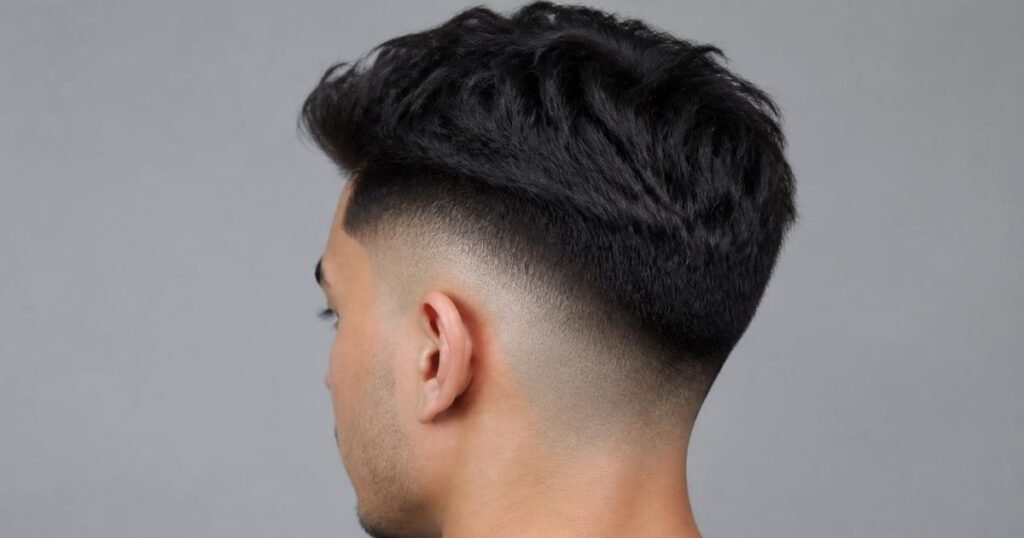
A high fade haircut generally begins at or above the temple the point where the hairline curves inward on the side of the head. On some cuts, the barber will take it even higher, closer to the crown, for an even more pronounced effect. There’s no single fixed measurement here; the exact starting point depends on the look the client wants and how the barber interprets it.
How high it sits
The height of the fade determines how much of the head shows very short hair or skin versus how much is covered by the longer top. The higher the starting point, the more scalp or closely cropped hair is visible, and the sharper the visual break between the short sides and the longer top. This is what gives a high fade its more dramatic, defined look compared to lower fade heights.
How it differs from other fades
Where a low fade barely changes the overall silhouette of the haircut and a mid fade offers a noticeable but restrained contrast, a high fade creates the most visible break between short and long hair. That’s part of why it pairs so easily with a wide range of top lengths and textures the sharp line at the sides does a lot of the visual work, so the top can be kept simple or built up into something more elaborate.
High fade vs skin/bald fade
This is one of the most common points of confusion, and it’s worth being precise about. “High” describes where the fade starts on the head. “Skin fade” or “bald fade” describes how far down the fade goes specifically, whether it fades all the way to bare skin at the bottom.
These are two different things, and a haircut can combine them: a high skin fade starts high on the head and finishes at the skin, giving the strongest possible contrast between the sides and the top. But you can also have a high fade that doesn’t go all the way to skin, stopping at a very short guard length instead still high, just not a skin finish. Knowing this distinction is genuinely useful when talking to a barber, since “high fade” and “skin fade” aren’t describing the same variable.
Low vs Mid vs High Fade: What’s the Difference?
Comparison table
| Aspect | Low Fade | Mid Fade | High Fade |
| Starting point | Just above the ear | Around the temple | At or above the temple, sometimes near the crown |
| Visual contrast | Subtle | Moderate | Strong |
| Overall impression | Understated, close to the natural hairline | Balanced noticeable but not extreme | Bold, with a clear break between sides and top |
| Amount of hair left on the lower sides | More | Less than a low fade | Least |
The high fade vs mid fade difference mostly comes down to how much of the head is taken down to a short length before the blend begins a mid fade leaves more length lower down, while a high fade pushes that transition further up the head. The high fade vs low fade comparison is even more pronounced, since a low fade barely disturbs the natural line of the hairline at all.
How to choose based on desired contrast
The clearest way to choose between the three is to think about how much contrast you actually want, rather than trying to match a rule to your face or hair. If you’d rather ease into a fade without a dramatic change, a low fade is the more conservative starting point. If you want something that reads as clearly intentional without being the boldest option in the room, a mid fade is often the middle ground. A high fade is the right call if you want the sides to make a statement on their own it’s the option most likely to draw the eye, and it tends to suit readers who are comfortable with a more defined, structured look.
Some readers also factor in their environment: a high fade can look sharp and professional when the top is kept neat, but its boldness is more noticeable than a low or mid fade, which is worth considering if your workplace leans conservative. This isn’t a hard rule it’s simply something worth weighing alongside your own style preference.
High Fade vs High Taper: What’s the Difference?
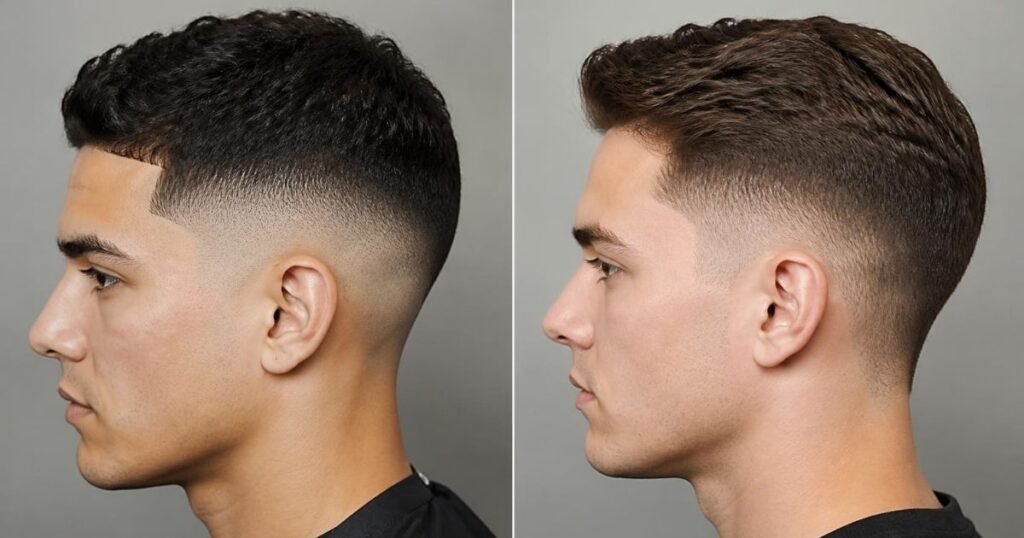
The high fade vs taper distinction trips up a lot of people, partly because the two terms are sometimes used loosely, even by barbers. Here’s the practical difference: a fade creates a much sharper contrast, with clipper guard lengths stepping down in a way that’s visually distinct even if well blended. A taper is gentler hair gradually gets shorter toward the hairline and neckline without the same dramatic drop in length, and often without any hard line at all.
A “high taper fade” is a hybrid term some barbers use to describe a cut that starts high like a high fade but blends more softly, closer to a taper’s gradual reduction. Because terminology varies between barbers and regions, the label alone doesn’t guarantee a specific result which is exactly why it helps to be specific about what you want rather than relying on one term to do all the communicating (more on that in the barber communication section below).
Practically speaking, a taper’s softer transition can sometimes be a little more forgiving to maintain between visits, since there’s no hard line to keep sharp as hair grows out. A high fade, by contrast, tends to show regrowth more quickly right at the fade line, since that’s where the length change is most dramatic.
Will a High Fade Suit Me?
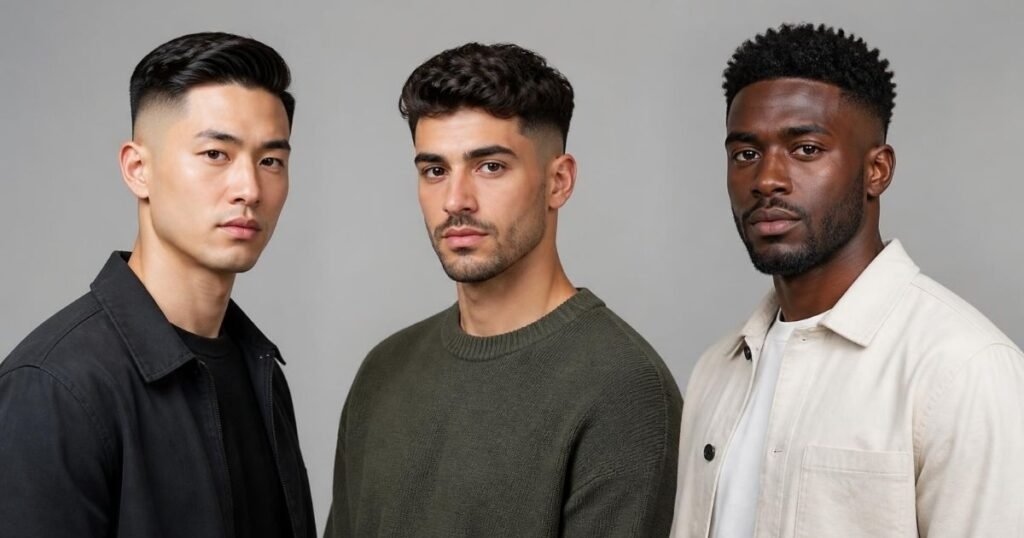
There’s no single face shape, hair type, or hair density that a high fade is reserved for. What matters more is how the cut is adapted the height of the fade, the length left on top, and how the blend is handled can all be adjusted to work with what you’ve already got. The considerations below are meant as things worth thinking about or raising with your barber, not rules.
Face shape
A high fade’s sharp contrast at the sides tends to draw attention toward the jaw and cheekbone area, since it removes bulk from the sides of the head. Depending on how the top is styled, this can add the impression of height or length to the face, or simply frame it more cleanly. Face shape is one input among several here how the barber shapes the top, and how much length is left, generally has just as much influence on the final look.
Hair type/texture
- Straight hair: The sides of a high fade are usually simple to maintain since straight hair lies flat and shows the blend clearly. The top may need a light product to hold shape, since straight hair on its own doesn’t always add volume.
- A high fade with curly hair works well for a lot of people because the short sides control bulk and frizz, while the curl pattern on top is left free to show its natural texture and volume. Curlier textures sometimes benefit from a barber who’s experienced with curl-specific cutting techniques, since curls can shrink or spring up differently once dry compared to how they look freshly cut.
- Wavy hair tends to sit somewhere between the two it can hold a shape on top with a little product, and the fade at the sides keeps the wave pattern from looking untidy.
Hair density
Density (how much hair is packed into a given area) is a separate question from texture, and it affects a high fade for thick hair differently than it does fine or sparse hair. Thicker, denser hair generally shows off the contrast of a high fade well, since there’s a clear visual difference between the short sides and the fuller top though some weight may need to be removed from the top to prevent it from looking bulky or triangular. Fine or lower-density hair can also work with a high fade, but the top may look thinner if it’s cut too short, so many barbers will leave a bit more length or texture on top to compensate.
Read More About : Top 40 Mid Fade Haircuts for Men: Fresh, Modern Styles to Try
Hairline
The shape of your hairline straight across, naturally receding, or with a widow’s peak can influence exactly where and how a barber starts the fade. A straight hairline gives the barber a clean, even line to work with. A receding or uneven hairline might mean the barber adjusts the starting point slightly, or blends the fade in a way that doesn’t draw extra attention to it. This is worth mentioning directly during your consultation rather than assuming a standard approach will apply the same way to everyone.
Growth patterns
Cowlicks and directional growth patterns areas where hair naturally grows in a different direction than the rest of the head can make blending trickier around the crown or hairline. This doesn’t rule out a high fade; it usually just means the barber needs to pay closer attention to how the hair lies naturally in those spots rather than cutting on autopilot.
Styling preference
How much daily effort you’re willing to put in is arguably as important as any physical hair factor. A high fade with a simple, short top needs almost no daily styling. A high fade under a pompadour or a structured textured crop needs product and a few minutes of work most days. It’s worth being honest with yourself about this before choosing a top style, since it affects your day-to-day experience of the haircut far more than face shape or hair type does.
The Best High Fade Haircuts for 2026
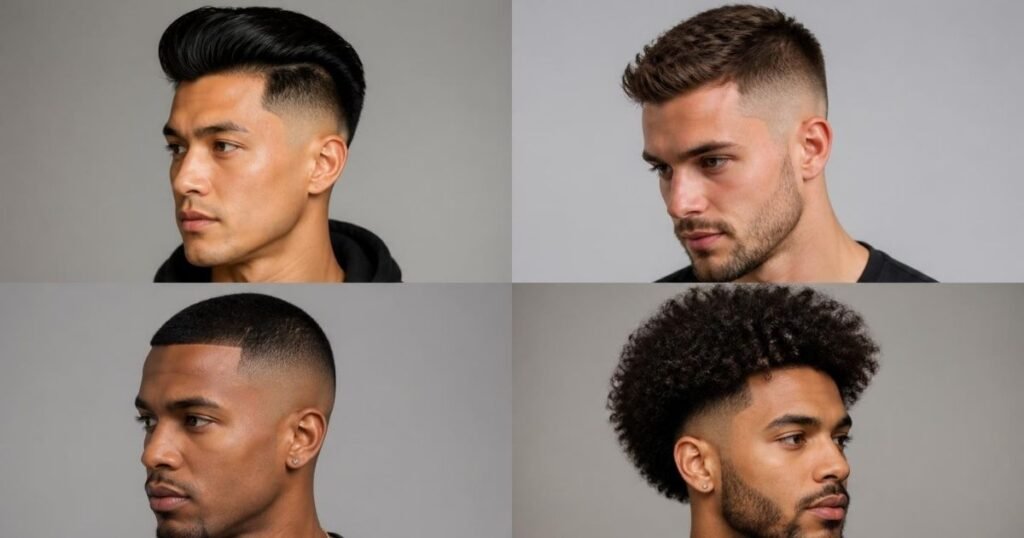
A high fade pairs with an unusually wide range of top styles, which is part of why it’s stayed a consistent option year after year. The high fade haircut styles below cover a range of lengths, textures, and maintenance levels, so you can find one that fits both your hair and how much time you want to spend styling it each morning.
Pompadour With a High Fade
A pompadour keeps significant length on top, swept upward and back to create noticeable volume, while the high fade strips the sides down for maximum contrast. This is one of the more styling-intensive pairings on this list it typically needs a strong-hold product and, for a lot of hair types, some blow-drying to build and hold the lift. Hair with a bit of natural body or length tends to make this easier to achieve; very fine or very short hair may need extra product to get the same lift.
High-and-Tight With a High Fade
This is the most minimal pairing available. The top is cut almost as short as the fade itself, leaving very little length contrast between the sides and the top. What sets it apart from every other entry on this list is how little daily styling it demands there’s essentially nothing to shape or hold in place, which makes it a genuinely low-effort option rather than just a “low-maintenance” label attached to something that still needs upkeep.
Read More About : 300+ Low Fade Haircuts for Men: Find Your Perfect Style
Crew Cut With a High Fade
A crew cut sits between the high-and-tight and longer top styles short, but with a bit more length and natural texture left on top than a high-and-tight, usually worn without being styled into a specific shape. A high fade with crew cut on top reads as neat and low-effort without looking quite as stripped-back as the high-and-tight. It’s a solid option for anyone who wants a fade’s contrast without committing to daily product use.
Textured Crop With a High Fade
A textured crop keeps the top at a moderate length with choppy, separated pieces rather than a smooth, uniform surface. Paired with a high fade, the sides stay clean while the top does the visual work through movement and texture rather than length. This pairing tends to rely on the hair’s natural texture or a light texturizing product to create that separation very straight or fine hair may need more product to get a similarly textured result.
Afro With a High Fade
For coily or tightly curled hair, a high fade at the sides creates a clean, defined edge around a fuller, rounded afro on top. The contrast lets the natural volume and curl pattern take center stage rather than getting visually lost against longer sides. This is a texture-specific pairing rather than one that translates to every hair type it’s built around coily and tightly curled textures specifically.
Buzz Cut With a High Fade
A buzz cut takes the entire top down to a single, uniform clipper length rather than leaving any length variation or texture. Combined with a high fade, this is arguably the lowest-maintenance version of the haircut on this list genuinely no daily styling required, since there’s no length to shape in the first place. A high fade with buzz cut is a common pick for readers who want the sharp look of a fade without spending any time on it each morning.
Locs, Twists, and Braids With a High Fade
A high fade gives locs, twists, or braids a clean, sharply defined edge at the sides that contrasts against the length and structure of the top. This is a commonly requested combination specifically because of that contrast the short, uniform sides make the pattern and movement of the top style stand out more clearly. It’s worth keeping in mind that locs, twists, and braids each come with their own separate care routine on top, which is a different consideration from the fade itself.
How to Style a High Fade
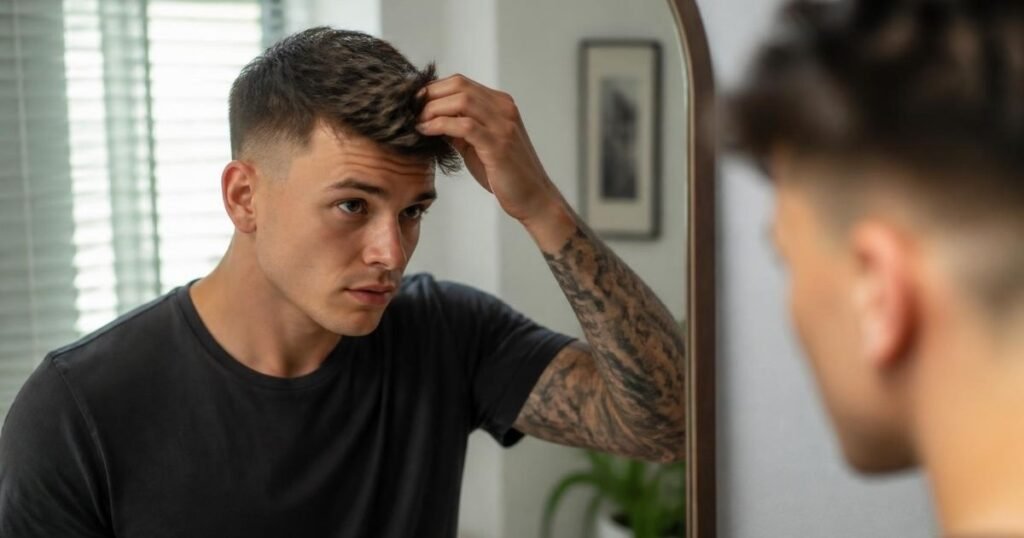
How to style a high fade largely comes down to the top length you’ve chosen, since the sides themselves need little more than regular trims to stay sharp. That said, a general approach works across most top styles:
- Start with clean or towel-dried hair. Most styling products work best on hair that isn’t soaking wet or fully dry damp hair gives you more control while you shape it.
- Choose a product suited to your hair texture and desired finish. A stronger-hold clay or paste works well for structured styles like a pompadour or textured crop. A lighter cream or curl-specific product suits looser styles or curlier textures where you want to keep movement rather than lock it in place.
- Shape the top while it’s still slightly damp, using your fingers or a comb depending on the style. This is where the difference between styles really shows a pompadour needs to be worked upward and back, while a textured crop is often better scrunched or tousled for separation.
- Let it air-dry or finish with a blow-dryer if you need extra volume or hold, keeping direct heat use to a minimum where you can, since repeated heat styling can affect hair condition over time.
- Set the style with a light hold spray if you want it to last through a full day, particularly for taller or more structured top styles.
Some styles genuinely need less than this a buzz cut or high-and-tight generally needs nothing beyond the cut itself, while a pompadour or faux hawk-style top will benefit from most of the steps above.
How to Maintain a High Fade
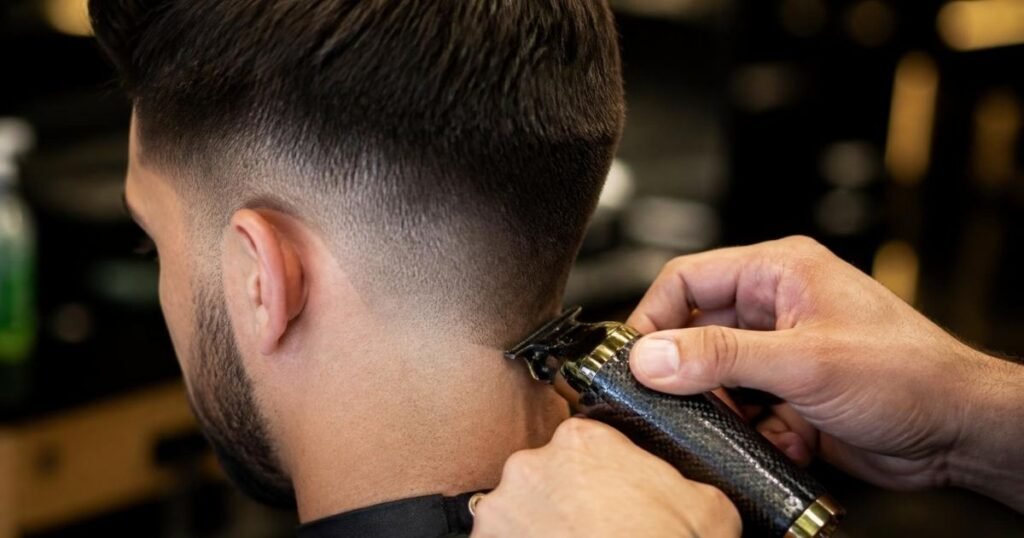
How to maintain a high fade mostly comes down to two things: keeping the fade line sharp as your hair grows, and taking care of the skin on the sides if you’ve gone with a skin finish.
Because the fade line is where the length change is most dramatic, it tends to show regrowth faster than a lower fade or a softer taper would. Many people find they need a trim every couple of weeks to keep the line looking crisp, though this genuinely depends on how fast your hair grows someone with fast-growing hair will need more frequent visits than someone whose hair grows more slowly. If a full barber visit isn’t practical between trims, some readers touch up the neckline or edges themselves with clippers at home, though this takes some practice to do cleanly.
If your fade goes down to the skin, that skin is more exposed than it would be under a fuller haircut. A little scalp moisturizer can help if the skin feels dry or tight after cutting, and sunscreen or a hat is worth considering if you’re out in strong sun, since that skin isn’t used to direct exposure the way the rest of your scalp is.
Regular washing helps keep both the scalp and the top of the hair in good condition, though exactly how often depends on your hair and scalp type some people find washing every couple of days keeps things fresh without over-drying, while others need a different rhythm entirely. If you’re unsure, it’s a reasonable thing to ask your barber about directly, since they’ll have seen how your specific hair and scalp respond.
How to Ask Your Barber for a High Fade
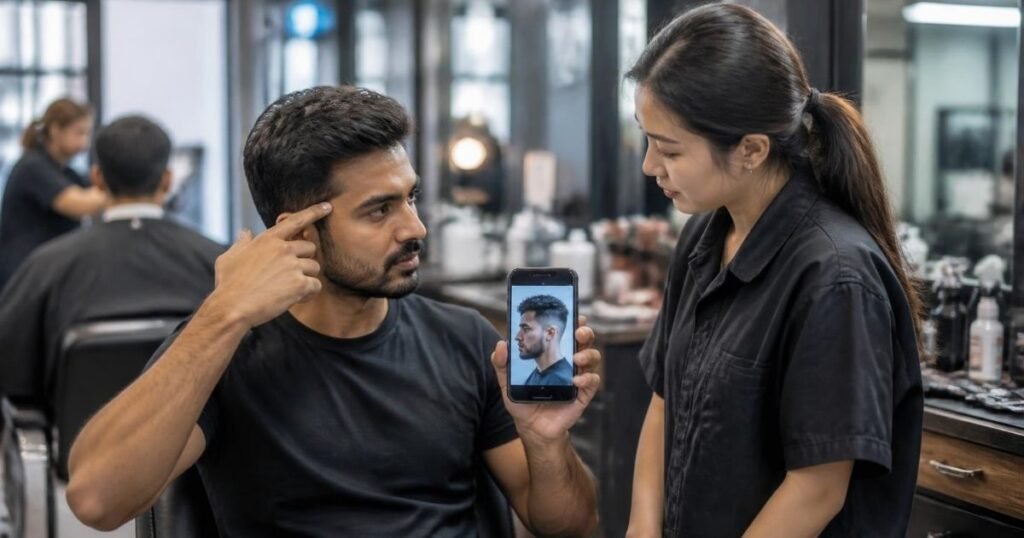
Knowing what to tell your barber for a high fade makes a real difference in getting a result that matches what you had in mind, since terminology and technique can vary between barbers. A few things are worth covering directly during your consultation:
- Starting height Point to roughly where you want the fade to begin, using a landmark like the temple or a bit above it. Saying “high fade” alone is a reasonable starting point, but showing where on your own head you mean removes any ambiguity.
- Finish Say clearly whether you want the fade to go all the way to the skin or stop at a very short length. This is the difference between a high fade and a high skin fade, and it’s not something a barber can safely assume.
- Top length and style Reference the specific style you’re after (pompadour, crew cut, textured crop, and so on) rather than leaving it open-ended, since “leave some length on top” can mean very different things to different people.
- Reference photos Because a high fade is a visual cut, bringing one or two clear reference photos ideally from an angle that shows the fade line itself, not just the top helps close any gap between what you’re describing and what the barber pictures.
- Any unique details If you want a particular design, a hard part, or a sharper edge around the hairline, mention it specifically rather than assuming it’s included by default.
It’s worth remembering that clipper guard numbers, terminology, and even the meaning of “high” can shift slightly from one barber to another. Describing what you want in plain terms, alongside a photo, tends to get more consistent results than relying on a single phrase to carry the whole request.
Read More About : Types of Fade Haircuts for Men: 50+ Skin Fade Hairstyles to Try in 2026
Frequently Asked Questions
Is a high fade higher than a mid fade?
Yes. A high fade starts at or above the temple, sometimes closer to the crown, while a mid fade begins around the temple area but lower on the head overall. The higher starting point is what gives a high fade its stronger contrast compared to a mid fade.
Is a high fade the same as a skin fade?
No. “High” describes where the fade starts on the head, while “skin fade” describes how far down it goes specifically, whether it fades all the way to bare skin. A fade can be high without finishing at the skin, or it can combine both as a high skin fade.
Is a high fade good for thick hair?
It can work well. Thicker hair often shows the contrast of a high fade clearly, since there’s a visible difference between the short sides and the fuller top. Some weight may need to be removed from the top to avoid excess bulk, which is worth discussing with your barber based on your specific hair.
Can you get a high fade with curly or coily hair?
Yes. The short sides help control volume and frizz while letting the natural curl or coil pattern show on top. Working with a barber who’s comfortable cutting curly or coily textures can make a real difference to the result, since these hair types can behave differently once dry compared to freshly cut.
How often should you maintain a high fade?
This depends on how quickly your hair grows, but many people find they need a trim roughly every couple of weeks to keep the fade line sharp, since regrowth shows more quickly at a high fade than it would at a lower fade or a softer taper.
What should I tell my barber if I want a high fade?
Be specific about three things: how high you want the fade to start, whether you want it to finish at the skin or a short length, and what you want on top. Bringing a reference photo alongside this description helps make sure you and your barber are picturing the same result.

Jake Miller is a barbering and men’s hairstyle enthusiast who shares practical tips, haircut inspiration, and the latest grooming trends at BarberZylo. He enjoys exploring modern and classic hairstyles and helping readers find fresh ideas for their next look.