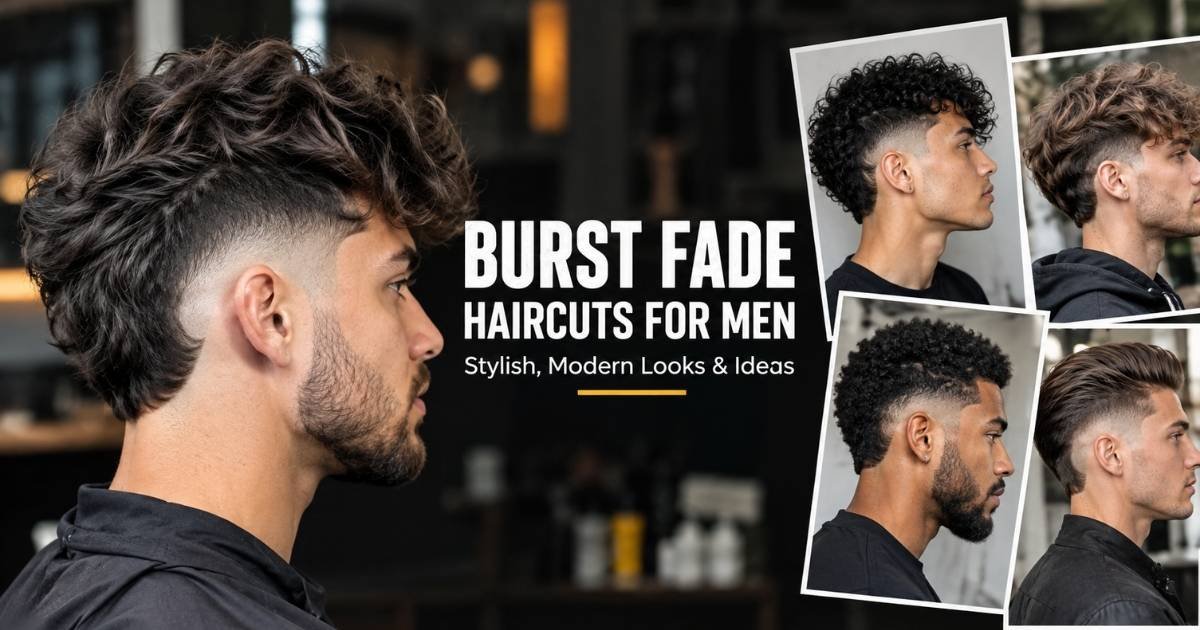
Burst Fade Haircuts for Men: Stylish, Modern Looks & Ideas in 2026
If you’ve searched for burst fade haircuts and landed here, you’ve probably already seen a few photos that caught your eye and want to know more before booking an appointment. Maybe you’re trying to figure out what a burst fade actually looks like, whether it will work with your hair type, or how it’s different from a drop fade you’ve also seen mentioned. This guide walks through all of that: what defines the cut, the most common variations, how it compares to similar fades, and how to talk to your barber so you get a result you’re happy with.
What Is a Burst Fade Haircut?
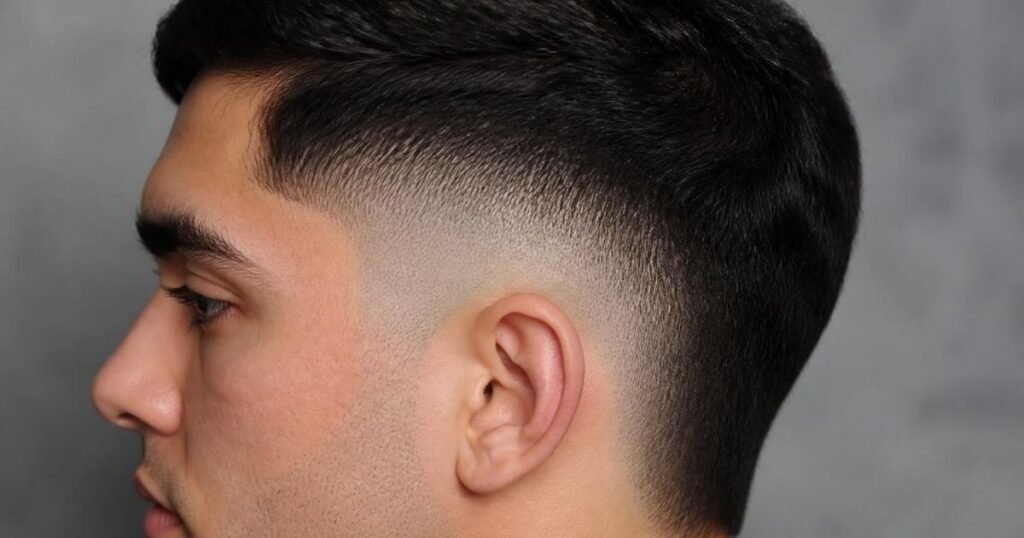
A burst fade is a haircut where the fade curves around the ear instead of running straight across the side of the head. The hair near the ear is cut very short and blends outward in a rounded shape, while more length is usually kept at the back and top. That curved shape is where the name comes from it looks like the fade “bursts” outward from a single point near the ear.
What Does a Burst Fade Look Like?
From the side, a burst fade shows a clear semicircular line of short hair wrapping around the ear, with the fade gradually getting longer as it moves away from that point. It’s most noticeable in profile, where you can see the short hair near the ear sit right next to noticeably longer hair at the back of the head. Unlike a fade that fades evenly all the way around the skull, this one is concentrated in one specific area, which tends to create sharper visual contrast right around the ear itself.
How Does It Differ from Traditional Fades?
A standard low, mid, or high fade usually runs in a fairly straight, continuous line around the entire head the transition from short to long happens gradually as you move up, and it looks roughly the same whether you’re looking at the front, side, or back. A burst fade doesn’t follow that same straight path.
Instead, the shortest point is anchored at the ear, and the fade curves out from there rather than continuing in a straight band. This is why burst fades tend to look bolder and more shaped in one specific area rather than uniform all the way around, and it’s also why they’re often paired with styles that keep extra length at the back, like mullets or textured crops.
Where Is the Fade Placed Around the Ear?
The fade typically starts at its shortest right at the top of the ear and curves outward and upward from there. Behind the ear, it can taper down toward the neckline in a soft point, or it can be kept more contained depending on how much length the back retains. This curved placement is what gives the cut its rounded, ear-framing shape, and it’s also the detail that’s easiest to describe incorrectly to a barber which is why reference photos matter more here than with a standard fade (more on that later).
Popular Burst Fade Haircuts for Men
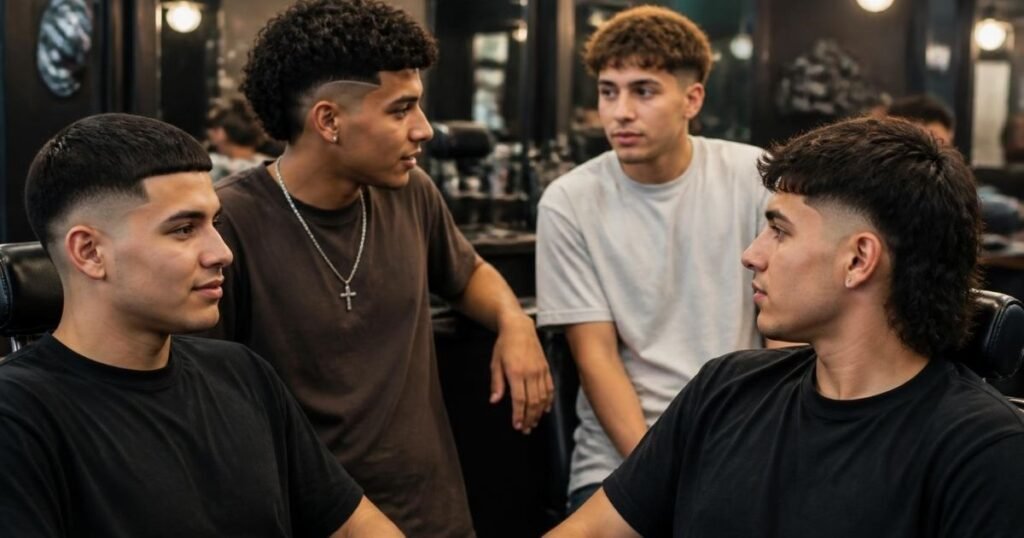
Burst fade hairstyles come in a range of variations depending on fade height, hair texture, and whether the cut is paired with another style like a mullet or mohawk. The list below covers the most common ones, along with what actually sets each apart.
Classic Burst Fade
This is the standard version: a moderate fade height with a balanced, medium-contrast blend and no added texture or combined style. It’s a useful reference point because most other variations are really just this base cut adjusted in height, texture, or combined with something else. Because it doesn’t depend on a specific curl pattern or added element, it tends to be a flexible starting point that a barber can adapt in either direction.
Low Burst Fade
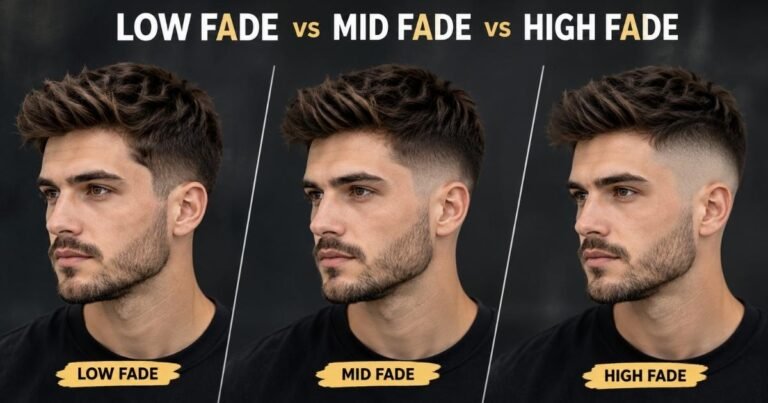
Here, the fade starts lower on the head, closer to the ear and neckline, which keeps the contrast between short and long hair fairly subtle. It’s often considered by men who want a cleaner, less dramatic look something that reads as neat rather than eye-catching. Since less scalp is exposed, it can also be a reasonable option to raise with your barber if you have thinner hair and want to avoid the scalp showing too much near the fade line.
Mid Burst Fade
The fade begins partway up the side of the head, landing between the subtlety of a low fade and the sharper statement of a high fade. It gives visible shape and contrast without being the boldest option on this list, which is part of why it’s a common middle-ground request.
High Burst Fade
This version starts higher on the head, creating the sharpest contrast between the short sides and the longer hair on top. It reads as the boldest of the three heights and tends to draw more attention to the shape of the fade itself. Because more of the scalp is visible for longer, it’s worth discussing with your barber how it will look as it grows out, since a high fade typically needs more frequent attention to stay sharp.
Burst Fade with Curly Hair
On curly hair, the burst fade creates a strong contrast between the short, tightly faded sides and the fuller volume on top. Curl pattern matters here tighter coils tend to shrink more than looser curls, which can make the top look shorter than the actual cut length, so it’s worth discussing this with your barber if you want a specific amount of visible length. Curl definition on top also plays a big role in how the finished look reads day to day.
Burst Fade with Straight Hair
Straight hair tends to lie flat against the head and shows a crisp, well-defined line where the fade blends into the longer hair. This can make the curved shape of the burst fade look especially clean-edged, since there’s no natural texture softening the transition. Denser straight hair generally holds shape a bit more than very fine straight hair, which may be worth mentioning if you want a specific amount of volume on top.
Burst Fade with Wavy Hair
Wavy hair adds natural movement on top, which tends to soften the contrast between the tight fade and the longer hair compared to straight hair, without the extra volume that comes with curls. It’s a texture that often works well if you want the cut to look a little more relaxed and less severe than a high-contrast straight or curly version.
Burst Fade with a Textured Top
This is a styling and cutting choice rather than a natural hair type texturizing techniques like point-cutting create a deliberately choppy, piece-y finish on top, and this can be done on straight, wavy, or curly hair alike. It’s a good option to mention if you like the look of movement and texture but your natural hair doesn’t create that effect on its own.
Burst Fade Mullet
The burst fade is applied to the sides while the back is left longer and often layered, creating a modern take on the mullet silhouette. Compared to a standard mullet without a fade, the burst shape adds a defined, curved transition at the sides instead of a more gradual taper. Hair density and growth rate at the back can affect how the length there grows in and holds its shape over time.
Burst Fade Mohawk
Instead of length concentrated at the back, this version keeps length running down the center or top of the head while the sides are faded sharply with the burst shape. It creates strong vertical contrast and tends to be one of the bolder combinations on this list. Hair density on top affects how much volume that center section holds, which is worth factoring in if you’re deciding how dramatic you want the shape to look.
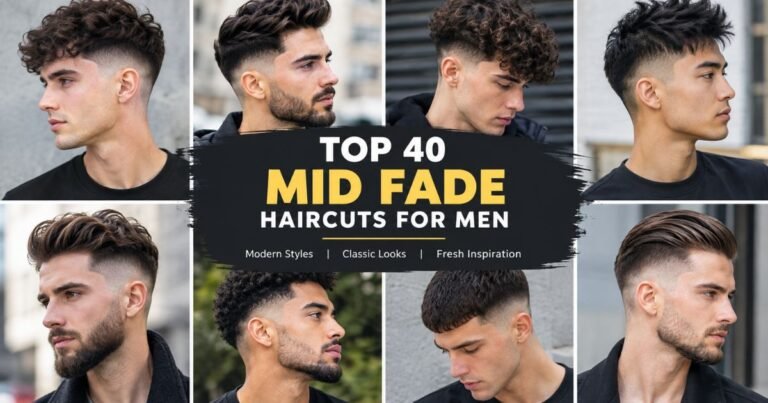
Read More About : Top 40 Mid Fade Haircuts for Men: Fresh, Modern Styles to Try
Burst Fade with a Taper
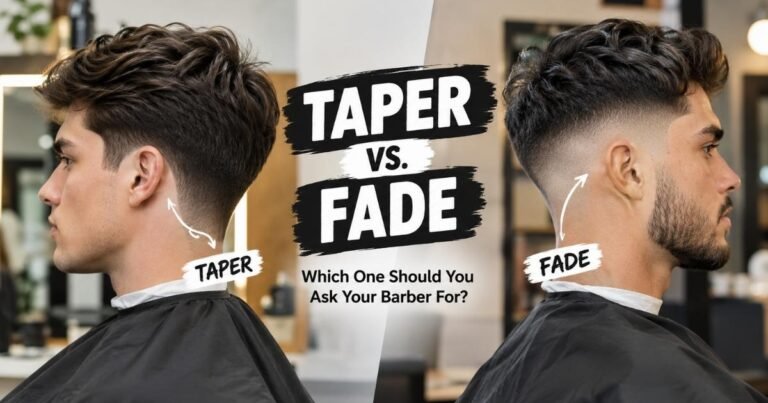
A taper is a gradual reduction in length rather than a sharp blend, so combining one with a burst fade softens the transition at the edges compared to a sharper, high-contrast burst. If you like the general shape of a burst fade but want something a little gentler than the sharpest versions, mentioning “taper” specifically to your barber tells them you want a softer blending technique, not just a lower fade height.
Burst Fade with Beard
When the fade connects into the beard, the sides blend directly into the facial hair for a continuous look rather than a visible break between hair and beard. Beard density and growth pattern affect how seamless this blend looks in practice, so it’s worth raising directly with your barber, since blending a fade into a beard usually takes extra technique beyond the haircut alone.
Burst Fade with Hair Design
Some men add a simple line or shaved pattern within the faded section for extra personalization. This is usually kept subtle so it doesn’t overpower the rest of the cut. It’s worth knowing that designs typically need more frequent touch-ups than the base fade, since the pattern grows out and loses definition faster than the surrounding fade.
Burst Fade vs. Drop Fade: What’s the Difference?
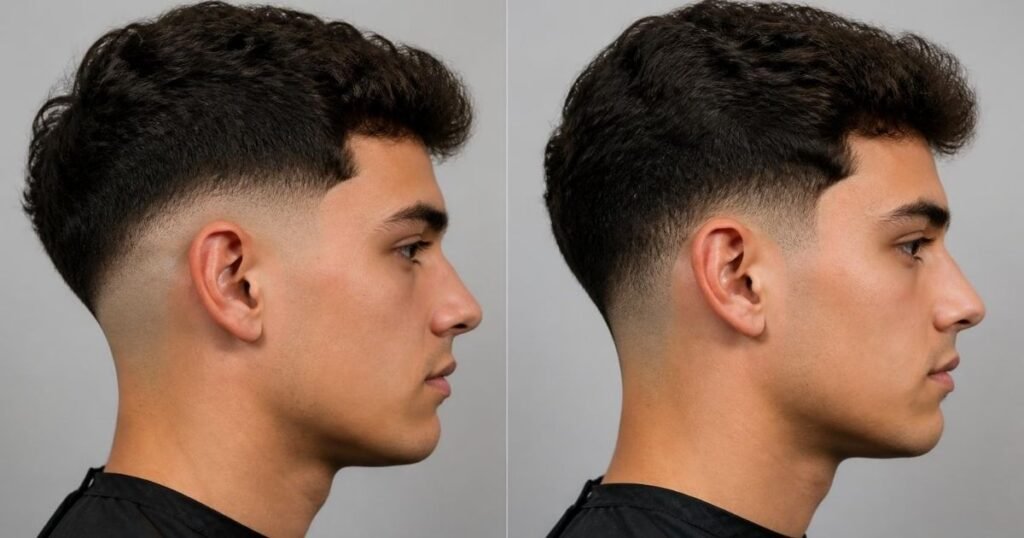
Both burst fades and drop fades curve rather than running in a straight line, which is part of why they’re often confused with each other. The difference comes down to where that curve goes.
| Feature | Burst Fade | Drop Fade |
| Curve direction | Curves tightly around the ear | Drops lower, following the natural curve of the head down toward the neckline |
| Contrast | Often bolder and more contained near the ear | Tends to look smoother and more gradual |
| Common pairings | Mullets, mohawks, textured tops | Slicked-back styles, quiffs, more traditional tops |
| Overall impression | More defined, eye-catching shape | More natural, blended transition |
Fade Shape and Placement
A burst fade’s shortest point sits right at the ear and curves outward from there. A drop fade’s shortest point also starts near the ear, but instead of curving into a tight semicircle, it continues dropping down and back, following the shape of the skull toward the nape of the neck.
How the Back and Sides Differ
Because of that placement difference, a burst fade often looks bolder and more concentrated right around the ear, while a drop fade tends to blend more continuously into the back, giving it a smoother, less segmented appearance overall.
Choosing Between a Burst Fade and Drop Fade
This largely comes down to personal preference rather than hair type. A burst fade may appeal if you want a more defined, eye-catching shape, while a drop fade may suit you better if you’d rather have a smoother, more gradual transition. Either way, bringing a reference photo is the most reliable way to make sure your barber understands which one you’re actually asking for, since the terms are easy to mix up.
How to Choose the Right Burst Fade
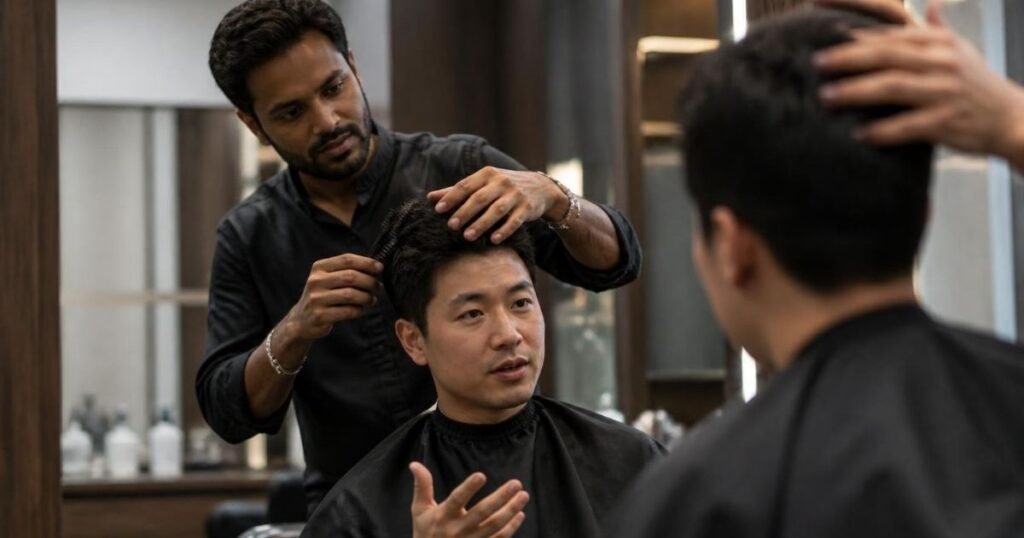
The right variation depends on a combination of factors specific to you your hair’s texture and density, your face shape, how much length you’re starting with, and how much time you want to spend on daily styling.
Based on Hair Type and Texture
If your hair is curly, a burst fade tends to create strong volume contrast on top. Straight hair usually shows a cleaner, sharper line at the fade. Wavy hair often lands in between, adding movement without heavy volume. If you’re not sure which variation suits your texture best, it’s worth looking back at the style breakdown above and discussing your specific hair with your barber before the appointment.
Based on Hair Density and Thickness
Density is a different factor from texture it’s about how much hair you have, not how it curls or lies. Thicker, denser hair can generally hold more dramatic contrast and higher fades well, since there’s enough hair on top to balance out a sharp fade line. Finer or thinner hair might look better with a lower or softer fade, since higher fades can expose more scalp on hair that doesn’t have much volume to offset it. This is a good point to raise directly with a barber who can look at your actual hair.
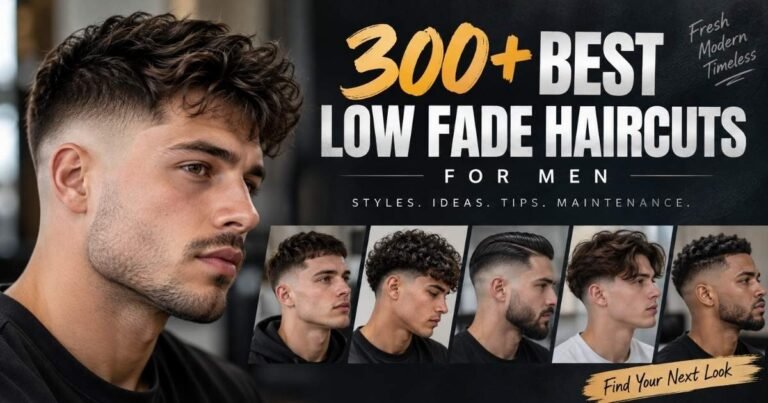
Read More About : 300+ Low Fade Haircuts for Men: Find Your Perfect Style
Based on Face Shape
Face shape can influence how a burst fade reads, though it’s not an exact science and a lot depends on how the barber adapts the cut. More height or volume on top may help balance rounder proportions, while a cleaner, lower-contrast fade can complement more angular faces without adding extra visual width. These are general tendencies rather than fixed rules the same haircut can look different on two people with similar face shapes depending on their hair and how the cut is styled.
Based on Hair Length
Because the burst fade mainly affects the sides, it can pair with a range of top lengths, from short and cropped to longer styles like mullets and mohawks. If your hair is currently very short all over, the contrast that defines the burst shape may be less noticeable until the top grows out a bit.
Based on Lifestyle and Maintenance
Higher-contrast versions and cuts with added elements, like a high burst fade or a hair design, typically need more frequent touch-ups to stay sharp than lower-contrast options. If you don’t want to be back in the chair every couple of weeks, that’s worth factoring into which variation you choose. The maintenance section further down covers this in more detail.
How to Ask Your Barber for a Burst Fade
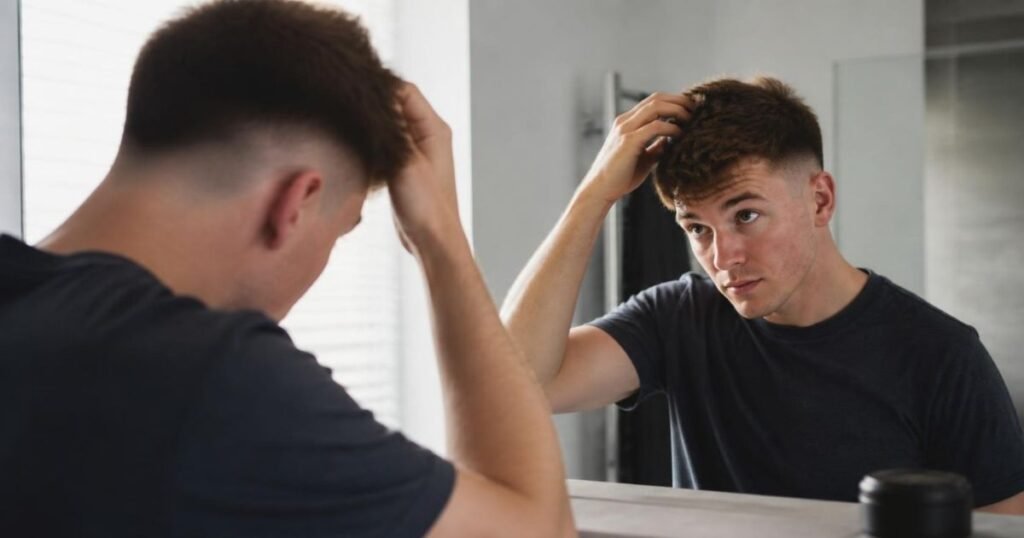
Because a burst fade is more specific than a standard fade request, clear communication upfront makes a real difference in the result.
What to Say Clearly
Tell your barber that you want a fade that curves around the ear rather than running straight across the side of the head. It also helps to specify roughly how much length you want kept at the back and on top, since that affects how the overall shape reads.
How to Use Reference Photos
Bring at least one side-profile photo, since the curved shape around the ear is the hardest detail to describe accurately in words alone. A front-facing photo can help too, but the profile angle shows the placement of the fade most clearly.
Choosing Fade Height and Blend
Be specific about fade height low, mid, or high using the descriptions earlier in this article as a starting point. It also helps to mention whether you want a soft, gradual blend or a sharper, more defined line, since that changes the overall contrast even at the same height.
What to Tell Your Barber About the Top and Back
Beyond the fade itself, let your barber know how much length and texture you want on top, and whether you’re aiming for a specific combination like a mullet or mohawk. This is especially important if you’re growing out from a shorter cut, since the barber will need to know what you’re working toward, not just what looks good right now.
How to Style a Burst Fade Haircut
Styling approach depends a lot on your top texture and which variation you have, which is why the routine looks different depending on your hair rather than being one-size-fits-all.
Styling a Short Burst Fade
With minimal length on top, styling is usually simple: a small amount of light-hold product worked through with your fingers is often enough for texture and control, without needing heat tools.
Styling a Textured Burst Fade
For a choppy, piece-y finish, applying a matte product to slightly damp hair and separating sections with your fingers rather than a comb tends to hold the texture better throughout the day.
Styling a Curly or Wavy Burst Fade
A lightweight, curl-friendly cream or gel applied to damp hair can help define natural curl or wave pattern without weighing it down. Air-drying or diffusing on a low setting is generally gentler on natural texture than high heat.
Styling a Burst Fade Mullet or Mohawk
These combined styles usually need a bit more product and direction. For a mohawk, a stronger-hold product helps build and maintain height down the center. For a mullet, a lighter product applied mainly to the back helps keep the length looking intentional rather than flat.
Best Hair Products for a Burst Fade
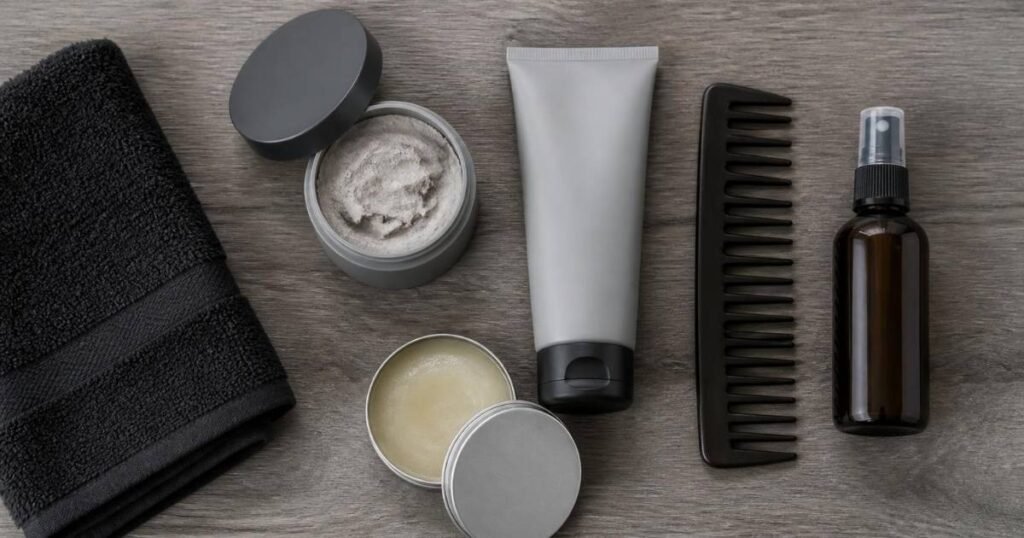
The right product depends on your hair type and which variation you’re wearing, more than any single “best” option.
- Texture Clay A matte finish that adds definition and separation, often suited to textured tops and curly or wavy styles where a natural, non-shiny look is the goal.
- Styling Cream A lighter, more flexible hold with a natural finish, often a good fit for straight or fine hair that doesn’t need heavy product.
- Light Pomade Adds control with a bit of shine, useful when you want a more defined, shaped look on top.
- Sea Salt Spray Adds texture and lift, often used on wavy hair or when you’re going for a more relaxed, tousled finish.
How to Maintain a Burst Fade
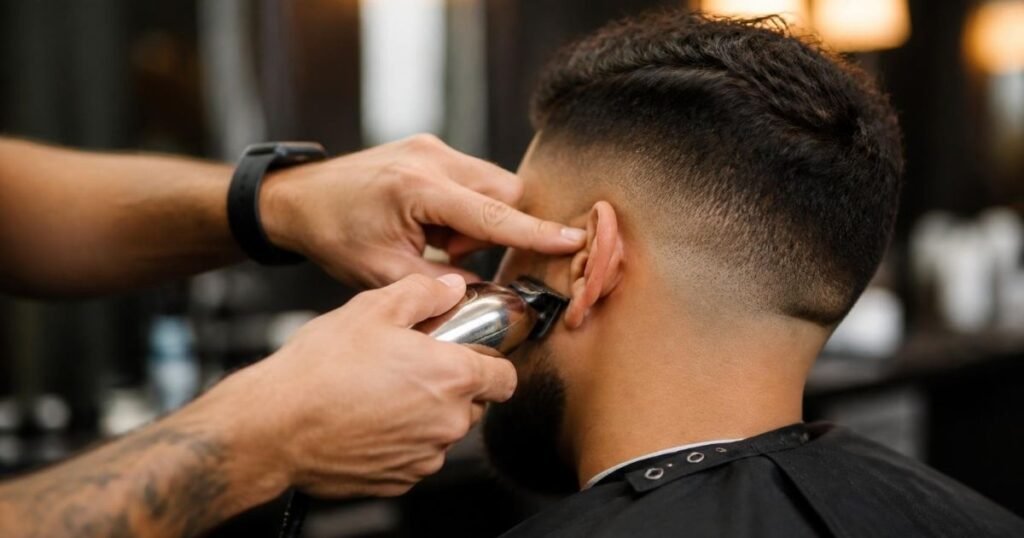
How often you need a touch-up, and how the cut looks in between visits, depends on a few factors specific to your hair and the variation you chose.
How Often Should You Get It Touched Up?
Higher-contrast fades tend to show visible growth sooner than lower-contrast ones, simply because there’s a bigger difference between the short and long sections to begin with. Individual hair growth rate also plays a large role, so there isn’t one fixed schedule that applies to everyone it’s worth asking your barber what interval makes sense for your hair specifically.
How Does a Burst Fade Grow Out?
As the cut grows, the sharp curve around the ear tends to soften first, and the contrast between the fade and the top gradually decreases. Many men find the cut still looks reasonably sharp for a while after the freshest point, since the transition just becomes more gradual rather than looking immediately overgrown.
How to Maintain the Hair Around the Ears and Neckline
The ear area and neckline are usually the shortest points in the cut, so they tend to show new growth first. Some men book a quick edge-up or neckline cleanup between full appointments to keep those areas looking sharp without needing a full fade refresh.
How to Care for the Longer Hair on Top
The longer section on top benefits from regular trims to keep its shape, along with a washing and conditioning routine suited to your hair type. This matters more for texture and overall hair health than for the fade itself, but it affects how the whole cut looks together.
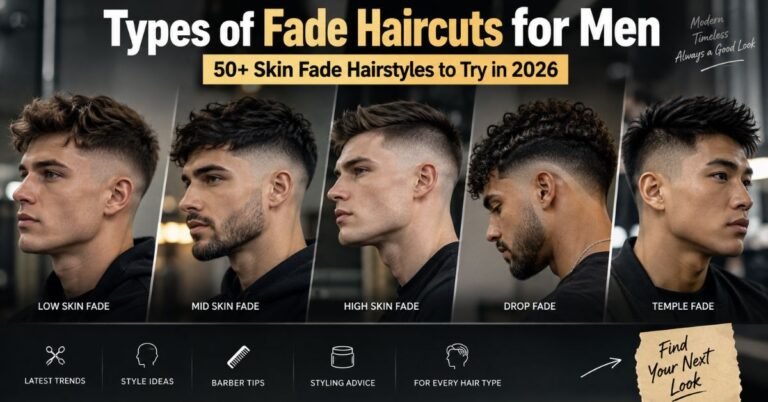
Read More About : Types of Fade Haircuts for Men: 50+ Skin Fade Hairstyles to Try in 2026
FAQs About Burst Fade Haircuts
Is the Burst Fade Still Trending?
It remains a widely requested style at barbershops, largely because it adapts well to different hair types and can be dressed up or down depending on the top length and texture chosen.
What Hairstyles Work Best With a Burst Fade?
Mullets, mohawks, and textured tops are among the most common pairings, since each takes advantage of the extra length the burst fade typically leaves at the back or top.
Can a Burst Fade Work With Short Hair?
Yes, though the contrast that defines the burst shape may be less pronounced with very short hair overall, since there’s less of a length difference to show off.
Can a Burst Fade Work With Thin Hair?
It can, though a softer, lower-contrast version is often worth discussing with your barber, since it exposes less scalp than a higher, sharper fade.
Can a Burst Fade Be Worn in Professional Settings?
Lower-contrast versions tend to read as more conservative and workplace-appropriate, while higher-contrast or more dramatic combinations may be worth discussing with your barber if your workplace has a stricter dress code.
How Often Should a Burst Fade Be Maintained?
This varies based on the fade’s contrast level and your individual hair growth rate higher-contrast versions generally need more frequent attention than subtler ones.
Final Thoughts on Burst Fade Haircuts
The right burst fade comes down to a combination of your hair type, density, face shape, and how much time you want to spend maintaining it there’s no single version that works the same way for everyone. Bringing a clear reference photo and being specific about fade height, blend, and length on top and at the back is the most reliable way to get a result that matches what you actually wanted. From there, it’s a flexible cut that can be dialed up or down depending on how bold you want the look to be.

Jake Miller is a barbering and men’s hairstyle enthusiast who shares practical tips, haircut inspiration, and the latest grooming trends at BarberZylo. He enjoys exploring modern and classic hairstyles and helping readers find fresh ideas for their next look.