Low Taper Fade: 25 Best Styles and Grooming Tips for Men
A low taper fade keeps things simple: the fade starts low, close to the ears, and blends gradually rather than creating a sharp, high-contrast line. It’s one of the more understated fade options out there, which is exactly why it works in so many settings the office, a wedding, a casual weekend without ever looking like it’s trying too hard.
This guide walks through what a low taper fade actually is, how it compares to similar cuts you’ve probably seen mentioned online, 25 ways to wear it depending on your hair type and personal style, and how to talk to your barber so you actually get the result you’re picturing. There’s also a maintenance section for keeping it sharp between visits.
If you’re not sure whether this is the right fade for you, or you just want inspiration before your next appointment, you’re in the right place.
What Is a Low Taper Fade?
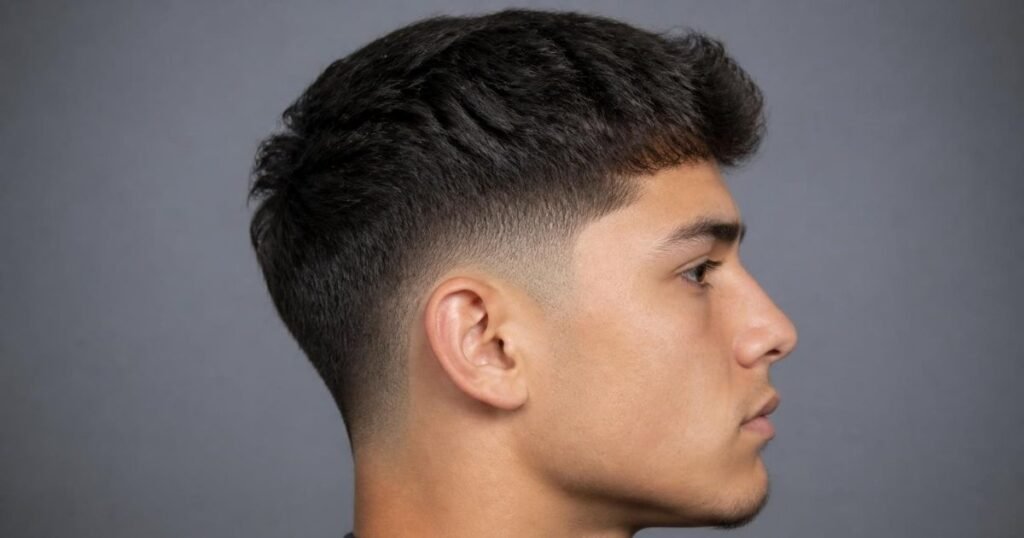
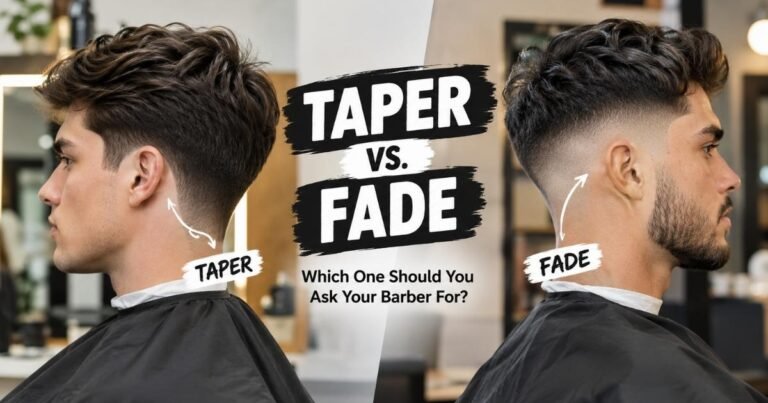
To understand a low taper fade, it helps to separate the two words. A taper is a gradual reduction in hair length, usually along the sides and back, that removes bulk without necessarily going down to the skin. A fade is a more dramatic version of the same idea the hair blends down to a very short length, sometimes close to bare skin, creating a visible contrast between the top and the sides.
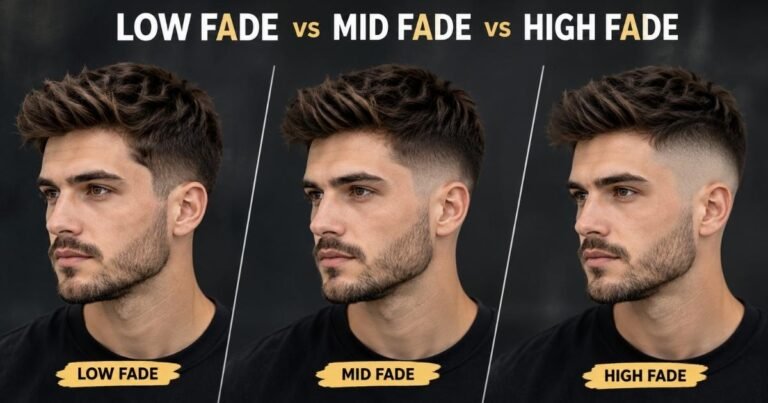
A taper fade combines both: hair tapers gradually, then fades into that shorter, blended finish near the bottom. The “low” part refers to where this fading action starts. Instead of beginning higher up near the temple or crown which is what you’d see with a mid or high fade a low taper fade starts its transition around the ear level, sometimes slightly above it, and fades out toward the neckline and sideburns.
Because the fade sits lower on the head, more of the natural hair length is preserved higher up, and the transition itself feels subtler. From a few feet away, a low taper fade often just reads as “neat hair” rather than a dramatic fade which is a big part of its appeal for people who want a clean look without a bold, high-contrast statement.
Where exactly a barber starts the fade can vary slightly from one shop to the next, and from one head of hair to another hairline shape and growth pattern both play a role. Think of “low” as a general zone rather than a fixed millimeter measurement.
Low Taper Fade vs Other Haircuts
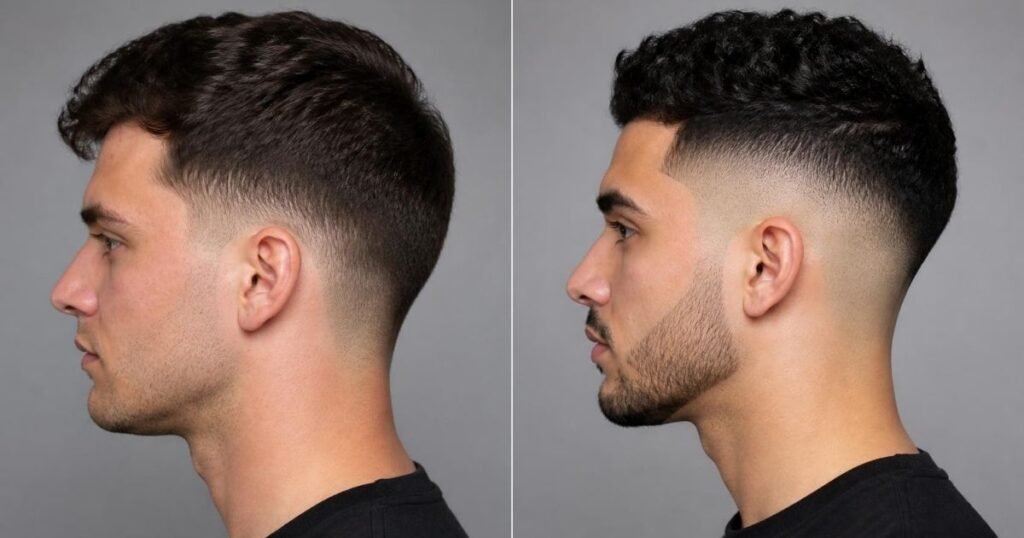
The terms “taper,” “fade,” “low fade,” and “skin fade” get used loosely online and in barbershops, which is part of why so many people end up confused before an appointment. This section breaks down the real differences so you can describe what you want more precisely.
Low Taper vs Low Taper Fade
These sound almost identical, but they’re not quite the same request. A low taper on its own usually means the sides and back gradually get shorter without necessarily reaching a heavily blended, near-skin finish there’s still visible length retained even at the shortest point. A low taper fade goes a step further: it adds that smooth, graduated blend that creates more contrast between the top and the bottom of the cut.
In practice, a lot of barbers use “taper” and “taper fade” interchangeably, but if you want the softer, less blended version, it’s worth being specific and saying “taper” rather than “taper fade” or vice versa if you want more blend.
Low Taper Fade vs Low Fade
This one comes down to how a shop uses its own shorthand. “Low fade” is sometimes used as a casual stand-in for “low taper fade,” referring to the same fade placement. In other shops, “fade” on its own implies a more aggressive blend without the gradual tapering on top that a proper taper fade includes.
Because this terminology isn’t standardized across barbershops or regions, the label matters less than showing a clear reference photo. If you say “low fade” and mean the gentle, gradual version described in this article, a photo removes any ambiguity a word alone can’t cover.
Low Taper Fade vs High Taper Fade
This comparison is really about where the fade begins and how much contrast it creates.
| Feature | Low Taper Fade | High Taper Fade |
| Fade starting point | Around or just above the ear | Higher up, closer to the temple or crown |
| Visual contrast | Subtle, gradual | More pronounced, bolder |
| Common use case | Everyday wear, professional settings | Statement looks, trend-driven styling |
| Regrowth visibility | Less noticeable as hair grows | Tends to show regrowth faster |
| Styling flexibility | Works with most top lengths and styles | Often paired with shorter, more structured tops |
Neither is objectively better it depends on how much contrast you want and how often you’re willing to sit in a barber’s chair. If you’d rather not think about your hair much between cuts, the lower starting point tends to be more forgiving as it grows out. If you want something bolder and don’t mind more frequent touch-ups, a high taper fade delivers more visual impact.
Taper Fade vs Skin Fade
This comparison isn’t about where the fade starts it’s about how short it gets at its shortest point.
A taper fade, even a low one, typically leaves a small amount of hair even at the very bottom of the fade. A skin fade goes further, blending all the way down to bare or nearly bare skin, which creates a much sharper, higher-contrast finish. Skin fades are often finished with a razor rather than clippers alone, to get that clean, bare edge.
Skin fades tend to need more frequent maintenance, since regrowth is more visible against bare skin than it is against a soft taper. They can also be a consideration for anyone prone to skin irritation or ingrown hairs, since razor work adds an extra variable. None of this makes one option “correct” it’s a genuine trade-off between subtlety and sharpness, and it’s worth mentioning both preferences to your barber directly.
Who Should Consider a Low Taper Fade?

A low taper fade tends to appeal to people who want a clean, put-together look without a lot of daily upkeep or a dramatic change in appearance. Because the fade sits low and blends gradually, it doesn’t demand the same regular touch-up schedule that a high-contrast fade does regrowth is simply less obvious when the transition starts closer to the ear.
It also tends to suit environments where a bold, attention-grabbing cut might feel out of place. Offices, client-facing jobs, and formal events are all settings where a low taper fade reads as neat and professional rather than trend-forward or edgy though workplace norms vary, and what counts as “professional” in one industry can look different in another.
That said, it’s not the right fit for everyone. If you specifically want a fade that’s visible and makes a statement, a higher fade or a skin fade will get you there more effectively. And if you’re growing your hair out or already have a lot of length, this haircut works best when paired with a top style that actually benefits from the low-key sides something covered in more detail in the style gallery and the hair-type section below.
25 Best Low Taper Fade Hairstyles for Men
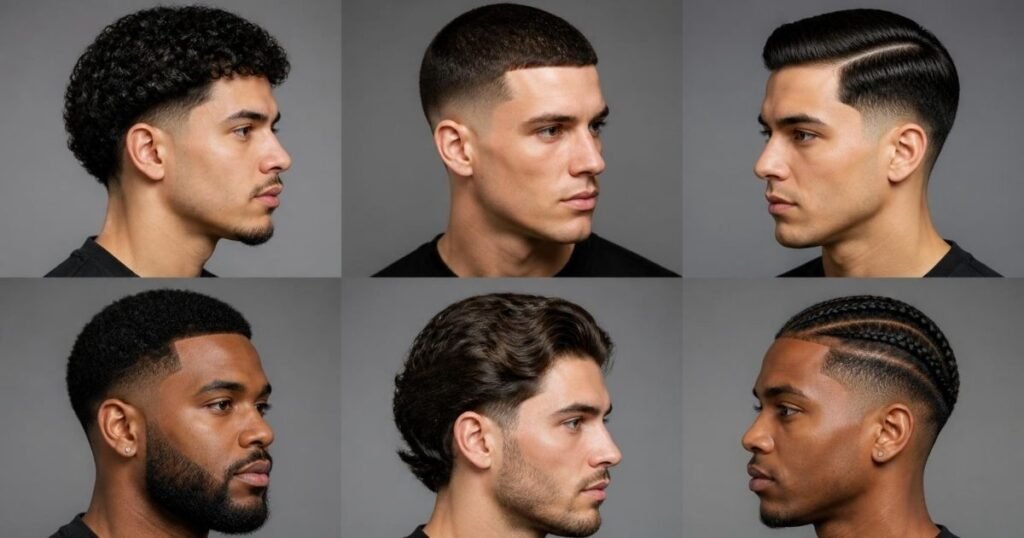
A low taper fade isn’t one single look it’s really a foundation that adapts to whatever you’re doing with the hair on top. Below are 25 ways people commonly wear it, organized loosely by hair texture, top styling, and specific combinations like beards or designs. Use these as a starting point, and bring whichever photo matches closest to your barber.
Low Taper Fade with Curly Hair
Curly hair adds volume and texture that pairs well with a low taper fade because the clean, gradual sides keep the overall look from feeling bulky. How much curl definition shows depends largely on how much length is left on top more length lets individual curls show their shape, while a shorter top compresses the curl into a denser, more textured look.
Curl-defining creams or gels applied to damp hair are commonly used to encourage definition and reduce frizz, rather than letting curls dry unpredictably. Curl tightness varies a lot from person to person, so how the fade blends into the curlier area, and how much product is actually needed, is worth discussing with a barber who has experience cutting curly hair specifically.
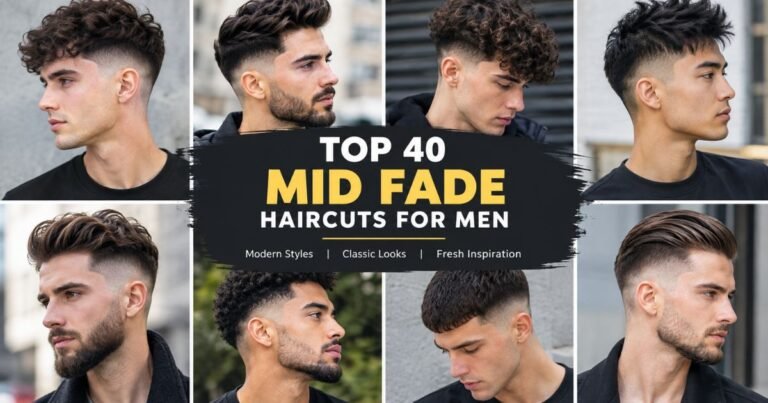
Read More About : Top 40 Mid Fade Haircuts for Men: Fresh, Modern Styles to Try
Short Hair with Low Taper Fade
Keeping the top uniformly short longer than a buzz cut, but without much length to style is one of the simplest ways to wear a low taper fade. The appeal here is speed: there’s very little daily styling involved, and the low fade keeps the whole look tidy without drawing much attention to itself.
A small amount of product for texture or a matte finish is usually all that’s needed. This is a solid option for anyone who wants a clean, professional look without spending time in front of a mirror each morning, though it offers less room for expression than styles with more length on top.
Low Taper Fade with Design
Adding a design a line, a shape, or a more detailed pattern shaved into the faded portion turns a low taper fade into something more personalized. Designs are usually placed near the temple or along the back of the head, where there’s enough contrast in the fade for the pattern to stand out clearly.
Fine line work tends to grow out and blur faster than the broader fade around it, so a design generally needs more frequent touch-ups than the base cut alone. It’s also worth working with a barber who specifically does design work, since freehand line art with clippers or a razor is a different skill than standard fading.
Textured Crop with Low Taper Fade
A textured crop is defined by short, choppy layers on top with a blunt or textured fringe falling over the forehead. Paired with a low taper fade, the sides stay clean and understated while all the visual interest sits in that layered, slightly undone top.
This look is usually styled by working a matte paste or clay through damp hair with fingers rather than a comb, which helps preserve the choppy texture instead of smoothing it out. The technique behind the haircut itself often point-cutting rather than blunt scissor cuts plays a bigger role in the final texture than hair type alone, though some natural texture on top does make the choppy effect easier to maintain.
Buzz Cut with Low Taper Fade
A buzz cut means the top is clipped to a single, uniform length rather than left longer or shaped in any way. Combined with a low taper fade, this is about as low-effort as a haircut gets day to day there’s essentially no styling required, since there’s no length to work with.
Because both the top and the fade are handled with clippers, the whole look stays sharp with minimal daily maintenance. This is a practical choice for anyone who wants a clean, modern look without spending any time styling in the morning the trade-off is that there’s no length on top to change up or experiment with between cuts.
Faux Hawk with Low Taper Fade
A faux hawk features a raised strip of hair running down the center of the head, tapering into shorter length on the sides, without shaving the sides down to a true mohawk. The low taper fade keeps the sides understated, which puts the visual focus squarely on that raised center section.
Getting the center to stand up usually requires a strong-hold wax or clay, along with some directional blow-drying to train the hair upward. Hair with a bit of natural body tends to hold this shape more easily than very fine, flat hair, which may need extra product to keep the volume from collapsing through the day.
Low Taper Fade with Beard
Pairing a low taper fade with a beard often comes down to how well the hairline and the beard’s edges are blended together a connected beard fade creates a more seamless, cohesive look than treating the head hair and beard as two separate grooming tasks.
Because beard hair and head hair don’t always grow at the same rate, keeping this connection looking sharp usually means trimming both on a fairly similar schedule. Beard density and growth pattern including any patchiness along the cheek line affect how cleanly a barber can blend the two areas, so it’s worth mentioning specifically if a seamless connection is what you’re after.
Read More About : 300+ Low Fade Haircuts for Men: Find Your Perfect Style
Low Taper Fade Afro
For coily or afro-textured hair, a low taper fade creates a clean transition into fuller, more voluminous hair on top without adding unnecessary bulk around the sides. The contrast between the tighter fade and the natural volume above tends to read as sharp and deliberate rather than unkempt.
Shape retention and moisture matter more here than with straighter textures moisturizing creams or oils are commonly used around the fade line to prevent dryness where the hair is shortest. Because curl pattern and density vary significantly between individuals, working with a barber experienced in cutting coily and afro-textured hair generally produces a more predictable, well-blended result.
Low Taper Fade with Twists or Locs
Twists or locs on top, combined with a faded perimeter, create a look where the top carries all the texture and personality while the sides stay clean and controlled. This combination is popular partly because it’s low-maintenance in one sense (the fade) and requires dedicated care in another (the twists or locs themselves).
The two elements are maintained on entirely separate schedules the fade needs its own regular touch-ups, while twists or locs require their own routine of retwisting and moisturizing, independent of how the haircut looks. How much length and pattern flexibility you have depends heavily on where you are in your hair’s growth journey, so this is very much a case-by-case conversation with your barber or loctician.
Comb Over with Low Taper Fade
A comb-over involves hair on top being combed to one side over a defined part, creating volume and a sense of direction. The low taper fade underneath gives it a clean, put-together finish that works especially well for more formal or professional settings.
This style is usually achieved with a comb and a pomade or wax for hold and a bit of shine. Straighter or slightly wavy hair tends to hold a combed direction more predictably than very curly or coily hair, which may need extra product or a different technique to keep the shape through the day though this varies enough from person to person that it’s worth testing before assuming it won’t work.
Low Taper Mullet
A low taper mullet takes the classic mullet shape shorter at the front and sides, longer at the back and modernizes it with a clean, low-fading blend on the sides instead of the heavier, less defined sides often associated with older mullet styles.
Growing out the back section takes patience, since the length contrast is the whole point of the style. In the meantime, maintenance mostly involves keeping the faded sides fresh while the back grows. This one is best suited to readers who are comfortable committing to that growth period rather than expecting a full transformation in a single visit.
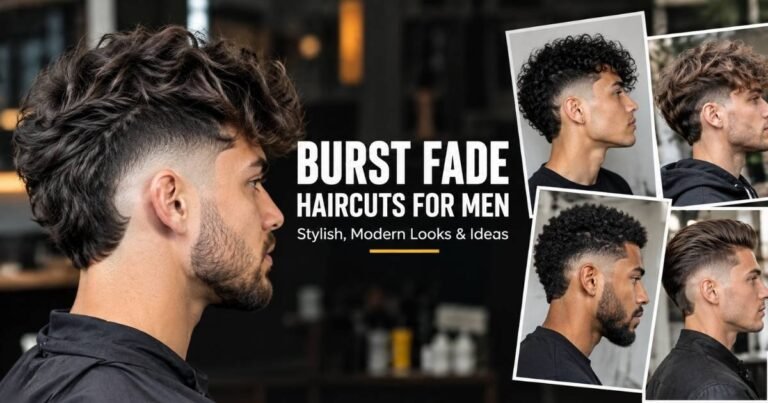
Read More About : Types of Fade Haircuts for Men: 50+ Skin Fade Hairstyles to Try in 2026
Spiky Hair with Low Taper Fade
Spiky hair means short-to-medium length styled upward or forward into defined points across the whole top, rather than concentrated in one raised strip like a faux hawk. The low fade on the sides keeps the overall look from feeling top-heavy.
This is typically styled on damp hair using a strong-hold wax or clay, working the product upward from the roots in small sections to define individual spikes. Hair with some natural volume or a slight wave tends to hold spikes more easily than very fine or perfectly straight hair, which may need more product to get the same effect.
Low Taper Fade with Side Part
A side part is a tighter, more classic look than a full comb-over a defined, visible line separating the hair, with shorter overall length on top than you’d see in a comb-over’s fuller volume. It’s often associated with an Ivy League or preppy aesthetic.
Daily maintenance is usually just a comb and a light-to-medium hold product to keep the part visible and the hair in place. A clean, visible part tends to be easier to maintain with straighter hair textures; curlier hair can still be styled this way, but may need more product or a slightly different parting technique to keep the line from disappearing.
Modern Pompadour with Low Taper Fade
A pompadour is built around swept-back volume with noticeable height at the front, contrasted here by the clean, low-key fade on the sides. It’s a more structured, deliberate style than a quiff, with more height and a fuller sweep-back shape.
Achieving the volume usually involves blow-drying hair back and up from the roots, then locking it in place with a strong-hold product. Longer top length and some natural thickness make the height easier to build; very fine or short hair may need significantly more product to hold a similar shape, and the daily styling time here is generally longer than with most other entries on this list.
Fluffy or Messy Top with Low Taper Fade
This style leans into deliberately undone, natural-looking movement on top, with the low fade providing enough structure on the sides to keep the whole thing from looking unkempt. It’s less about a specific cut shape and more about a relaxed styling approach.
A light texture spray or cream, worked through with fingers rather than a comb, usually gets the best result the goal is texture and movement, not smoothness. Hair with some natural wave tends to fall into this look with less effort; very straight or very fine hair can still achieve it, but often needs more product to fake the same lived-in texture.
Low Taper Fade with Straight Hair
Straight hair tends to fall cleanly and hold sharp lines well, which makes it a good match for styles that depend on defined shape a crisp side part, a sleek comb-back, or simply a neat, uniform top. The low fade complements that clean fall rather than fighting against it.
If more volume or movement is wanted than straight hair naturally provides, a texturizing product can help build that in without changing the hair’s underlying structure. Very fine straight hair can go flat without some product support, so it’s worth mentioning your hair’s natural body to your barber and stylist ahead of time.
Long Hair with Low Taper Fade
A low taper fade isn’t limited to shorter cuts it works with considerably more length on top too, whether that’s worn down, tied back, or pulled into a bun. The sides stay controlled while the length itself becomes the main visual feature.
Because most of the maintenance attention goes toward keeping the fade fresh rather than styling the top daily, this combination works well for anyone growing their hair out or who already has longer hair and wants a cleaner-looking base. It offers more styling flexibility day to day than shorter combinations worn loose one day, tied back the next.
Wavy Hair with Low Taper Fade
Wavy hair has a looser, less defined pattern than curly hair, and it often styles into natural-looking texture with a lot less product than tighter curls require. The low fade lets that texture stay front and center without competing for attention on the sides.
A light cream or a texturizing spray is commonly used to enhance the natural wave pattern without weighing it down or making it look greasy. Wave pattern isn’t always uniform across the whole head some people have more wave in certain areas than others which is part of why results can vary even among people who’d both describe their hair as “wavy.”
Low Taper Fade with Fringe
A fringe brings the front section of hair forward over the forehead, and it can be styled as a sharp, blunt line or a softer, more textured edge. The rest of the top can stay relatively simple, since the fringe itself carries most of the visual weight.
Because fringe length is very deliberate, it tends to need more frequent trims than the rest of the haircut to stay at the desired length and shape. A small amount of product usually helps control flyaways and hold the fringe’s shape through the day. For some readers, a well-placed fringe can also be a way to work with an uneven or receding hairline though results vary enough that it’s genuinely worth a direct conversation with your barber rather than assuming it from a photo.
Slick Back with Low Taper Fade
Unlike a comb-over or side part, a slick back has no visible parting line at all the entire top is combed straight back for a smooth, uniform finish. Paired with a low taper fade, it leans toward a polished, formal look.
A pomade water-based for a glossy sheen or oil-based for stronger, longer-lasting hold is the usual product of choice, combed through in one direction from front to back. This style needs enough length on top to actually comb backward; if the top is too short, there simply isn’t enough hair to work with.
Curtains or Middle Part with Low Taper Fade
A middle part sends hair falling symmetrically to both sides from a central point, framing the face rather than sweeping in one direction. The low fade keeps the sides from competing with that framing effect.
There needs to be enough length on top for the hair to fall naturally on both sides a light cream or gel is usually enough to guide the part without making it look stiff or overly styled. Hair with a bit of natural fall or a slight wave tends to frame the face with less effort here; very straight, stubborn hair may need a blow-dry technique or extra product to hold the part in place.
Quiff with Low Taper Fade
A quiff is a softer, shorter relative of the pompadour forward-swept volume at the front, but with less overall height and a more relaxed shape. It requires noticeably less daily styling effort than a full pompadour while still adding some lift and movement.
The usual approach is a quick blow-dry lifting the front section, followed by a medium-hold product to keep it in place without stiffness. Some natural volume or medium hair density tends to help this style hold its shape more easily than very fine hair, which may need a bit more product to get a similar lift.
Braids with Low Taper Fade
Braided patterns on top, in whatever direction or design you choose, pair well with a clean faded perimeter that frames the braids without adding bulk. This combination is popular partly because it lets the braid pattern itself be the focal point.
The fade and the braids are on entirely different maintenance timelines the fade needs its own regular touch-ups, while the braids will need to be redone periodically depending on hair type and the specific braiding style used. Because braid patterns depend heavily on hair length and texture, this is best planned out with a barber or braider who’s experienced with your specific hair type.
360 Waves with Low Taper Fade
360 waves refer to a circular wave pattern trained across the whole top of the head, typically maintained through consistent brushing and the use of a durag or wave cap. The low taper fade complements the pattern by keeping the sides clean, so the waves on top read clearly without distraction.
This is more of an ongoing styling commitment than a one-time haircut result regular brushing (often multiple times a day early on) and overnight durag use are part of building and maintaining the wave pattern. This particular style is closely tied to coily or curly hair textures that can be trained into waves, so it’s one of the few entries on this list where hair type plays a genuinely central role rather than a minor one.
Blowout with Low Taper Fade
A blowout builds volume and texture across the whole top using a blow dryer and a lifting technique at the roots, often finished with a pick or wide-tooth comb for an airy, full result. It’s different from a pompadour or quiff in that the volume isn’t concentrated in one direction it’s lifted and textured more evenly across the top.
This look generally requires a dedicated styling session with a blow dryer rather than a quick morning routine. Naturally fuller or curlier hair tends to achieve volume with less effort here, though finer or straighter hair can still get a similar look with the right blow-drying technique and product.
How to Choose the Right Low Taper Fade for Your Hair Type
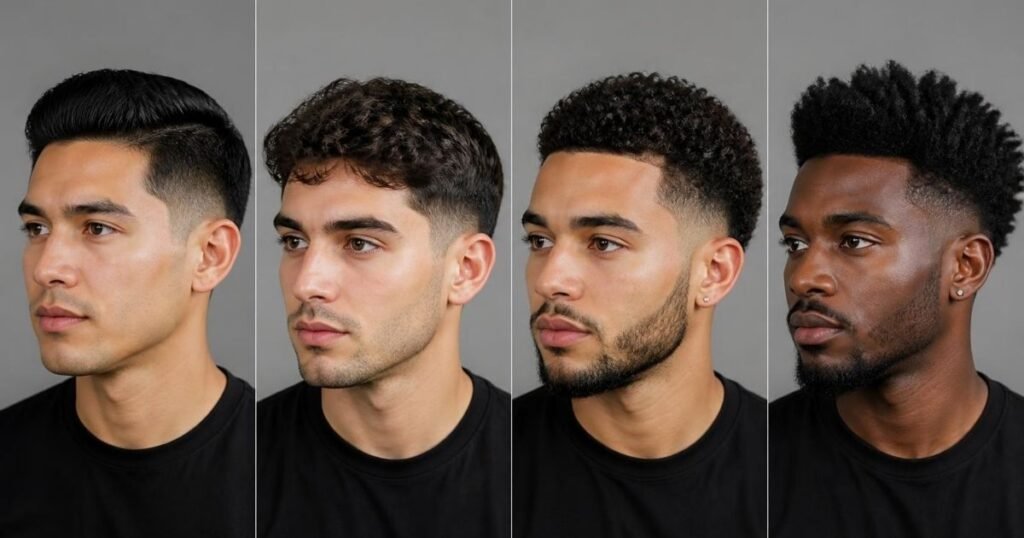
With 25 variations to consider, it helps to narrow things down by starting with the hair you actually have rather than the photo you like best. Here’s a general starting point treat it as a guide, not a rulebook, since individual hair within each category can behave quite differently.
| Hair Type | General Tendency | Related Styles Above |
| Straight | Holds sharp lines and combed shapes well; may need product for added volume | Side Part, Slick Back, Comb Over, Straight Hair |
| Wavy | Flexible works with both natural-texture looks and combed styles | Wavy Hair, Fluffy or Messy Top, Curtains |
| Curly | Benefits from retained length on top for curl definition; barber experience with curly cutting matters | Curly Hair, Textured Crop, Faux Hawk |
| Coily / Afro-textured | Fade blending and top shape depend heavily on density and curl pattern | Afro, Twists or Locs, Braids, 360 Waves, Blowout |
Density and porosity also play a role that goes beyond curl pattern alone. Thicker, denser hair generally holds more structured, voluminous styles like a pompadour or blowout with less product, while finer hair regardless of curl pattern often needs more product support to hold shape through the day. None of this is a hard rule; the same texture can behave differently from one person to the next, and a barber who regularly works with your specific hair type will usually give you a more accurate read than any general guide can.
How to Ask Your Barber for a Low Taper Fade
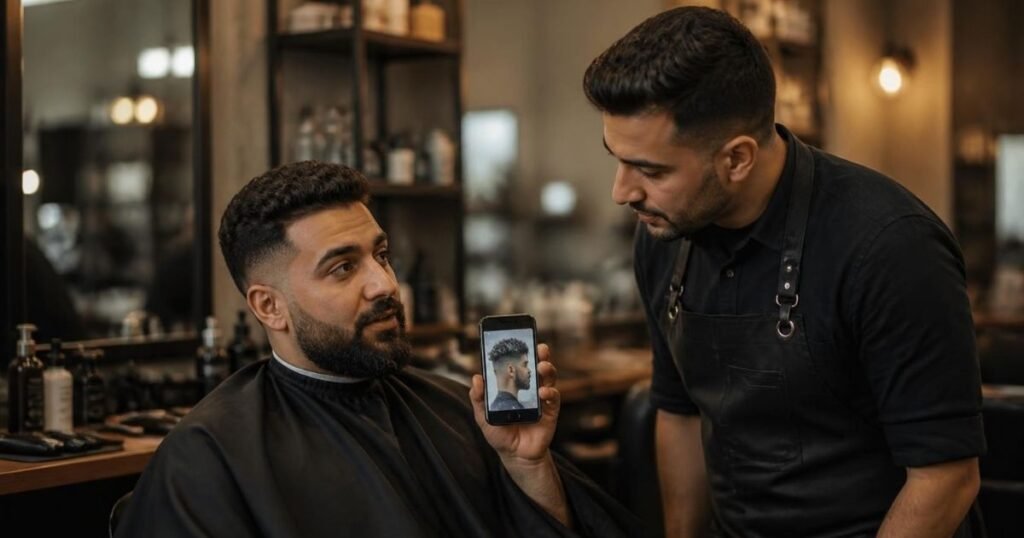
Getting the result you want mostly comes down to clear communication, since the same words can mean slightly different things from one barbershop to the next. A few things make this conversation easier:
- Bring a reference photo, ideally more than one. A side or back-angle photo showing exactly where the fade starts is far more precise than trying to describe it verbally.
- Talk about the top and the fade as two separate decisions. Length, texture, and styling on top are a different conversation from how low or high the fade sits most barbers will ask about both anyway, but it helps to have an answer ready for each.
- Be specific about the starting point. Something like “keep the fade low, starting around here” while pointing to a photo or your own hairline removes a lot of guesswork.
- Ask how it will hold up as it grows out. This gives you a realistic sense of how it’ll look in two or three weeks, and roughly when you should plan your next visit.
- Mention any specific concerns up front skin sensitivity, a cowlick, a fading hairline, or anything else that might affect how the cut turns out.
No single phrase guarantees an identical result at every shop, since technique and interpretation vary by barber. A clear photo, paired with a short conversation about what you do and don’t want, is the most reliable way to bridge that gap.
How to Maintain a Low Taper Fade at Home
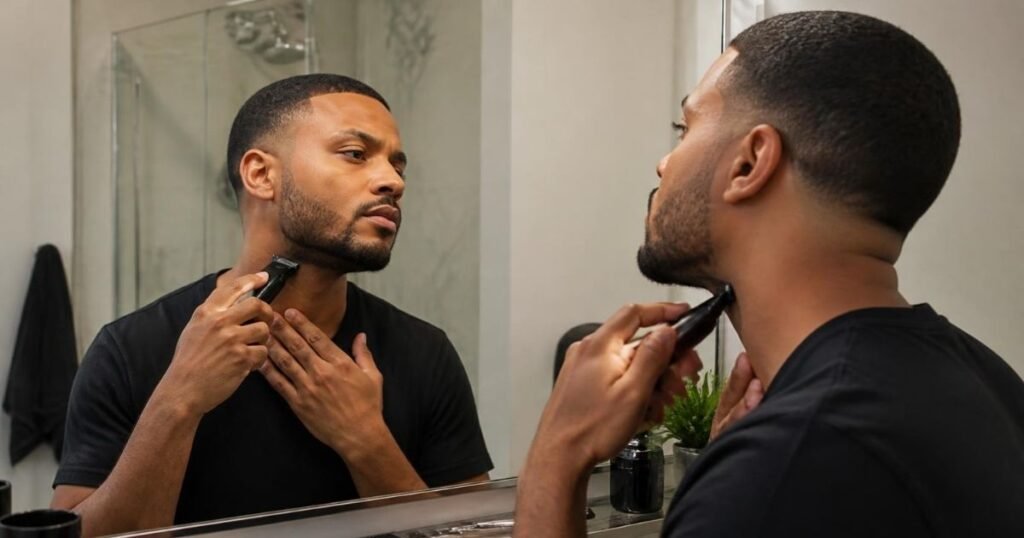
A low taper fade is relatively low-maintenance by fade standards, but a few habits will keep it looking sharp between barber visits.
Keep Your Temples and Neckline Neat
The neckline and temple area are usually where regrowth becomes noticeable first, since hair here is cut shortest. A basic trimmer with a guard can clean up stray hairs in these spots between visits just stick to light touch-ups rather than trying to recreate the full fade yourself.
Maintain Your Hair and Scalp
Short, faded areas can dry out more easily since there’s less hair to protect the scalp. A light moisturizer can help with dryness around the fade, and sunscreen or a hat is worth considering after a fresh cut, since newly exposed skin is more sensitive to sun.
Use Suitable Styling Products
The right product depends on the specific style and texture you’re working with a matte clay or paste for texture and hold, a pomade for a sleek, defined finish, or a light cream for natural movement. If you’re not sure which fits your hair and chosen style, the hair-type table above and the individual style entries are a good place to check.
Avoid Unnecessary At-Home Trimming
A properly blended fade is genuinely difficult to replicate at home the gradual transition that makes it look clean is easy to disrupt with a single uneven pass of clippers. Light edge or neckline touch-ups are generally safe; attempting to redo the actual fade blend yourself often creates visible lines that a barber then has to correct.
Plan Your Next Barber Visit
Rather than working off a fixed schedule, it helps to watch for signs that a refresh is due the fade line starting to blur, or the neckline and temples getting noticeably shaggier. Since hair growth rate varies quite a bit from person to person, this is more useful as a general guide than a strict countdown, and it’s worth booking ahead if you have an event coming up.
Frequently Asked Questions About Low Taper Fades
Can You Get a Low Taper Fade with Any Hair Type?
Yes a low taper fade can generally be adapted to straight, wavy, curly, and coily hair, though how it’s executed and how much daily styling it needs will vary depending on your texture and density. See the hair-type table above for a closer look at what tends to work well with each.
How Long Does a Low Taper Fade Last?
This depends heavily on individual hair growth rate, so there’s no single fixed answer but because the fade sits low and blends gradually, regrowth tends to be less immediately noticeable than it would be with a higher-contrast fade. Most people find they can go a bit longer between visits compared to a high or skin fade.
Is a Low Taper Fade Suitable for a Professional Setting?
Generally, yes. Its subtle, low-contrast look tends to read as clean and put-together rather than trend-forward, which suits most professional environments. That said, workplace norms vary, and choices like an elaborate design or a very high-volume top style can shift the overall impression, even with the same fade underneath.
Can You Get a Low Taper Fade with a Beard?
Yes, this is a common combination many barbers can blend the hairline into the beard’s edges for a more seamless, connected look. See the Low Taper Fade with Beard entry above for more on how that blend works.
How Often Should You Get a Low Taper Fade Trimmed?
There’s no universal schedule, since hair growth rate differs from person to person, but a low taper fade generally needs less frequent trims than a higher-contrast fade. Watch for the fade line softening or the temples and neckline getting shaggy as your cue to book another visit.
Is a Low Taper Fade Suitable for Short Hair?
Yes some of the simplest, lowest-maintenance versions of this cut involve short hair on top, whether that’s a buzz cut or slightly longer uniform length. See the Short Hair and Buzz Cut entries above for two straightforward options.
Final Thoughts
A low taper fade works as well as it does because it’s less a single haircut and more a flexible foundation one that adapts to straight, wavy, curly, or coily hair, and to top styles ranging from a simple buzz cut to a full pompadour. What actually determines how it looks on you comes down to your hair’s natural texture and density, how much time you want to spend styling it, and how well your barber executes the blend.
The best next step is usually the simplest one: pick a style from this guide that fits your hair type and lifestyle, save a clear reference photo, and use the barber communication tips above to talk through exactly what you want. From there, it’s really a conversation between you, your hair, and whoever’s holding the clippers.

Jake Miller is a barbering and men’s hairstyle enthusiast who shares practical tips, haircut inspiration, and the latest grooming trends at BarberZylo. He enjoys exploring modern and classic hairstyles and helping readers find fresh ideas for their next look.