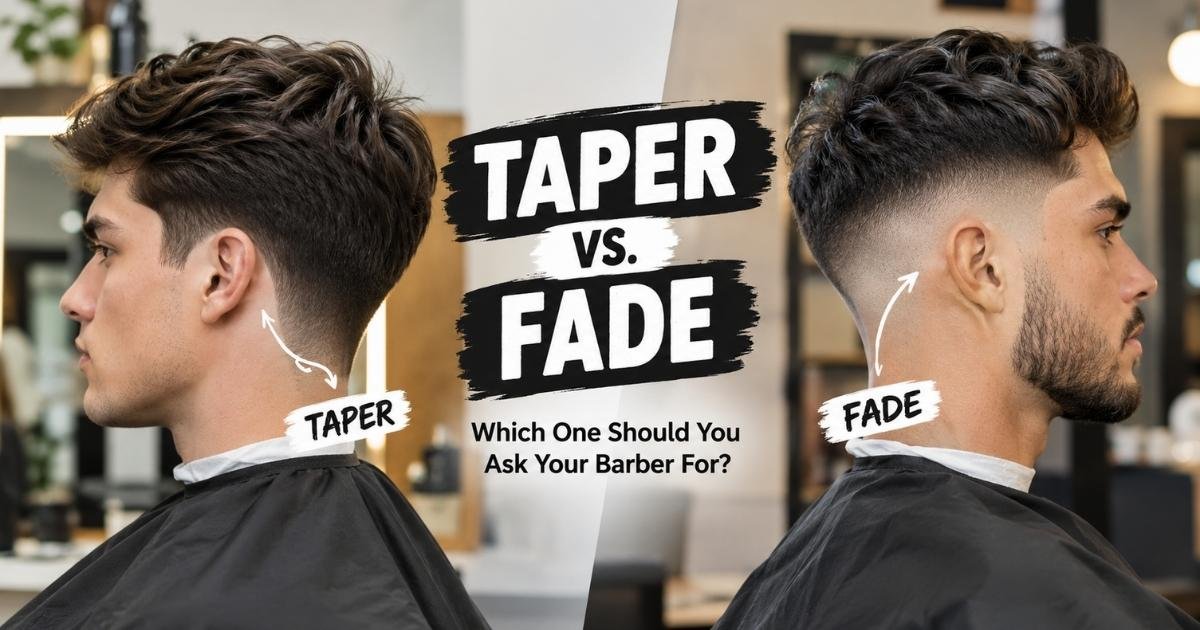
Taper vs. Fade Haircut: Which One Should You Ask Your Barber For?
If you’ve ever asked for a “fade” and walked out with something closer to a taper (or the other way around), you’re not alone. Barbers use these two words loosely, and the line between them gets blurry fast, especially once you start looking at variations like drop fades, skin tapers, and the ever-confusing “taper fade.”
Here’s the short version before we get into specifics: a taper changes your hair length gradually, with no hard line, and generally leaves more hair overall. A fade changes length more abruptly, often blending down to bare skin, and creates a sharper, more visible contrast. Most modern haircuts actually use a bit of both which is exactly why the terms get mixed up so often.
This guide breaks down what each one actually looks like, walks through the common variations, and more importantly helps you figure out which one fits your hair, your face and head shape, and how much upkeep you’re willing to deal with between visits.
What’s the Difference Between a Taper and a Fade?
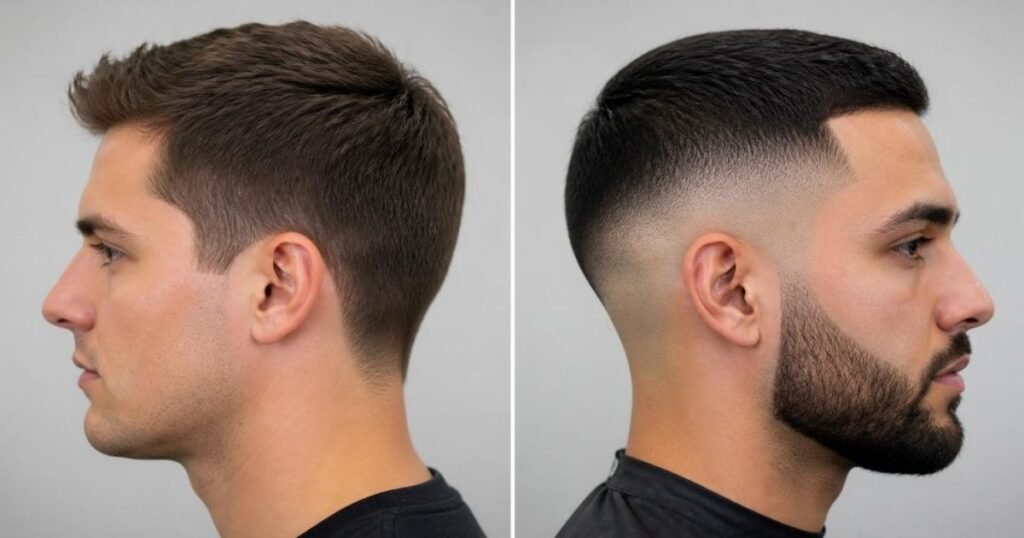
At the most basic level, the difference between a taper and a fade comes down to how quickly the hair changes length and how close to the skin it gets. A taper haircut shortens gradually as it moves down toward your hairline and neckline, so there’s no obvious line where “long” turns into “short.” A fade does the opposite it drops in length more sharply, often finishing at or near bare skin, which creates a much more visible line of contrast.
| Taper | Fade | |
| Length transition | Gradual, blended | Abrupt, more defined |
| Typical skin exposure | Rare, unless specifically requested (skin taper) | Common, especially at the shortest point |
| Contrast level | Low to moderate | Moderate to high |
| Hair left on sides | Generally more length retained | Generally shorter, closer to skin |
| Barber time/skill | Requires clean, even blending | Often requires more precise blending work |
| Best known for | A natural, classic finish | A sharp, defined finish |
When people search for a taper vs fade haircut or the difference between taper and fade, this is usually the answer they’re actually looking for: it’s not about one being “better,” it’s about how dramatic you want the transition around your sides and back to look.
One thing worth knowing early: a fade can also be tapered, and a taper can technically go all the way to skin (more on that in the taper section below). So while the general taper haircut vs fade distinction holds up gradual versus abrupt the two techniques aren’t mutually exclusive. That overlap is part of why the terminology gets confusing, and it’s also why the rest of this guide breaks each one down on its own before getting into how to choose.
What Is a Taper?
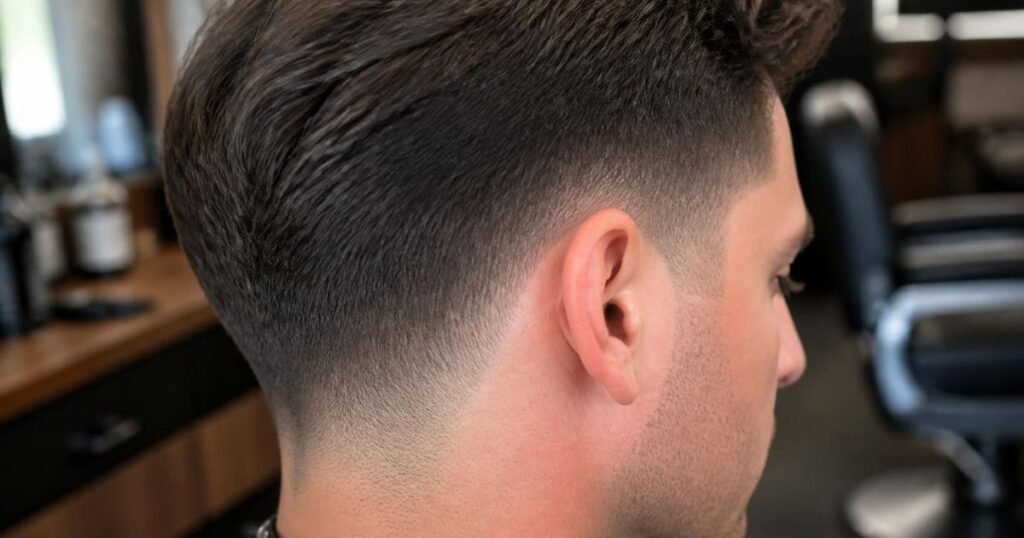
A taper is a haircut technique where the hair gradually gets shorter as it moves down toward the hairline, temples, and neckline with no sudden jump in length anywhere along the way. There’s no hard edge to spot; instead, the transition happens smoothly, which is what gives a taper its clean-but-natural look.
Because the change in length is subtle, tapers tend to leave more length overall compared to a fade cut to the same general area. This makes them a lower-contrast option that reads as neat and put-together without looking like a dramatic style change. It’s also why so many classic and professional haircuts side parts, crew cuts, slicked-back styles quietly include a taper without the client ever specifically asking for one. If your barber says your haircut is “tapered around the edges,” this is what they mean.
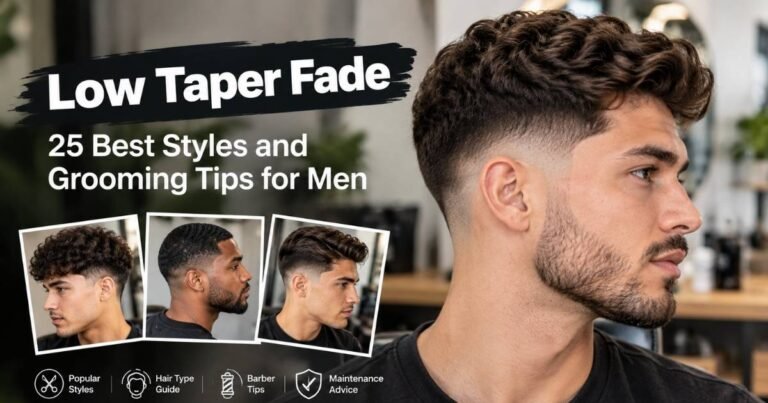
Low Taper
A low taper keeps the gradual shortening close to the hairline and ears, so most of the length up top and around the crown stays untouched. It’s the most subtle version of a taper the kind of cut that reads as “just a haircut” rather than a noticeable style change.
This makes a low taper a solid choice if you want a cleaner finish around the neckline and edges without altering the rest of your look. It’s also a common starting point for anyone who’s never had a taper before, since it blends well with almost any length on top and works in conservative settings like most offices.
High Taper
A high taper starts its gradual shortening further up the head, which creates more visible contrast than a low taper while still avoiding the sharp line of a fade. Think of it as the taper’s version of “more noticeable” the transition is still smooth, but it starts higher and covers more of the side of the head.
This tends to pair well with styles that already have some height or texture on top, like a textured crop or a comb-over, since the added contrast on the sides gives the top more visual presence.
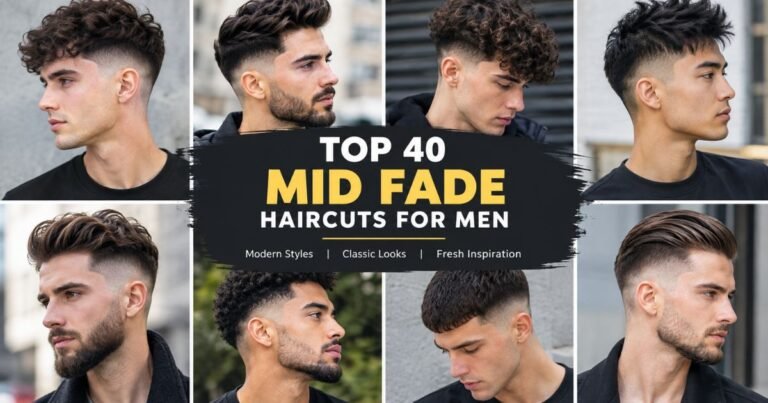
Read More About : Top 40 Mid Fade Haircuts for Men: Fresh, Modern Styles to Try
Temple Taper
A temple taper focuses the gradual blending specifically around the front hairline and temples, rather than tapering the entire side of the head. It’s a more localized adjustment useful for cleaning up the area where hair meets the forehead without committing to a full haircut.
This is a good option if you’re between full haircuts and just want a softer transition around the temples, or if you’re dealing with an uneven or receding hairline and want your barber to soften that area rather than draw attention to it with a sharp line.
Neck Taper
A neck taper applies the same gradual-blend principle to the nape of the neck instead of cutting a hard, blocked line at the base of the hairline. It’s a small detail, but it makes a real difference in how the haircut looks over time.
A tapered neckline tends to grow out more naturally than a blocked one, since there’s no straight edge to lose its shape. If you’re after a cleaner finish around the neckline that doesn’t look overgrown after a couple of weeks, this is the detail to mention to your barber it’s easy to overlook, but it’s one of the things that separates a fresh-looking haircut from one that clearly needs a trim.
What Is a Fade?
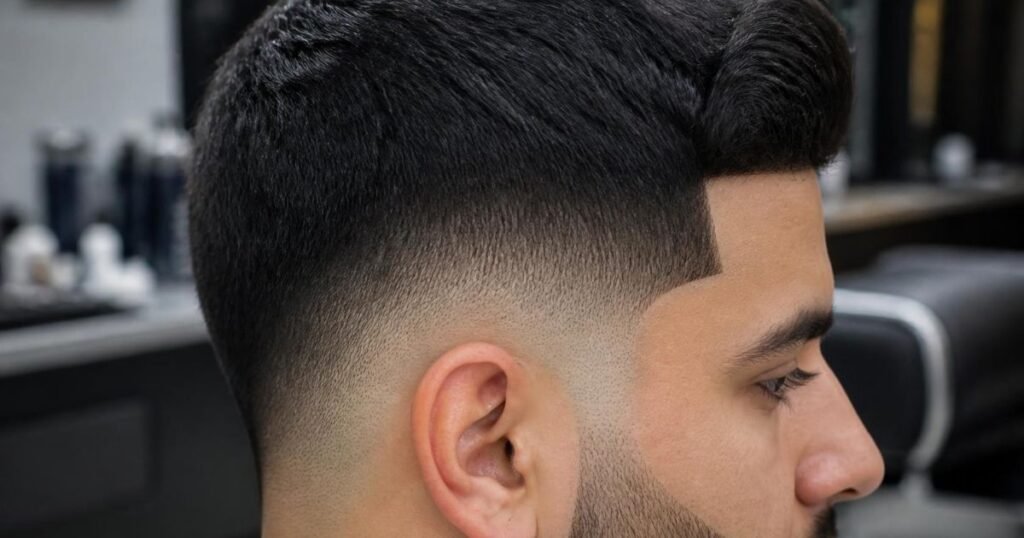
A fade is a haircut technique where the hair shortens abruptly rather than gradually, usually finishing at or very close to bare skin. Instead of a smooth blend, there’s a clear, visible line where the length drops that line is essentially the whole point of a fade, and it’s what gives the cut its sharper, more defined look.
Fades aren’t a standalone hairstyle so much as a technique that gets built into a huge range of haircuts, from buzz cuts to pompadours to textured crops. Getting a clean fade generally takes more precision than a taper, since the barber has to blend multiple clipper guards smoothly enough that the transition looks intentional rather than choppy. If you’re wondering about the types of fade haircuts out there, they’re mostly distinguished by two separate things: how high up the head the fade starts, and how close to the skin it goes. The sections below cover both.
Low Fade
A low fade keeps the sharp transition close to the hairline and ears similar placement to a low taper, but with an abrupt line instead of a gradual blend. That’s really the key difference between the two: same general area, different type of transition.
A low fade haircut is often the first fade people try, since it adds definition without the higher contrast of a mid or high fade. It pairs naturally with crew cuts and buzz cuts, giving them a sharper finish around the edges without changing the overall style.
Mid Fade
A mid fade starts between the low and high placements, generally around the temple area, which gives it a middle-ground level of contrast. It’s not as subtle as a low fade, but it’s not as bold as a high fade either which is exactly why a lot of barbers default to a mid fade when a client isn’t sure what height they want.
If you’re not sure how high the fade should go, a mid fade is a reasonable place to start the conversation with your barber, since it works with most top lengths and styles without pulling too much attention to the sides.
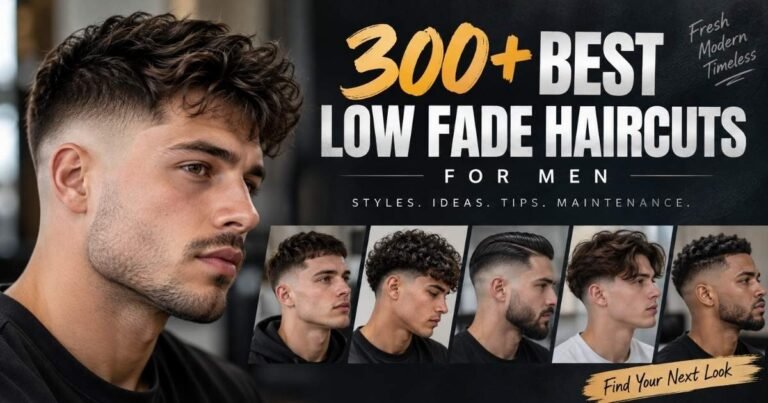
Read More About : 300+ Low Fade Haircuts for Men: Find Your Perfect Style
High Fade
A high fade starts well above the ears, which creates the most contrast of the three standard placements. Because it clears so much of the side of the head, it also gives your barber more room to work in whether that means adding a design line, blending into a longer top, or creating a sharper contrast with a textured style.
This is generally the option to ask for if you want a more noticeable contrast on the sides and don’t mind the haircut making more of a statement. It also tends to need more frequent attention to stay looking sharp, which is worth factoring in more on that in the maintenance section below.
Skin Fade
A skin fade sometimes called a bald fade refers to how close to the skin the fade goes, not how high up the head it starts. That distinction trips a lot of people up: a skin fade can be low, mid, or high. “Skin fade” just means the shortest point of the fade is bare skin rather than a very short clipper guard.
Because it creates the highest possible contrast at the blend point, a skin fade tends to look sharpest right after a cut and shows regrowth the fastest of any fade type. It works with almost any length on top, from a short buzz to a longer, styled top, which is part of why it’s such a commonly requested cut.
Drop Fade
A drop fade follows a curved line that dips downward behind the ear, rather than staying at a consistent height all the way around the head. It’s a shape variation that can be applied at a low, mid, or high placement the curve is what makes it a “drop” fade, not the height.
Because the line curves with the natural shape of the head instead of running straight, it takes a bit more precision from the barber to keep it clean, and it may need slightly more careful upkeep to preserve that curve as the hair grows.
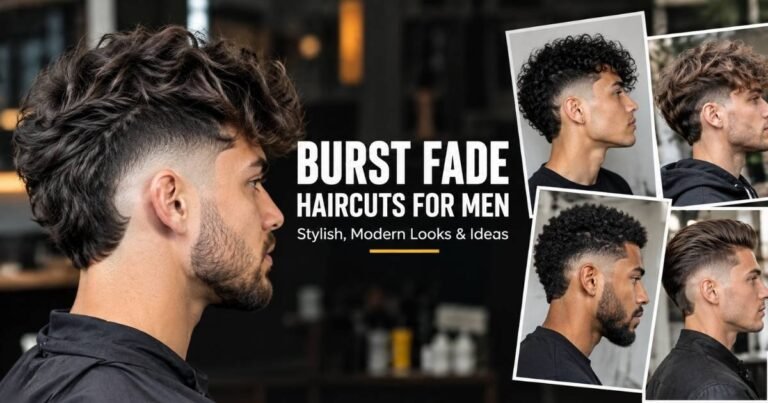
Burst Fade
A burst fade curves around the ear in more of a semicircle shape, fading outward from the ear rather than continuing in a straight or dropping line along the head. It’s often paired with longer top styles mohawks, fringes, spiked tops where the sides need to fade independently rather than blend into a straight line at the back.
It’s more of a design choice than a default option, and it tends to work best when there’s a clear reason for the sides to stand apart from the back, rather than as a general everyday cut.
What Is a Taper Fade?
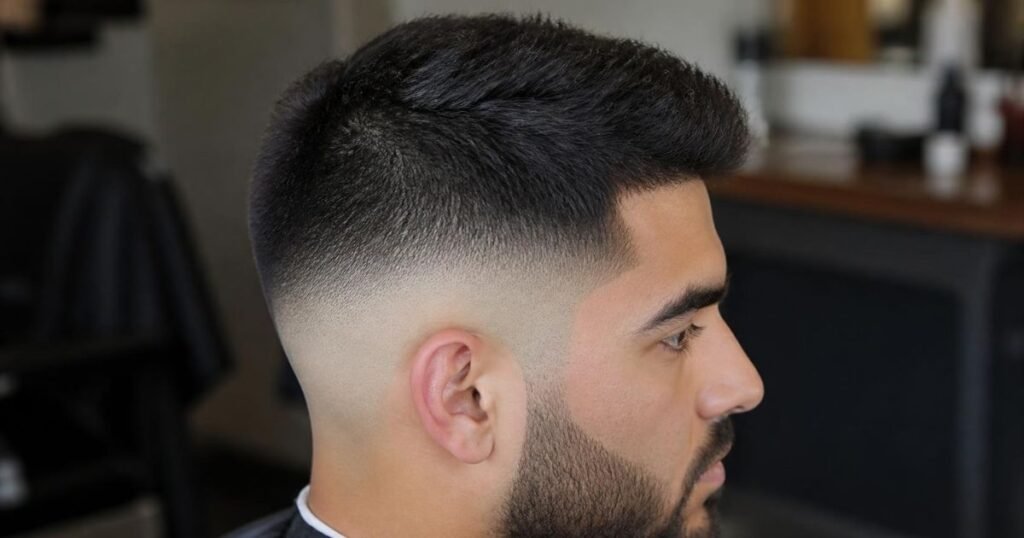
“Taper fade” is one of the most commonly used and least standardized terms in barbering. It doesn’t refer to one specific, fixed haircut. Instead, it’s generally used to describe a cut that combines a gradual taper (often through the top and crown area) with a sharper fade lower down toward the hairline.
Because there’s no universal definition, what you get when you ask for a “taper fade” can vary quite a bit depending on the barber. Some will interpret it as a fade with softer edges; others will treat it as a taper with more contrast added at the bottom. Neither interpretation is wrong the term just isn’t standardized enough to guarantee a specific result on its own, which is exactly why bringing a reference photo matters (more on that shortly).
Taper vs. Taper Fade: What’s the Difference?
A plain “taper” generally implies the whole transition stays gradual from top to bottom no sharp line anywhere. A “taper fade” typically implies that gradual blending is combined with a more abrupt fade somewhere on the head, usually toward the sides or back.
In practice, the difference between the two often comes down to how your specific barber interprets the term. If you’re asking for a taper fade, it can help to clarify where you want the sharper fade portion to happen for example, “gradual on top, with a fade around the ears” rather than relying on the term alone to communicate the full picture.
Taper vs. Fade Haircut: Which One Should You Choose?
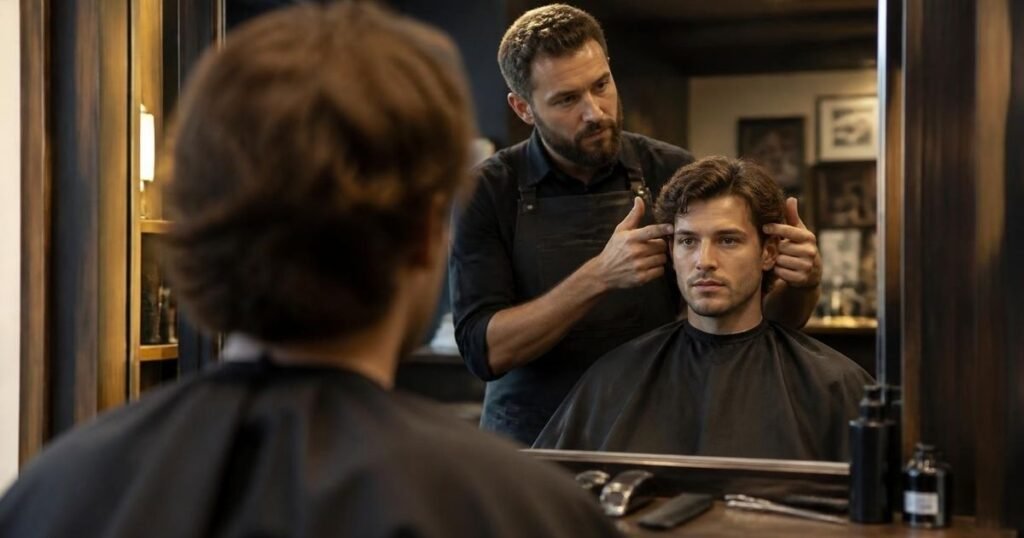
There’s no single right answer here the better choice depends on how much contrast you want, what your hair does naturally, and how often you’re realistically going to get back in the barber’s chair. Here’s how to think through it.
If You Want a More Subtle Look
A taper particularly a low taper generally gives you the most subtle, low-contrast result, since the length change is gradual rather than sharply defined. If you’re not sure how short you want to go, or you work somewhere conservative, a taper is usually the safer starting point. It reads as a clean, intentional haircut without making a big statement.
If You Want More Contrast
A fade, especially a high fade or skin fade, delivers the sharpest visual contrast around your sides and back. If you want your haircut to have more presence a noticeable difference between the top and sides a fade is generally the better fit. Just keep in mind that more contrast also means regrowth becomes visible sooner, since there’s a defined line to maintain rather than a soft blend.
Consider Your Hair Texture and Density
Hair texture and density can genuinely affect how a taper or fade turns out, though not in a way that rules anything out entirely. Denser or curlier hair can make a fade’s contrast line “pop” more visually, since there’s more volume sitting on top of the shorter section. Finer or straighter hair tends to show a taper’s gradual blend more smoothly, since there’s less volume creating a visual break.
None of this means curly or coily hair can’t handle a fade, or fine hair can’t handle a fade either it just means the result can look a little different depending on what your hair naturally does. If you have thicker or more textured hair, it’s worth mentioning that to your barber and asking specifically what works with your natural hair texture, since fade and taper execution can vary depending on a barber’s experience with different hair types.
Consider Your Face and Head Shape
Face and head shape can influence how a taper or fade reads visually, but there’s no fixed rule that says one is “correct” for a particular face shape despite what a lot of haircut advice implies. Higher contrast (a fade) can draw more attention to the jaw and cheek area, which some people with rounder faces use intentionally to add definition. A taper’s softer transition can feel like a gentler frame for more angular faces, though plenty of people with angular features choose fades too.
Head shape matters here as well, not just face shape how flat or curved the back of your head is can affect how cleanly a fade line reads from certain angles. If you have specific concerns, it’s worth raising them with your barber directly rather than trying to match a rule you found online; they can adjust placement to work with your head shape rather than against it.
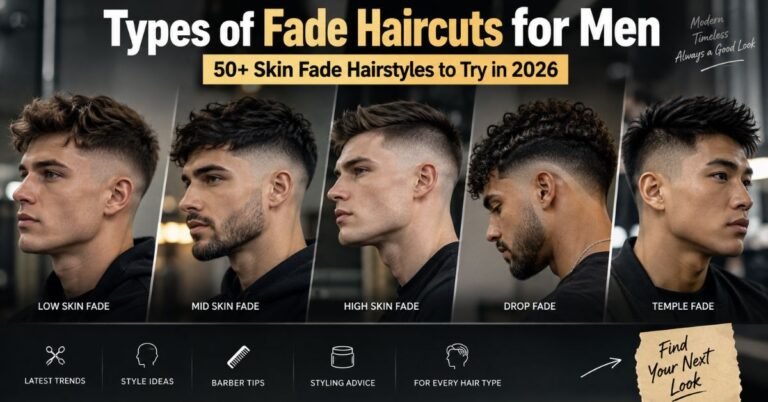
Read More About : Types of Fade Haircuts for Men: 50+ Skin Fade Hairstyles to Try in 2026
Consider Your Hairline and Growth Pattern
Cowlicks, uneven hairlines, and receding hairlines can all affect how a taper or fade turns out particularly around the front and temples. A barber may adjust the fade height or lean toward a taper instead of a sharp fade line specifically to work around a difficult growth pattern, since a hard edge tends to draw more attention to hairline irregularities than a soft blend does.
If you have a cowlick, a receding hairline, or hair that grows in an unusual direction somewhere, it’s genuinely useful to point it out before the cut starts. It gives your barber the chance to plan the fade or taper placement around it instead of discovering it partway through.
Consider Maintenance
Fades, especially skin fades, generally need more frequent barber visits to keep their sharp line looking clean. Tapers tend to grow out more gracefully and can usually go longer between appointments without looking obviously overdue for a cut.
If you’re after something low-maintenance between barber visits, that’s a real point in favor of a taper. If you don’t mind more frequent trims in exchange for a sharper look, a fade is worth it. We’ll get into the specifics of how each one actually grows out in the next section.
What Should You Tell Your Barber?

Knowing the right terminology helps, but it’s not the whole story barbers interpret terms differently, and what one calls a “mid fade” another might call something else entirely. Being specific about what you want matters more than getting the vocabulary exactly right.
What to Ask for When You Want a Taper
When describing a taper, it helps to be specific about three things:
- Placement low, high, or focused on a specific area like the temples or neckline
- Blend type make it clear you want a gradual transition with no hard line
- Top length how much length you want to keep on top, since that affects how noticeable the taper looks underneath
Clipper guard numbers can also help communicate length (for example, referencing a shorter guard near the hairline and a longer one higher up), but treat them as a rough starting point rather than a guarantee the same guard number can look different depending on your hair’s natural thickness and how it lies.
What to Ask for When You Want a Fade
For a fade, the specifics that matter most are a little different:
- Height low, mid, or high, so your barber knows where the sharper transition should start
- Skin exposure whether you want it to fade all the way to bare skin (a skin fade) or stop at a very short guard instead
- Shape whether you want a straight fade line, a drop fade that curves behind the ear, or a burst fade that circles the ear
As with tapers, guard numbers are useful shorthand but shouldn’t be treated as an exact formula, since the same number can read differently depending on how dense or textured your hair is.
Why a Reference Photo Helps
Because terms like “taper fade” aren’t standardized, a photo does something words often can’t: it removes the guesswork. Terminology gets interpreted differently from barber to barber, but a photo of the actual fade height, curve, or contrast level gives your barber a clear visual target.
It’s worth bringing a photo from an angle that actually shows what you’re after a side or back view for fade height and shape, not just a front-facing photo, since that’s usually where the most important details live. If you’re not sure what to show your barber in a reference photo, a clear side-profile shot that captures the transition point is usually more useful than a front-on portrait.
Taper vs. Fade Haircut: Maintenance and Grow-Out
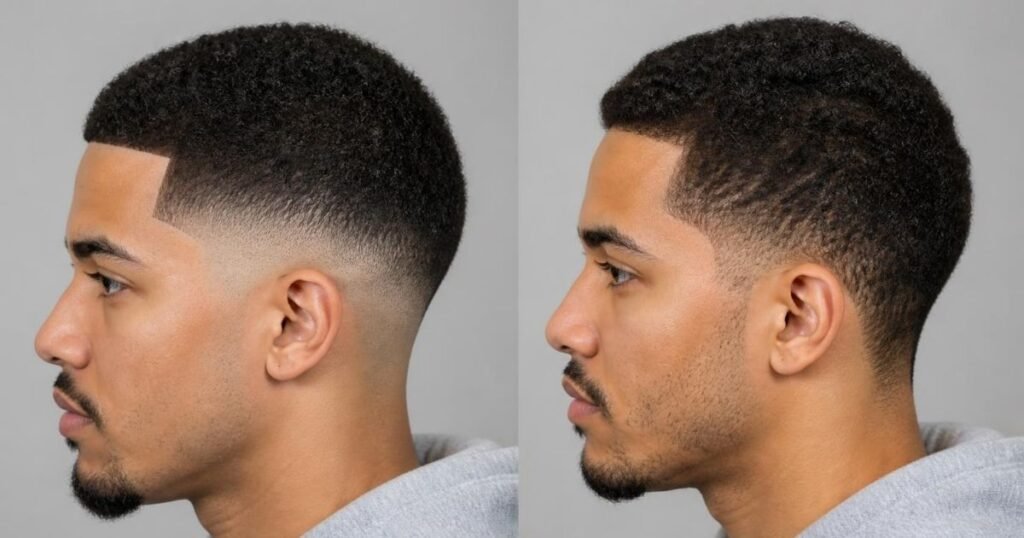
Maintenance is one of the more overlooked factors in choosing between a taper and a fade, but it’s often the thing that actually determines whether someone sticks with a haircut long-term.
Fades particularly skin fades and high fades start losing their sharp definition fairly quickly as hair grows in, since the whole look depends on that clear line of contrast. As the hair grows out, that line softens and starts to look less intentional, which is usually the point people go back in for a touch-up. A grown-out fade also tends to need more effort to style in between visits, since the shorter section grows unevenly compared to the top.
Tapers, by contrast, tend to grow out more gracefully. Because there was never a hard line to begin with, the gradual blend just becomes a slightly less defined gradual blend it doesn’t suddenly look unfinished the way a grown-out fade can. This is a big part of why tapers get described as a haircut that grows out naturally, and why they’re often recommended to people who want something low-maintenance between barber visits.
There’s no single universal rule for exactly how often you need a touch-up that depends on how fast your hair grows, how much contrast you want to maintain, and honestly, how particular you are about the look staying sharp. What’s fairly consistent, though, is the general pattern: the more contrast a cut has, the sooner it starts to look like it needs attention. A skin fade will typically ask for more frequent visits than a low taper, simply because there’s more of a visual line to lose.
Frequently Asked Questions
Is a taper the same as a fade?
No. A taper changes hair length gradually with no hard line, while a fade changes length abruptly, often down to bare skin. They’re related techniques, but they create different levels of contrast and read differently once the haircut is finished.
Is a taper fade the same as a low fade?
Not exactly. “Taper fade” describes a haircut that combines a gradual taper with a more abrupt fade somewhere on the head, while “low fade” describes a fade placed close to the hairline. A low fade can be part of a taper fade, but the two terms aren’t interchangeable.
Is a low taper the same as a low fade?
No. They start in a similar spot on the head, but the transition style is different. A low taper blends gradually with no visible line, while a low fade creates a sharper, more defined line in the same general area.
Which lasts longer, a taper or a fade?
A taper generally holds its look longer between appointments, since the gradual blend doesn’t rely on a sharp line that grows out quickly. A fade’s contrast tends to soften sooner as the hair grows, which usually means more frequent trims to keep it looking sharp.
How often should you get a taper or fade touched up?
There’s no fixed universal schedule it depends on how fast your hair grows and how much contrast you want to maintain. As a general pattern, fades (especially skin fades) tend to need more frequent visits than tapers to keep their line looking clean.
Can you get a taper or fade with curly or wavy hair?
Yes, both work with curly or wavy hair. Texture can affect how the contrast line reads and how the top styles day to day, so it’s worth mentioning your hair type to your barber beforehand but neither cut is off the table based on texture alone.
Does a skin fade require more maintenance?
Generally, yes. A skin fade creates the highest contrast of any fade type, which means regrowth becomes visible sooner at the skin line compared to a fade that stops at a short guard rather than bare skin.
What’s the difference between a drop fade and a burst fade?
A drop fade curves downward behind the ear and continues along the shape of the head, while a burst fade circles the ear in more of a contained semicircle. Both are shape variations that can be applied at a low, mid, or high placement.
Conclusion
The core difference between a taper and a fade really comes down to how the hair changes length: gradually and softly with a taper, or abruptly and sharply with a fade. From there, the right choice depends less on trends and more on your own priorities how much contrast you want, what your hair naturally does, and how often you’re willing to sit in a barber’s chair to maintain it.
Whichever direction you lean, the most useful thing you can do before your appointment is be specific. Bring a reference photo, describe the placement and contrast level you’re after in your own words, and don’t hesitate to mention your hair type or any growth quirks your barber should know about. That’s what actually closes the gap between what you picture and what you walk out with.

Jake Miller is a barbering and men’s hairstyle enthusiast who shares practical tips, haircut inspiration, and the latest grooming trends at BarberZylo. He enjoys exploring modern and classic hairstyles and helping readers find fresh ideas for their next look.