Low Fade vs Mid Fade vs High Fade: What’s the Key Differences and Which Suits You Best?
Quick Answer
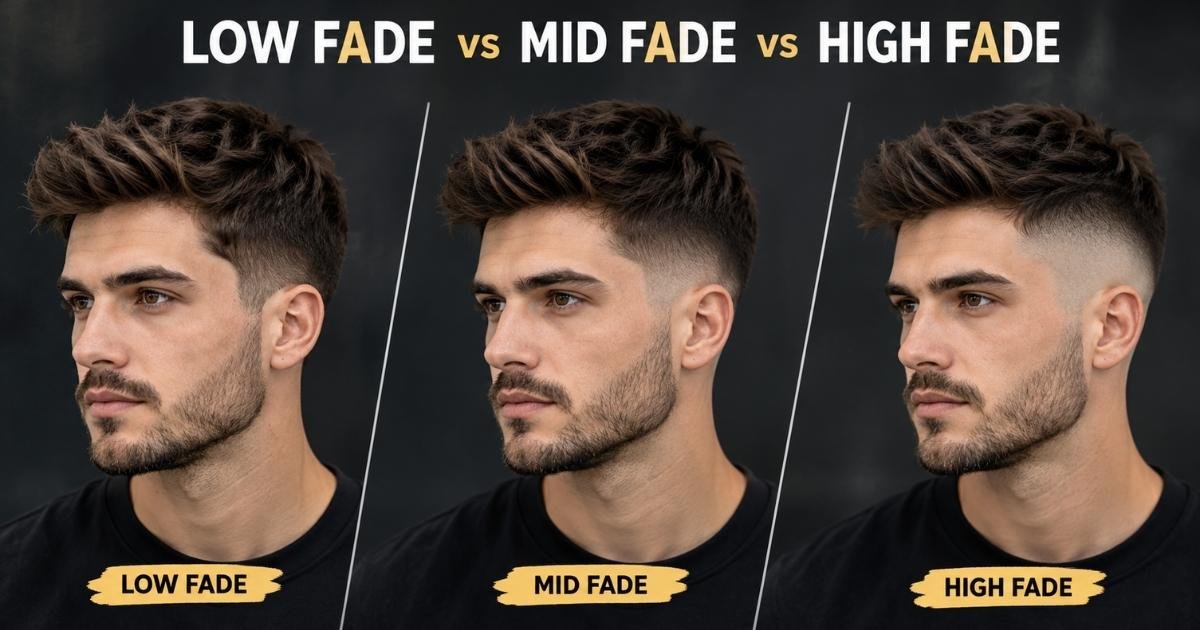
The difference between a low fade, mid fade, and high fade comes down to one thing: where the fade starts on your head. A low fade begins near the ears and neckline, so most of the sides keep some length and the overall look stays subtle. A mid fade starts around the temple area, giving a bit more contrast without looking dramatic. A high fade starts above the temple, closer to the top of the head, which creates the sharpest contrast and shows the most scalp.
There’s no single “correct” choice here. A low fade tends to suit people who want a softer, easier-to-grow-out look. A mid fade works for those who want noticeable shape without going too bold. A high fade suits anyone who wants a graphic, high-contrast finish and doesn’t mind more frequent touch-ups. The rest of this guide walks through exactly how each one looks, how face shape and hair type factor in, and how to describe what you want to your barber.
What Is a Fade Haircut and Why Is It Trending?
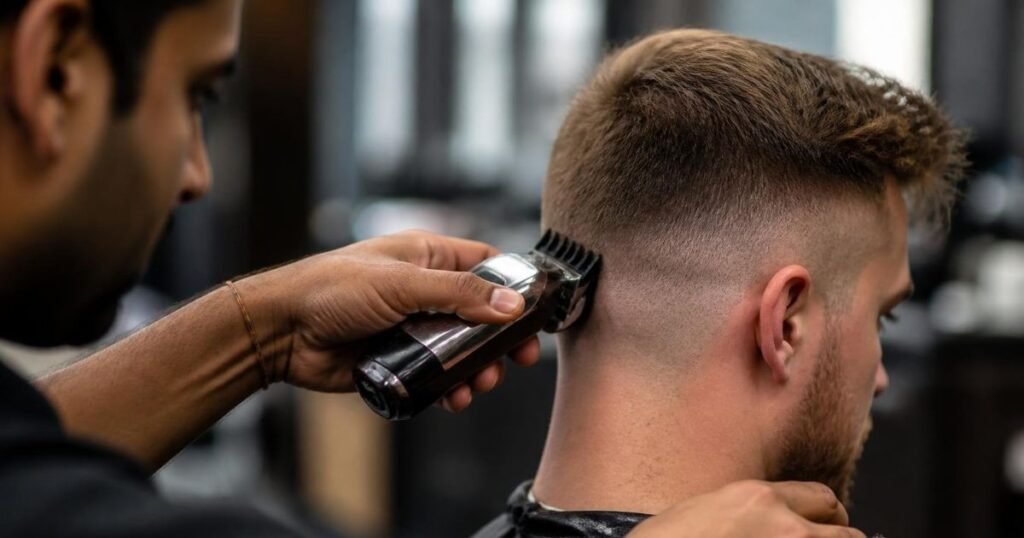
A fade is a cutting technique where the hair on the sides and back gradually gets shorter, blending down toward the skin or a very short length, rather than being cut to one uniform length. That gradual transition moving from long to short without a visible line is what separates a fade from a basic clipper cut or a simple undercut with a hard edge.
The reason fades have stuck around for so long isn’t really about a single celebrity or a single year of trend cycles. It’s more structural: the technique itself is flexible. A barber can start the fade at almost any point on the head, take it down to bare skin or leave a light shadow, and pair it with almost any length or texture on top. That means the same basic idea a gradual blend on the sides can look completely different depending on where it starts and what it’s paired with.
Low, mid, and high describe the placement of that blend. Later in this guide, we’ll separate that from type meaning how short the fade actually gets, and whether it’s a skin fade, a shadow fade, or closer to a taper. Those are two different decisions that combine to create the final look.
Low Fade vs. Mid Fade vs. High Fade: What’s the Difference?
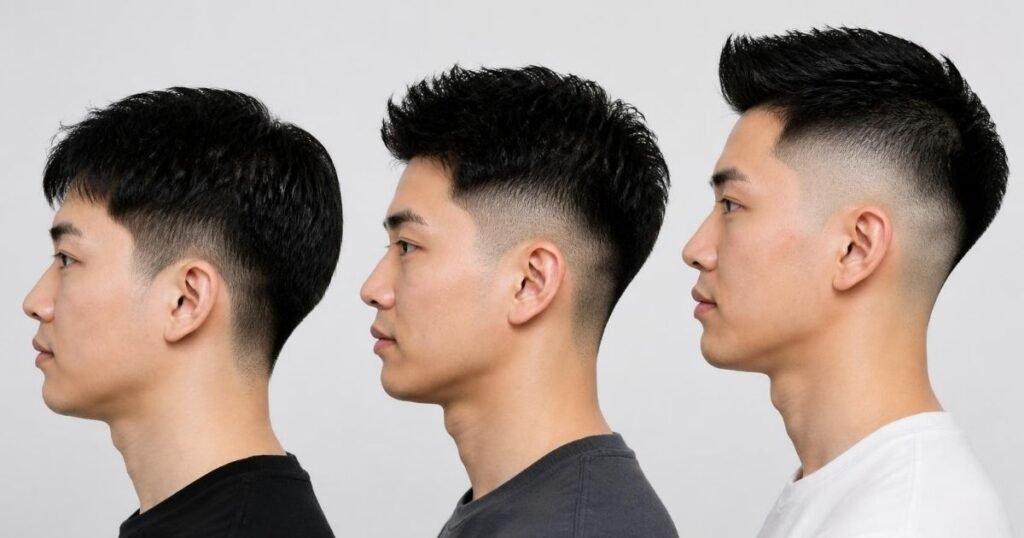
The core difference between these three fades is where the blend begins relative to your ear and temple. That starting point changes three things: how much contrast you see between the top and sides, how much scalp shows, and roughly how often you’ll need a touch-up to keep it looking sharp.
Here’s how each one plays out in practice.
LOW FADE
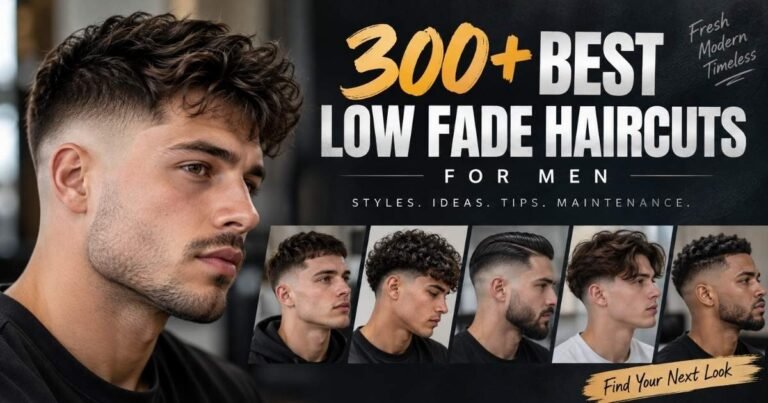
A low fade starts close to the ears and the neckline, leaving most of the side hair at a longer length before it tapers down near the bottom. Because the blend happens in a small area low on the head, the contrast between the top and sides stays fairly gentle from a few feet away, it can look close to a regular short haircut rather than a graphic fade.
This subtlety is part of why a low fade is often associated with conservative or workplace-friendly settings, though that’s more about perception than any fixed rule plenty of workplaces are relaxed about hair length either way. What matters more practically is that because the fade sits low, the visible “fresh cut” line grows out more gradually near the ear, which some people find easier to live with between barber visits.
MID FADE
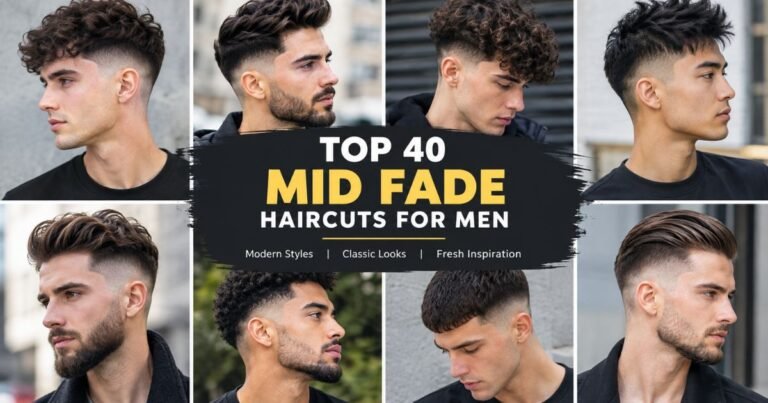
A mid fade moves the starting point up to roughly the middle of the side of the head, around temple height. That places the blend closer to eye level when viewed from the side, which creates noticeably more contrast than a low fade without pushing into high-fade territory.
Because the blend sits in that middle zone, a mid fade tends to work with a wide range of top lengths from short textured crops to slightly longer, more voluminous styles since the contrast is moderate enough not to fight with either extreme. That flexibility is really a function of the placement itself: it’s neither so subtle that it disappears under longer top hair, nor so sharp that it demands a particular kind of top style to look balanced.
HIGH FADE
A high fade starts above the temple, sometimes reaching close to the top of the head before blending into the longer hair. This is the shortest amount of hair on the sides relative to the other two options, and it creates the most visible contrast against whatever’s left on top.
Because more of the head is involved in the fade itself, a high fade shows more scalp, especially if it’s cut down to skin. It also means regrowth becomes noticeable sooner the higher up the fade sits, the more area there is for new growth to soften that sharp line. That’s worth factoring in if you’re deciding how often you’re realistically willing to sit in a barber’s chair, which we’ll come back to later.
Read More About : Top 40 Mid Fade Haircuts for Men: Fresh, Modern Styles to Try
Comparison table of differences between low fade, mid fade, and high fade
| Low Fade | Mid Fade | High Fade | |
| Where it starts | Near the ears and neckline | Around the temple, mid-side | Above the temple, higher on the side |
| Visual contrast | Subtle | Moderate | Strong |
| Scalp visibility | Minimal | Moderate | Most visible, especially as a skin fade |
| Typical touch-up rhythm | Every 3–5 weeks | Every 2–4 weeks | Every 2–3 weeks |
| Common perception | Understated, easy to wear daily | Balanced, works with many top styles | Bold, graphic, statement-making |
| Pairs well with | Most top lengths and textures | Very wide range of top styles | Shorter or more structured top styles tend to show it off best |
These are general tendencies rather than fixed rules your own hair growth rate, the barber’s technique, and how you style the top will all shift these numbers and impressions in practice.
Fade Height vs. Fade Type: What’s the Difference?
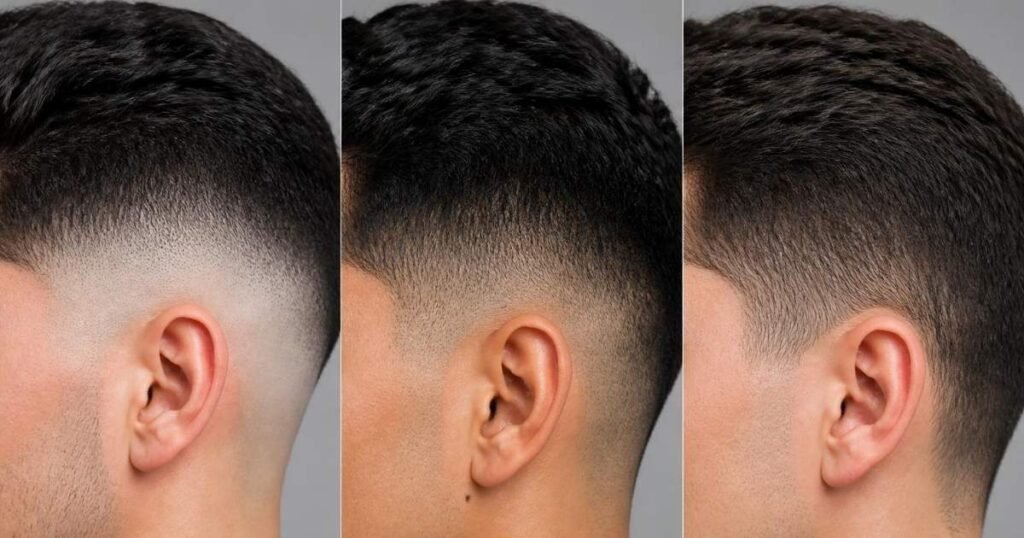
One of the more common mix-ups when people search for fade haircuts is confusing how high a fade starts with how it’s actually cut. These are two separate decisions. Height is about placement low, mid, or high. Type is about the cutting technique itself how short it gets at its shortest point, and how that transition is handled. You can combine them in different ways: a low skin fade and a high skin fade are both valid requests, and so are a mid shadow fade or a low taper.
Low, Mid, and High Fade: What the Height Means
To recap briefly: height answers the question “where does the fade begin on my head?” It’s the part of the haircut you’d point to on yourself when explaining what you want. Everything else how short it gets, how gradual the transition feels is a separate layer on top of that starting point.
Skin Fade vs. Shadow Fade
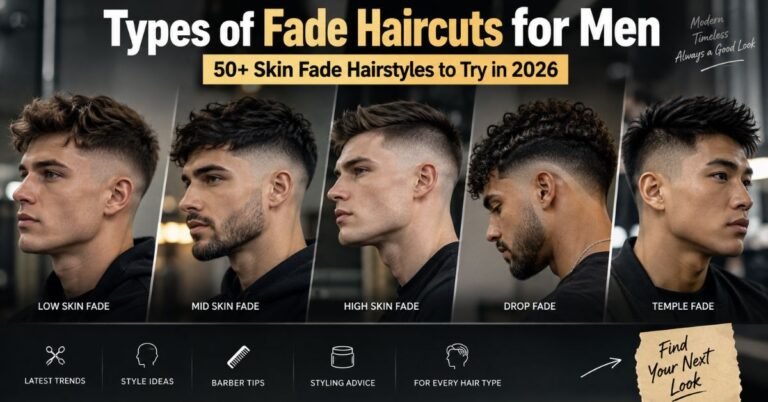
A skin fade takes the shortest part of the cut all the way down to bare skin, creating the most dramatic contrast at whatever height it starts. A shadow fade, by contrast, never quite reaches the skin it leaves a light dusting of hair even at its shortest point, which softens the transition and reduces how much scalp shows.
Both can be combined with any fade height. A low shadow fade is a genuinely subtle look, since the height keeps things understated and the shadow finish avoids scalp exposure entirely. A high skin fade sits at the opposite end maximum height and maximum contrast. Knowing this distinction matters when you’re at the barbershop, because “I want a fade” leaves a lot open to interpretation, while “I want a low shadow fade” or “a high skin fade” gives your barber a much clearer target.
Read More About : 300+ Low Fade Haircuts for Men: Find Your Perfect Style
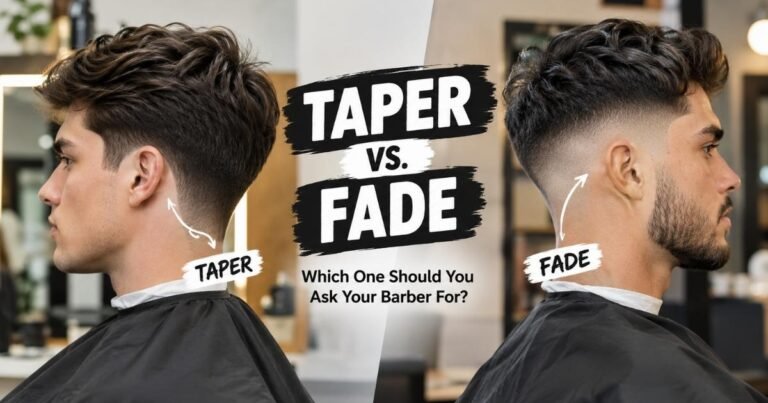
Taper Fade vs. Low, Mid, and High Fade
A taper is generally a more gradual, less dramatic version of a gradual haircut, often confined to a smaller area commonly just around the ears and the neckline without necessarily reaching skin at any point. A fade, by comparison, usually covers more of the side and back and can go all the way down to bare skin if you want it to.
In practice, the term “taper fade” gets used loosely to describe something in between a gradual blend that’s softer than a full skin fade but still noticeably more graduated than a simple trim. This is partly why the terms get confused: many barbers use “taper” and “fade” almost interchangeably depending on region and personal habit. If you’re aiming for a subtler result than what you picture with the word “fade,” asking for a taper or a low taper fade specifically is a useful way to signal that you want less contrast, even at the same general height.
Which Fade Haircut Is Best for Your Face Shape?
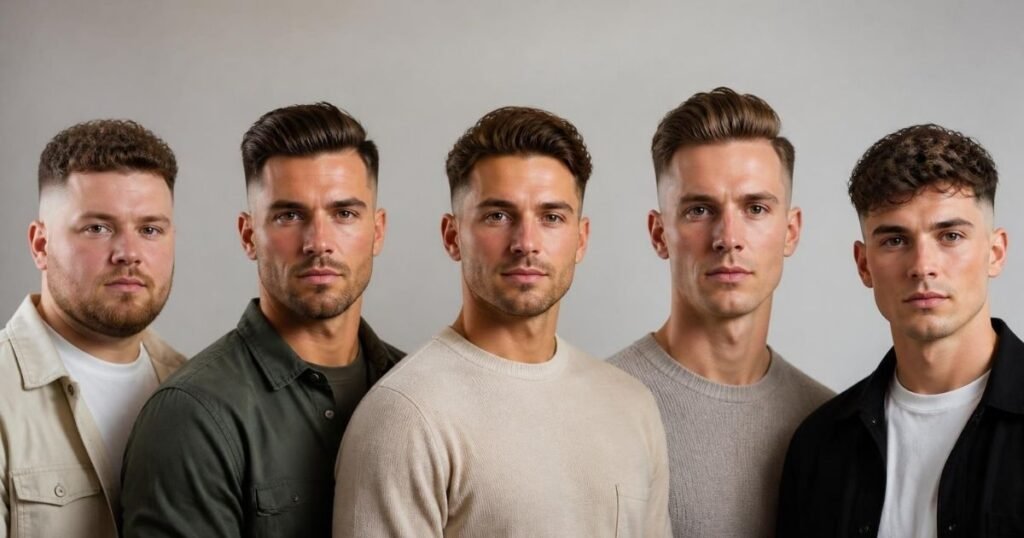
Face shape can be a useful starting point when thinking about fade height, but it’s worth treating as a general discussion point rather than a rulebook. Facial proportions interact with a lot of other things how you wear your beard, how much hair is left on top, and how a barber shapes the sides so the same fade height can look different from person to person even within the same broad face shape category.
Oval Face Shape
An oval face shape is often described as proportionally balanced between length and width, which tends to give more flexibility with fade height in general. Low, mid, and high fades can all work reasonably well here, so the choice often comes down to personal preference for contrast level rather than a specific corrective need.
Round Face Shape
Round faces tend to have similar width and length with softer angles. A mid or high fade is sometimes discussed as a way to add some visual height and contrast near the temple, which can create an impression of more definition along the sides of the face. A low fade is a perfectly reasonable alternative too, especially for anyone who prefers a softer overall look this really comes down to how much contrast you personally want, not a strict rule about round faces needing extra height.
Square Face Shape
A square face shape usually comes with a strong, defined jawline and a fairly straight hairline. A mid fade is often brought up here because the moderate contrast doesn’t compete with that jaw definition the way a very high, sharp fade sometimes can. That said, plenty of people with square faces wear high fades well, particularly when paired with a beard that softens or complements the jawline.
Oblong Face Shape
Oblong faces are generally longer than they are wide. Lower fades, or keeping a bit more length and width on top, are sometimes preferred here since they can help avoid drawing extra attention to the length of the face. A high fade isn’t off-limits it just tends to work best when balanced with enough volume or width on top to offset the added height on the sides.
Diamond Face Shape
A diamond face shape typically has narrower forehead and chin proportions with wider cheekbones. Fade height interacts with this by affecting how much width appears at the temple a lower fade can leave a bit more visual width there, while a higher fade sharpens the taper toward the cheekbone area. Neither is inherently better; it depends on whether you want to soften or emphasize that natural width.
Read More About : Types of Fade Haircuts for Men: 50+ Skin Fade Hairstyles to Try in 2026
Heart Face Shape
Heart-shaped faces usually have a wider forehead narrowing down to a smaller chin. Fade height here is often discussed alongside top volume keeping some width or texture on top while choosing a fade that doesn’t add extra visual weight near the temple is a common approach, though it’s far from the only one that works.
Triangle Face Shape
A triangle face shape typically has a narrower forehead and a wider jawline. Some people find that a fade with a bit more height, combined with volume or texture on top, helps balance the visual weight between the upper and lower parts of the face. As with the other shapes, this is a tendency worth discussing with a barber in person, not a fixed formula.
Which Fade Works Best for Different Hair Types?
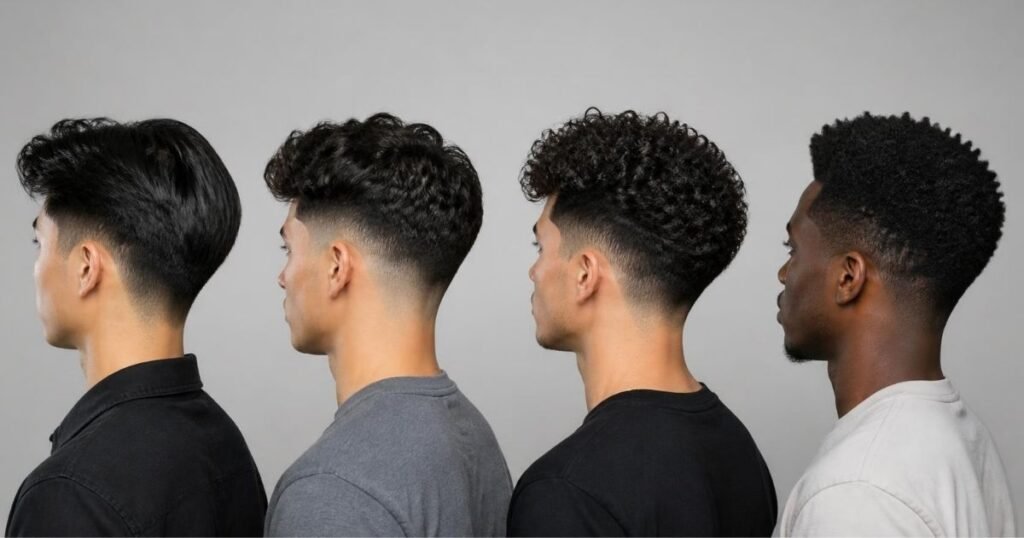
Hair texture and density affect a fade in a more mechanical way than face shape does they influence how crisp the blend line looks, how quickly a fade grows out, and how much daily styling the top hair needs. This section focuses on those practical effects rather than repeating the suitability language from the face shape section above.
Straight Hair
Straight hair usually shows a clean, crisp blend line clearly, since there’s little natural texture to soften the transition. That crispness cuts both ways: a fresh fade on straight hair can look particularly sharp, but regrowth can also become visible sooner, especially with a higher fade, since there’s less natural volume to mask new growth at the roots.
Wavy Hair
Wavy hair adds a bit of natural movement to the blend zone, which can soften the line slightly compared to poker-straight hair without hiding it entirely. This tends to give a little more flexibility with fade height, since the natural texture works reasonably well whether the contrast is subtle or more pronounced.
Curly Hair
Curly hair often draws the eye upward toward the top of the head, since the curl pattern adds volume and texture there. A fade underneath can range from low to high depending on how much contrast you want against that curl a mid or high fade tends to make the curls “pop” more by comparison, while a low fade keeps the focus more evenly distributed. The blend line itself may look a little less razor-sharp with curly hair immediately after cutting, simply because curl pattern doesn’t lie as flat as straight hair.
Coily Hair
Coily hair has a tighter curl pattern and often more density per strand, which can make achieving an even blend more dependent on the barber’s clipper skill and familiarity with that hair type. It’s worth asking a barber directly about their experience with coily hair textures when booking a fade, since technique matters more here than with straighter textures.
Thick or Dense Hair
Thick or dense hair creates strong visual contrast with almost any fade height, since there’s more visible volume on top to contrast against the shorter sides. It can also take a bit more time in the chair, since there’s more hair for the barber to gradually blend through. Low, mid, and high fades are all realistic options with thick hair the choice mostly comes down to how bold a contrast you want.
Fine or Thinning Hair
With fine or thinning hair, some people prefer a lower fade simply because it keeps less contrast overall, which can feel like a more comfortable, lower-key look. This isn’t a rule, though a skilled barber can adapt any fade height to fine hair, and plenty of people with fine hair choose a mid or high fade without any issue. It’s genuinely a matter of personal preference here rather than a technical limitation.
How Does Fade Height Change the Look of Your Hairstyle?
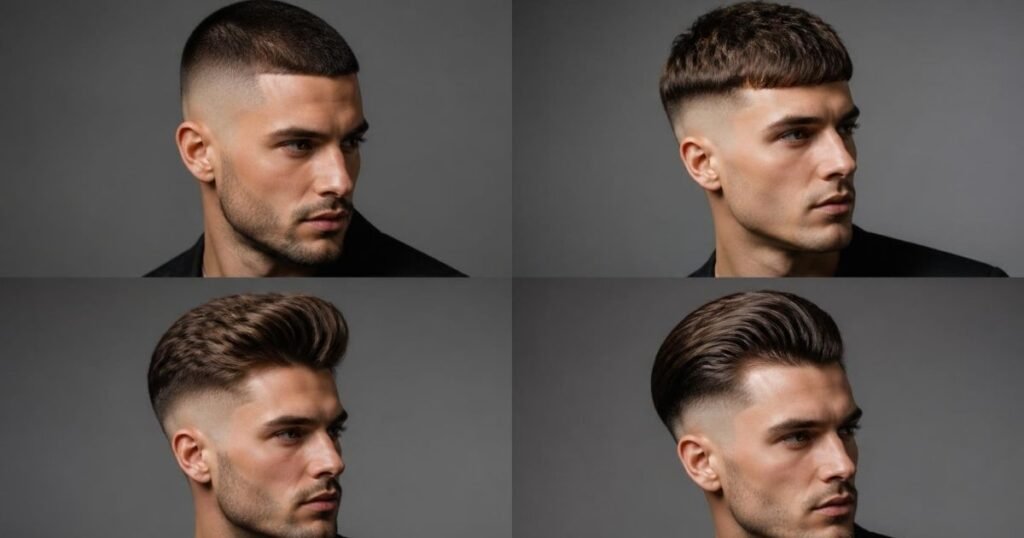
The same top style can look quite different depending on where the fade starts underneath it. This section looks at common top styles and how fade height changes the overall effect not what a low, mid, or high fade is (already covered above), but how that placement interacts with what’s happening on top.
Fade with a Buzz Cut
With very short hair on top, there’s less length to create contrast on its own, so the fade itself becomes more of a visual feature. A higher fade against a buzz cut creates a noticeably graphic look, almost like a gradient across the whole head, while a low fade keeps things closer to a uniform, understated short cut.
Fade with a Crew Cut
A crew cut has slightly more length on top than a buzz cut, usually with enough to show some texture or a bit of natural direction. A mid or high fade here tends to sharpen that texture by contrast, while a low fade lets the crew cut read as a more classic, all-over short style.
Fade with a French Crop or Textured Crop
This style features a short, textured fringe with some definition on top. Fade height changes how much that fringe stands out: a higher fade frames it sharply, drawing the eye straight to the textured top, while a low fade gives a softer overall silhouette where the fringe blends more naturally into the rest of the cut.
Fade with a Quiff
A quiff relies on some length and lift at the front for that swept-up shape. A higher fade increases the contrast beneath that lift, making the height of the quiff look more dramatic by comparison. A low fade under the same quiff creates a gentler transition, letting the style feel less graphic overall.
Fade with a Pompadour
A pompadour is a more structured, swept-back style with real volume. Pairing it with a high fade tends to emphasize the height and shape of the pompadour through contrast, giving a bolder, more vintage-meets-modern effect. A low fade with a pompadour keeps the focus on the top’s shape without adding as much visual drama on the sides.
Fade with a Slick Back or Side Part
Both of these styles rely on smooth, controlled top hair, usually styled with some hold product. Fade height here mostly affects formality and sharpness: a low or mid fade tends to read as more classic and versatile for both casual and dressier settings, while a high fade adds a more contemporary, sharper edge to the same top style.
Fade with Curly or Longer Hair on Top
When there’s more length or natural curl on top, fade height changes how much that texture “pops” against the sides. A higher fade creates a stronger contrast that makes curls or longer texture stand out more, while a low fade lets the top hair blend more gradually into the sides for a softer overall shape. This is really about the visual pairing rather than how the fade blends mechanically that mechanical side is covered in the hair type section above.
How Do Barbers Choose the Right Fade?
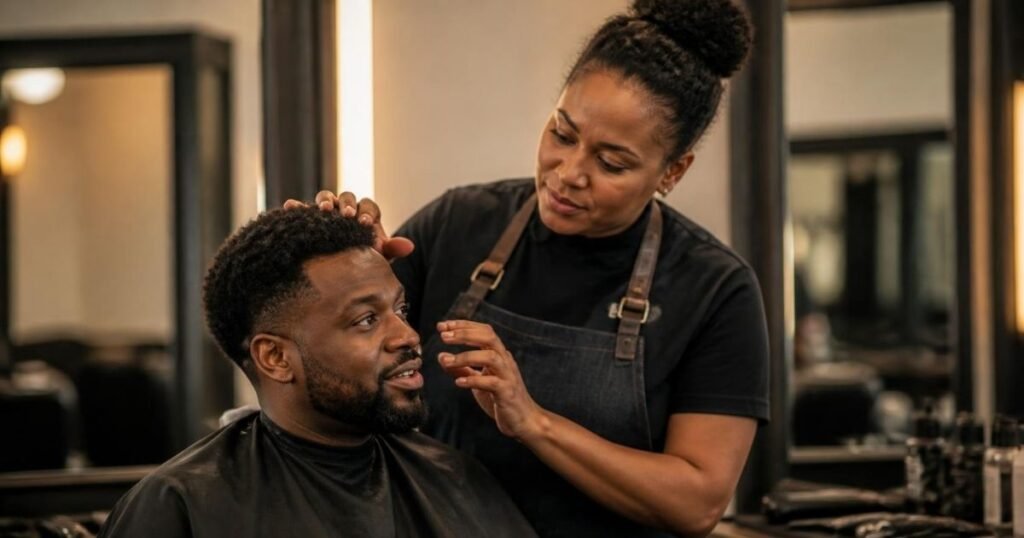
When you sit down for a fade, a good barber isn’t just working off the height you ask for they’re also assessing a handful of physical factors in real time that can shift their recommendation slightly. Understanding what they’re looking at can help explain why a barber might suggest something a little different from what you originally pictured.
- Head Shape The contours of your head, not just your face, affect how a fade line reads from the side and back. Flatter areas can make a blend look different than more rounded ones, which is something a barber can usually only judge properly in person.
- Hair Texture As covered above, curl pattern and density affect how crisp or soft a blend line looks and how it grows out. A barber will often factor this in when suggesting a height or finish.
- Desired Style The top style you want plays into the recommendation, since certain fade heights pair more naturally with certain top lengths and shapes, as discussed in the styling section above.
- Hair Length on Top How much length you’re keeping on top affects how much contrast is needed for the overall look to feel balanced rather than mismatched.
- Maintenance Preferences A good barber will often ask how often you’re realistically able to come back in, since that affects whether a higher-maintenance high fade makes practical sense for you.
- Hairline and Growth Patterns Cowlicks, a receding hairline, or uneven growth patterns can affect where a fade blends most cleanly, and an experienced barber will often adjust the starting point slightly to work with rather than against your natural hairline.
How to Choose the Right Fade for Your Lifestyle
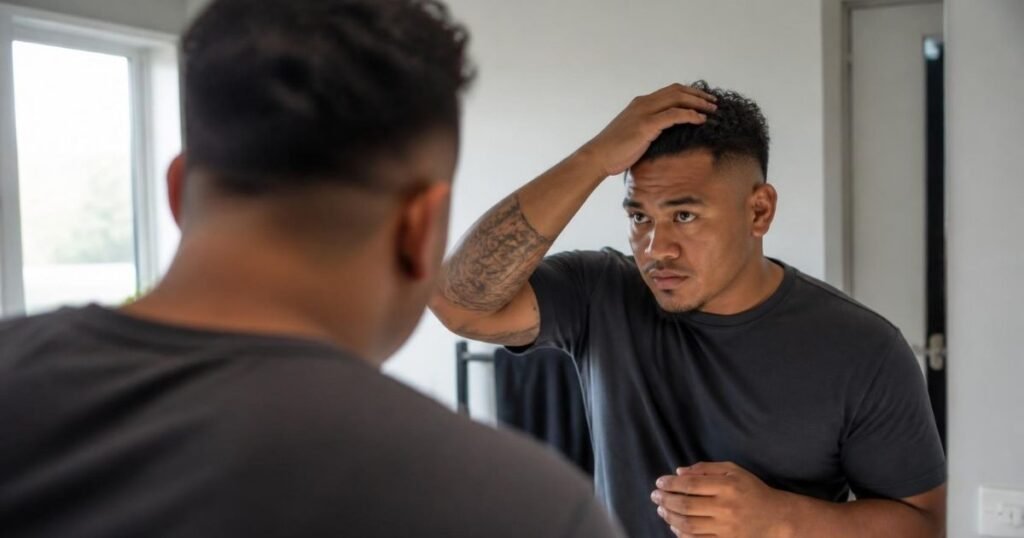
Beyond face shape and hair type, a handful of everyday practical factors often end up deciding which fade actually makes sense day to day.
Styling Time and Daily Routine
How much time you’re willing to spend styling in the morning matters more than most guides admit. A textured crop or crew cut generally needs less daily effort than a pompadour or a carefully swept quiff, regardless of which fade height sits underneath it so it’s worth thinking about the top style’s effort level alongside the fade itself.
Maintenance Preferences
If frequent barber visits aren’t realistic for your schedule or budget, that’s a genuinely valid reason to lean toward a low fade, since it tends to hold its shape a little longer between trims. If you don’t mind visiting more often for a sharper look, a mid or high fade becomes more practical. More detail on typical touch-up timing is below.
Workplace and Personal Style
Workplace norms around hair vary enormously by industry, company, and country, so it’s worth thinking about your specific environment rather than assuming any fade height is universally “too much” or “safe.” A high fade reads as bold in some settings and completely unremarkable in others.
Desired Level of Contrast
At the end of the day, a lot of this comes down to personal taste. Some people simply prefer a subtle, low-key look, while others like the sharper, more graphic effect of a high fade. There’s no need to force a “correct” answer here beyond what you actually like looking at in the mirror.
What Should You Tell Your Barber?
Describing the fade you want clearly makes a real difference in getting a result close to what you pictured. These are useful ways to communicate each fade height, though it’s worth keeping in mind that exact results can still vary between barbers and barbershops based on individual technique.
How to Ask for a Low Fade
Try something like: “I’d like a low fade keep the blend starting near my ears and neckline, with most of the length staying on the sides above that.” Mentioning that you want the transition to happen low, close to the neckline, is the clearest way to signal this height.
How to Ask for a Mid Fade
You might say: “I’d like a mid fade, starting around my temple area, with a moderate amount of contrast against the top.” Referencing the temple as the starting point is generally understood across most barbershops.
How to Ask for a High Fade
A useful way to phrase this: “I’d like a high fade, starting above my temple, with a lot of contrast against the top feel free to take it down to skin if that looks cleanest.” Being specific about wanting strong contrast helps avoid ending up with something closer to a mid fade.
What to Include When Describing Your Fade
- The fade height you want (low, mid, or high)
- Whether you’d like a skin fade or a softer shadow finish
- Roughly how much length you want left on top
- Any specific concerns, like a cowlick, a receding area, or a hairline you’d like worked around
- How often you’re realistically able to come back for touch-ups, since this can affect the barber’s recommendation
Why a Reference Photo Can Help
Words can only communicate so much nuance, especially with something as visual as fade height and blend softness. Bringing a photo ideally showing the side and back of the head, not just a front-facing shot gives your barber something concrete to work from, and it’s often faster than trying to describe every detail verbally.
How Often Should a Fade Be Maintained?
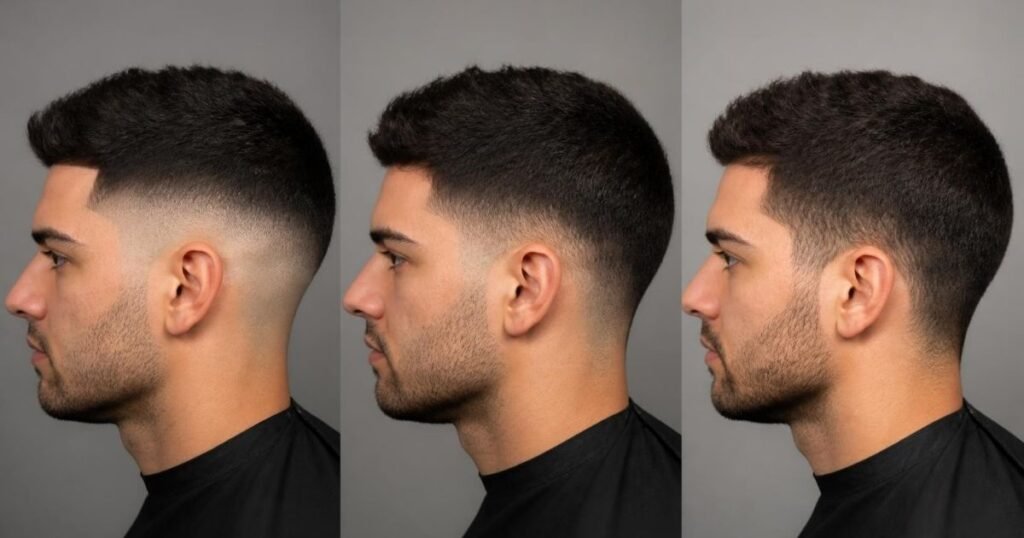
Fades generally need more frequent trims than a basic all-one-length haircut, since the whole appeal relies on a clean transition that regrowth gradually softens. As a general guide, low fades tend to hold their shape for around three to five weeks, mid fades for roughly two to four weeks, and high fades often need attention every two to three weeks to keep the contrast sharp.
These are rough starting points rather than fixed rules individual hair growth rate varies quite a bit from person to person, and someone with fast-growing hair might need a touch-up sooner regardless of fade height. As a fade grows out, the sharp blend line softens gradually rather than disappearing all at once, which is a normal part of the cycle rather than a sign the haircut has “failed.” Many people simply get used to how their particular fade ages between visits and plan their barber schedule around that.
Why Your Barber Matters for a Perfect Fade
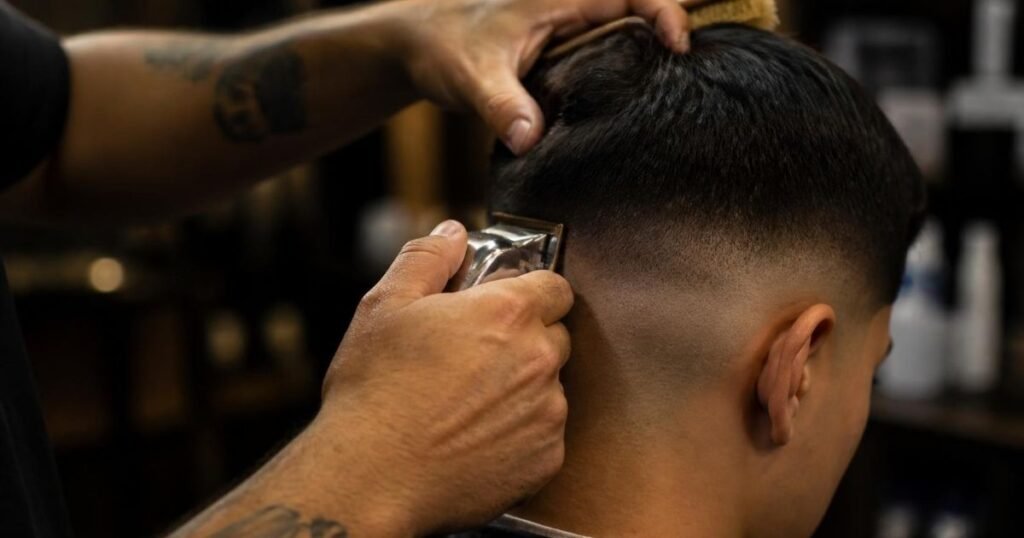
Choosing the right fade height is only part of the equation execution matters just as much, if not more. A clean, even blend depends heavily on the barber’s technique, attention to your specific hairline and growth pattern, and general experience working with fades on hair similar to yours.
If you’re trying a new barbershop, it’s worth looking at a barber’s portfolio or recent work specifically for fade haircuts, rather than assuming general haircutting skill automatically translates to sharp fade work. A consultation before the cut even a short one where you explain your preferred height, finish, and any concerns, tends to lead to a result much closer to what you actually wanted.
FAQs
What is the difference between low taper fade and mid fade?
A low taper fade combines a subtler, more gradual cutting style with a low starting point near the ears and neckline, resulting in minimal contrast. A mid fade starts higher, around the temple, and generally creates more visible contrast than a low taper, even though both can be relatively understated compared to a high fade.
Which fade haircut lasts the longest?
Low fades generally hold a neat appearance for longer between trims, since regrowth is less visible in the smaller, lower blend area. That said, individual hair growth rate plays a big role, so results vary from person to person.
Is a high fade good for thin hair?
A high fade can work with thin hair, though some people with fine or thinning hair prefer a lower fade to keep the overall contrast more subtle. It really comes down to personal preference a skilled barber can adapt a high fade to thin hair without issue.
Is a taper fade professional?
A taper fade generally reads as a classic, understated style, which tends to fit well in most professional settings. That said, “professional” varies a lot by workplace, so it’s worth considering your specific environment rather than assuming any one style is universally appropriate.
Can you combine a low fade or high fade with a beard?
Yes. Fade height and beard shape are independent choices, and a barber can coordinate the two so the fade blends naturally into the beard line, whether you go low, mid, or high.
Which fade is more low maintenance?
A low fade is generally considered the lowest maintenance of the three, since its smaller blend area shows regrowth more slowly than a mid or high fade.
Does a low fade or high fade suit round faces better?
Neither is definitively “better” for a round face. A mid or high fade is sometimes discussed as a way to add visual height and contrast near the temple, while a low fade offers a softer overall look. It genuinely comes down to how much contrast you want, not a strict requirement based on face shape alone.
Can I get a low fade or high fade with thick hair?
Yes, both work with thick hair. Thick hair tends to create strong contrast with either fade height, so the choice is more about the look you want than a technical limitation.
How often should I get my fade touched up?
As a general guide, roughly every three to five weeks for a low fade, two to four weeks for a mid fade, and two to three weeks for a high fade though your own hair growth rate will affect this timeline.
Is a high fade the same as a skin fade?
No. A high fade describes where the fade starts on the head, while a skin fade describes how short the cut gets at its shortest point. A high fade can be finished as a skin fade or as a softer shadow fade, depending on preference.
What’s the difference between a low fade and a mid fade?
A low fade starts near the ears and neckline, while a mid fade starts higher, around the temple area. This gives a mid fade noticeably more contrast and scalp visibility than a low fade.
What’s the difference between a mid fade and a high fade?
A mid fade starts around the temple, while a high fade starts above it, closer to the top of the head. A high fade creates sharper contrast and shows more scalp than a mid fade.
Can a low, mid, or high fade be a skin fade?
Yes. Fade height and fade type are separate decisions any of the three heights can be finished as a skin fade, a shadow fade, or something closer to a soft taper.
Which fade shows the most scalp?
A high fade generally shows the most scalp, especially when finished as a skin fade, since the blend covers a larger area higher up the head.
Which fade keeps the most hair on the sides?
A low fade keeps the most hair on the sides overall, since the blend area is smaller and starts lower on the head.
Can you change from a low fade to a high fade at your next haircut?
Yes, a barber can gradually raise the fade height over one or more visits. Depending on how much hair needs to be removed to reach the new height, it may take a session or two to fully settle into the higher fade.
How do I choose between a low, mid, and high fade?
Start by thinking about how much contrast you actually like, how often you can realistically visit a barber, and what top style you want to pair it with. From there, a conversation with your barber about your face shape, hair type, and hairline can help fine-tune the final choice.
Conclusion
The difference between a low, mid, and high fade really comes down to where the blend starts and how much contrast that creates but choosing the right one for you depends on more than placement alone. Your hair type affects how crisp the blend looks and how it grows out. Your face shape can inform the discussion, though it’s never an absolute rule. And your daily routine, from styling time to how often you can get to a barbershop, plays just as big a role as anything visual.
The most useful next step is a real conversation with your barber, ideally backed up with a reference photo and a clear description of the height, finish, and top style you’re picturing. From there, they can adapt the details hairline, growth pattern, and technique to make sure the fade actually works with your hair, not just in theory.

Jake Miller is a barbering and men’s hairstyle enthusiast who shares practical tips, haircut inspiration, and the latest grooming trends at BarberZylo. He enjoys exploring modern and classic hairstyles and helping readers find fresh ideas for their next look.