
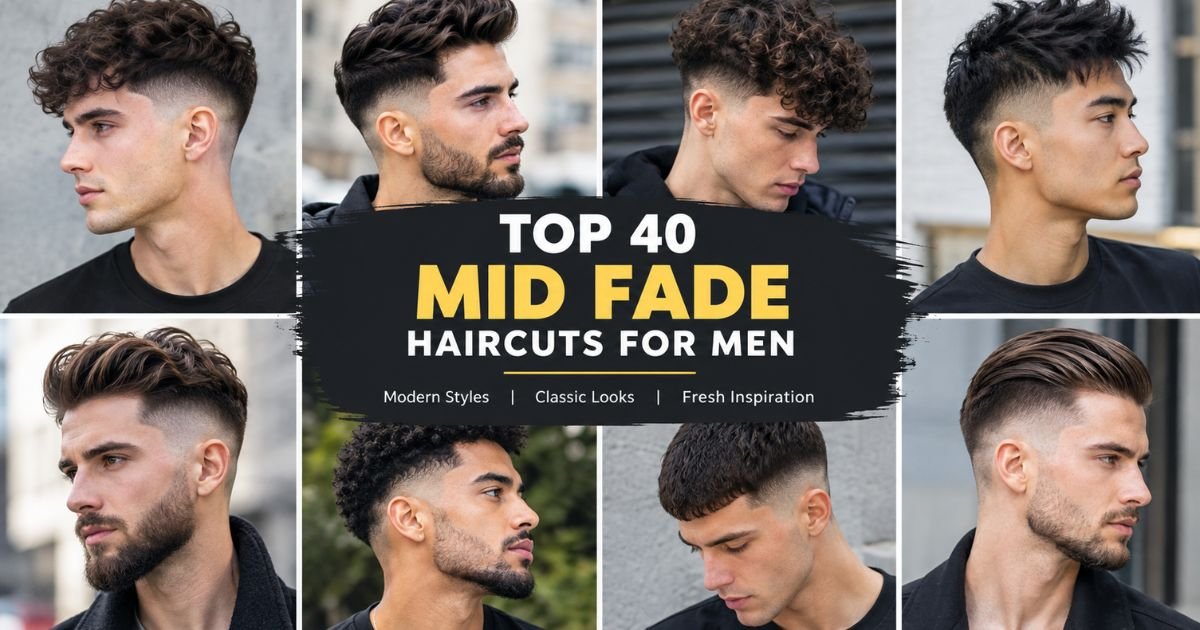
Top 40 Mid Fade Haircuts for Men: Fresh, Modern Styles to Try
If you’ve been scrolling through haircut photos trying to figure out what a “mid fade” actually is and which version of it might work for you you’re not alone. It’s one of the most requested fades at barbershops right now, mostly because it sits in a sweet spot: sharp enough to look deliberate, subtle enough to wear to work.
This guide walks through what a mid fade haircut actually is, 40 ways to wear one, how it compares to a low fade, high fade, taper, and skin fade, and how to choose, ask for, style, and maintain the version that fits your hair.
What Is a Mid Fade Haircut?
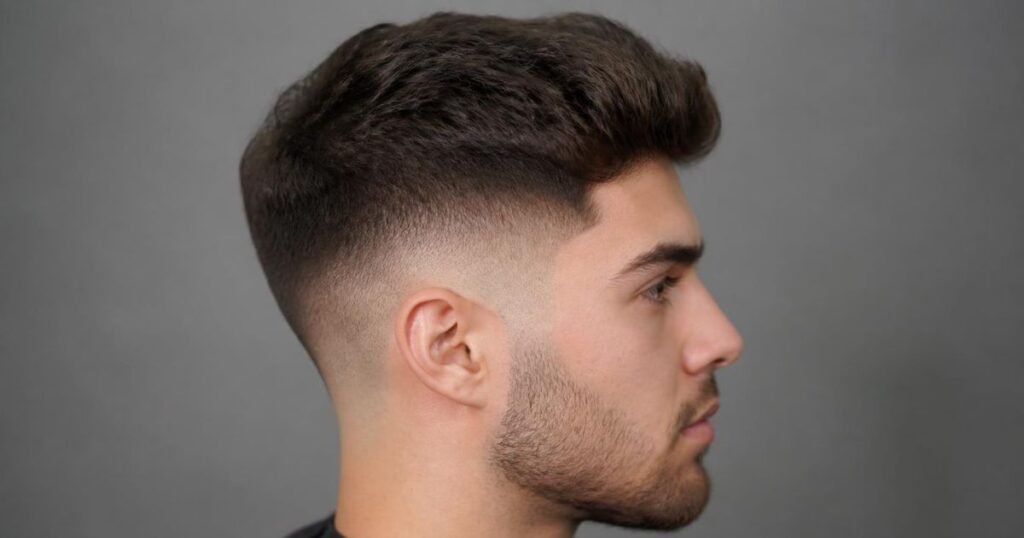
A mid fade haircut is defined by where the fade begins, not by what’s happening on top. The fade typically starts somewhere between the temple and the top of the ear, then blends gradually into shorter hair as it moves down toward the neckline. That starting point is what gives it the name “mid” it sits between a low fade, which begins closer to the ear, and a high fade, which starts higher up the side of the head, closer to the crown.
Because a mid fade only describes the fade’s placement, it can be paired with almost any top style short and textured, long and swept back, curly, straight, or anything in between. That’s part of why there are so many named variations: the fade itself stays fairly consistent, and the variety comes from the top length, texture, and finishing details.
The exact starting point isn’t fixed to the millimeter. A barber will often adjust it slightly based on your hairline shape and how much contrast you want, so two people asking for a “mid fade” can walk out with slightly different fade heights and still both be correct.
40 Best Mid Fade Haircuts for Men
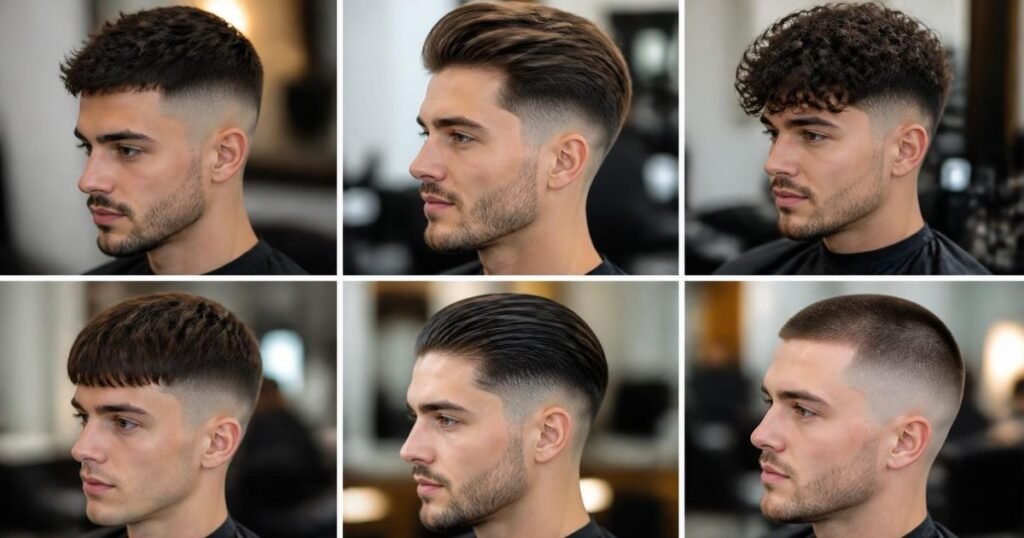
The styles below are grouped by top length and texture, hair type, and a few distinctive techniques, so you can jump to whichever section is closest to what you’re picturing. Keep in mind that the mid fade itself stays roughly the same across most of these what changes is the top.
Classic and Clean Mid Fade Styles
These are the lower-maintenance, more traditional takes on the mid fade. The main differences between them come down to how short the sides go and how much length and shape is left on top.
Mid Fade Haircut
This is the reference point for the whole category: a mid fade on the sides with a moderate amount of length left on top, usually enough to comb, brush, or finger-style into a simple shape. It’s a good starting point if you’re not sure yet how short or how textured you want to go it can be dialed up or down from here.
Mid Fade Taper
A mid fade taper softens the transition on the sides so it doesn’t read as quite as crisp or high-contrast as a straight fade. The blend is more gradual, which tends to look a little less severe and can be a good option if you’d rather ease into a fade than commit to sharp lines right away.
Mid Skin Fade
Here, the sides are taken all the way down to the skin, which creates the most contrast against whatever length is left on top. It works especially well when there’s some volume or texture up top to play off the bare skin at the sides makes that volume stand out more.
Bald Mid Fade
Similar in depth to a mid skin fade, but usually paired with a short, uniform top rather than added length or texture. The effect is cleaner and more minimal overall less about contrast between two different lengths, and more about one consistently short, precise shape.
Military Cut with Mid Fade
Built for low effort: short, even length on top with a mid fade on the sides, and little to no daily styling required. It’s a practical option if you want a sharp look without spending time on it each morning.
Buzz Cut Mid Fade
The top is cut to one uniform clipper length with no length variation at all, and the mid fade handles the transition down the sides. It’s about as low-maintenance as a fade haircut gets, since there’s no shape to lose between cuts.
Crew Cut Mid Fade
Slightly longer than a buzz cut, with a small amount of graduated length from front to back on top. That little bit of extra length gives it a touch more texture and definition than a pure buzz cut, while keeping the same easy upkeep.
Short and Textured Mid Fade Styles
This group brings more visual interest to the top cropped shapes, fringes, and choppy texture while keeping the sides relatively short.
Mid Fade French Crop
A short, textured fringe sits forward with minimal overall length, giving the top a compact, slightly rugged shape. It reads as more deliberately textured than a straightforward crew cut, without needing much length to work with.
Mid Fade Caesar Cut
The fringe here is cut straighter and shorter across the forehead than a French crop, with more uniform length across the crown. It has a tidier, more even finish and needs less finger-styling to hold its shape day to day.
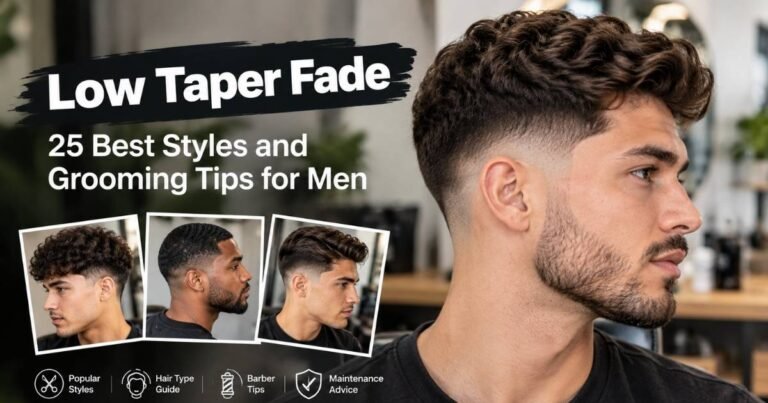
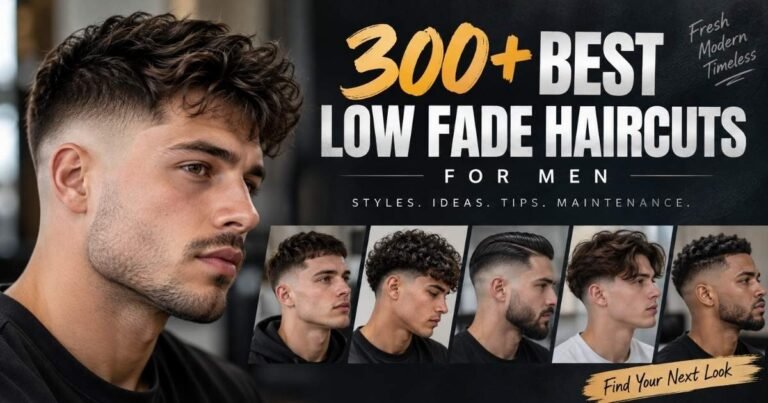
Read More About : 300+ Low Fade Haircuts for Men: Find Your Perfect Style
Mid Fade Short Fringe
A simpler, more versatile take on the fringe idea the front sits just long enough to have some shape, without the heavier texture of a French crop or Caesar. It’s an easy entry point if you like the idea of a fringe but don’t want something too styled.
Mid Fade Textured Fringe
This version leans into choppy, piece-y texture on top rather than a smooth, uniform fringe. It usually takes a bit more styling effort some blow-drying and product work to get that separated, textured finish.
Textured Crop Mid Fade
Building on the crop shape with added layering and volume, this style has more lift and movement on top than a standard French crop. A hard part or design line is sometimes added here for extra contrast.
Mid Fade Crop Top
A slightly longer, more deliberately shaped crop than the French Crop or Textured Crop there’s more length to work with, giving the top a fuller silhouette while the fringe stays relatively short and controlled.
Mid Fade Messy Hair
The focus here is on overall texture across the whole top rather than a specific fringe shape think loose, slightly undone movement achieved with finger-styling rather than a comb. It suits hair with some natural wave or texture that holds shape on its own.
Mid Fade Messy Fringe
Similar idea to Messy Hair, but specifically applied to a forward-styled fringe rather than the whole top. The fringe gets tousled and pulled forward for a relaxed look, while the rest of the top stays shorter.
Longer and Styled Mid Fade Haircuts
These styles need more length on top and generally more daily styling time, since the finished shape depends on direction swept back, to the side, or lifted up rather than just natural texture.
Mid Fade Long Top
The sides stay faded short while the top is left noticeably longer than in the “classic” or “textured” clusters above long enough to be combed, brushed, or styled into a specific direction rather than just finger-tousled.
Mid Fade Long Hair
Where Long Top refers mainly to length at the crown with a defined shape, this version is about overall length and movement across the whole top, often reaching down toward the forehead or ears. It has a looser, less structured finish than Long Top.
Mid Fade Comb Over
Defined mainly by direction: the hair on top is combed to one side, without necessarily a hard, visible dividing line. It’s a fairly relaxed way to introduce some styled structure without going full side part.
Mid Fade Side Part
More structured than a comb over, this style has a visible part line often a hard, shaved line for extra definition separating the styled top from the fade. It reads as sharper and more formal.
Mid Fade Slick Back
Instead of going to one side, the hair is swept straight back, usually with some volume held at the front. It needs enough length and a strong-hold product to keep that backward direction in place through the day.
Quiff Mid Fade
The defining feature is height and volume at the front rather than a side or back direction the top is lifted and pushed slightly forward for a rounded, raised shape just above the forehead.
Mid Fade Fluffy Hair
Similar length range to Long Top, but the emphasis is on natural volume and movement rather than a deliberately styled direction. It tends to suit hair that already has some body, since less heat and product are needed to hold the shape.
Mid Fade Blowout
Specifically defined by the blow-drying technique used to lift and shape the top hair is dried upward and outward while damp to build volume, rather than relying mainly on product after the fact.
Mid Fades for Different Hair Types
A mid fade for curly hair, wavy hair, or straight hair isn’t really a different haircut it’s the same fade placement adapted to how your hair naturally behaves. Curl pattern and density affect how much volume the top holds on its own, how much product is genuinely needed, and how long between cuts the shape stays sharp.
Mid Fade Curly Hair
Curls generally add natural volume without much extra effort, so the top often needs less product than straighter hair to look full. The fade helps keep that volume from looking overgrown by removing bulk at the sides, and a lightweight, curl-friendly product can help define individual curls without weighing them down.
Mid Fade Wavy Hair
Wavy hair sits between straight and curly in how it behaves it holds some natural texture and movement, but usually needs a bit more product or styling to build real shape than curly hair does. It’s often a fairly easy texture to work with for both textured-crop and longer, swept-back styles.
Mid Fade Straight Hair
Straight hair tends to fall flat more easily, so texture on top often has to be added deliberately, using a texturizing cream or clay, or a choppy cutting technique from your barber. A fringe or crop shape can add visual interest that straight hair doesn’t create on its own.
Mid Fade for Asian Hair
This search comes up often, and it’s usually pointing at hair that’s naturally thick, straight, and dense which means the top can hold volume and shape well, but styling generally leans on drying technique and product to move it in a specific direction, since straighter, denser strands don’t add movement on their own.
Mid Fade Afro
An afro top has a distinct, high-volume, uniformly coiled texture styled for height and shape rather than combed in a particular direction. The mid fade at the sides creates contrast against that volume and helps define the shape without needing to touch the top itself.
Mid Fade Blonde Hair
This one’s about color rather than texture lighter hair, whether naturally blonde or lightened, tends to make the contrast between the fade and the top more visible. The cut itself can be any of the top styles above; the lighter color is what changes the overall look.
Distinctive Mid Fade Variations
These styles are defined by a specific technique or detail rather than top length alone a shaped fade line, a design element, or a particular combination like a mullet or beard pairing.
Read More About : Types of Fade Haircuts for Men: 50+ Skin Fade Hairstyles to Try in 2026
Mid Drop Fade
The fade curves downward as it travels behind the ear, following the natural line of the head rather than staying level. It’s a technique applied to the fade itself, and it can be combined with most of the top styles listed above.
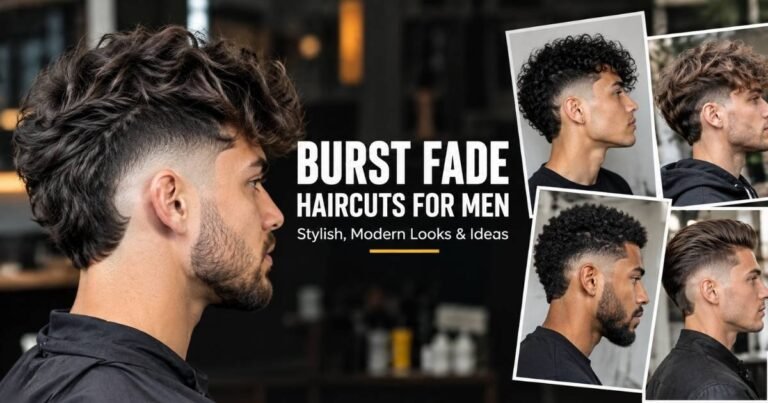
Mid Burst Fade
A tighter, more curved fade concentrated specifically around the ear, rather than running in a straight line across the whole side of the head. It creates a more localized burst of contrast, often used with rounder or more voluminous tops.
Mid Fade Mullet
Structurally different from a standard mid fade top: the sides and top stay short and faded as usual, but length is deliberately retained at the back. That length is usually left long enough to move or curl, which is the main thing that separates it from the other styles here.
Mid Fade Mohawk
A strip of longer hair runs down the center of the head, from front to back, while the mid fade takes care of the sides. It’s one of the boldest options in this list and reads as more of a statement style than an everyday one.
Mid Fade V Cut
The fade narrows into a distinct V-shape at the nape of the neck instead of a straight or rounded line. It’s a detail applied at the back of the head, so it’s often best appreciated in photos taken from behind.
Mid Fade Undercut
Defined by strong contrast in length the sides are cut very short, often disconnected from a noticeably longer top, rather than blending gradually. The mid fade version softens that disconnection slightly compared with a harder undercut.
Mid Fade Hard Part
A shaved line marks a clear division between the top and the fade, usually used to accentuate a side part or comb-over direction. It’s a detail that can be added to several of the styles above rather than a top style on its own.
Mid Fade Design
A razor-cut line or pattern is added into the fade itself, usually along the side or behind the ear, as a deliberate visual detail. Because the line needs to stay crisp to read clearly, this style typically needs more frequent touch-ups than a plain fade to keep looking sharp.
Mid Temple Fade
This refers specifically to where the fade starts right at the temple rather than a shape applied further down, which is what makes it distinct from a drop fade. It’s often chosen when someone wants the fade to be visible as soon as possible from the front.
Mid Fade with Beard
Pairing a mid fade with a full or well-groomed beard creates a connected, high-contrast look when the fade blends cleanly into the beard line near the ear and jaw. Getting that blend right usually means pointing it out specifically to your barber, since it involves coordinating two separate areas of facial hair and head hair.
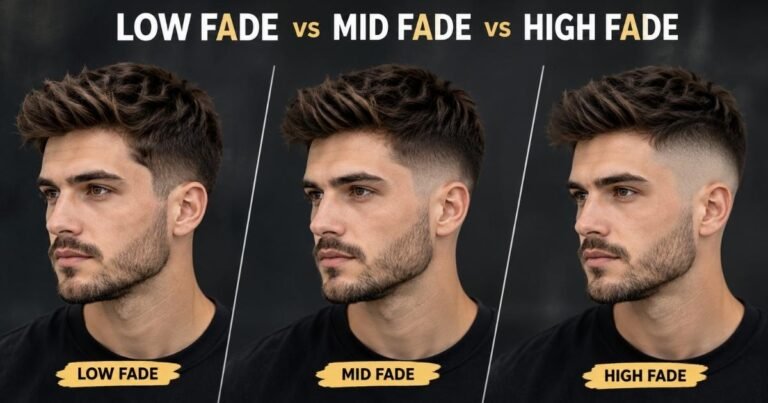
Mid Fade vs Low Fade and High Fade
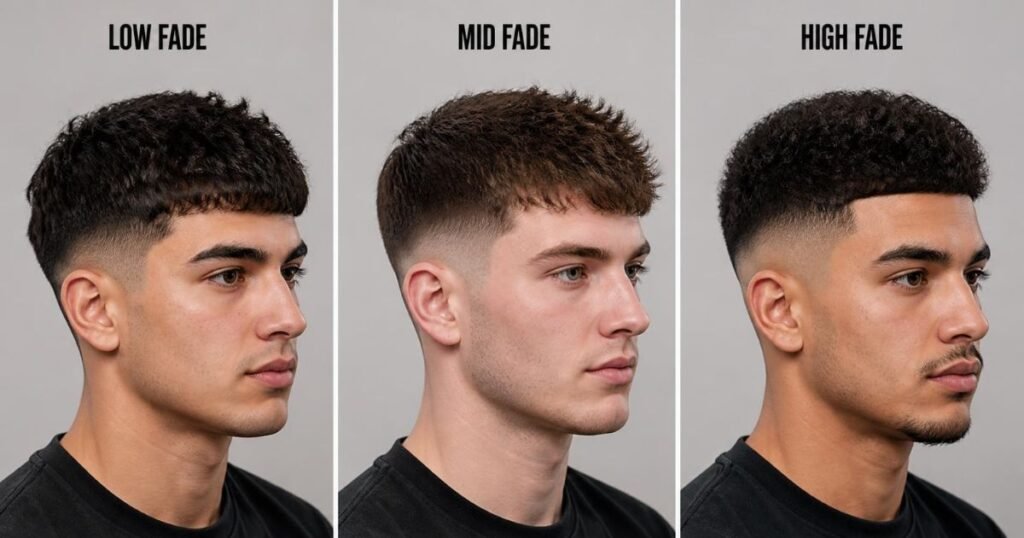
Mid, low, and high fades are all the same basic technique clippers blending shorter hair into longer hair applied at different heights on the side of the head. The main practical differences are how much contrast the fade creates and, generally, how often it needs a touch-up to stay sharp.
| Fade type | Approximate starting point | Contrast level | General impression |
| Low fade | Just above the ear | Subtle | Understated, easy to wear |
| Mid fade | Between the temple and the top of the ear | Moderate | Balanced, noticeable without being bold |
| High fade | Higher on the side, closer to the crown | Strong | Bold, sharp-edged |
| Skin fade | Can apply to any of the above | Depends on height, but always reaches bare skin | Maximum contrast at whichever height it’s cut |
Mid Fade vs Low Fade
A low fade starts closer to the ear, so less of the side of the head shows contrast, and the overall look reads as more subtle and conservative. A mid fade starts a bit higher, giving a clearer sense of shape and contrast without going as bold as a high fade. Neither is inherently more appropriate than the other it’s really a matter of how much contrast you want to see.
Mid Fade vs High Fade
The gap between mid and high is mainly about intensity. A high fade begins higher up the side, closer to the crown, which creates a sharper, more dramatic line and tends to draw more attention. Because more of the head is involved in the fade, a high fade often needs slightly more frequent touch-ups to stay looking clean, whereas a mid fade tends to grow out a little more gracefully.
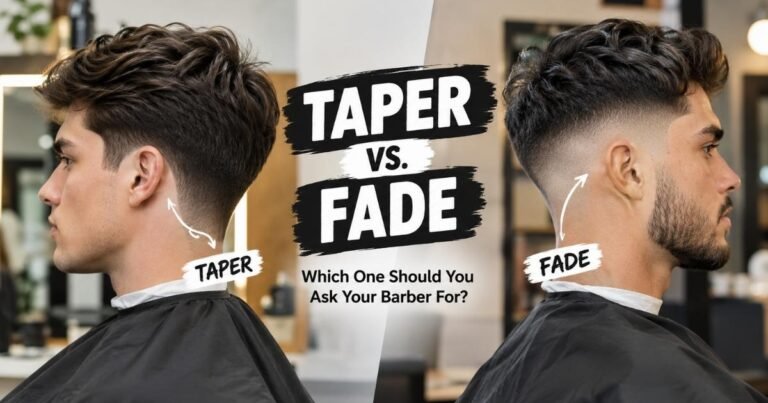
Mid Fade vs Taper
This comparison trips people up because fade and taper aren’t describing the same thing. A taper is a technique a soft, gradual reduction in length with no hard line, often used on its own around the neckline and ears even without a fade elsewhere. A fade, including a mid fade, typically creates more visible, graduated contrast between short and long sections. In practice, a mid fade haircut often includes some tapering as part of the blend, but “taper” on its own usually points to a softer, less dramatic result than a defined fade.
Mid Fade vs Skin Fade
Mid and skin fade aren’t opposites they answer different questions. “Mid” describes where the fade starts. “Skin” describes how far down it goes: all the way to bare skin, for maximum contrast. A mid fade can be cut as a skin fade or as a softer, non-skin blend, depending on how much contrast you’re after. When people compare the two, they’re usually really asking whether they want their fade to reach the skin or stop short of it.
How to Choose the Right Mid Fade Haircut for You
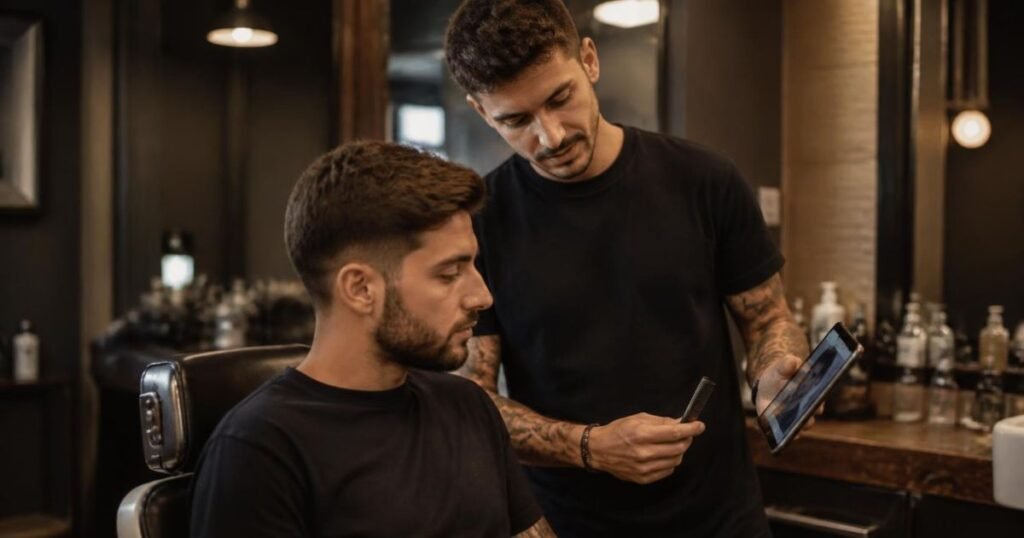
With 40 variations to consider, it helps to think through a few practical factors rather than just picking whichever photo looks best. None of these are hard rules they’re things worth discussing with your barber so the finished cut actually works with what you’ve got.
Consider Your Hair Type and Texture
Texture affects how much a hairstyle holds its shape on its own versus how much product or styling it needs. Thicker or coarser hair often has enough natural body to carry volume and texture without much help, which is part of why textured crops and quiffs tend to work well for readers with that kind of hair. Finer or straighter hair can still wear those same styles, but it may need a lightweight product to avoid looking flat by the end of the day. There’s no fixed rule here individual results vary even within the same general texture category, so it’s worth telling your barber what your hair typically does after a wash.
Consider Your Hair Length and Density
Length and density aren’t the same thing, and it’s easy to mix them up. Length is simply how long the hair currently is; density is how much hair you actually have per square inch of scalp. Two people with exactly the same top length can get noticeably different results if one has dense, full hair and the other has finer, sparser hair the denser head will generally look fuller at the same length. A barber can adjust the recommended top length based on your density so the finished style doesn’t end up looking either sparse or unnecessarily bulky.
Consider Your Face Shape
A mid fade can generally be adapted to suit most face shapes by adjusting how much height or volume is left on top and how close the sides are taken in more height can add length visually, while closer sides can soften wider areas. That said, no single mid fade variation is a guaranteed match for every reader with a particular face shape, since face shape is only one factor among several, including hair texture, hairline, and how the barber tailors the specific cut. It’s worth treating face shape as one useful data point in the conversation with your barber, not a strict rulebook.
Decide How Short You Want the Sides
Beyond choosing a top style, it’s worth deciding early on whether you want the sides taken down to skin or left with a softer, non-skin blend. A skin fade gives more contrast and a sharper look, but it also tends to show regrowth faster since bare skin is the most visible starting point as hair grows back in. A softer blend is more forgiving between cuts, at the cost of slightly less definition.
Consider Your Styling Routine
Some mid fade variations genuinely take more daily effort than others. Styles in the “Classic and Clean” group generally need little more than a quick towel-dry, while the “Longer and Styled” group slick backs, quiffs, blowouts usually calls for regular blow-drying and product to hold their shape through the day. If you’re not interested in a daily styling routine, it’s worth leaning toward the lower-effort end of the list, regardless of which look you find most appealing in photos.
Consider Your Hairline and Growth Pattern
This one’s easy to overlook, but it matters. A cowlick, a receding area, or an irregular growth pattern near the temples can all affect how cleanly a fade line sits and how a particular top style falls once it’s dry. Barbers generally work around these factors as a normal part of cutting hair, but mentioning anything unusual about your hairline or growth pattern during the consultation rather than assuming your barber will spot it and adjust automatically tends to produce a result that matches the reference photo more closely.
How to Ask Your Barber for a Mid Fade
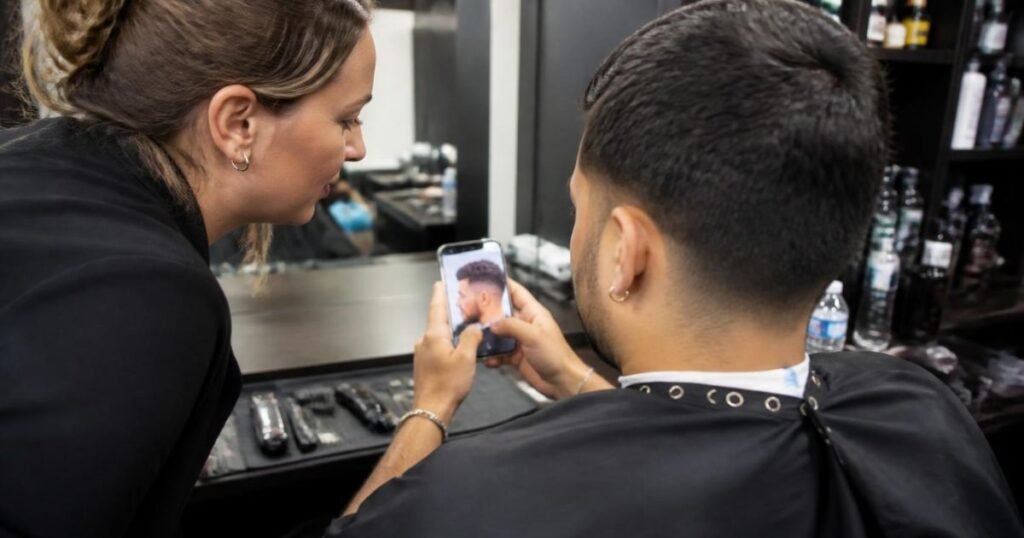
Clear communication makes a bigger difference to the outcome than almost anything else on this list. Here’s a practical way to walk through the conversation:
- Bring a reference photo, ideally more than one angle. A front view, a side profile, and a back-of-head shot together give your barber a much clearer picture than a single photo especially for details like drop fades, V-cuts, or design lines that are hard to describe in words.
- Point out where you want the fade to start. For a mid fade, that generally means asking for the fade to begin around the temple or the top of the ear, then blend downward from there.
- Say whether you want the sides to reach skin or stay softer. This is one of the biggest variables in how the finished cut looks, so it’s worth being specific rather than leaving it open.
- Describe what you want on top. Mention the length you’d like left, whether you want texture or a smoother finish, and any specific detail like a fringe, a part, or added volume.
- Mention your hairline or growth pattern if it’s relevant. A quick note about a cowlick or a receding area helps your barber plan the cut around it rather than working it out mid-appointment.
- Ask for input. Barbers see far more heads of hair than any single client does, and they’ll often flag if a specific request doesn’t suit your natural texture or density it’s worth asking directly rather than assuming the photo will translate exactly.
Keep in mind that the same request can look slightly different depending on the barber and your own hair, so treat the photo and description as a starting point for a conversation rather than an exact order.
How to Maintain a Mid Fade
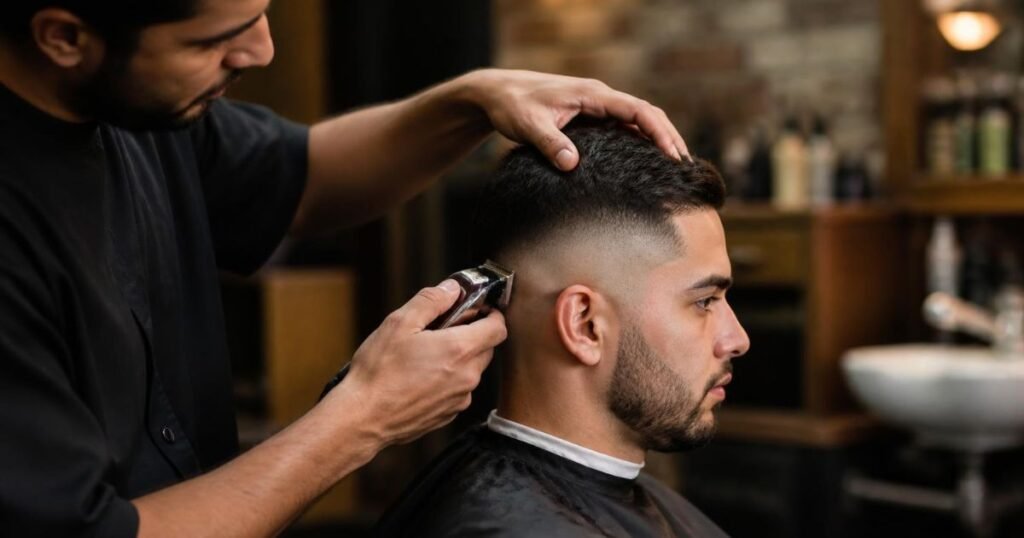
Maintaining a mid fade is really about two separate things: how often you get it cut, and what you do in between visits to keep it looking sharp.
How Often Should You Get a Mid Fade?
There’s no single fixed number here, since it depends mainly on how quickly your hair grows and how sharp you want the fade to stay. Many people find they need a touch-up every few weeks to keep the contrast crisp, while others are comfortable letting it grow out a bit longer before going back in. If you have particularly fast-growing hair, or you’ve chosen a skin fade, you’ll likely need more frequent visits than someone with a softer blend or slower growth to maintain the same look.
How to Keep a Mid Fade Looking Clean
Between visits, being mindful of anything that repeatedly rubs against the fade line hats, headphones, tight collars can help it stay sharper for longer, since regrowth is most noticeable right at the fade itself. If the fade starts to look uneven or the line has softened significantly, that’s generally a sign it’s time for a touch-up rather than a full cut, which many barbershops offer at a lower cost and shorter appointment time.
How to Maintain the Hair on Top
The top of a mid fade needs its own routine separate from the fade itself. Regular washing prevents product buildup, which can make hair look dull or feel heavier than it should, especially with clay- or paste-based products. Depending on how fast your hair grows and how much shape you want to maintain, a trim on top somewhere between full haircuts can help keep longer or textured styles from losing their form.
How to Style a Mid Fade Haircut
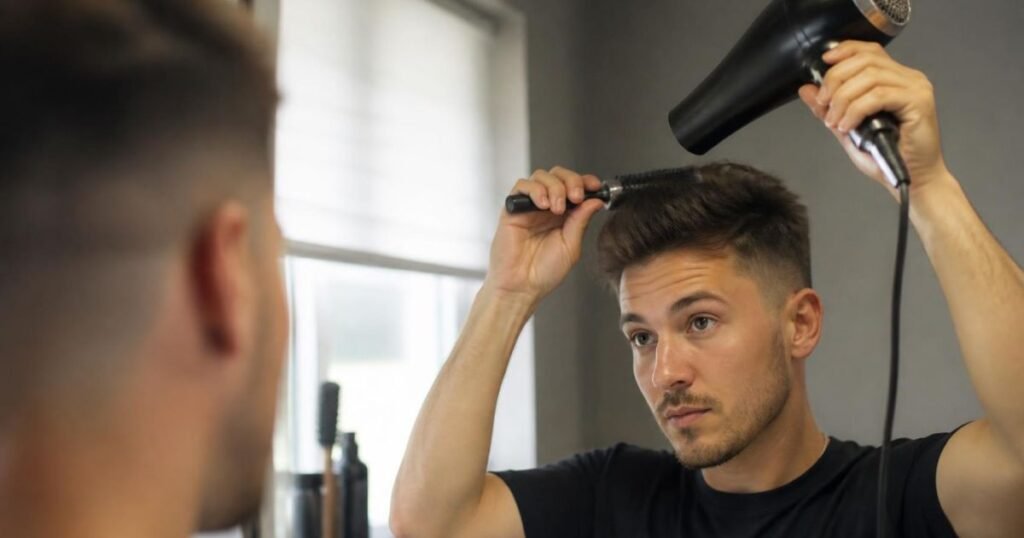
While the exact technique varies by top style, most mid fade haircuts follow a similar general sequence:
- Start with damp, towel-dried hair. Most styling products work better and distribute more evenly on damp hair than on hair that’s either soaking wet or completely dry.
- Apply product before drying, not after. Working a small amount of product through damp hair first gives you more control over the final direction and texture than adding it once the hair is already dry.
- Direct the hair as you dry it. Whether you’re pushing volume up and back for a quiff, forward for a fringe, or simply drying for natural texture, this is the stage where the shape actually forms a blow-dryer with some airflow control makes this easier than air-drying.
- Finish with your fingers or a comb, depending on the look. Textured, messy styles generally respond better to finger-styling, while sleeker looks like a side part or slick back hold their shape more precisely with a comb.
- Add a small amount of extra product only if needed. It’s easier to add more than to fix hair that’s overloaded with product, so start light and build up.
How much daily effort this takes depends heavily on which top style you’ve chosen a buzz cut or crew cut needs almost none of this, while a slicked-back or quiff style generally needs the full sequence most days to hold its shape.
Best Hair Products for Styling a Mid Fade
Different products are built for different jobs some add hold, some add texture, and some are really about volume. Picking the right one has more to do with your hair type and the top style you’re going for than with any single “best” product.
| Product | Hold level | Finish | Best suited for |
| Sea salt spray | Light | Natural, matte | Adding texture and lift to damp hair without stiffness |
| Volumizing mousse | Light to medium | Natural | Building body at the roots on finer or thinner hair |
| Texture clay | Medium to strong | Matte | Defining texture on crops and shorter styles |
| Molding paste | Medium | Matte, flexible | Restyling through the day without a hard, crunchy finish |
| Texture powder | Light | Matte | Adding lift and grip to flat or fine hair |
| Styling cream | Light to medium | Natural, slightly smooth | Controlling frizz and softening the finish on longer styles |
Sea Salt Spray
Sea salt spray adds texture and a slightly tousled, beach-like movement, and it works best on damp hair rather than dry. It’s a good fit for messy or naturally textured styles where you want lift without a heavy, styled look.
Volumizing Mousse
Mousse is mainly about building body at the root, which makes it useful for finer or thinner hair that tends to sit flat. It’s lighter than clay or paste, so it suits styles that need lift more than they need strong hold.
Texture Clay
Clay gives a stronger hold with a matte finish, and it’s a common choice for cropped and shorter textured styles where you want the individual sections of hair to hold their shape and stay separated.
Molding Paste
Paste sits between clay and cream in terms of hold, and its main advantage is flexibility you can reshape hair through the day without it feeling stiff or crunchy, which makes it a practical choice for fringes and side parts that need touch-ups.
Texture Powder
Powder is mostly used to add quick lift at the roots and break up flatness between washes. It’s a lighter option than clay or paste and works well as a refresher rather than a primary styling product.
Styling Cream
Cream gives a lighter hold with a smoother, more natural finish, which makes it useful for controlling frizz on longer or slightly wavy styles without adding heavy shine or stiffness.
Frequently Asked Questions About Mid Fade Haircuts
What Is a Mid Fade Haircut?
A mid fade haircut is a fade that starts around the temple or the top of the ear and blends down toward the neckline, sitting between a low fade and a high fade in terms of where it begins and how much contrast it creates.
How Long Does a Mid Fade Haircut Last?
This varies by individual hair growth rate and how sharp you want the fade to stay, but many people find they need a touch-up every few weeks to maintain a crisp line, with faster-growing hair or skin fades typically needing more frequent visits.
Can I Get a Mid Fade With Curly Hair?
Yes. The fade removes bulk at the sides while the curls on top can stay defined with a lightweight, curl-friendly product curl pattern doesn’t prevent a mid fade, though it does affect how much product and styling the top needs.
How Do I Ask My Barber for a Mid Fade?
Bring a reference photo, describe where you’d like the fade to start (temple or top of the ear), say whether you want the sides taken down to skin or left softer, and describe the length and texture you want on top.
What’s Better: A Mid Fade or Taper?
They’re not directly interchangeable a taper is a soft, gradual length transition with no hard line, while a mid fade creates more visible contrast between short and long sections. Which one is “better” depends on whether you want a subtle blend or a more defined look.
What Face Shape Suits a Mid Fade Haircut?
A mid fade can generally be adapted to most face shapes by adjusting the top’s height and volume and how close the sides are cut, though the right specific variation depends on more than face shape alone, including hair texture and personal preference.
How Does a Mid Fade Differ From a Skin Fade?
Mid fade describes where the fade starts; skin fade describes how far down it goes. A mid fade can be cut as a skin fade if the sides go all the way to bare skin, or with a softer, non-skin blend if you want less contrast.
What Hairstyles Pair Well With a Mid Fade?
Crops, quiffs, side parts, slick backs, and textured tops all pair naturally with a mid fade, since the fade itself is a placement choice that works with most top styles and lengths.
Can a Mid Fade Work With a Fringe?
Yes, a mid fade works well with a fringe, whether it’s a short, straight fringe like a Caesar cut or a more textured, choppy fringe the fade at the sides adds contrast against the fringe up front.
Is a Mid Fade Suitable for Short Hair?
Yes. Shorter top lengths, like a buzz cut or crew cut, pair easily with a mid fade and tend to require the least daily styling of any variation in this guide.
How Often Should I Get a Mid Fade?
Most people find every few weeks keeps the fade looking sharp, though this depends on your individual hair growth rate and whether you’ve chosen a skin fade or a softer blend, which grows out at different visible rates.

Jake Miller is a barbering and men’s hairstyle enthusiast who shares practical tips, haircut inspiration, and the latest grooming trends at BarberZylo. He enjoys exploring modern and classic hairstyles and helping readers find fresh ideas for their next look.
4 Comments