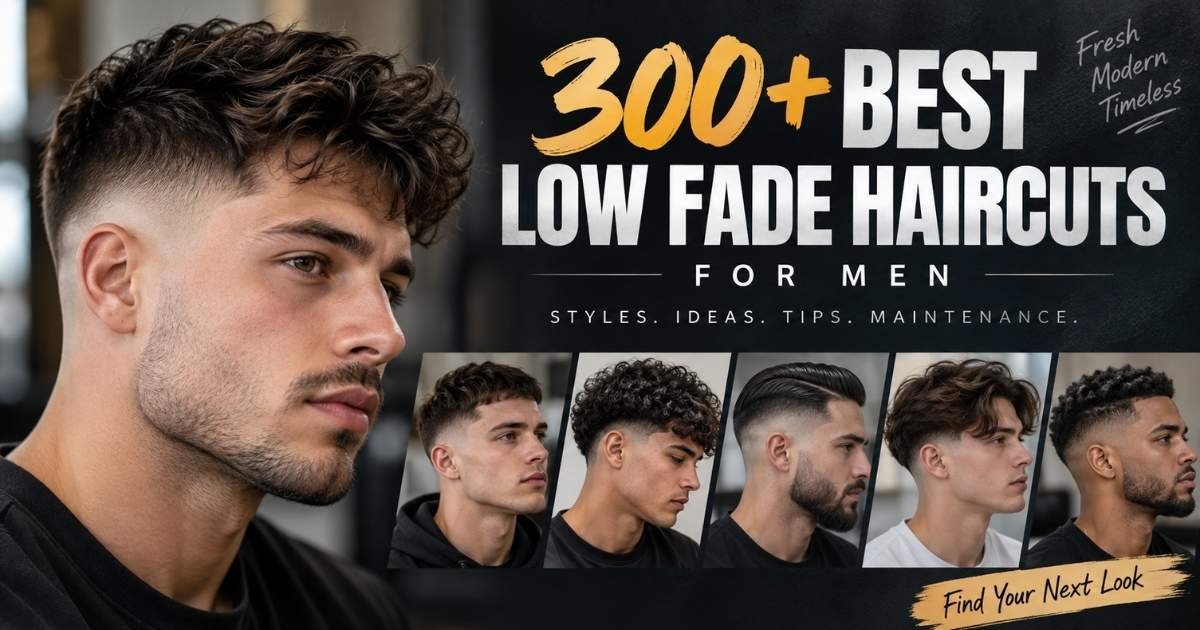
300+ Low Fade Haircuts for Men: Find Your Perfect Style
A low fade haircut is one of the most flexible cuts a barber can give you. The fade itself sits low, close to the ears and neckline, which means it works quietly in the background while almost anything can happen on top short and textured, long and swept back, curly, straight, buzzed, or styled into a pompadour.
This guide walks through more than 300 low fade ideas, organized by hair type, length, texture, and overall vibe, so you can find a look that actually matches your hair rather than just a photo you liked. Along the way, you’ll get help figuring out which fade height suits the contrast you want, how your face shape and hair type might change the result, and just as important how to explain the cut you want to a barber who’s never seen you before.
What Is a Low Fade Haircut?
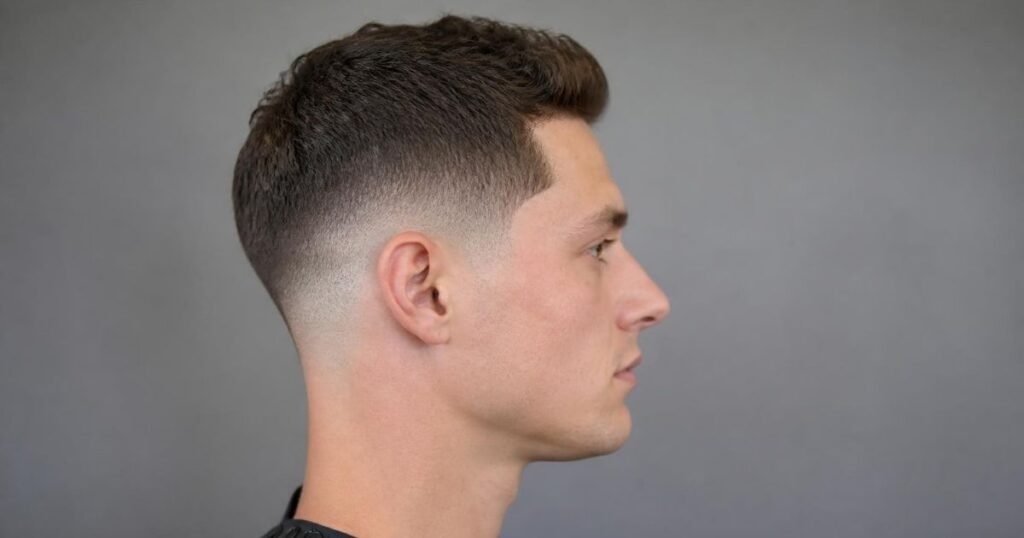
A low fade haircut starts its fade just above the ears, roughly at the point where the hairline naturally curves around the side of the head, and blends downward to the skin or near-skin at the neckline. Because the fade begins so low, most of the head keeps its natural hair length, and the “action” of the haircut is concentrated in a narrow band around the ears and the back of the neck.
This is different from where a mid or high fade begins, those start higher up the head, closer to the temple or even the crown, and expose more of the scalp along the sides (more on that comparison later). A low fade, by contrast, is the gentlest version of a fade in terms of how much hair is removed and how visible the transition is from a distance.
It’s also worth separating “fade” from “taper,” since barbers and clients often use the words differently. A taper gradually shortens hair toward the neckline and sideburns without necessarily going down to skin, the shortest point might still have some visible length. A fade, in contrast, blends hair down to bare or near-bare skin at its shortest point. A “low taper fade” specifically combines both ideas: a fade that starts low and finishes with a soft, tapered edge rather than a hard, skin-close line.
How much hair is left above the fade line matters more than people expect. A low fade paired with very short hair on top reads as a clean, understated cut. The same low fade paired with a long, voluminous top creates a much bolder contrast, even though the fade portion itself is identical. That’s part of why a low fade shows up across so many different styles, it’s really a foundation, not a finished look on its own.
One more thing worth knowing before you start browsing: terminology isn’t perfectly standardized. What one barber calls a “low fade,” another might call a “low taper,” and a third might ask exactly where you want it to start rather than relying on the label at all. Bringing a reference photo (covered later in this guide) solves most of that confusion.
Key Considerations for Low Taper Fade Haircuts
Before diving into the full gallery, it helps to know which factors actually change how a low fade turns out on you. These aren’t rules they’re things worth thinking about as you browse, so the style you pick is one your hair can actually deliver.
Hair Type
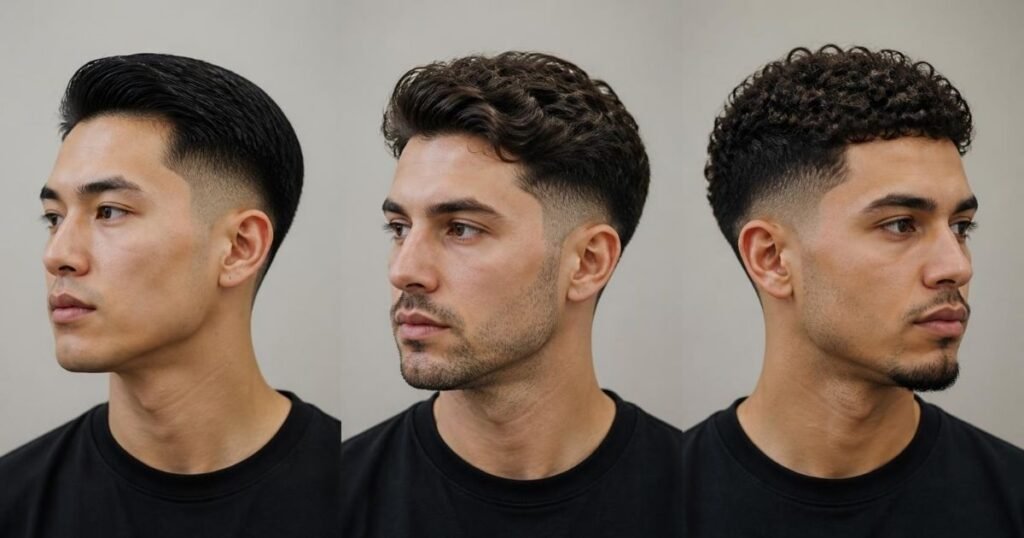
Straight hair tends to lie flat and smooth against a low fade, which shows off a crisp line but can look a little flat on top without some length or product. Wavy hair adds natural movement that can soften the transition between the fade and the top. Curly and coily hair usually creates the strongest visual contrast against a low fade, since the density and shape of the curls sit so differently from the closely cut sides. None of this makes one texture “better” for a low fade it just changes what the finished look will emphasize.
Face Shape
A fade doesn’t reshape your face, but the combination of fade height and top length can shift how proportions read. More length on top can help balance a rounder or wider face, while a shorter, closer cut tends to emphasize a jawline or cheekbones more directly. This is worth keeping in mind as you scroll a style you love on someone else might need a small adjustment (a bit more or less length up top) to work as well on you.
Maintenance Level
Fades in general need more frequent trims than a single uniform length, simply because regrowth becomes visible fastest right at the blend line. On top of that, the style you choose on top adds its own maintenance layer, a buzzed or cropped top needs almost no daily effort, while a pompadour or slicked-back style needs a few minutes with product and a comb or blow-dryer most days. Worth factoring in before you commit to a look you’ll need to recreate every morning.
Trending Low Fade Haircuts for Men
This is the heart of the guide, a wide range of low fade variations grouped by what they have in common, whether that’s length, texture, styling direction, or the specific fade technique itself. Use the photos to find something you like the look of, then read the description to understand what’s actually happening with the cut and what you’d need to tell a barber to get there.
Short, Low-Maintenance Cuts
These styles keep the top short and require the least daily effort. The differences between them come down to fringe shape and how uniform the length is across the top.
Low Fade Buzz Cut
The top is buzzed to a single, uniform length using clippers, with no separate styling needed once it’s cut. The low fade blends the sides down smoothly so the length change from top to bottom feels gradual rather than abrupt. This is about as close to zero-effort as a haircut gets there’s nothing to comb or style, which makes it a reliable choice if mornings are rushed. It also works with almost any hair texture, since there’s no length for curl pattern or waviness to affect.
Low Fade Crew Cut
A step up in length from the buzz cut, with the top left slightly longer and tapered rather than perfectly flat. That extra length gives it a bit more texture and the option to add a small amount of product for definition, while still sitting close enough to the head that it needs very little daily styling. Ask your barber for a crew cut on top with a low fade on the sides if you want this specific combination “crew cut” alone doesn’t specify the fade height.
Low Fade Military Haircut
Similar length to a crew cut, but the emphasis here is on precision rather than just shortness a clean, structured outline at the hairline and neckline, with the top kept neat and even. It’s less about the exact number of millimeters and more about the crisp finish, which is why it tends to need slightly more frequent trims to keep that sharp edge as it grows out.
Low Fade French Crop
Defined by a straight, blunt-edged fringe across the front rather than any particular length on top. The crop itself sits short, and the fringe is cut with a clean horizontal line rather than tapered or textured ends. Pairing that structured fringe with a low fade keeps the whole look tidy without feeling severe.
Low Fade Crop Top
Closely related to the French crop, but looser in feel the fringe here has more natural texture and movement instead of a hard, straight edge. If the French crop is the buttoned-up version, the crop top is the same general shape with a bit more casual energy, usually achieved by leaving slightly more length and asking for texturizing scissor work rather than a blunt cut.
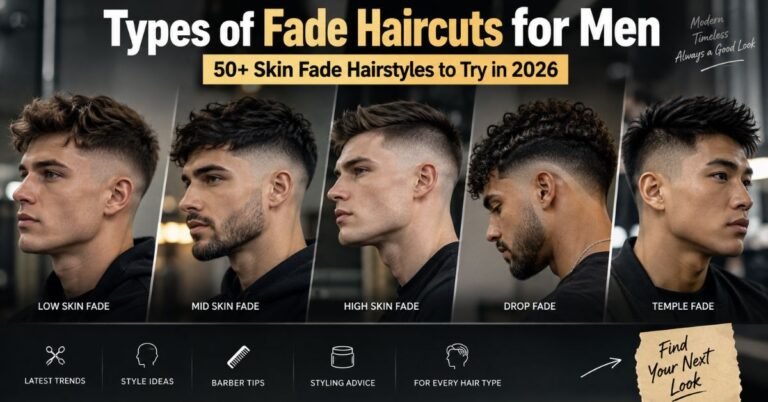
Read More About : Types of Fade Haircuts for Men: 50+ Skin Fade Hairstyles to Try in 2026
Low Fade Edgar
Recognizable by its distinctly straight, low-set fringe that sits close to the eyebrows, combined with short, tightly faded sides. The name refers to this specific fringe shape rather than being a general term for “short hair with a fringe” if you want this exact look, showing a photo matters more here than with most other styles, since the fringe placement is quite specific.
Low Fade Cut
A flexible, general version of the style moderate length on top, a soft taper toward the fade, and no strong styling direction built in. Think of this as the adaptable base that a lot of the more specific styles in this list are variations of. It’s a solid choice if you want a low fade but don’t yet know exactly how you want the top styled.
Textured and Fringe-Forward Styles
These share a top with visible texture and movement, but differ in how structured or “undone” that texture looks, and in how the fringe is treated.
Low Fade Textured Crop
Short-to-medium length on top with visible separation between pieces of hair, giving it a lived-in, slightly rougher finish than a plain crop. This texture usually comes from a combination of scissor-over-comb cutting and a texturizing product like clay, applied to damp or dry hair and worked through with fingers rather than a comb.
Low Fade Textured Fringe
Similar texture to the crop above, but the styling direction is forward, with the fringe pulled down and separated into distinct pieces across the forehead. This works particularly well with hair that has some natural wave, since the texture holds shape more easily than very straight hair.
Low Fade Messy Fringe
A looser, less defined version of the textured fringe pieces aren’t as clearly separated, and the overall effect is meant to look effortless rather than deliberately styled. It’s a good option if you want texture without spending much time perfecting it each morning, since a slightly imperfect finish is part of the look.
Low Fade Fringe
The more neutral, adaptable version of a fringe-forward top no strong texture or messiness built in, so it can be worn smoother for a tidier look or roughed up with product for something more casual, depending on the day.
Top-Length Range
These entries exist to show how much a low fade’s compatible top length can vary from very short to dramatically long since the fade itself doesn’t limit what happens above it.
Low Fade Long on Top
A moderate-to-long length on top that has enough room to be worn several ways swept back, left loose, or pushed to one side. This flexibility is the main appeal: you’re not locked into one styling direction the way you would be with a more defined cut.
Low Fade with Short Hair
A reminder that a low fade works just as well with minimal length up top as it does with something more elaborate, the fade doesn’t require length to look intentional. If low maintenance matters more to you than styling variety, this end of the spectrum is worth considering.
Low Fade with Long Hair
The most dramatic length contrast on this list is very short, closely faded sides paired with noticeably long hair on top that has real movement and weight. This combination draws attention to the top, so it tends to suit anyone who wants their hairstyle to be a bigger part of their overall look rather than staying in the background.
Sleek and Polished Styles
Everything in this group relies on directional, combed styling rather than natural texture. The differences are mostly about where the part sits and how much volume is built in at the front.
Low Fade Slick Back
Hair is combed straight back and kept close to the head rather than lifted, usually with a pomade or similar product for shine and hold. It needs enough length on top to comb back cleanly, usually a few inches at minimum and straighter hair tends to hold the slicked shape with less product than wavier or curlier hair.
Low Fade Comb Over
Hair is combed to one side rather than straight back, without necessarily lying flat, the defining feature is the directional sweep rather than a specific level of flatness. A side part isn’t required, but many comb overs use one to help guide the direction of the sweep.
Low Fade Side Part
Built specifically around a visible, defined part line as the anchor of the style, with hair combed to either side of it. This is a more structured relative of the comb over, since the part itself is a deliberate feature rather than just a side effect of how the hair is combed.
Low Fade Middle Part
The same general family of combed, neat styling, but parted down the center instead of to one side. This changes how the style frames the face compared to a side part, and tends to work best with hair that has enough natural weight to fall evenly on both sides rather than curling away from the part.
Low Fade Quiff
Volume is concentrated at the front, brushed upward and slightly back rather than combed flat. It usually needs a blow-dryer used at the roots for lift, followed by a medium-hold product to keep the shape through the day hair with a bit of natural body tends to hold a quiff more easily than very fine, flat hair.
Low Fade Pompadour
The most volume of this group, with a raised, structured front section that’s noticeably taller than a quiff. Getting the height right usually takes the most product and blow-drying effort of any style in this list, so it’s worth being honest with yourself about how much time you want to spend on your hair each morning before committing to it.
Height and Volume Styles
This group is defined by lift and volume rather than length alone, ranging from all-over height to volume concentrated in a single central strip.
Low Fade Blowout
Volume achieved primarily through blow-drying technique lifting the roots with a round brush or fingers while drying, rather than relying on a lot of length. It gives a fuller, more voluminous look than the hair’s natural state would otherwise produce.
Low Fade Fluffy Hair
A softer, airier version of volume than the structured blowout less about height and more about a natural, slightly tousled fullness. This tends to suit hair with some natural texture, since perfectly straight hair often needs more product to fake that same soft fullness.
Low Fade Faux Hawk
Volume is built up in a central strip running from front to back, without shaving the sides down to skin the way a true mohawk would. The low fade on the sides provides contrast without the more extreme, fully shaved look.
Low Fade with Mohawk
A more pronounced version of the central-strip idea, usually with shorter, more closely faded sides than a faux hawk for a sharper contrast against the central strip. Achieving the upright shape depends a lot on having enough length and hold product, since finer hair may need more support to stand up throughout the day.
Low Fade Mullet
Defined by length retained at the back rather than height on top short to moderate length at the front and sides, faded low, with more length left at the back and nape. It’s a distinct silhouette rather than a height style, but it’s included here as one of the boldest, most statement-making entries in the collection.
Structural and Silhouette Styles
These styles are defined by a specific shape or silhouette a neckline, a disconnection, or a distinct fringe form more than by length or volume alone.
Low Fade Undercut
Even though it’s technically a blended fade rather than a shaved disconnect, the visual effect of an undercut is a sharp-feeling jump between very short sides and a notably longer top. That contrast is the whole point of the style, and it tends to look sharpest with a top length long enough to visually separate from the fade below it.
Low Fade V Cut
The defining feature here is the neckline shape, not the top the hair at the back comes to a point, forming a V rather than the more common rounded or straight-across neckline. This is a detail worth specifically mentioning to a barber, since “V cut” refers to the back of the neck, not anything happening on top.
Low Fade Two Block
A term with roots in East Asian barbering that describes a look with a clear separation between the top and the sides; the top is often left long enough to fall forward over the fade line, creating a layered, two-part appearance rather than a smooth, continuous blend. Because the term isn’t universally used by every barber, describing what you want in plain language (long top, short faded sides, minimal blending between them) is a useful backup.
Low Fade Comma Hair
Named for the shape of the fringe, which curves gently across the forehead in a form similar to a comma. It relies on the fringe being cut and styled with that specific curve, usually with a light styling cream to help guide the shape without stiffening it.
Low Fade Man Bun
Here, the fade’s job is simply to keep the sides and back clean while the rest of the length is gathered and tied back. This requires enough overall length to actually pull into a bun usually at least shoulder-length or close to it with the low fade doing all the visual work at the sides.
Low Fade with Design
A low fade combined with a shaved-in line or pattern, usually along the temple or side of the head. This is razor or clipper artwork layered on top of the fade rather than a haircut shape in itself, and it depends on the sides being short enough for the design to actually show up clearly against the skin.
Facial Hair and Color Pairings
These two entries aren’t top-length or texture categories, they’re about how a low fade interacts with a beard or with hair color.
Low Fade with Beard
Pairing a low fade with a beard usually involves blending the beard line into the fade at the sideburns so the two flow together rather than creating a hard stop. How well this blends in practice depends a lot on individual beard density and growth pattern, so it’s worth discussing directly with a barber who does beard work rather than assuming any beard shape will connect the same way.
Low Fade Blonde Hair
This is a coloring choice rather than a haircut shape any of the cuts in this guide can be paired with lighter or lifted color. What changes is the visual contrast: lighter hair against a closely faded side creates a more noticeable line than darker hair might, simply because of the color difference rather than anything about the cut itself.
Hair Type and Texture Specific
This group connects specific hair textures to how a low fade actually looks and behaves genuinely useful if you’re trying to picture the style on your own hair rather than someone else’s.
Low Fade Straight Hair
Straight hair sits flat against the fade line, which tends to highlight a crisp, clean transition but can look a little sparse on top without enough length or a texturizing product to add some visual interest.
Low Fade Wavy Hair
Natural waves add movement and a bit of volume without much styling effort, and they tend to soften the line between the fade and the top compared to poker-straight hair.
Low Fade with Curly Hair
Curly hair creates a strong, natural contrast against a low fade simply because of how different the curl texture looks next to the closely cut sides. A curl-defining cream and a diffuser attachment on a blow-dryer tend to help keep the curl pattern looking intentional rather than frizzy.
Low Fade Curly Top
A more specific version of the curly pairing above, where the top is cut and styled into a rounded, fuller shape rather than left loose. The rounded silhouette is the differentiator here, it’s about the shape the curls are cut into, not just the fact that the hair is curly.
Low Fade Afro
This refers specifically to coily, Type 4-pattern hair styled into its natural rounded shape, with a low fade cut into the sides. Coily hair has its own density and shrinkage considerations, a length that looks short when dry may actually be longer when stretched out which is worth discussing with a barber experienced in cutting this hair type.
Low Fade Black Male
Closely related to the afro entry above, this typically refers to a low fade paired with coily or tightly curled hair, often with more attention paid to the sharpness of the skin-fade contrast against the natural texture on top. If you have this hair type, the practical considerations are largely the same as the afro entry: density, shrinkage, and a barber comfortable working with the texture matter more than the specific label used.
Low Fade Skin
The fade here goes all the way down to bare skin at its shortest point rather than stopping at a very short length, creating the highest-contrast finish in this section. It’s a good option if you specifically want a sharp, high-contrast look rather than a softer blend.
Fade Technique Variations
Unlike the groups above, these entries differ by the technique used to create the fade itself, not by what’s happening on top. Getting these terms right is one of the most useful things you can take from this guide into a barber conversation.
Low Drop Fade
The fade line curves downward as it moves behind the ear, rather than staying level in a straight line. This shape change is subtle in photos but noticeable in person, and it’s a detail worth pointing out specifically if you want it, since “low fade” alone doesn’t tell a barber which shape you’re after.
Low Temp Fade
Short for “temple fade,” this concentrates the fading specifically around the temple area rather than fading evenly across the whole side of the head. It’s commonly paired with longer overall hair afros and curlier styles in particular since it cleans up the hairline and temple without shortening the rest of the length.
Low Burst Fade
The fade radiates outward in a rounded, circular pattern around the ear instead of running in a straight line across the side. This shape shows up often with faux hawk and mohawk-style tops, since the curved fade complements the central-strip volume above it.
Low Fade Taper
Here, the fade finishes with a gradual, soft taper rather than going all the way to bare skin a gentler transition than a full skin fade. If you want a subtle fade around the sides and back without the fade looking too sharp or exposed, this is generally the version to ask for.
Low Cut Taper Fade
Combines an overall short length with the softer tapering technique above, rather than a longer top. The main difference from a plain “taper” is the shorter starting length across the whole head, not just at the sides.
Low Fade vs Mid and High Fade: Key Differences
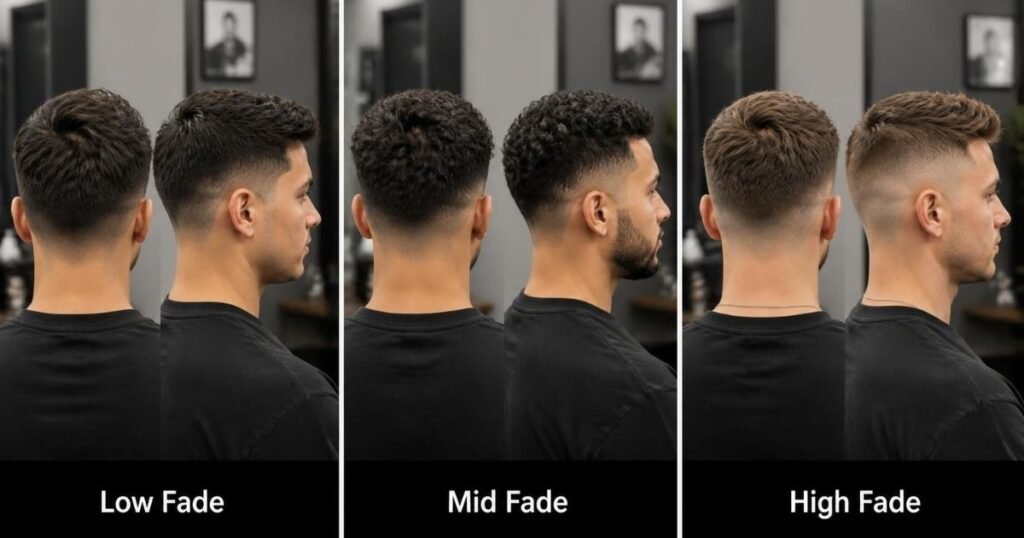
Once you know you want a fade, the next real decision is how high it should sit. Fade height changes how much contrast the haircut has and how much attention it draws to the sides versus the top.
| Low Fade | Mid Fade | High Fade | |
| Starting point | Just above the ears | Around temple level | Near the crown |
| Amount of skin/short hair exposed | Least | Moderate | Most |
| Visual contrast | Subtle | Noticeable | Most dramatic |
| Effect on the top | Top stays the visual focus | Sides and top get more equal attention | Sides draw significant attention |
Low Fade vs Mid Fade
A low fade keeps the transition close to the ears, which makes it read as a subtler, quieter cut most of the visual interest stays on top rather than the sides. A mid fade starts higher, around the temples, and creates more contrast between the short sides and the top. Neither is objectively better; it mostly comes down to how much you want the sides of the haircut to stand out versus staying in the background. If you want a clean look without taking the fade too high, a low fade is generally the safer starting point, especially for a first fade or a more conservative setting.
Low Fade vs High Fade
The gap widens further with a high fade, which starts near the crown and creates the most dramatic disconnect between the sides and the top of any of the three. Because so much more scalp is exposed, a high fade tends to draw the eye more directly to the sides, and pairing it with a longer or fuller top helps keep the overall look balanced.
A low fade sits at the opposite end of that spectrum it keeps more length around the sides and produces a much softer transition, which tends to suit anyone who wants the fade to blend in rather than stand out. Which one gives more contrast really comes down to how high the fade starts, and that’s the single biggest lever between all three options.
How to Choose the Right Low Fade Haircut for You
Face Shape
Face shape doesn’t determine which haircut will suit you, but the balance between fade height and top length and shape can shift how your proportions read. Here’s a general starting point for each shape treat these as suggestions to discuss with your barber, not rules.
- Oval: Considered a flexible shape that tends to work with most top lengths and fade heights, since proportions are already fairly balanced.
- Round: More length on top, especially with some height or volume, can help create the impression of a longer face; very short, uniform tops sometimes emphasize width instead.
- Square: A defined, structured top can complement a strong jawline, while softer, textured tops can ease a more angular look if that’s the effect you’re after.
- Oblong: Shorter to moderate length on top, rather than a lot of added height, may help avoid drawing the face out further.
- Diamond: A top with some width or volume around the temples can help balance narrower proportions at the forehead and jaw.
- Heart: Fuller styling toward the jawline area (through top length or beard pairing) may help offset a narrower chin.
- Triangle: Added volume or texture at the crown can help balance a wider jawline with a narrower forehead.
These are tendencies, not guarantees the same face shape can carry very different haircuts well depending on individual features, hair texture, and how a barber adapts the cut to you specifically.
Hair Type
Beyond face shape, your hair’s own characteristics do a lot of the work in determining what a given style will actually look like once it’s cut.
Texture and curl pattern affect how much visual contrast the fade creates and how the top holds its shape. Straight hair shows a crisp line but can look flat without added length or product; wavy and curly hair adds natural movement and contrast, generally with less daily styling effort needed to look intentional.
Density and thickness influence how much length you can carry on top before it starts looking heavy or unshaped. Thicker, denser hair can generally support more length and bulkier styles like a pompadour or blowout; finer or thinner hair sometimes looks better with shorter or more textured tops that don’t rely on volume to look full.
Hairline and growth patterns including cowlicks are worth mentioning to your barber regardless of which style you choose, since they can affect how a fringe sits or how a part behaves. A strong cowlick near the front hairline, for example, can make certain fringe styles harder to keep flat without extra styling.
Styling habits matter just as much as the hair itself. If you rarely use a blow-dryer, a style that depends on lifted volume (like a quiff or pompadour) will need more daily commitment than you might expect. Being honest with your barber about how much time you actually want to spend styling each day will steer you toward a more realistic choice than picking based on photos alone.
How to Ask Your Barber for the Right Low Fade Haircut
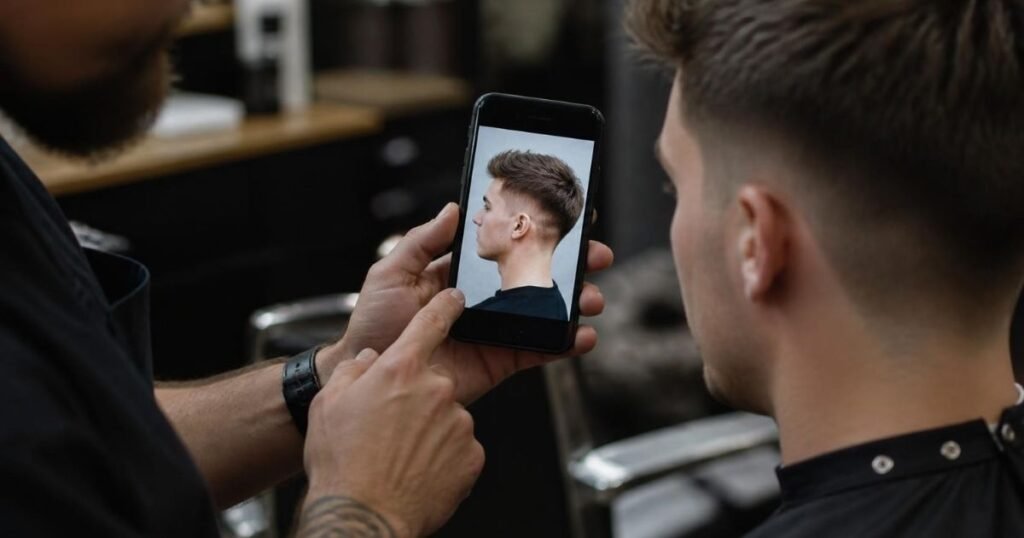
Show a Reference Image
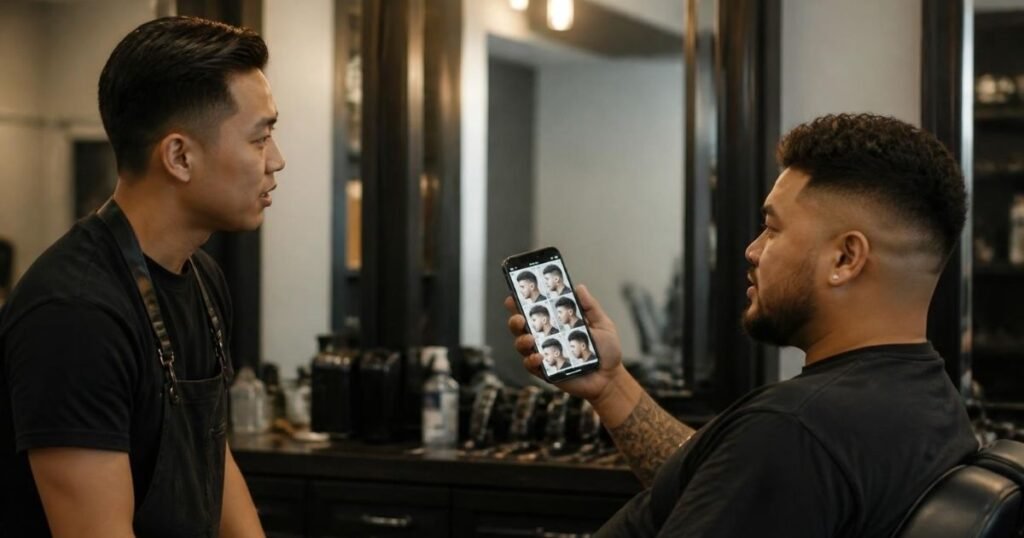
Because fade terminology varies from barber to barber, a photo does more communicating than words alone. Ideally, bring more than one angle a front view shows top length and fringe shape, a side view shows exactly how low the fade should sit, and a back view shows the neckline shape you’re after. If your ideal cut combines pieces from different photos (say, this fade height with that top length), bring both images and say so directly rather than assuming one photo covers everything.
Common Mistakes to Avoid When Asking for Low Fade
A vague request is the single most common reason a haircut doesn’t turn out the way someone pictured it. Before you sit down in the chair, it helps to have clear answers to a few specific questions:
- How sharp should the fade look? A skin fade and a soft taper finish look very different even at the same starting height specify which one you want.
- What length should I leave on top? Vague terms like “not too short” mean different things to different barbers; a specific length or a reference photo removes the guesswork.
- How should the neckline look? Rounded, blocked, or pointed (like a V cut) all look distinct mention this if you have a preference.
- Do you have a cowlick or a strong growth pattern? Flagging this upfront lets your barber adjust the cut to work with it rather than against it.
- What are your styling habits? Let your barber know if you blow-dry daily, use product, or prefer to let your hair air-dry it affects how they cut the length and layers.
- Do you want a subtle or high-contrast result? This is really a shorthand way of communicating fade height and sharpness in one sentence.
Walking in and simply asking for “a fade” leaves too much open to interpretation. The more specific you can be about these details, the closer the result is likely to match what you had in mind.
How to Style a Low Fade Haircut
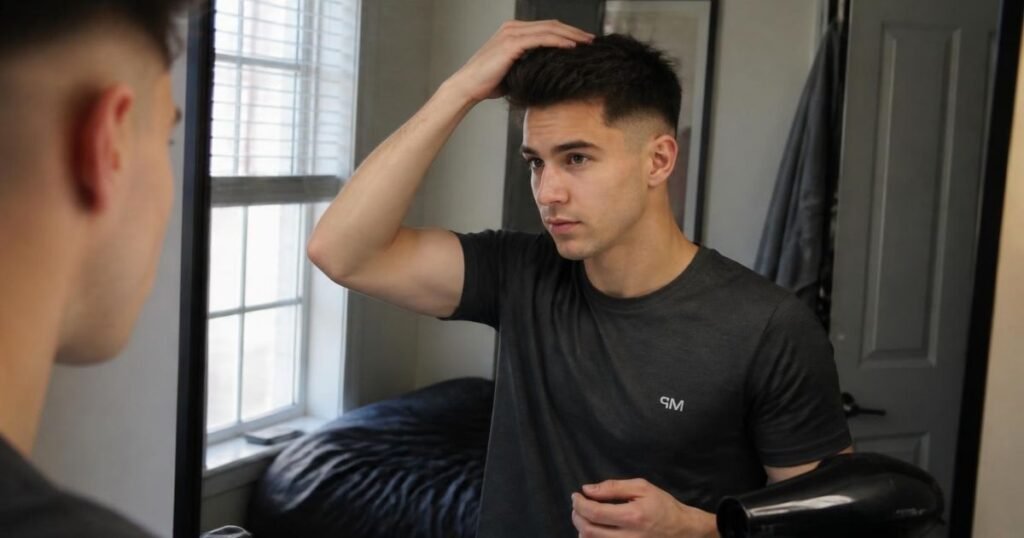
Not every low fade needs all of the steps below a buzz cut or crew cut needs almost none of this, while a pompadour or quiff benefits from all four. Use what’s relevant to the top style you’ve chosen.
- Start with clean hair. Product tends to distribute more evenly and hold better on hair that’s been washed recently, rather than hair with a day or two of natural oil buildup.
- Apply product evenly. Work a small amount through damp or dry hair (depending on the product) from roots to ends, rather than concentrating it in one spot this helps avoid a greasy or clumped look.
- Use a comb or brush. A comb tends to create cleaner, sharper lines for combed styles like a side part or slick back; a brush is generally better for blending texture into looser, more natural-looking styles.
- Consider a blow dryer. For styles that rely on volume or lift quiffs, pompadours, blowouts directing warm air at the roots while brushing upward gives noticeably more height than air-drying alone.
Recommended Hair Products for Low Fade Haircut
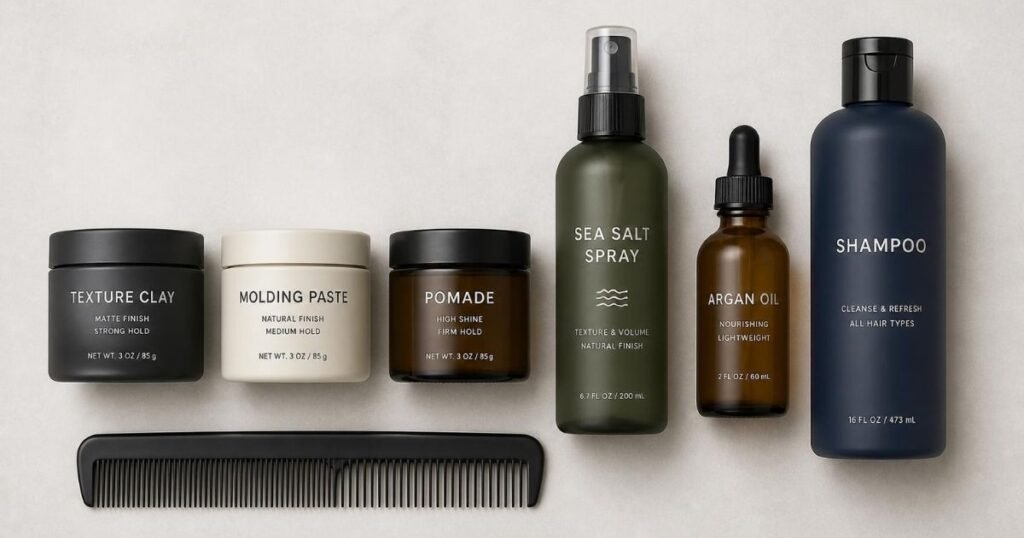
Different low fade styles call for different finishes, so picking a product based on the look you’re going for matters more than picking whatever’s popular.
| Product | Best For | Finish |
| Texture Clay | Textured crops, messy fringes, natural-looking styles | Matte, medium hold |
| Molding Paste | Styles that need flexible, restyleable hold | Low shine, soft hold |
| Pomade | Slick backs, side parts, combed styles | High shine, strong hold |
| Sea Salt Spray | Wavy or curly tops, tousled volume styles | Textured, natural finish |
| Argan Oil | Frizz control and shine, especially on curly or coily hair | Adds softness, not hold |
| Shampoo & Conditioner | Overall hair and scalp health | N/A |
Texture Clay
Clay builds shape and separation without adding shine, which makes it a natural fit for textured crops, messy fringes, and any style meant to look a little undone rather than polished.
Molding Paste
Paste offers a softer, more flexible hold than clay or pomade, which makes it easier to restyle throughout the day, useful for styles like the two block or comma hair, where the shape needs to move naturally rather than stay rigid.
Pomade
Pomade’s higher shine and firmer hold make it the go-to for combed, directional styles like a slick back or a sharp side part, where a clean, glossy finish is part of the look.
Sea Salt Spray
Spraying this onto damp hair before drying adds volume and a slightly tousled texture, which suits wavy or curly tops that want to look natural rather than heavily styled.
Argan Oil
Rather than providing hold, argan oil adds shine and softness while helping control frizz particularly useful for curly or coily hair types where dryness and flyaways are more common concerns.
Shampoo & Conditioner
A lightweight, sulfate-free shampoo and a light conditioner help remove product buildup and keep both hair and scalp healthy, which matters for how well any styling product performs day to day.
How to Maintain a Low Fade Haircut
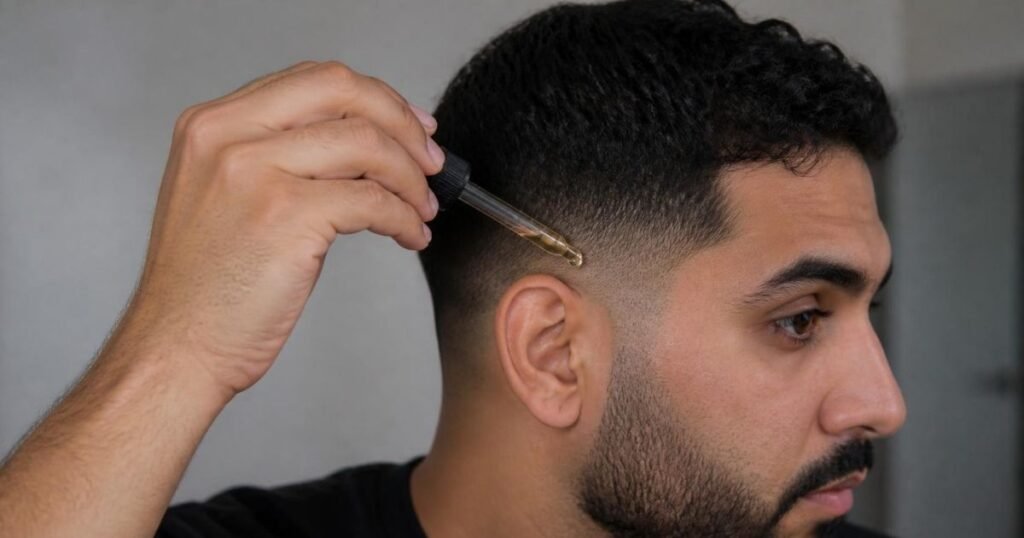
Nourish Your Hair and Scalp
Since a fade brings clippers close to the scalp, keeping that skin healthy matters as much as caring for the hair itself. A lightweight scalp oil or serum can help prevent dryness and flaking around the fade line, which otherwise tends to be more noticeable against short hair than it would be under longer length.
Cleanse and Condition Regularly
Washing with a gentle, sulfate-free shampoo helps remove product buildup from clays, pastes, or pomades without stripping natural oils, which keeps both the fade and the top looking fresh rather than dull or heavy.
Hydrate and Prevent Frizz
A leave-in conditioner or lightweight anti-frizz product can help keep longer or curlier tops looking smooth and defined, particularly in humid conditions or dry winter air where frizz tends to be more of an issue.
Frequently Asked Questions
What is a low fade haircut?
A low fade haircut blends short, faded hair near the ears and neckline into longer hair higher up, with the fade starting close to the ears rather than higher up the head. See the full breakdown above for how it compares to a taper.
What is a low fade haircut called?
“Low fade” and “low taper fade” are often used interchangeably, though some barbers use “taper” specifically to mean a softer, non-skin finish rather than a full fade.
What is a taper vs fade?
A taper gradually shortens hair without necessarily reaching bare skin, while a fade blends all the way down to skin or near-skin at its shortest point.
What looks better: high fade or low fade?
Neither is objectively better a high fade creates more contrast and draws more attention to the sides, while a low fade offers a subtler, more understated look. The right choice depends on how much contrast you personally want.
Who suits a low fade?
A low fade is broadly adaptable across hair types and face shapes, largely because it’s a subtle, low-contrast style though the final result still depends on your specific hair texture, the top style chosen, and how the barber adapts the cut to you.
What face shapes are best suited for a low fade?
There’s no single best-suited face shape, since a low fade pairs with almost any top style. See the Face Shape section above for style-specific suggestions to discuss with your barber.
Can I get a low fade with curly hair?
Yes curly hair typically creates strong, natural contrast against a low fade, and a curl-defining product helps keep the top looking intentional.
How to ask for a low fade haircut confidently?
Bring a reference photo and be specific about fade sharpness, top length, and neckline shape rather than just asking for “a fade” see the barber communication section above for a full list of details worth mentioning.
How often should I visit the barber for a low fade haircut?
Fades generally need more frequent trims than a uniform-length cut, since regrowth shows fastest right at the blend line many people find they need to go in every few weeks to keep the line looking sharp, though this varies with hair growth rate and how crisp you want the fade to stay.
Are low fade haircuts high maintenance?
The fade itself needs reasonably regular trims to stay sharp, but overall maintenance depends heavily on the top style; a buzzed or short top needs very little daily effort, while a longer, styled top adds real time to your routine.
How can I style my low fade haircut at home?
Start with clean hair, apply a small amount of the right product for your desired finish, and use a comb or brush (and a blow-dryer, if your style needs volume) to shape the top see the styling section above for a full walkthrough.
How do I maintain a low fade between haircuts?
Keep the scalp around the fade line hydrated, wash regularly with a gentle shampoo to avoid product buildup, and use a leave-in conditioner if your top tends toward dryness or frizz.
What hair products should I use for styling a low fade?
It depends on the finish you want clay and paste for texture, pomade for shine and hold, sea salt spray for natural volume, and argan oil for shine and frizz control. See the product section above for a full comparison.
Conclusion
A low fade works because it’s a foundation rather than a finished statement the same subtle, low-set blend can sit under a buzz cut, a pompadour, a full head of curls, or a long, swept-back top. The real decision isn’t whether to get a low fade; it’s what to pair it with, based on your hair type, your face shape, and how much time you actually want to spend styling it each day.
Pick a couple of favorites from the styles above, bring a clear reference photo to your next appointment, and be specific about the details that matter most to you, that combination does more to get you the result you want than any single phrase ever will.

Jake Miller is a barbering and men’s hairstyle enthusiast who shares practical tips, haircut inspiration, and the latest grooming trends at BarberZylo. He enjoys exploring modern and classic hairstyles and helping readers find fresh ideas for their next look.