
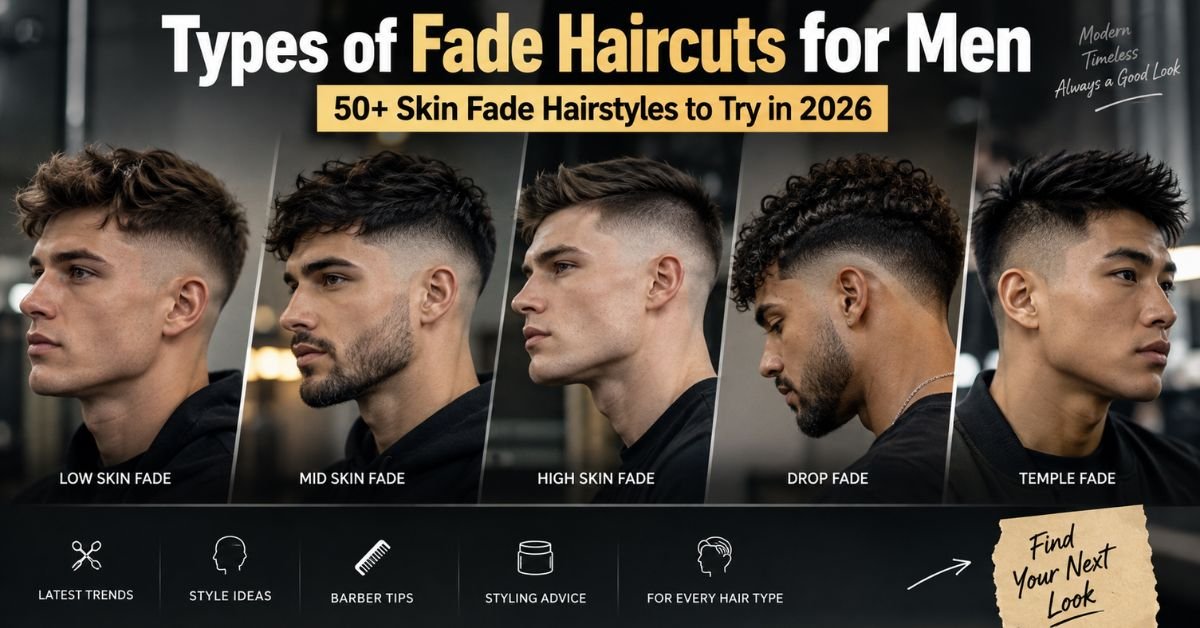
Types of Fade Haircuts for Men: 50+ Skin Fade Hairstyles to Try in 2026
If you’ve been searching for the right fade and keep running into terms like drop fade, burst fade, and temple fade without a clear sense of how they differ, you’re not alone. “Skin fade” isn’t one haircut, it’s a family of techniques, and the differences between them come down to fade height, the shape of the fade line, and what’s happening on top.
This guide breaks down the different types of fade haircuts for men, shows you real style combinations to consider, and walks through how to choose a fade that fits your hair, your face, and your lifestyle. By the end, you’ll also know exactly how to describe what you want to a barber, so you leave the chair with the result you actually asked for.
What Is a Skin Fade Haircut?
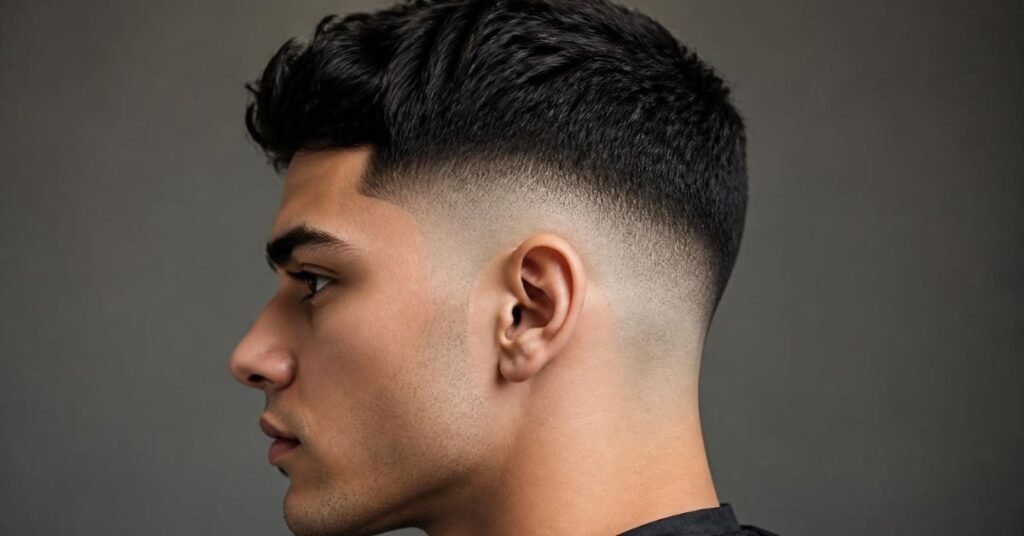
A skin fade haircut is a technique where the hair is cut progressively shorter until it fades down to skin level, then it’s left to grow back out above the natural hairline. It’s easy to confuse this with a taper, since both involve a gradual change in length, but they’re not the same thing.
A taper shortens the hair gradually without ever reaching bare skin there’s always a fine layer of hair, even at its shortest point near the neckline. A skin fade goes further, blending the hair all the way down to nothing before the natural hairline takes over. That’s what creates the sharp, high-contrast look most people picture when they hear “skin fade haircut.”
It’s also worth understanding that a skin fade isn’t a complete hairstyle on its own. It’s a technique applied to the sides and back of a haircut, and it gets paired with a huge range of top styles buzzed, textured, slicked back, curly, long which is exactly why there are so many “types” of skin fade to choose from.
What Are the Different types of fade haircuts for men?
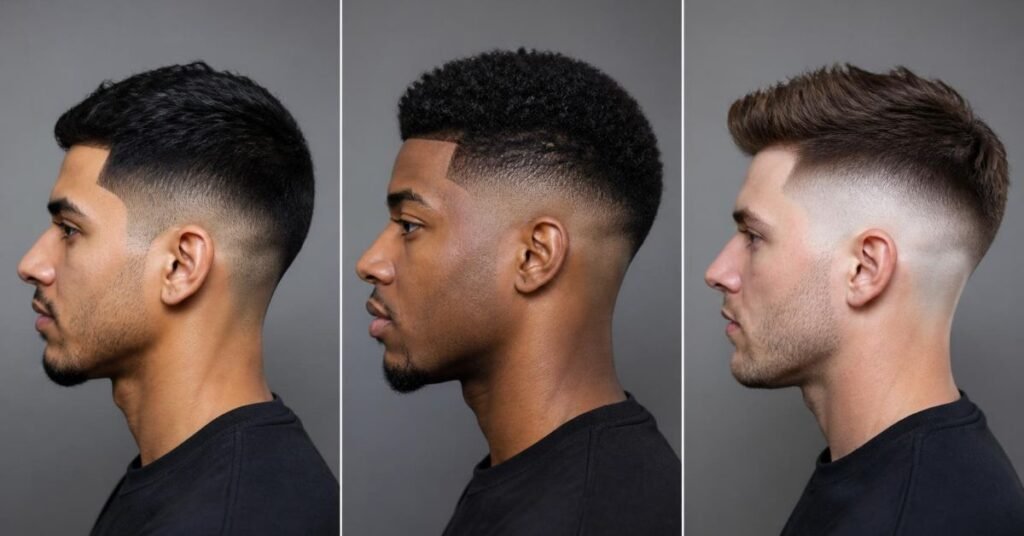
The different types of skin fade haircuts are mostly defined by two things: how high up the head the fade starts, and the shape the fade line takes as it moves around the head. Understanding both makes it much easier to recognize what you’re looking at in a photo, and much easier to describe what you want in a barber’s chair.
Low Skin Fade
A low skin fade starts close to the ear and stays fairly low around the back and sides of the head, generally showing about an inch or so of visible skin before blending into longer hair. Because the transition happens close to the hairline, the contrast is more subtle than higher fades, and less skin is on display overall.
This lower placement is often chosen when someone wants a fade that reads as clean and put-together without drawing a lot of attention to the haircut itself it’s a common choice in more conservative or traditional settings, though that’s a general tendency rather than a rule.
Mid Skin Fade
A mid skin fade starts noticeably higher than a low fade, usually around the area near the brow or temple, and shows more visible skin as a result. It still tapers down toward the back of the head, but not as dramatically as a low fade does.
Most people describe a mid fade as a middle-ground option more contrast and definition than a low fade, without the boldness of a high fade. It works as a flexible base for a wide range of top styles, from cropped and textured to longer and swept back.
High Skin Fade
A high skin fade starts near the top of the head, close to where the crown begins, which means it shows the most visible skin of the three fade heights. Unlike lower fades, a high fade generally runs evenly around the head rather than dropping down toward the neckline at the back.
This is the boldest, highest-contrast option of the group. It puts more visual weight on the top of the head and can make a strong style statement, though it also tends to need more frequent upkeep to keep the line looking sharp something worth factoring into your decision, which we’ll get into later.
Drop Skin Fade
A drop fade isn’t a separate height category it describes the shape of the fade line, not how high it starts. In a drop fade, the fade line curves or “drops” downward as it moves behind the ear and around the back of the head, rather than staying level.
This is actually a common point of confusion. Low and mid fades are frequently drop fades, because their fade line typically dips down at the back. A high fade, on the other hand, usually isn’t described as a drop fade, since it tends to stay level around the head instead of curving down at the nape.
Burst Skin Fade
A burst fade also describes a shape rather than a height. In a burst fade, the fade curves around the ear in a rounded, semicircle shape and finishes at the side of the neck it doesn’t continue along the back hairline the way a drop fade does.
Burst fades are frequently chosen when the back of the hair is left a bit longer than the sides, since the semicircle shape lets the back blend into longer length without the fade line running all the way across the nape. It’s a detail that comes up a lot with mullet-inspired and longer-on-top styles.
Temple Skin Fade
A temple fade concentrates the fade at the temples and the nape of the neck, while the natural hairline stays visible behind the ear rather than being fully faded to skin. In practice, this sits closer to a taper fade the hair still tapers down toward the hairline, with skin only showing at specific points rather than across the whole side of the head.
Naming here gets inconsistent depending on who you ask. “Temple fade” and “taper fade” are often used interchangeably, and you may also come across terms like “Brooklyn fade” or “blowout fade” used to describe similar cuts. None of these terms are used the exact same way everywhere, so if you’re chasing a specific look, a reference photo will do more work than the name alone. We’ll cover how temple fades and skin fades differ in more detail later in this guide.
Which Skin Fade Hairstyles Are Trending in 2026?
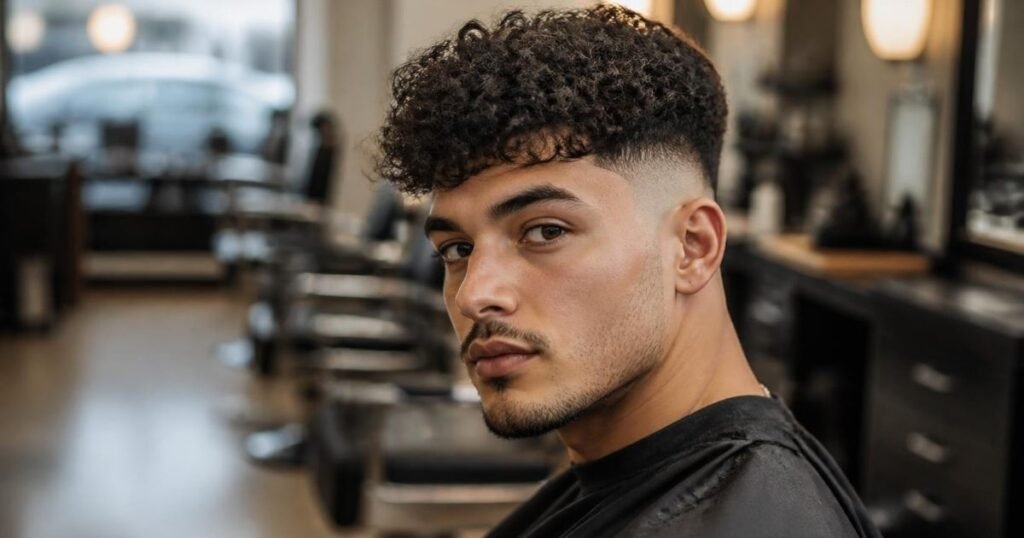
Rather than naming a single “trending” haircut, it’s more useful to look at the general directions fade styling is heading in. A few patterns have been showing up consistently.
Natural texture on top continues to pair well with a sharp fade underneath. Instead of heavily slicked or product-heavy finishes, a lot of current styling leans into whatever the hair naturally does waves, curls, or textured crops while letting the fade underneath provide the contrast and structure.
Contrast pairings also remain popular: a high or burst fade underneath longer, curlier, or textured hair on top tends to draw more attention than a uniform length throughout. This isn’t a new idea, but it’s continued to hold up as a reliable way to add visual interest without a dramatic change on top.
At the same time, classic combinations haven’t gone anywhere. Low and mid fades paired with a simple side part or crop remain a common, dependable choice, particularly for anyone who wants a clean look without much daily styling. If anything, the current direction is less about one dominant “trend” and more about barbers adapting fade height and shape to whatever texture and length a client already has.
32 Skin Fade Haircuts for Men
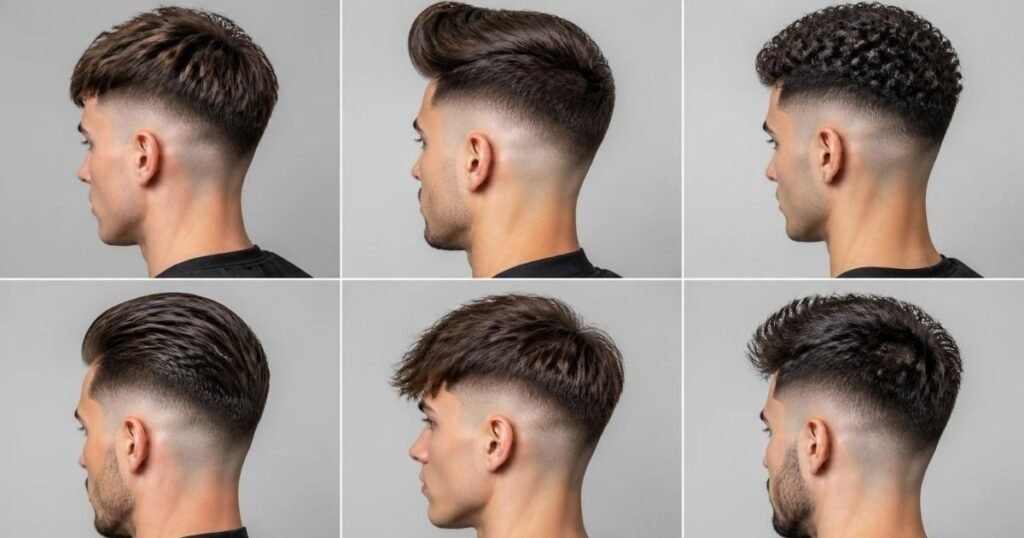
The sections below group 32 skin fade hairstyles by fade type, so you can see the range of finished looks possible within each category. Each entry combines a specific fade with a top style, texture, or finishing detail use these as a starting point for your own reference photos rather than an exact match to bring in unchanged.
High Skin Fade Styles
1. High Fade with Textured Crop Short, choppy layers on top with visible separation, cut to sit forward or slightly off to one side. The high fade underneath keeps the eye focused on the texture up top.
2. High Fade with Pompadour A classic, voluminous front section swept upward and back, contrasted against a sharply faded side. Works best with hair that has enough length and body to hold height without heavy product.
3. High Fade with Curly Top Natural curl pattern left largely untouched on top, while the sides are faded high for maximum contrast between the loose, textured top and the closely shaved sides.
4. High Fade with Slick Back Hair combed straight back with a strong-hold product, creating a smooth, structured top that pairs with the sharp line of a high fade for a more polished finish.
5. High Fade with Fringe A short fringe left forward over the forehead, generally kept blunt or lightly textured, with the high fade providing a clean, minimal base around it.
6. High Fade with Spiky Texture Shorter length on top styled upward with a matte or textured product for a piecey, deliberately messy finish above a high, clean-lined fade.
Mid Skin Fade Styles
7. Mid Fade with Side Part A defined part line on one side with the hair combed across, giving a neat, classic look that balances well against the moderate contrast of a mid fade.
8. Mid Fade with Quiff Hair swept up and back from the front, with more volume concentrated toward the hairline, paired with a mid fade that keeps the sides from competing with the height on top.
9. Mid Fade with Textured Fringe A slightly longer, textured fringe styled forward or with light movement, softened by the medium contrast of a mid fade rather than the sharper edge of a high fade.
10. Mid Fade with Comb-Over Longer hair on one side combed across the head over the shorter section, a style that tends to work well when there’s enough length on top to create real movement.
11. Mid Fade with Buzzed Top Uniform short length across the entire top, with the mid fade providing just enough contrast at the sides to avoid a completely flat, all-one-length look.
Low Skin Fade Styles
12. Low Fade with Side Part A subtler, more traditional take on the side part, where the low fade keeps the sides tidy without drawing attention away from the part itself.
13. Low Fade with Crew Cut Short, even length on top that gradually blends into the low fade at the sides, a straightforward option that tends to be low-effort day to day.
14. Low Fade with Slick Back A smoother, more subdued version of the slicked-back look, where the low fade keeps the sides understated rather than adding extra contrast.
15. Low Fade with Natural Texture Hair left to fall as it naturally grows, with minimal product, while the low fade cleans up the sides without changing the character of the top.
Drop, Burst & Temple Variations
16. Drop Fade with Textured Crop The curved drop-fade line at the back pairs with a choppy, textured top, keeping the transition soft rather than perfectly straight around the head.
17. Drop Fade with Curly Top A common pairing for curlier hair types, since the drop shape follows the natural curve of the head at the back rather than cutting a hard, straight line.
18. Burst Fade with Mullet The semicircle shape of a burst fade lets the back hair grow longer, uninterrupted by a fade line, while the sides stay short and defined one of the more distinctive combinations in this list.
19. Burst Fade with Textured Top Short, piecey layers on top with the burst fade wrapping cleanly around the ear, ending before it reaches the nape.
20. Temple Fade with Side Swept Top Hair swept to one side on top, with fading concentrated at the temples rather than across the whole side of the head, giving a slightly softer transition than a full skin fade.
21. Temple Fade with Beard A tapered temple fade paired with a well-maintained beard, where the fade and beard line are typically blended together so the two don’t compete for visual attention. This is a common request among readers searching for a skin fade with beard.
22. Temple Fade with Slick Back A polished, straight-back finish on top with a temple fade underneath, offering a cleaner, more traditional look than a full skin fade would give.
Classic & Modern Skin Fade Combinations
23. Skin Fade with Pompadour A longstanding pairing: a structured, voluminous top with a sharply faded side, balancing an older classic shape with a more modern finish underneath.
24. Skin Fade with Buzz Cut Minimal length across the entire head, with the fade providing the only real visual detail a low-effort option for anyone who doesn’t want to style hair daily.
25. Skin Fade with Afro A high-contrast pairing where the natural volume and texture of an afro sits above a closely faded side, giving strong definition between the two.
26. Skin Fade with Long Curly Hair Longer curls or coils left on top with a faded side, a combination that’s increasingly common for anyone searching for a skin fade with curly hair without wanting to cut length off the top.
27. Skin Fade with Long Slicked-Back Hair Enough length on top to comb straight back with product, paired with a fade at the sides a good example of a skin fade with long hair that still keeps a defined, tidy shape.
28. Skin Fade with French Crop A short, blunt fringe combined with a faded side, giving a compact, low-maintenance shape that’s remained popular for years.
29. Skin Fade with Undercut Top A disconnected look where the top is left noticeably longer than the faded sides, without much gradual blending between the two.
30. Skin Fade with Curtain Fringe Center-parted hair that falls forward on both sides, paired with a fade underneath to keep the overall shape from looking too heavy.
31. Skin Fade with Wavy Top Natural or product-enhanced waves on top, left with visible movement rather than combed flat, contrasted against a clean fade at the sides.
32. Skin Fade with Textured Mullet A modern take on the mullet, where the top and sides are faded and textured while the back is left long, often paired with a burst fade for a cleaner transition.
How to Choose the Right Skin Fade
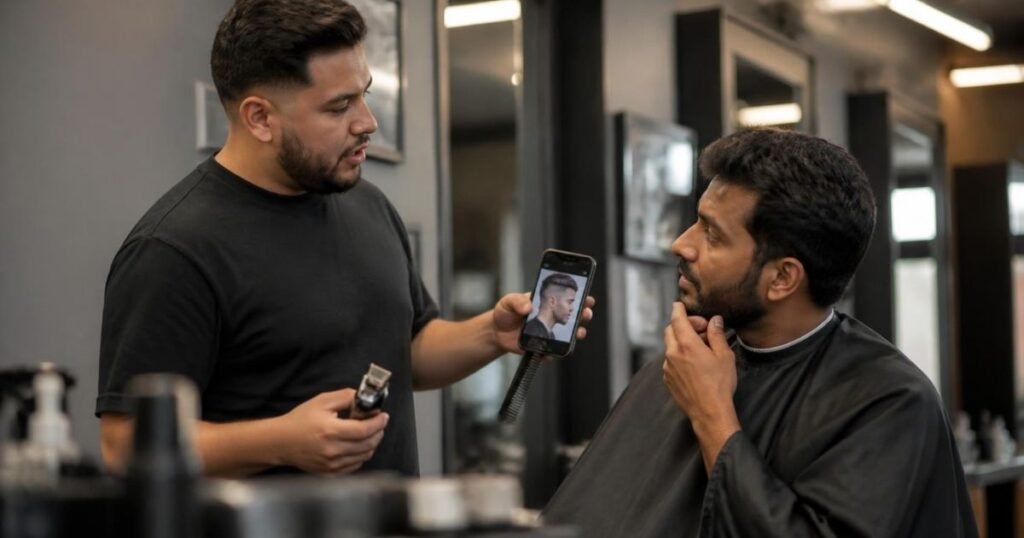
There isn’t a single “correct” fade for any given person the right choice usually comes down to how a few factors interact, rather than any one factor on its own. The sections below walk through what’s genuinely worth considering.
Before getting into individual factors, it helps to see how the three main fade heights compare side by side:
| Fade Height | Where It Starts | Skin Shown | General Impression |
| Low fade | Just above the ear | Least | Subtle, understated contrast |
| Mid fade | Around the brow/temple line | Moderate | Balanced, versatile contrast |
| High fade | Near the crown | Most | Bold, high-contrast statement |
This comparison of low vs mid vs high fade is really a starting point rather than a decision on its own the right height still depends on the factors below.
Face Shape
Fade height and contrast can influence how facial proportions read, and barbers commonly factor in face shape when suggesting where a fade should start. A higher fade tends to draw more visual attention toward the top of the head, while a lower fade keeps more focus on the sides staying close to the head.
That said, there’s no single fade that’s guaranteed to work for a given face shape. Facial proportions interact with hairline shape, hair texture, and how the top of the haircut is styled so it’s worth treating face shape as one consideration to mention to your barber, rather than a rule that decides the outcome on its own.
Hair Type and Texture
Hair texture straight, wavy, curly, or coily affects how a fade line reads and how the top of the haircut behaves once it’s cut. Straighter hair tends to show a sharp fade line very clearly, while curlier or coilier hair can soften that line slightly and may need a bit more adjustment from the barber to blend cleanly.
If you’re wondering whether a skin fade works with curly hair, the short answer is yes but the technique may be adapted slightly compared to straight hair, and it’s worth mentioning your hair type and how you usually wear it when you’re describing the cut you want.
Hair Density
Hair density how much hair grows per area of scalp is a separate factor from texture, though the two are often mixed up. Denser hair can make a fade line look fuller and can affect how quickly the transition blends visually, while thinner density may show the fade line a little more starkly.
This isn’t something that rules any fade in or out, but it’s useful information for a barber to know, particularly if you’re aiming for a very high-contrast look.
Hair Length
The fade itself is independent of how much length you keep on top a skin fade can pair with a buzzed top just as easily as with hair long enough to comb back or tie up. What changes with length is the amount of daily styling involved, not whether the fade will work.
If you’re considering a skin fade with long hair on top, the fade will still function the same way at the sides; the main consideration becomes how you plan to style the length above it.
Hairline and Growth Pattern
This is a factor that’s often overlooked, but it genuinely affects how clean a fade can look. Cowlicks, an uneven hairline, or hair that grows in an unusual direction near the temples or nape can all influence how a fade blends in those areas.
A barber experienced with fades will usually adjust the line and blending technique around these growth patterns rather than forcing a perfectly uniform line where the natural hair doesn’t cooperate. If you know you have a cowlick or an uneven hairline, it’s worth mentioning before the cut starts.
Maintenance Preferences
Higher-contrast fades particularly high and burst fades generally show regrowth sooner than lower-contrast options, simply because there’s more visible skin for new hair growth to fill in. If frequent barbershop visits aren’t realistic for your schedule, that’s a reasonable factor to weigh when choosing fade height. We’ll cover maintenance in more detail shortly.
How to Ask Your Barber for a Skin Fade
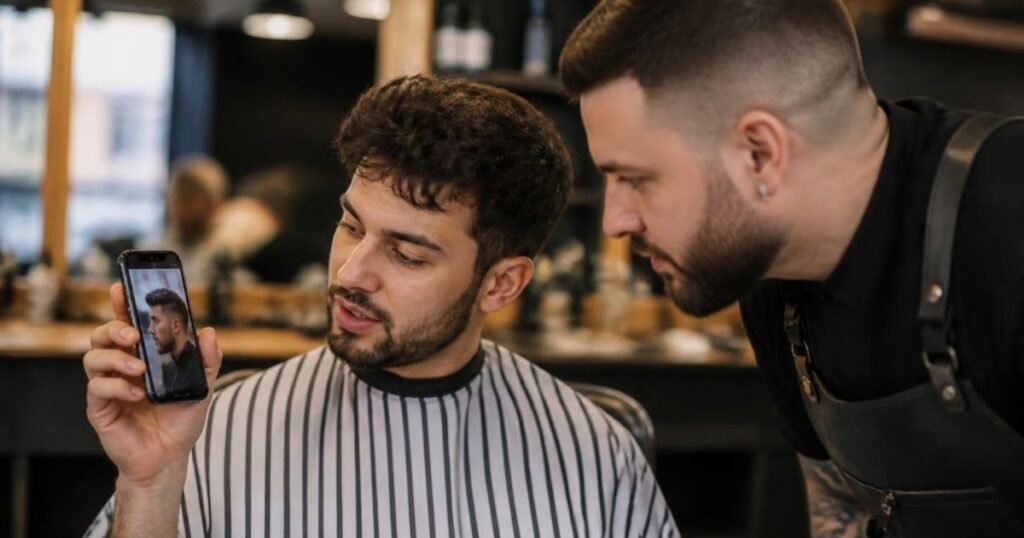
Getting the fade you actually want usually comes down to how clearly you can describe three things: the height, the shape, and what’s happening on top.
Start with the height tell your barber whether you’re picturing a low, mid, or high fade, using the terms from earlier in this guide. From there, mention the shape if it matters to you: a drop fade if you want the line to curve down at the back, a burst fade if you want it to end at the ear rather than continuing along the neckline, or a temple fade if you’d rather keep the hairline visible behind the ear.
Then describe the top separately from the fade itself the length you want to keep, whether you want it textured or smooth, and how much daily styling you’re willing to put in. Fade height and top style are two different decisions, and being specific about both helps avoid a result that’s technically a “skin fade” but not the one you had in mind.
A reference photo does more work than a verbal description alone, especially since fade terminology isn’t used the same way at every barbershop. If you can, bring one or two photos that show the fade height and the top style clearly ideally from more than one angle, since a single front-facing photo won’t show how the fade looks at the back of the head.
It’s worth keeping in mind that even with a clear description and a photo, results can vary slightly from barber to barber based on their technique and how your hair responds on the day. That’s normal, and it’s part of why an ongoing relationship with a barber who understands your hair tends to produce more consistent results over time.
What Do Fade Numbers and Clipper Guards Mean?
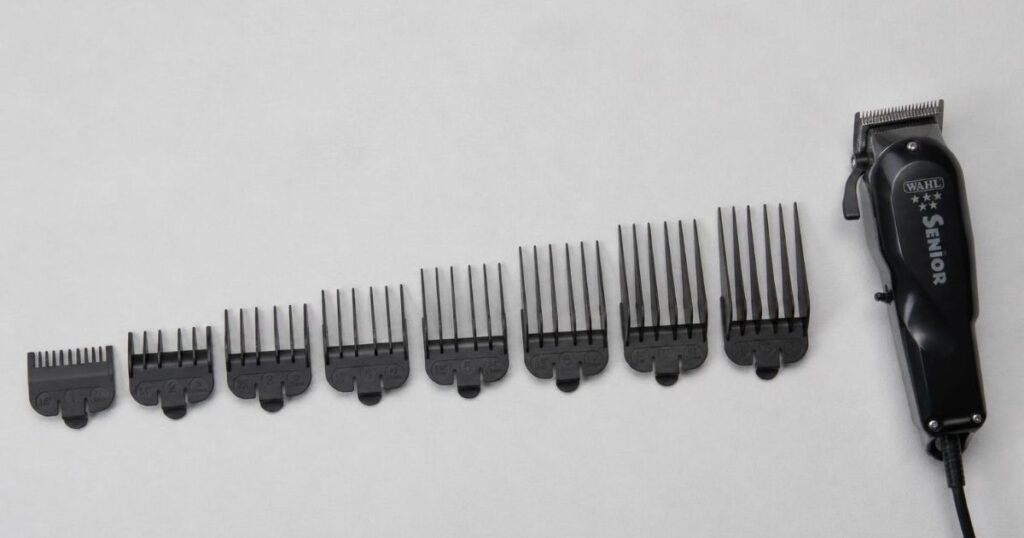
Clipper guards are the plastic attachments placed over clipper blades to control how much hair is left behind, and they’re usually numbered a lower number generally means a shorter length, and a higher number means more length is left on the hair.
The exact length associated with each number can vary slightly between clipper brands, so treat the table below as a general guide rather than an exact standard used everywhere:
| Guard Number | Approximate Length | Common Use |
| 0 / 0.5 | Skin level to barely visible hair | The skin-level part of a fade |
| 1–2 | Very short | Blending just above the skin-level section |
| 3–4 | Short, but with visible length | Mid-to-upper blending zone |
| 5+ | Noticeably longer | Length left on top or at the very top of a fade |
When a barber “fades” the hair, they’re typically working through several guard lengths in sequence starting at skin level or a very low guard near the bottom, and gradually moving up to longer guards as they work up the head, blending each transition so there’s no visible line between lengths. Understanding this sequence is part of what makes it easier to describe fade height in terms a barber will recognize immediately, rather than relying on photos alone.
How to Style and Maintain a Skin Fade
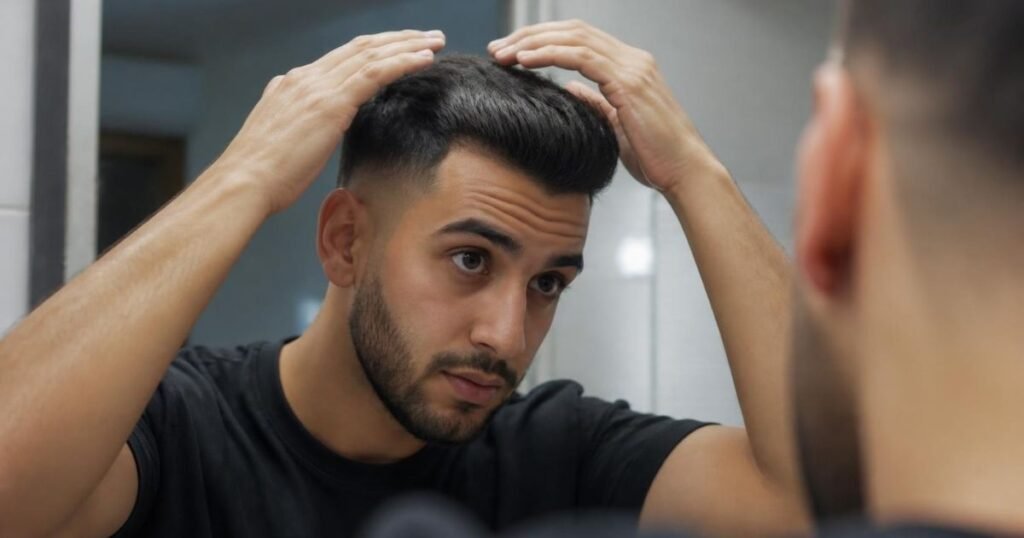
Once the cut is done, day-to-day upkeep mostly comes down to the top of the haircut the fade itself needs very little attention between visits, aside from basic care.
Keep the Top Styled for the Desired Look
How much daily effort a skin fade takes depends almost entirely on what’s happening on top, not on the fade itself. A buzzed or very short top needs little more than a quick comb or nothing at all, while a longer, textured, or slicked-back style will need some combination of product and a few minutes of styling to look intentional rather than just left alone.
Use Products Based on Your Hair Type
The right product depends on the look you’re going for and how your hair naturally behaves:
- Clay or paste tends to suit textured, matte finishes and works well for styles like textured crops or spiky tops, since it holds without adding shine.
- Pomade is generally better suited to slicked-back or smooth, structured looks, since it adds hold along with a noticeable shine.
- Sea salt spray works well for adding texture to naturally wavy or straight hair without weighing it down or creating a heavy, styled look.
These are general starting points rather than fixed rules hair responds differently from person to person, so some trial and error is normal when finding what works for your texture.
Keep the Fade and Hairline Clean
Because a fade brings hair down to skin level, that area benefits from basic scalp care moisturizing where the skin is exposed can help with dryness or irritation, particularly for anyone prone to a dry scalp. Some men also touch up their own hairline or neckline between barber visits using a trimmer, though this takes some practice, and a barber-maintained line will generally look cleaner and more even than a self-touch-up.
Know When It’s Time for a Touch-Up
A fade tends to show its regrowth before the rest of a haircut looks noticeably grown out, since the sharpness of the contrast is exactly what makes it look “fresh” in the first place. As hair grows back in at the fade line, the transition softens and the contrast that defines the style starts to fade no pun intended.
How long that takes varies from person to person based on how fast your hair grows, and it also depends on how bold the original fade was a high or burst fade will typically need attention sooner than a low fade, since there’s more visible skin for regrowth to fill in. Many people find they need a touch-up somewhere in the range of every two to four weeks, though this is a general pattern rather than a fixed schedule, and it’s worth paying attention to how your own hair grows rather than following someone else’s timeline exactly.
Skin Fade Mistakes to Avoid
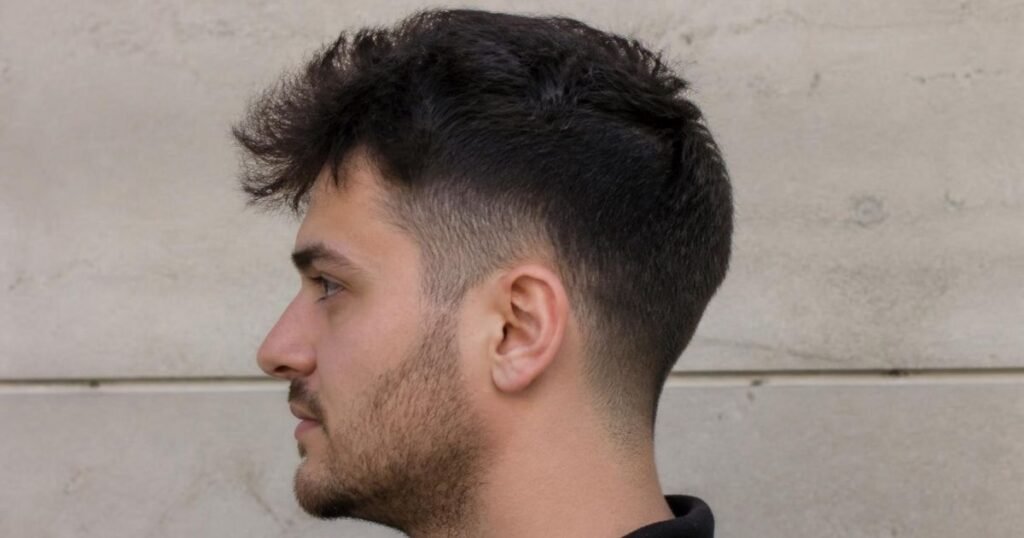
A few recurring issues tend to come up with skin fades, and most of them are avoidable with a bit of planning before or after the cut:
- Being vague about fade height. Saying “give me a fade” without specifying low, mid, or high leaves a lot of room for interpretation be specific, and bring a reference photo if you can.
- Waiting too long between touch-ups. Letting a high-contrast fade grow out for too long can blur the line that makes the style work, sometimes leaving an uneven, harder-to-fix transition.
- Ignoring scalp care. Skipping moisturizer or basic scalp care where the skin is exposed can lead to dryness or irritation, especially for those with naturally dry skin.
- Choosing a fade height without considering hair density or texture. A very high, sharp fade can look different depending on hair density and texture than it might in a reference photo taken from someone with different hair.
- Not mentioning cowlicks or an uneven hairline. If your barber doesn’t know about a growth pattern issue ahead of time, the fade line may not account for it as well as it could.
- Trying to self-maintain a complex shape. A basic neckline touch-up at home is one thing; attempting to maintain a burst or drop fade’s curved shape yourself is much harder to get right without practice.
Skin Fade vs Other Fade Haircuts
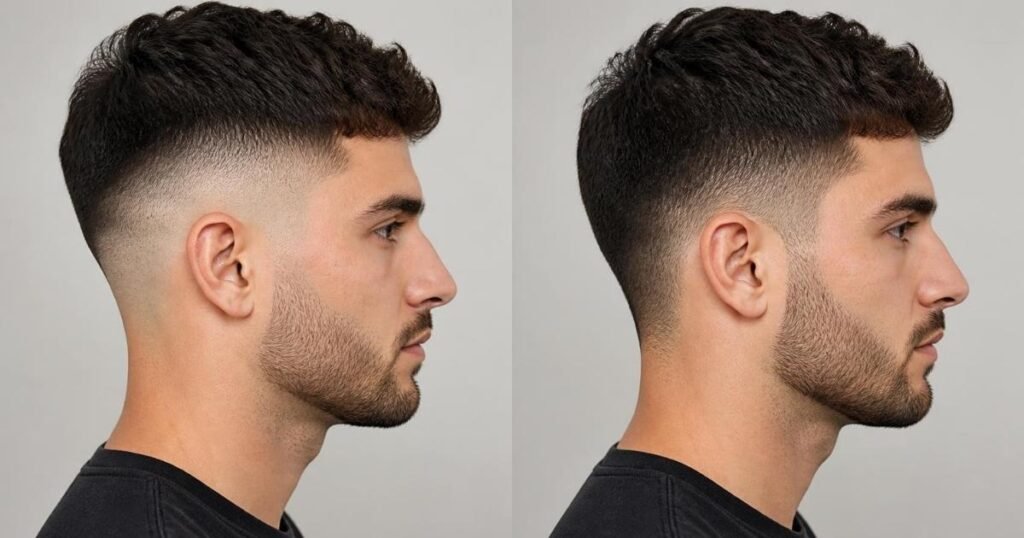
Fade terminology overlaps a lot, and it’s easy to end up unsure whether two terms describe the same haircut or something genuinely different. Here’s how a skin fade compares to the other terms you’re likely to run into.
| Comparison | Key Difference |
| Skin fade vs taper fade | A skin fade blends all the way to bare skin; a taper fade tapers the hair shorter without fully reaching skin. |
| Skin fade vs low fade | “Low fade” describes a height within skin fades (and can apply to tapers too) not a separate haircut. |
| Skin fade vs mid fade | Same relationship as above mid fade is a height category within the skin fade family. |
| Skin fade vs high fade | High fade is simply the highest-placed height option within the skin fade family. |
| Skin fade vs bald fade | Terminology varies “bald fade” is often used as another name for skin fade, though some use it specifically for an especially close, high-contrast version. |
Skin Fade vs Taper Fade
As covered earlier, the core difference comes down to whether the hair reaches bare skin. A skin fade fades all the way down to skin level; a taper fade (sometimes just called a “taper”) gradually shortens the hair without exposing skin, leaving a fine layer of hair even at its shortest point. A temple fade sits somewhere close to a taper fade, since the hairline typically stays visible rather than being fully faded.
Skin Fade vs Low Fade
These aren’t two separate haircuts a low fade is simply a height option within the skin fade category (and can also describe a low taper). If someone asks for “a low fade,” they’re specifying how high the fade should start, not choosing a different technique altogether.
Skin Fade vs Mid Fade
The same logic applies here. A mid fade is a specific height within the broader skin fade family, sitting between low and high in terms of both starting point and how much skin is visible.
Skin Fade vs High Fade
A high fade is simply the boldest height option within the skin fade category more skin shown, starting higher up the head, and generally the most attention-grabbing of the three main heights.
Skin Fade vs Bald Fade
This comparison genuinely depends on who you’re talking to. In many cases, “bald fade” is used as a direct synonym for “skin fade” both describe hair fading down to bare skin. In other contexts, particularly in parts of the UK and Australia, “bald fade” is used more specifically to describe an especially close, high-contrast version of the fade. Because usage isn’t consistent, a reference photo is genuinely the most reliable way to make sure you and your barber mean the same thing.
Frequently Asked Questions
What is a skin fade haircut?
A skin fade haircut is a technique where hair is cut progressively shorter until it fades to bare skin, then left to grow back out above the natural hairline. It’s applied to the sides and back of a haircut and paired with a wide range of top styles.
Is a skin fade the same as a bald fade?
Often, yes the two terms are frequently used interchangeably. In some regions, though, “bald fade” refers specifically to an especially close, high-contrast version of a skin fade, so it’s worth confirming with your barber or bringing a reference photo if the distinction matters to you.
How long does a skin fade last?
Many people find they need a touch-up roughly every two to four weeks, though this depends heavily on individual hair growth rate and how bold the original fade was higher-contrast fades tend to need attention sooner than lower, more subtle ones.
Can I get a skin fade with curly hair?
Yes. Curl pattern can affect how the fade line reads and may require some adjustment in technique, but curly hair doesn’t rule out a skin fade it’s worth mentioning your hair type and how you usually wear it when describing the cut you want.
What face shape suits a skin fade?
There’s no single face shape a skin fade is limited to. Fade height can influence how facial proportions read a higher fade draws more attention upward, a lower fade keeps more focus at the sides but the right choice depends on several factors together, not face shape alone, and it’s worth discussing with your barber.
Is a skin fade high maintenance?
It depends mainly on the fade height and the style on top. Higher-contrast fades like high or burst fades generally need more frequent touch-ups than low fades, and a longer or more textured top will need more daily styling than a simple buzzed top.
How do I ask my barber for a skin fade?
Be specific about three things: the fade height (low, mid, or high), the shape if it matters to you (drop, burst, or temple), and what you want on top. Bringing a reference photo, ideally from more than one angle, helps make sure you and your barber are picturing the same result.
Can I get a skin fade with long hair on top?
Yes the fade itself works independently of how much length is kept on top. A skin fade can pair with hair long enough to comb back, tie up, or leave loose; the main difference is how much daily styling that length will need.
Final Thoughts
A skin fade isn’t one haircut it’s a flexible technique that changes shape depending on height, line, and what you pair it with on top. Once you understand the difference between low, mid, and high fades, and how shapes like drop, burst, and temple fades fit into that picture, it becomes much easier to browse styles with a clearer sense of what you’re actually looking at.
The same understanding makes barbershop conversations easier too. Knowing how to describe fade height, shape, and top style and bringing a reference photo when it counts goes a long way toward leaving the chair with the result you actually pictured.

Jake Miller is a barbering and men’s hairstyle enthusiast who shares practical tips, haircut inspiration, and the latest grooming trends at BarberZylo. He enjoys exploring modern and classic hairstyles and helping readers find fresh ideas for their next look.
One Comment